Andrew Storey

BROWSE ALL FROM THIS PHOTOGRAPHER HERE

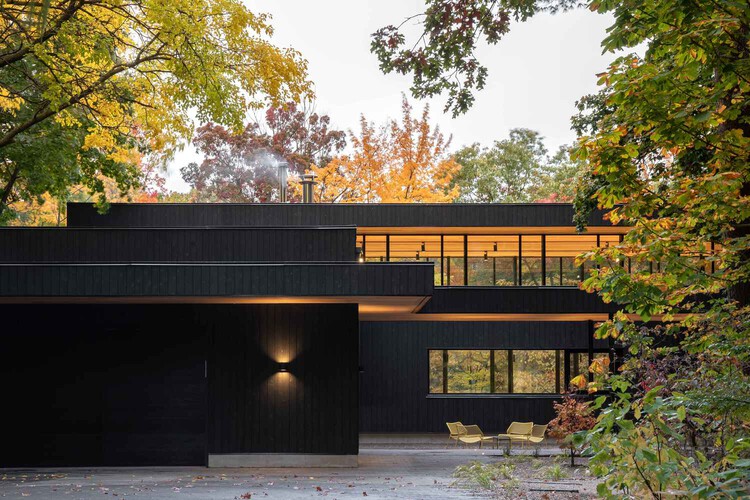
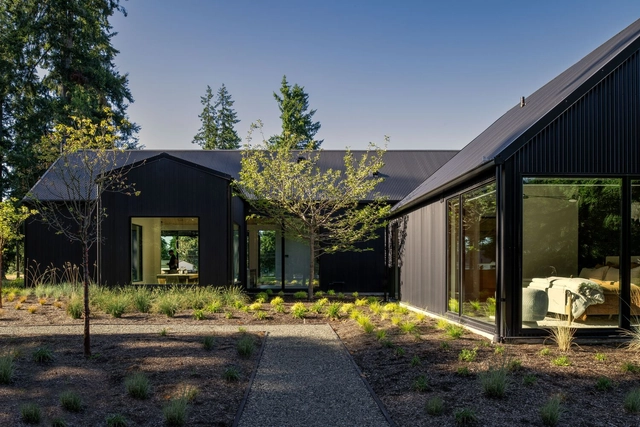
Deep Tones and Natural Roots: 22 Shou Sugi Ban Homes Across the US and Canada

Subscriber Access | 

Shou Sugi Ban is a traditional Japanese technique for wood preservation that involves charring the surface of timber to create a protective layer. While its origins are rooted in practical durability, the method has been widely adapted into the modern built environment and shapes a unique and distinctive aesthetic. It is a material of contradiction: it remains bold in its visual language due to its dark tones, yet it simultaneously borrows from and complements its natural surroundings, allowing houses to settle quietly into their sites.

The charred finish among the 22 residences featured here across Canada and the United States serves as a common thread for navigating extreme climates. From humid lakefronts to dense forests, the carbonized skin acts as a resilient shield against diverse conditions. Beyond mere protection, these houses demonstrate how the material's texture changes with exposure to light, transforming from a flat matte in the shade to a silver-flecked, shimmering surface in direct sun. These projects also showcase the technique's ability to define architectural volumes, using the dark cladding to create sharp, monolithic silhouettes or to highlight the voids in a building's mass, such as recessed entryways and sheltered terraces.

Deep Tones and Natural Roots: 22 Shou Sugi Ban Homes Across the US and Canada - More Images+ 20

The Lawn as Battleground: How Domestic Landscaping Became a Symbol of American Identity

The almost cliché image of the white picket fence has become synonymous with the ideals of the American Dream. Behind the fence, there is invariably a perfectly manicured lawn, a green carpet upon which life can unfold. This image and its associations are not, however, accidental. In her book, "Domesticity at War", Beatriz Colomina notices that, since the Second World War, the lawn has taken a central space in the imagination of the country, becoming first a in order to make space for diversity, both social and ecological. symbol of the stability of the homes soldiers were hoping to return to, offering a space where those at home could still perform duties for the nation, and, after the war, propagating the image of an idealized lifestyle, one maintained with hard work and dedication. In recent years, the lawn has emerged once again as a site of conflict, this time between those hoping to preserve this idealized image, and those seeking to break the uniformity in order to make space for diversity, both social and ecological.

The Lawn as Battleground: How Domestic Landscaping Became a Symbol of American Identity - Image 1 of 4The Lawn as Battleground: How Domestic Landscaping Became a Symbol of American Identity - Image 2 of 4The Lawn as Battleground: How Domestic Landscaping Became a Symbol of American Identity - Image 3 of 4The Lawn as Battleground: How Domestic Landscaping Became a Symbol of American Identity - Image 4 of 4The Lawn as Battleground: How Domestic Landscaping Became a Symbol of American Identity - More Images+ 9

Homestead C / Citizen Design

Homestead C / Citizen Design - More Images+ 27

Maple Valley, United States

The Trailblazer House / Citizen Design

The Trailblazer House / Citizen Design - More Images+ 21