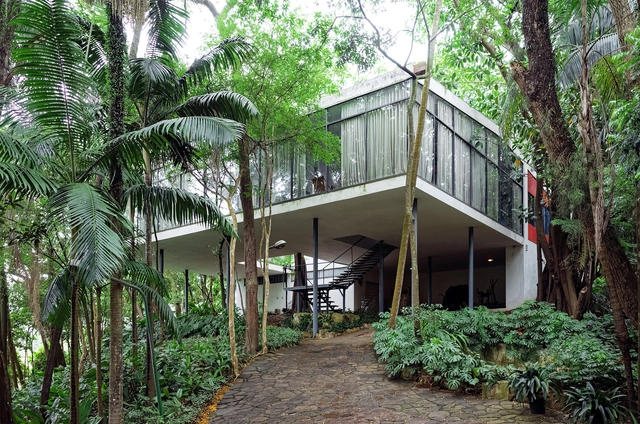
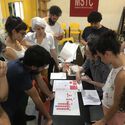
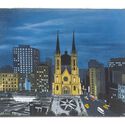
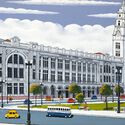
Alternating between housewife and architect, Lina Bo Bardi appeared in the pages of O Cruzeiro magazine—featured in women's columns for her risotto alla milanese, and in cultural sections as the architect of MASP (Museum of Modern Art of São Paulo). Published weekly by Assis Chateaubriand's Diários Associados, O Cruzeiro enjoyed nationwide notoriety and circulation. Although targeted at upper-class housewives, its content was broad, covering fashion, culture, cinema, politics, and "women's advice sections" (sic).
No País dos Arquitectosis a podcast created by Sara Nunes, who also runs the architecture film production company Building Pictures. The podcast aims to profile the professionals, projects, and stories behind Portugal's leading contemporary architecture. With just over 10 million inhabitants, Portugal is a fascinating country when it comes to this professional field, and its architectural output far exceeds its population or territorial scale.
In this episode, Sara talks with the architects of extrastudio, João Caldeira Ferrão and João Costa Ribeiro, about the Red House project. Listen to the full interview and read an excerpt of the transcript below:
Lacking a clear definition, the term smart cities has become increasingly common with each passing year. Many theorists point out that this conceptual ambiguity is linked to its rapid adoption and expansion by large corporations and institutions, thus turning it into a buzzword. Despite the “innovative” rhetoric, the model chosen to implement a smart city can lead to segregation and privilege specific groups if it is not designed around local specificities and does not involve local leadership (MENDES, 2020). This essay adopts the understanding that innovation and intelligence are not necessarily tied to digital technologies or high-cost resources. Rather, they stem from a fresh perspective on urban problems and the development of non-traditional solutions in decision-making and execution.
Videos
Opening frame. Source: Oliver Latta/Apple TV+.
One of the most highly acclaimed television productions of recent years, “Severance” (released as “Ruptura” in Brazil), the Apple TV+ sci-fi series released in 2022, establishes an intriguing premise: employees of the mysterious Lumon Industries volunteer to undergo a procedure that surgically separates their personal and professional memories, ensuring that their work and private lives never overlap. The procedure thus creates an intermittent alter ego, mutually unaware of the other self and hyper-focused on its respective domain. The deft direction of Ben Stiller and Aoife McArdle, coupled with stellar performances from the cast, does justice to Dan Erickson's brilliant plot. Here, however, we focus on how the show's primary setting—the corporate headquarters in the fictional town of Kier—heightens the distress of the small team of employees through the architecture that houses and alienates them during the workday.
Gentrification is the process by which real estate becomes more desirable and, consequently, more expensive. Rising prices displace long-time residents, replacing them with higher-income newcomers. This should not be confused with the forced removal of citizens through eminent domain or forced evictions. Evicting residents by official decree is a different issue altogether.
https://www.archdaily.com/1132196/filtering-gentrification-in-reverseAnthony Ling e Jeff Andrade-Fong
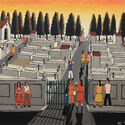
"Agostinho de Freitas was an extraordinary artist," says Agnaldo Farias, art critic, professor, and curator of the exhibition “Agostinho Batista de Freitas – Mestre das Ruas,” on view from May 12 to June 11 at Galeria Estação in São Paulo. The exhibition features a selection of about 20 of the artist's canvases from the collection of gallerist Vilma Eid.
Urban planning is of interest to everyone, but it is no subject for novices. With this in mind, Arquicast invited professionals who contribute directly to the field through extensive research and practical experience for a conversation. Joining the podcast are Roberto Ghidini, an engineer, urban observer, founder of Sociedad Peatonal, and PhD in Urbanism from UPM (Polytechnic University of Madrid); and João Flávio Folly, an architect with a Master’s in Urbanism from UFF and currently a PhD candidate in Mobility and Urbanism at PROURB/UFRJ.
On May 5, the first edition of the Model. Barcelona Architectures Festival officially opened. Jointly organized by the Barcelona City Council and the Association of Architects of Catalonia (COAC), the event is led by artistic directors Eva Franch i Gilabert and Beth Galí, along with cultural researcher José Luis de Vicente. It brings us closer to experimental architecture, helping us rethink how we want to live together through new urban models and new imaginaries.
Through five temporary architecture installations located along a circuit in Ciutat Vella—starting at Plaza de Catalunya, the Sant Antoni slab, Plaza de Idrissa Diallo, Paseo de Lluís Companys, and Plaza Reial—the festival explores its five major themes under the central concept of "Regrow": Between-Classes, Between-Cultures, Between-Species, Between-Generations, and Between-Materials.
In this context, we present the installation "Reversing the Pyramid" by OJO estudio.
We must slow down traffic in Brazilian cities—and fast. This is a public health issue, as traffic crashes are among the leading causes of death worldwide. It is also a matter of quality of life and equity, as cities that effectively reduce vehicle speeds become safer, more welcoming, and more vibrant for everyone.
https://www.archdaily.com/1131994/8-approaches-and-trends-to-promote-safe-traffic-and-quality-public-spacesPaula Manoela dos Santos, Bruno Rizzon e Adriana Jakovcevic
From May 5 to 15, Barcelona's Plaza Real was transformed into one of the hubs for debates on architecture and the city during the MODEL Festival. The ephemeral installation "Occupy the Center with the Word"—led by the ELISAVA Barcelona School of Design and Engineering under the direction of Roger Paez, in collaboration with Manuela Valtchanova, Albert Fuster, and Toni Montes—sought to "create optimal conditions for both encounters and disagreements to take place, always through the spoken word."
Two years after receiving the complete archive of Paulo Mendes da Rocha, Portugal's Casa da Arquitectura inaugurated its Digital Building last weekend. Marking the institution's shift toward the inescapable virtual world, the project consists of digitizing the archive accumulated since the organization was founded in 2017.
The 13th edition of the Architecture Biennial, organized by IAB-São Paulo, will open on May 27. It emerges from a reality of intense transformations brought about by the Covid-19 pandemic worldwide, which demanded major efforts to reorganize urban, social, and professional dynamics for survival.
Travessias (Crossings), the theme of this edition, recognizes that the pandemic reinforces socio-spatial inequalities that were already established, not only in Brazil but globally, understanding that these structures undergo physical and symbolic fragmentations rooted in violent processes of colonization and historical erasure. As a result, they trigger numerous manifestations of oppression – such as racism, sexism, ableism, and coloniality – in Brazil and other territories.
https://www.archdaily.com/1131944/francis-kere-banga-nossa-and-dele-adeyemo-among-the-participants-of-the-13th-sao-paulo-architecture-biennialArchDaily Team
Concéntrico is the renowned Logroño International Architecture and Design Festival. An event about the city, open to residents and visitors alike, its main goal is to discover and rediscover key sites in the Historic Center, reflecting on the urban environment through temporary architectural and design installations. This year, the 8th edition will be held from September 1 to 6.
In May, the same month that the 13th São Paulo International Architecture Biennale begins, SescTV will make five selected episodes from two series—Arquiteturas and Coleções - Mestres da Arquitetura—available on-demand on the channel's website. These episodes prompt a reflection on architectural and historical heritage and depict the vision of architects and other professionals in the field, offering different perspectives on several iconic projects. All of this content, along with other programming spanning various artistic expressions, is part of the channel's collection and is available on-demand on the SescTV website.
https://www.archdaily.com/1132231/sesctv-offers-free-thematic-series-on-architecture-and-citiesArchDaily Team
Architects and designers, as well as psychologists and sociologists, recognize that aesthetics and its underlying philosophy have the power to change how we perceive the world around us. Consequently, a deeper understanding of what is beautiful has the power to reshape how people respond to their environment.
Exploring the different meanings of aesthetics in architecture—from "form follows function" to the aesthetics of the metaverse—can help us understand the potential of our physical and virtual environments on the path toward a better world.
Much has already been written on the subject, but we now want to open the debate to you, our readers. Share your thoughts on what makes a building or a city beautiful.
Leave your comments in the form below. These will be selected and published in an upcoming article.
Documenting architectural and urban projects is not just a final step, but a vital act of preserving memory. In this episode of the Betoneira Podcast, architect Hugo Segawa, a pioneer in using photography as a tool for researching and documenting Brazilian architecture, emphasized that the act of documenting must generate knowledge.
At the dawn of the automobile era, suppose Henry Ford and John D. Rockefeller had asked how urban planners could increase the demand for cars and gasoline. Consider three options. First, divide the city into separate zones (housing here, jobs there, shopping over there) to generate trips between them. Second, limit density to spread everything out and increase those trips even further. Third, require ample off-street parking everywhere, making cars the easiest and cheapest way to travel.
The Global Designing Cities Initiative (GDCI) released its Global Street Design Guide to help urban planners with the challenging task of including all users of urban spaces in their designs. The publication became a benchmark and has now inspired a dedicated companion guide focused on children. The guide Designing Streets for Kids (translated into Portuguese as Desenhando Ruas para Córiaças) is already available in several languages, including Portuguese.
The canals of Amsterdam, the capital of the Netherlands, span more than 100 kilometers and are not immune to plastic pollution. However, a clever invention has arrived in the city to address this issue: “The Great Bubble Barrier,” a technology that creates bubbles in the water to make collecting plastic waste easier.
On a warm, hazy Sunday afternoon, Nairobi's concrete tenements tower over the city's shanties (or “slums”). Men and women hang laundry from roofs and balconies — making the buildings look like a patchwork quilt, a mosaic of fabric.
According to Victor Carvalho Pinto, an attorney specializing in Urban Law and a legislative advisor to the Brazilian Federal Senate, supporting the modernization of city and state administrations—so-called "institutional development"—is more critical than funding municipal public works. In an exclusive interview with Geocracia, Carvalho Pinto, coordinator of the Cities and Regulation Hub at Insper's Arq.Futuro Cities Lab, stated he is not concerned about the dissolution of the Ministry of Cities, as the federal budget, Caixa Econômica Federal, and BNDES already allocate non-repayable grants for many municipal projects.
https://www.archdaily.com/1132416/before-municipal-works-come-information-mapping-and-property-registrationCarlos Vieira e Victor Carvalho Pinto
The new report from the Intergovernmental Panel on Climate Change highlights nature's immense potential to reduce climate change risks and build resilience. The political landscape has become increasingly supportive of this approach. In 2021, for instance, 137 countries collectively committed to halting forest loss and land degradation by 2030 as part of the Glasgow Leaders' Declaration on Forests and Land Use. Signatories reaffirmed the importance of all forests in adapting to the impacts of climate change and maintaining healthy ecosystem services. Funding pledges quickly followed, including $19.2 billion to protect and restore forests globally.
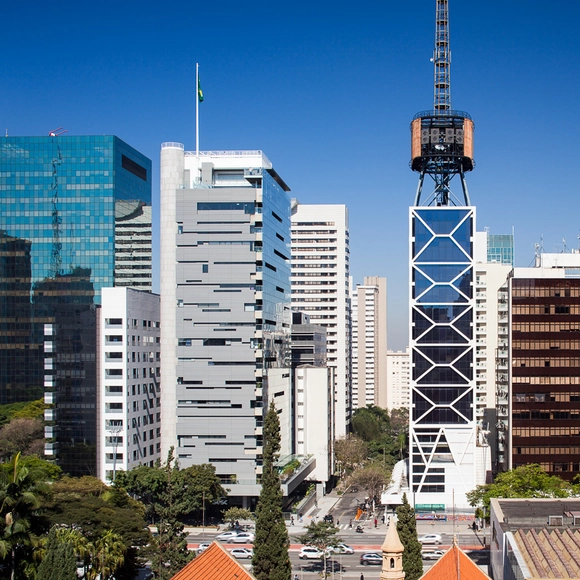
From early 20th-century hygienism to the macro-planning of urbanization in the 1970s, the urban model aimed at carving out wide avenues to connect neighborhoods (the center and its extensions) via motorized transport: the city on wheels. This North American urbanization model, adopted by Brazilian cities, privileges high-rise development and private vehicles over public transit.
Located in the neighborhood of São Cristóvão in Rio de Janeiro, the Prefeito Mendes de Moraes Residential Complex, better known as Pedregulho, was designed by architect Affonso Eduardo Reidy in 1947 to house public servants of the then-Federal District. The project marks a moment of international recognition for Reidy's architectural and urban design work, while also highlighting his significant partnership with Carmen Portinho.