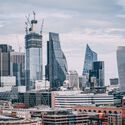
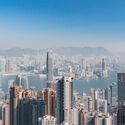
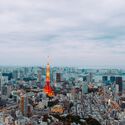
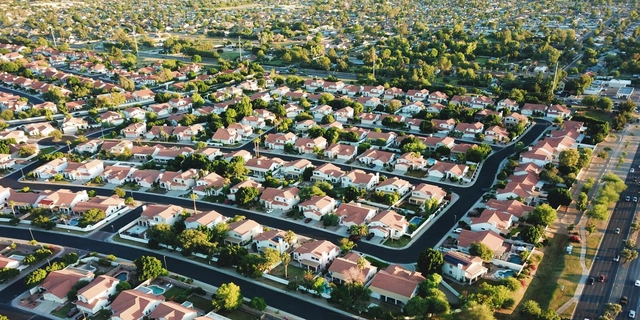
Cities play a fundamental role in the search for solutions and policies to mitigate the problems driving global climate change. Today, urban areas account for more than 70% of carbon dioxide (CO₂) emissions—one of the main causes of the greenhouse effect and its consequences for the environment and human life.
Just like much of popular culture, for most of the twentieth century, architectural media relied on magazines sold at newsstands and supermarkets. Through them, readers discovered what was being built, tracked technological innovations, and, to some extent, popularized architectural discourse, taking it beyond the academic and elitist confines of universities and conferences. With the rise of the internet, the format of this information shifted, finding new ways to reach the public. Social media and specialized websites became crucial channels for sharing information and services, expanding public access to architectural issues. Today, every major social network hosts profiles dedicated exclusively to architecture, tailoring their content to each specific platform.
In his most recent book, Survival of the City, economist Edward Glaeser diagnoses the conflicts of interest that permeate the urban debate. According to him, there is a fundamental opposition between insiders—longtime residents interested in maintaining the status quo and increasing their property values—and outsiders—new residents looking for affordable housing and new opportunities for work, consumption, and urban space.
https://www.archdaily.com/1132011/nimby-and-yimby-two-visions-of-the-cityAndrey Barbosa, Gabriel Nunes, Guilherme Pereira e Pedro Portes
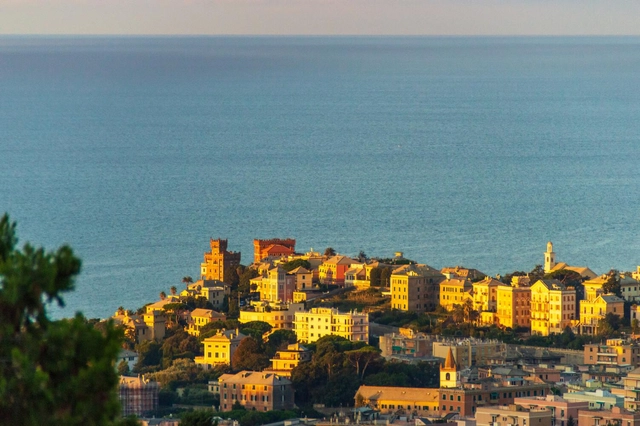
Genoa, Italy. Photo by Philip Schroeder via Unsplash
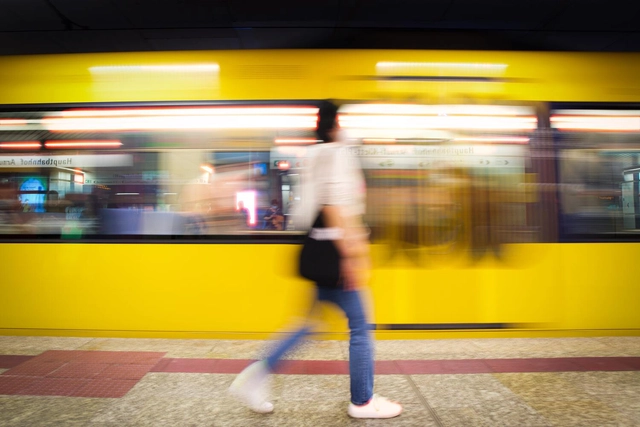
At the end of 2021, the port city of Genoa, Italy, introduced free public transit. Following the success of the initiative, the experiment, originally scheduled to end on March 31, 2022, was extended for another four months.
Vertical transit systems (such as elevators and funiculars) will remain free seven days a week with no time restrictions, while free subway access is available during two specific windows: daily from 10:00 a.m. to 4:00 p.m. and from 8:00 p.m. to 10:00 p.m. This free access will be valid until July 31.
Bringing lighting to those in need using solar energy and affordable materials. This is the mission of the NGO Litro de Luz, which, during a three-day campaign, positively impacted the quality of life of 173 families from riverside communities living along the banks of the Rio Negro in the Amazon.
One of the great theorists of architecture, the city, and nature recently passed away on March 17, 2022, at the age of 85. Born in Vienna on October 4, 1936, Christopher Alexander lived a long life of singular contributions, offering visionary ideas about cities that challenged the mainstream of architectural practice.
https://www.archdaily.com/1132139/christopher-alexander-the-legacy-of-a-visionary-urbanistVinicius M. Netto
Summer, carnival, and transit fare hikes: the beginning of the year in Brazil is typically when municipal and state governments announce increases in public transportation fares. While these fares were frozen in 2021 due to the coronavirus pandemic, many cities have faced hikes once again in 2022. Understanding the impact of rising public transportation fares on our society is crucial.
On May 3 at 11 a.m., Portobello will host the UNLTD Dreams Exhibition, an event that promotes discussions on art, architecture, and sustainability, while showcasing the diverse possibilities of space design through the eyes of leading professionals.
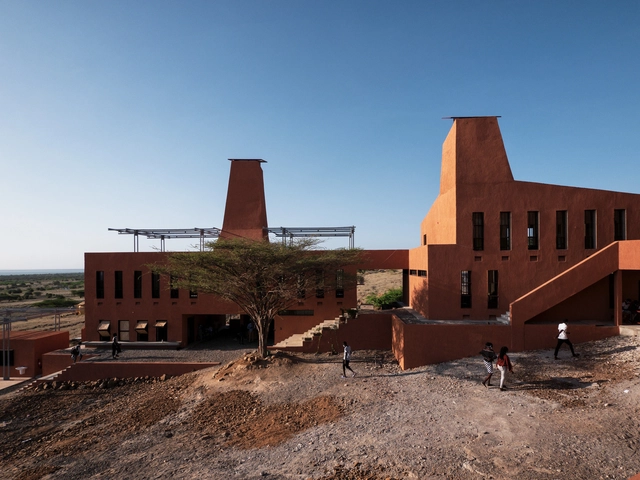
Startup Lions Campus / Kéré Architecture. Courtesy of Kéré Architecture
African architect Diébédo Francis Kéré, known worldwide for work guided by a social vision of architecture and design practice as a tool for inclusion and transformation, was this year's Pritzker Prize laureate. To discuss the award, the jury's selection, and its implications for architectural culture as a whole, Arquicast invited Caio Dias and Bruno Sarmento.
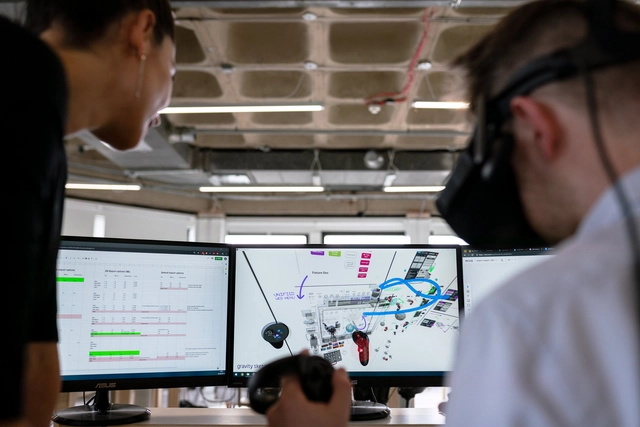
Two thousand five hundred reais is the average price of a good virtual reality headset. If you opt for the full experience, shell out another four thousand reais to add sensors and controllers. These models must be connected to a high-performance computer to process information and transform spaces into 3D models, costing at least five thousand reais. In addition to the headset, sensors, and computer, software is also required, with annual licenses that likewise run into the thousands. In short, keeping up with technology nowadays is quite a costly endeavor.
There is no shortage of filmmakers trained in architecture, nor of architects passionate about cinema. On the Betoneira Podcast, architect and filmmaker Marcio Kogan joined hosts Marcelo Barbosa and André Scarpa, both architects and cinephiles, to discuss the films that have shaped their lives and influenced their architecture.
The world's population is aging, and one of the major questions raised by this demographic shift—with more older adults than young children—is whether municipalities are equipped for these citizens to use urban spaces safely and accessibly, and to feel included in the social and civic life of their communities.
A United Nations (UN) report estimates that the number of individuals aged 65 or older is expected to double by 2050, growing from 727 million in 2020 to approximately 1.5 billion—representing 16% of the global population.
https://www.archdaily.com/1132240/how-to-make-a-city-age-friendlySomos Cidade
From May 10 to 15, the second edition of the Barcelona International Architecture Film Festival (BARQ) will take place. The event will be hosted within the MODEL. Barcelona Architectures Festival. It will feature seven feature films and twelve short films in competition, which will be screened at Barcelona's Cines Girona and the Disseny HUB. During the festival, the selected films will also be available on the Filmin platform.
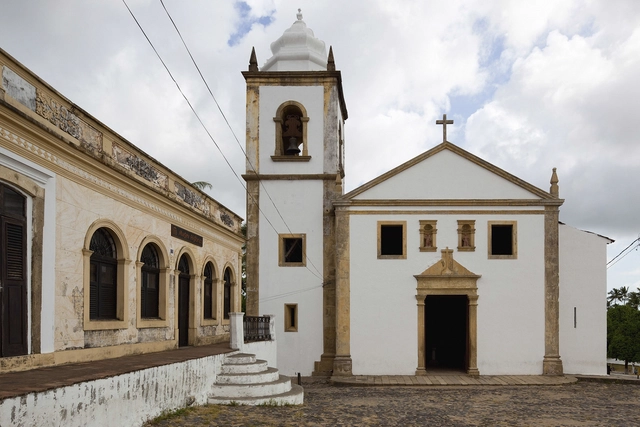
Dating back to 1535, the Church of Saints Cosmas and Damian in Igarassu, Pernambuco, is considered the oldest surviving church in Brazil. This iconic landmark has recently undergone an extensive restoration that preserves its historic features while introducing upgrades to facilitate its contemporary use. The intervention also included the adjacent two-story Parish House.
https://www.archdaily.com/1132380/brazils-oldest-church-restored-in-igarassu-pernambucoArchDaily Team
Alternating between housewife and architect, Lina Bo Bardi appeared in the pages of O Cruzeiro magazine—featured in women's columns for her risotto alla milanese, and in cultural sections as the architect of MASP (Museum of Modern Art of São Paulo). Published weekly by Assis Chateaubriand's Diários Associados, O Cruzeiro enjoyed nationwide notoriety and circulation. Although targeted at upper-class housewives, its content was broad, covering fashion, culture, cinema, politics, and "women's advice sections" (sic).
No País dos Arquitectosis a podcast created by Sara Nunes, who also runs the architecture film production company Building Pictures. The podcast aims to profile the professionals, projects, and stories behind Portugal's leading contemporary architecture. With just over 10 million inhabitants, Portugal is a fascinating country when it comes to this professional field, and its architectural output far exceeds its population or territorial scale.
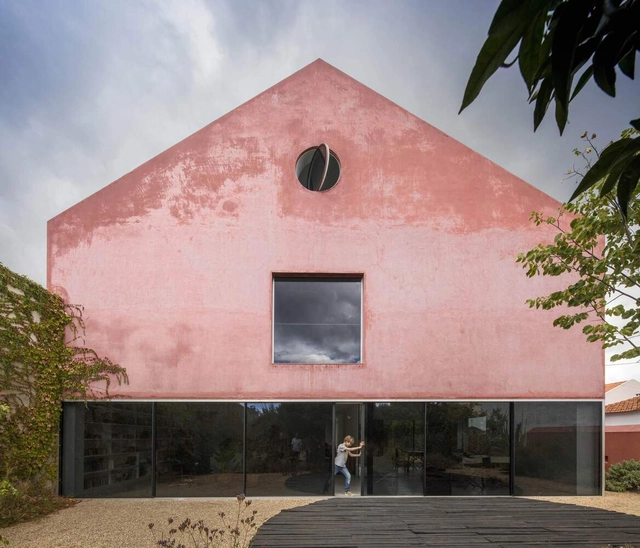
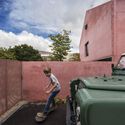
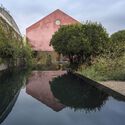
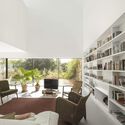
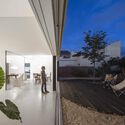
In this episode, Sara talks with the architects of extrastudio, João Caldeira Ferrão and João Costa Ribeiro, about the Red House project. Listen to the full interview and read an excerpt of the transcript below:
Lacking a clear definition, the term smart cities has become increasingly common with each passing year. Many theorists point out that this conceptual ambiguity is linked to its rapid adoption and expansion by large corporations and institutions, thus turning it into a buzzword. Despite the “innovative” rhetoric, the model chosen to implement a smart city can lead to segregation and privilege specific groups if it is not designed around local specificities and does not involve local leadership (MENDES, 2020). This essay adopts the understanding that innovation and intelligence are not necessarily tied to digital technologies or high-cost resources. Rather, they stem from a fresh perspective on urban problems and the development of non-traditional solutions in decision-making and execution.
Videos
Opening frame. Source: Oliver Latta/Apple TV+.
One of the most highly acclaimed television productions of recent years, “Severance” (released as “Ruptura” in Brazil), the Apple TV+ sci-fi series released in 2022, establishes an intriguing premise: employees of the mysterious Lumon Industries volunteer to undergo a procedure that surgically separates their personal and professional memories, ensuring that their work and private lives never overlap. The procedure thus creates an intermittent alter ego, mutually unaware of the other self and hyper-focused on its respective domain. The deft direction of Ben Stiller and Aoife McArdle, coupled with stellar performances from the cast, does justice to Dan Erickson's brilliant plot. Here, however, we focus on how the show's primary setting—the corporate headquarters in the fictional town of Kier—heightens the distress of the small team of employees through the architecture that houses and alienates them during the workday.
Gentrification is the process by which real estate becomes more desirable and, consequently, more expensive. Rising prices displace long-time residents, replacing them with higher-income newcomers. This should not be confused with the forced removal of citizens through eminent domain or forced evictions. Evicting residents by official decree is a different issue altogether.
https://www.archdaily.com/1132196/filtering-gentrification-in-reverseAnthony Ling e Jeff Andrade-Fong
"Agostinho de Freitas was an extraordinary artist," says Agnaldo Farias, art critic, professor, and curator of the exhibition “Agostinho Batista de Freitas – Mestre das Ruas,” on view from May 12 to June 11 at Galeria Estação in São Paulo. The exhibition features a selection of about 20 of the artist's canvases from the collection of gallerist Vilma Eid.
On May 5, the first edition of the Model. Barcelona Architectures Festival officially opened. Jointly organized by the Barcelona City Council and the Association of Architects of Catalonia (COAC), the event is led by artistic directors Eva Franch i Gilabert and Beth Galí, along with cultural researcher José Luis de Vicente. It brings us closer to experimental architecture, helping us rethink how we want to live together through new urban models and new imaginaries.
Through five temporary architecture installations located along a circuit in Ciutat Vella—starting at Plaza de Catalunya, the Sant Antoni slab, Plaza de Idrissa Diallo, Paseo de Lluís Companys, and Plaza Reial—the festival explores its five major themes under the central concept of "Regrow": Between-Classes, Between-Cultures, Between-Species, Between-Generations, and Between-Materials.
In this context, we present the installation "Reversing the Pyramid" by OJO estudio.
Urban planning is of interest to everyone, but it is no subject for novices. With this in mind, Arquicast invited professionals who contribute directly to the field through extensive research and practical experience for a conversation. Joining the podcast are Roberto Ghidini, an engineer, urban observer, founder of Sociedad Peatonal, and PhD in Urbanism from UPM (Polytechnic University of Madrid); and João Flávio Folly, an architect with a Master’s in Urbanism from UFF and currently a PhD candidate in Mobility and Urbanism at PROURB/UFRJ.
Architects and designers, as well as psychologists and sociologists, recognize that aesthetics and its underlying philosophy have the power to change how we perceive the world around us. Consequently, a deeper understanding of what is beautiful has the power to reshape how people respond to their environment.
Exploring the different meanings of aesthetics in architecture—from "form follows function" to the aesthetics of the metaverse—can help us understand the potential of our physical and virtual environments on the path toward a better world.
Much has already been written on the subject, but we now want to open the debate to you, our readers. Share your thoughts on what makes a building or a city beautiful.
Leave your comments in the form below. These will be selected and published in an upcoming article.
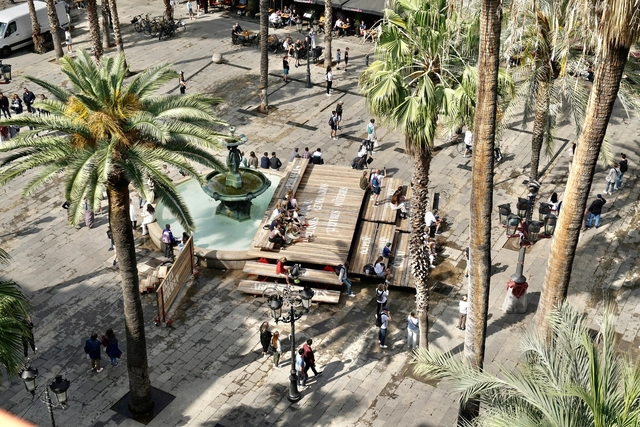
From May 5 to 15, Barcelona's Plaza Real was transformed into one of the hubs for debates on architecture and the city during the MODEL Festival. The ephemeral installation "Occupy the Center with the Word"—led by the ELISAVA Barcelona School of Design and Engineering under the direction of Roger Paez, in collaboration with Manuela Valtchanova, Albert Fuster, and Toni Montes—sought to "create optimal conditions for both encounters and disagreements to take place, always through the spoken word."