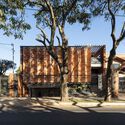
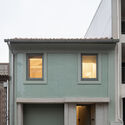
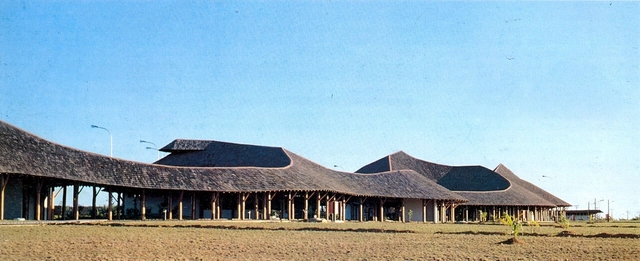
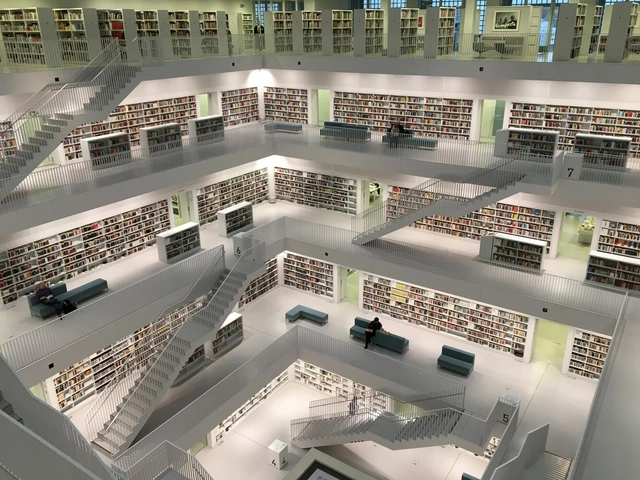
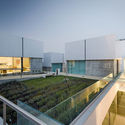
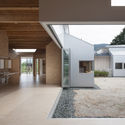
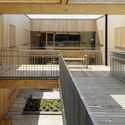
For designers and architects, ugliness has historically not been something to strive for. Culturally, however, we are increasingly weary of perfection.
Following decades of designs that behaved in similarly simple and orderly ways—particularly during the twentieth century, with the rationalism and purity of Modernism—we now long for expressions that are less sanitized and, at the same time, more human.
Whether or not they grow up to be architects, the fundamental skills that drive design and architecture can offer immense benefits to our children. The way children grow up to think, behave, solve problems, and create can be immeasurably enhanced by teaching them to think like architects from an early age.
Preserving and restoring riparian forests has multiple benefits for climate adaptation and resilience. Pictured, the Atibaia River in Campinas. Photo: Renan Pissolatti, WRI Brasil
Will 2022 place Brazil on the path toward the economic transition needed to meet climate goals and keep the long-term target of net-zero emissions by 2050 viable? There is still a window of opportunity for the world to limit warming to 1.5°C, but countries' lack of ambition so far has made this scenario increasingly costly to achieve. Each passing year adds urgency, and science has made it clear that decisions made this decade will define the planet's climate balance.
https://www.archdaily.com/1132049/5-facts-and-trends-that-will-shape-the-environmental-agenda-in-brazil-in-2022WRI Brasil
Facades are the calling card of any building, shaping visitors' first impressions of the space they are entering. They are also the part of a building most exposed to the elements and street pollution, requiring periodic maintenance. This article offers practical tips to guide you when renovating the front of your home.
Severiano Porto was honored today with the 2021 Global Award for Sustainable Architecture, organized by the Cité de l’Architecture et du Patrimoine, a French institution dedicated, among other things, to organizing events focused on heritage and architectural education. Porto, who passed away in 2020, had his work represented by Professor Marcos Cereto, a professor at the Federal University of Amazonas, and is the first Brazilian to receive the honor.
We have repeated the word “sustainability” so often in recent years that we have almost lost sight of its true meaning. What does it actually mean to be sustainable?
A guest on the Betoneira Podcast, architect Marko Brajovic suggests that, rather than seeking out certifications—often used for greenwashing—the most genuine approach is to recognize that we are part of the very nature we are trying to protect.
CAU Brasil is developing an Interactive Database for its Education and Training Commission. The project aims to collect, systematize, and qualitatively and quantitatively use data on education, training, research, and outreach activities in Architecture and Urbanism.
To develop this technology, CAU Brasil has launched a special bidding process to hire a software development startup. The estimated budget is R$ 100,000.
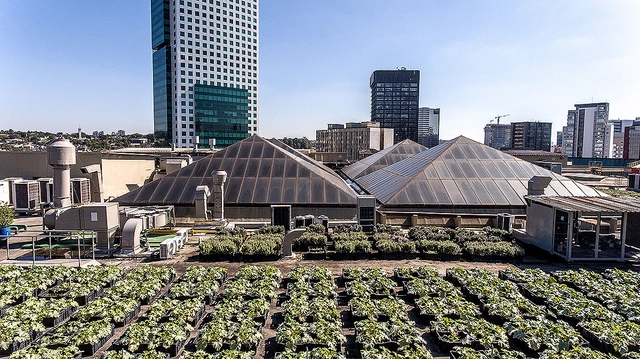
"Telhado Verde" (Green Roof) Project. Image: Courtesy of Shopping Eldorado
Aiming to find an environmentally friendly use for approximately 164 tons of organic waste generated monthly in its food courts, Shopping Eldorado in São Paulo has invested in the Telhado Verde (Green Roof) composting project since 2012. The initiative transforms food waste into organic compost, recycling more than 30% of the waste generated by the establishment.
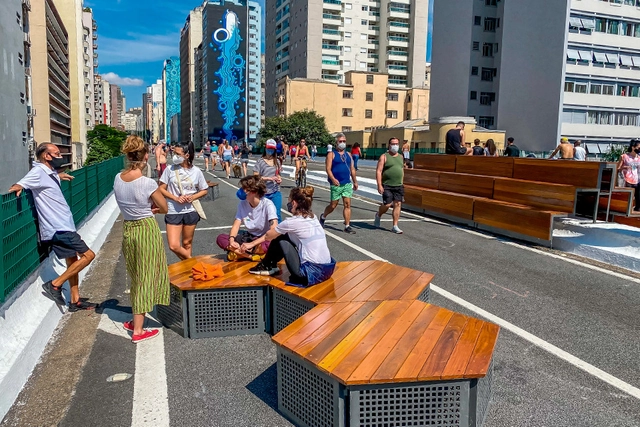
Image: Prefeitura de São Paulo. Courtesy of Caops Planejado
Departing from the 20th-century logic that shaped most cities, deprioritizing cars in urban development and reducing their designated street space does not worsen congestion. On the contrary, reclaiming road space by reducing vehicle lanes prompts a shift in transit habits. People increasingly opt for sustainable alternatives—such as walking, cycling, or public transit—which significantly reduces the volume of private vehicles.
https://www.archdaily.com/1132150/why-closing-streets-to-cars-does-not-increase-trafficSomos Cidade
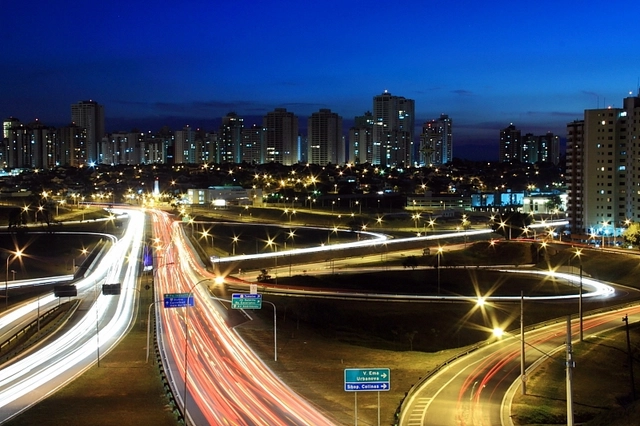
São José dos Campos. Image by wtrilhas - Flickr, via Wikipedia. License CC BY-SA 2.0
This article begins with the premise that cities are not neutral spaces. Territories, much like architecture, urbanism, literature, culture, and politics, are conditioned by the values of a given society at a specific point in time. Consequently, the configuration of these spaces is shaped by societal values—in this case, those of a patriarchal, racist, and capitalist society. As a result, this lack of neutrality in the production of urban space leads to different ways in which cities are used and experienced by their inhabitants. These unique experiences, in turn, are deeply intertwined with issues of social class, race, and gender.
The design for what was then called the Ministry of Education and Public Health was developed during 1936 by a team comprising architects Oscar Niemeyer, Affonso Reidy, Jorge Moreira, Carlos Leão, and Ernani Vasconcelos, under the coordination of Lucio Costa. At the request of the then-Minister Gustavo Capanema and with guidance from Le Corbusier, the team of young Brazilian modernists was tasked with giving a national identity to the building that would become one of the greatest icons of Brazilian architecture, in direct opposition to the dominant aesthetic of the time. The decision not to commission the original design, which had won the public competition held for this purpose, is just one part of this incredible story.
We are living through a period of demographic transition—a shift we are all well aware of. The growth of the population over 60 has been exponential; however, it is not just this demographic increase that must be considered, but also the changing profile of this generation. After all, older adults are not what they used to be.
"I’m an architect... now what do I do?" is likely one of the most common questions asked by any recent architecture graduate. Over the years, many will find jobs in different industries that do not necessarily involve working in an office designing and constructing buildings.
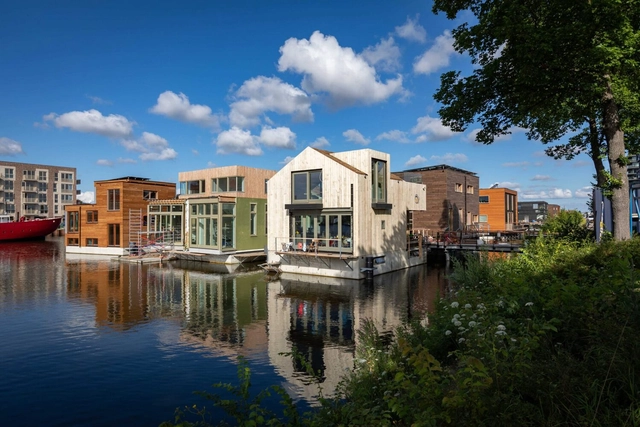
As the global population increasingly concentrates in urban centers, land in major cities is becoming progressively more expensive. Meanwhile, rising sea levels driven by climate change threaten the housing of millions worldwide—it is estimated that 800 million people will be at risk by 2050.
Living on water could offer a solution to both of these major challenges. This very premise inspired a new neighborhood in Amsterdam, the capital of the Netherlands—a country with a long history of adapting to environmental adversity, where a quarter of the land lies below sea level.
Using a car is an individual choice that causes significant collective harm. Photo: Nelson Antoine/Shutterstock
For decades, cars have been associated with a promise of convenience, autonomy, and comfort. Individually, this may well be true. However, prioritizing the automobile in city design makes urban mobility inefficient and fuels inequality by depriving a large portion of the population of access to opportunities. Using a car is an individual choice that imposes heavy collective costs. Charging for the social costs of this choice is a promising way to discourage it while simultaneously generating funding for sustainable mobility.
https://www.archdaily.com/1131971/why-charging-for-car-use-is-a-fair-and-smart-solution-for-sustainable-mobilityofLuis Antonio Lindau, Cristina Albuquerque, Guillermo Petzhold e Fernando Corrêa
No País dos Arquitectos is a podcast created by Sara Nunes, who is also responsible for the architectural film production company Building Pictures. The podcast aims to profile the professionals, projects, and stories behind leading contemporary Portuguese architecture. With just over 10 million inhabitants, Portugal is a highly intriguing country in this professional field, with an architectural output that far outstrips its population and territorial scale.
In the first episode of the third season, Sara talks with architects Carlos Antunes and Désirée Pedro from Atelier do Corvo about their design for the Casa de Saúde Rainha Santa Isabel in Condeixa-a-Nova. Listen to the full interview and read an excerpt of the conversation below:
Renovations can often be a major headache. To avoid this, thorough planning and investing time in a comprehensive project are essential to ensure that every stage is executed on time and, most importantly, within budget. With this in mind, here are some tips and key elements to consider before embarking on a basic kitchen renovation.
The latest episode of Arquicast on construction industry trends explores the key themes that dominated architectural debate throughout 2021 and how these issues are shaping market expectations for the year ahead. Sustainability, innovation, technology, and workplace culture are among the core concepts discussed—all of which, in one way or another, seem central to the shifts on the horizon for 2022.
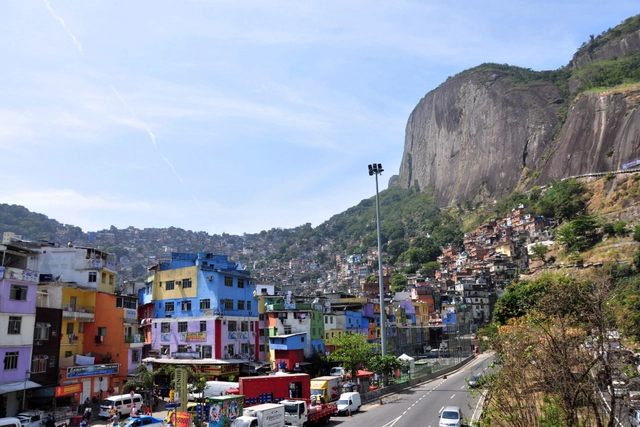
Rocinha, Rio de Janeiro. Image: Alexandre Macieira/Riotur
The future of urban planning may lie in Brazil's second-largest city: Rio de Janeiro. But it is not along the glittering waterfront of Ipanema, overlooked because it houses some of the most expensive real estate in Latin America. Nor is it in the city center, renovated for the 2016 Olympics and now the focus of a major urban revitalization plan. To glimpse the future of cities, one must pass by the Rodrigo de Freitas Lagoon to the Jardim Botânico neighborhood and then look up at the hills, where the immense neighborhood of Rocinha is perilously perched on the slopes.
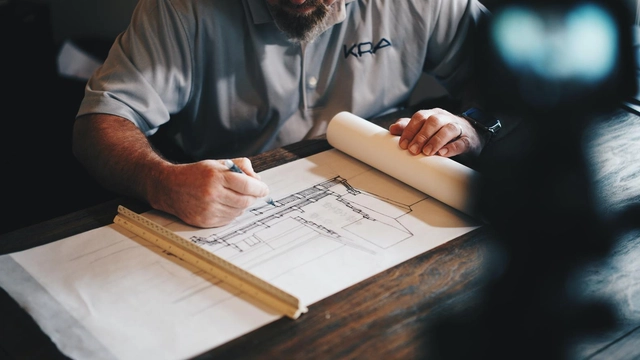
An architectural project goes far beyond final plans, stunning renderings, or physical models. It progresses through several phases that generate a comprehensive set of documents—including technical drawings, written reports, and various other forms of representation—covering everything from conceptualization to construction. More than just a methodology, these stages are governed by standards, with NBR 13532 (Preparation of Building Projects - Architecture) serving as the foundation for the necessary conditions of architectural design development.
The choice to use private cars is understandable, extending far beyond the so-called "car culture." The convenience of point-to-point transit, flexible scheduling, and a sense of personal security justifies its use, especially where sustainable transportation networks do not adequately serve the entire population. But do drivers actually pay for the impacts they generate?
https://www.archdaily.com/1132385/understand-why-you-pay-for-cars-even-if-you-dont-use-themITDP Brasil
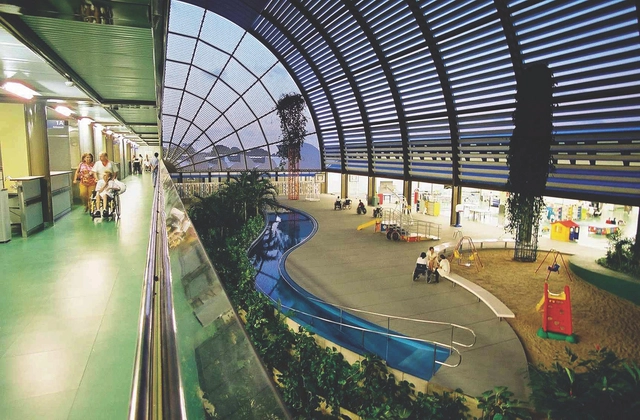
Sarah Fortaleza Neurorehabilitation Center, 2001. Photo: courtesy of EC, via Betoneira
With a deeply social body of work dedicated to public use, João da Gama Filgueiras Lima, known as Lelé, became one of the key figures in Brazilian architecture. Over his 60-year career, he built hospitals, schools, transit terminals, bus shelters, courthouses, government offices, and other administrative headquarters.
Across all these projects, he combined a meticulous care for materials and the workforce with technical and artistic excellence. He understood, like few others, how to leverage natural light and ventilation to promote energy efficiency and user well-being.
No País dos Arquitectos is a podcast created by Sara Nunes, who also runs the architectural film production company Building Pictures. The podcast aims to introduce the professionals, projects, and stories behind landmark contemporary Portuguese architecture. With just over 10 million inhabitants, Portugal is a highly compelling country in this professional field, with an architectural output that far exceeds what its population or territorial scale might suggest.
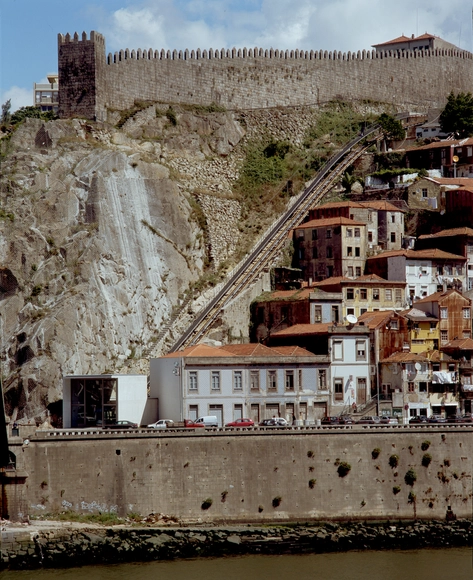
In this episode, Sara talks with architect Adalberto Dias about the Guindais Funicular project in Porto. Listen to the full interview and read an excerpt of the transcript below:
Registration is now open for the second edition of the self-paced course “Heritage Education, Diversity, and Environment in the Federal District.” Open to the general public, the course is part of the work plan under a cooperation agreement signed between the National Institute of Historical and Artistic Heritage (Iphan) in the Federal District (DF) and the State Secretariat of Education of the DF (SEEDF).