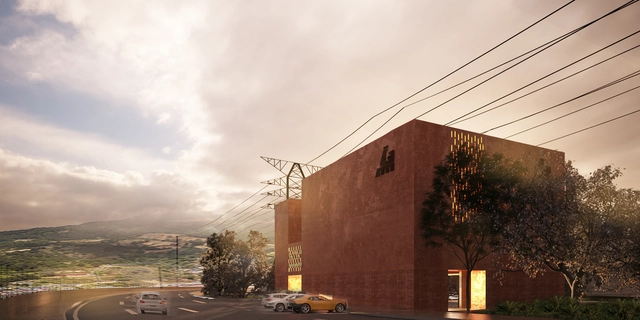
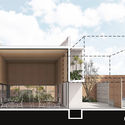
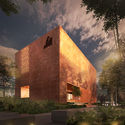
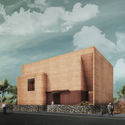
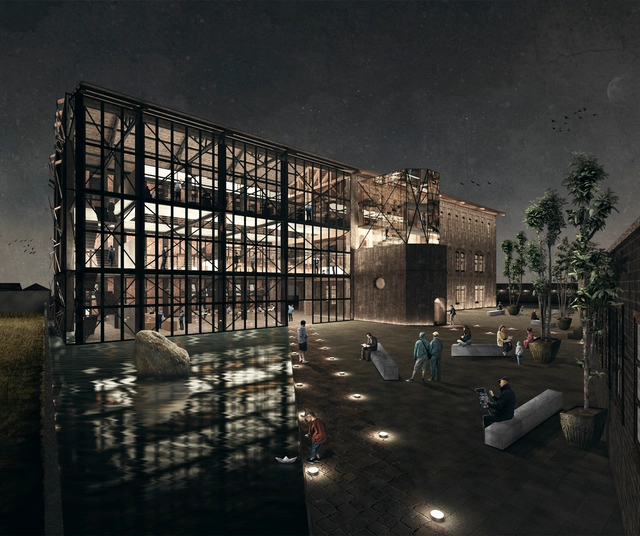
The Colegio de Arquitectos del Estado de Michoacán is a non-profit association established 54 years ago serving the city of Morelia, dedicated to heritage preservation and fostering debate on contemporary architectural production and urban development. To provide an adequate space for these activities, a competition was launched after securing a site for the new headquarters to support and foster contemporary architecture.
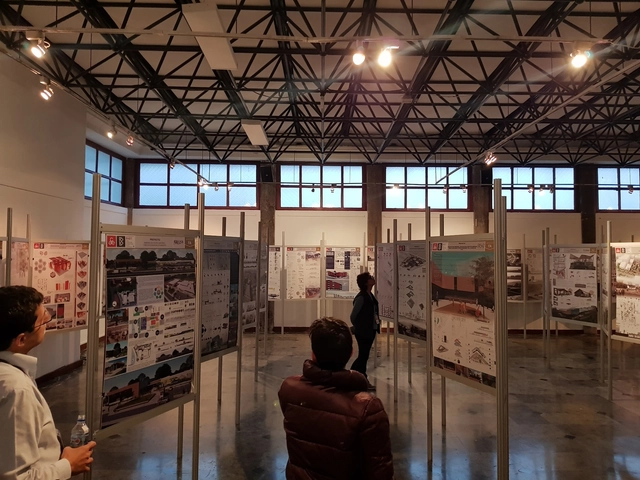
On November 29, the National Competition for the Headquarters Project of the Colegio de Arquitectos Michoacán, A.C. was held at its current headquarters. The jury—composed of Pedro Núñez González, Isaura González Gottdiener, Salvador Reyes Ríos, José Muñoz, Carlos Marín, and Jorge Humberto Flores Romero—evaluated 17 completely anonymous proposals.
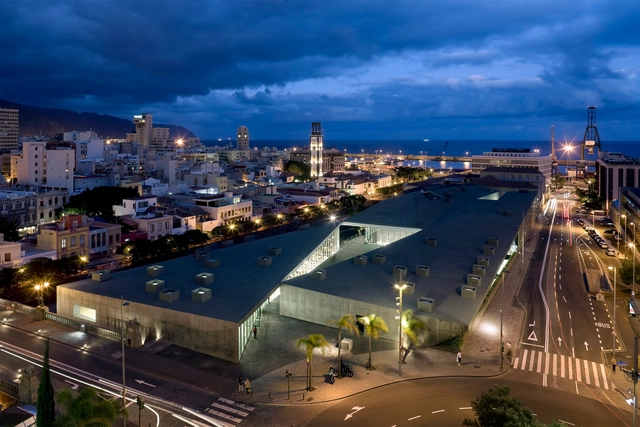
Tenerife Espacio de las Artes / Herzog & de Meuron + Virgilio Gutiérrez Herreros. Image Cortesía de COACTFE
As part of Architecture Week, celebrated by the Official Association of Architects of Tenerife, La Gomera, and El Hierro (Spain), the Oraá Architecture Prizes were awarded, recognizing the best architectural achievements of the last 10 years on the islands of Tenerife, La Gomera, and El Hierro.
The Spanish accolade highlights new construction, restorations, renovations, landscape, public space, and interior design, along with special distinctions for outstanding career achievements, emerging talent, patronage, and the best architectural photography.
Pontificia Universidad Católica de Chile [Flickr]: Lo Contador, CC BY-SA 2.0. ImageFaculty of Architecture, Design and Urban Studies of the Pontificia Universidad Católica de Chile
América Economía magazine has published its most recent ranking of Chilean universities, just a few months ahead of the upcoming 2019 higher education admission process. In addition to the general evaluation—in which the Universidad de Chile remains in first place for the fourth consecutive year—the publication features the specific ranking of the 16 "most in-demand or highly regarded and prestigious" programs in Chile, including Architecture.
With our commitment to providing the most comprehensive information for university applicants, in this article we share the ranking of the best universities to study Architecture in Chile. This list includes technical data on average admission scores, faculty specialization levels, annual tuition costs and variations, and first-year post-graduation employability rates, among other key metrics.
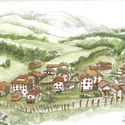
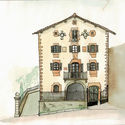
Dibujo en Torre de Donamaría. Image Cortesía de Premio Rafael Manzano
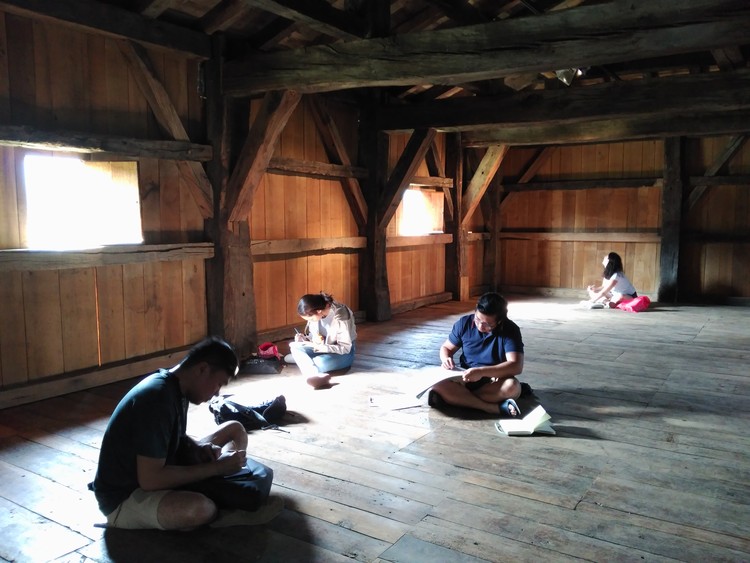
Organized by INTBAU and the Rafael Manzano Prize for New Traditional Architecture, the most recent edition of the Summer School of Traditional Architecture focused its work on the Baztan Valley (Navarre, Spain). The program studied traditional construction, architecture, and urban planning to produce a manual for conservation and new traditional construction in the area. In addition, hand drawing and building surveys were the primary activities carried out by the participating students.
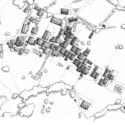
Although the scope of work extended to the entire Baztan Valley, the bulk of the study was carried out in Amaiur, the town that hosted the group during those two weeks. Articulated around the branch of the Camino de Santiago that passes through it, the town's urban layout is structured almost as a linear development. Along this axis, the richness, diversity, and versatility of its architectural tradition unfold, presenting a showcase of solutions from different eras that have adapted to multiple trends and functions without ever losing their essence. Accordingly, the study examined the architecture of the town center in its entirety, from fine details to the broader urban structure.
Construction works at the Cidade Matarazzo complex in June 2018. Image: Cidade Matarazzo. Via Instagram
Announced in 2016, the Cidade Matarazzo complex is currently under construction near Paulista Avenue in São Paulo. In addition to a tower designed by Jean Nouvel, the development includes the restoration of the former Matarazzo Hospital and the Santa Luzia Church, both heritage-listed by Condephaat – the Council for the Defense of Historical, Archaeological, Artistic, and Tourist Heritage of the State of São Paulo.
To protect the church's structure during excavation work, the engineering team behind the Grupo Allard development carried out a delicate procedure to keep the 1,200-ton building suspended 31 meters above the ground.
Diseño ganador del Museo de la Memoria y los Derechos Humanos en Concepción, fallado en noviembre de 2016. Image Cortesía de Gobierno Regional Biobío
Construction of Chile's second Museum of Memory will have to wait. As reported by national newspaper La Tercera, the project designed for the city of Concepción "was not included as a priority in the 2019 budget" by the Regional Ministerial Secretariat (Seremi) of the Ministry of Public Works (MOP) of Biobío.
“We are talking about a construction project that we have estimated at nearly 4 billion pesos [USD 6 million]; it is therefore beyond what the MOP has historically built,” Daniel Escobar, regional secretary (Seremi) of Public Works, told the same outlet, adding that the budget is reaching 88 UF per square meter (2.6 million Chilean pesos). Following the shelving of the project, the mayor of Concepción, Álvaro Ortiz, questioned on Radio Cooperativa that “some technical reasons are being argued that, curiously, we did not know about before.”
After analyzing 94 projects by undergraduate students from 20 architecture schools across 8 regions in Chile, the jury of the 2018 Arquitectura Caliente Competition has announced the winning projects of its latest edition.
These projects span the entire country and encompass diverse typologies, ranging from urban planning to student housing, as well as landscape designs and structural emergency initiatives.
Below, we present the award-winning third-year projects:
The Brazilian Institute of Geography and Statistics (IBGE) has released the publication Urbanized Areas of Brazil, which maps the urban footprints of major Brazilian cities. Covering the changes that occurred between 2011 and 2015, the study presents an overview of the country's recent urbanization process.
This month, we continue to celebrate the 6th anniversary of ArchDaily Mexico, an achievement made possible thanks to the hard work of our great team, as well as the relationships we have built over the years with the local architectural community and our readers.
With this in mind, this year we decided to celebrate with a contest that involved all of our readers. We wanted to discover their favorite projects in Mexico, whether classic or contemporary. We asked our readers to follow the @ArchDailyMx account on Instagram and share their favorite project with us using the hashtags #ConcursoArchDailyMx and #6AñosArchDailyMx.
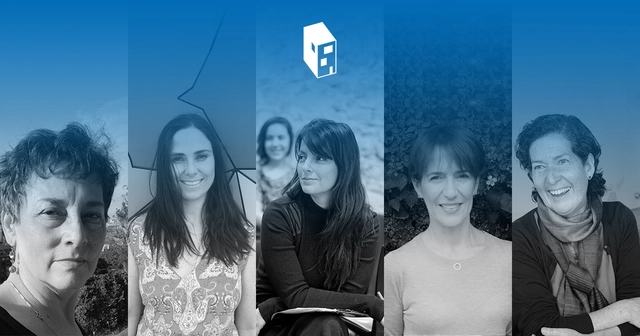
Beatríz García Moreno (left), María Paula González Bozzi, Lina Toro, Ana Elvira Vélez, María Cecilia O'Byrne. Image
In recent years, International Women's Day has reclaimed the political significance of its origins, bringing together some of the most recent discussions surrounding women: the gender pay gap, the exposure of sexual abuse through the #MeToo movement, and, in the specific case of our discipline, the visibility of women in architecture. Zaha Hadid went so far as to say that she felt "harshly judged for [the fact of] being a woman," despite winning the Pritzker Prize in 2004.
If that happened to her, imagine the rest.
In this regard, at ArchDaily we have opened up the discussion and are proud to highlight the work of women architects worldwide, in addition to partnering with interesting Latin American initiatives along the same lines, such as Un día, una arquitecta. For this edition of International Women's Day, we have joined forces with the Colombian print publication de-Arq (Universidad de los Andes) to showcase the work of five contemporary Colombian women architects, who represent distinct yet complementary approaches within our discipline: design, research, teaching, and experimentation.
ARCA / Belén Salvatierra. Image Cortesía de Arquitectura Caliente
After reviewing 94 undergraduate student projects from 20 architecture schools across 8 regions of Chile, the jury of the Concurso Arquitectura Caliente 2018 has announced the winning projects of its latest edition.
The submissions span the entire country and cover diverse typologies, ranging from urban planning and student housing to landscape designs and structural emergency initiatives.
Below, we present the award-winning second-year projects:
Porcelain tile is a ceramic material composed of clay and other rock minerals, characterized by negligible water absorption. In other words, a ceramic material can be classified as porcelain tile if its water absorption rate is below 0.5%. Manufactured from a finely atomized mixture of clays, feldspars, feldspathic sands, and sometimes kaolin, phyllites, and coloring additives, porcelain tile can be installed on interior and exterior surfaces, including floors, walls, facades, and, in some cases, ceilings.
Its high resistance to wear and breakage, minimal maintenance, and vast diversity of finishes, colors, and formats make it an excellent material for use throughout almost an entire architectural project, from furniture to exterior cladding. Below, find everything you need to know to incorporate porcelain tile into your designs, based on the comprehensive information shared by CHC.
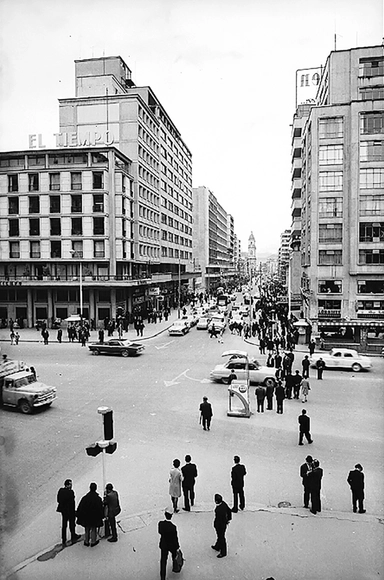
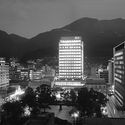
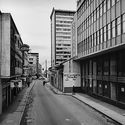
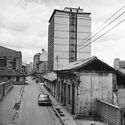
The modernization of Bogotá between 1940 and 1970, captured in urban and architectural photographic essays, has been documented in various books, magazines, and photobooks of the era, as well as in images from the city's public and private archives. These photographs reveal a deliberate, and even critical, approach to how modern architecture reconfigured city centers, bringing new buildings and urban spaces into relation with the existing cityscape.
When analyzing the impact of street photography, it is essential to discuss Leo Matiz, Armando Matiz and Hernán Díaz. These three photographers captured the people, events, and daily urban life of Bogotá. From their extensive bodies of work, we have selected shots of streets, plazas, intersections, and representative buildings—both iconic and anonymous spaces that, through photography, anchor modern heritage in the collective memory, with architecture and urban spaces taking center stage.
The Architectural League of New York is an independent architecture forum that aims to "stimulate thinking and debate about the critical design and architectural issues of our time." Each year, through the 'Emerging Voices' competition, they recognize the work of various North American architectural practices with the potential to positively influence how architecture is conceptualized and built across the continent.
This year marks the bicentennial of the Battle of Maipú, the decisive clash that secured Chile's independence. 1818 also marks the vow made by Chilean liberator Bernardo O'Higgins to erect a votive temple in honor of the Virgin of Carmen, Chile's patron saint, to whom local troops prayed for the victory that ultimately freed them from the Spanish Empire.
Historically, most social housing programs have focused on constructing new housing units. However, according to urban planning and housing specialist Elisabete França, this approach is often detrimental to the social development of low- and middle-income citizens.
https://www.archdaily.com/1114122/lessons-for-brazil-cities-that-developed-with-good-social-housing-projectsAndré Nunes e Daliane Nogueira
Alongside the activities and lectures held over three consecutive days at the Lux Theater in Guatemala City's historic center, the Guatemala Architecture Biennale (BAG) presented the winning works and projects of the Danta Awards on Wednesday, May 30, and Thursday, May 31.
For this edition, the organization proposed that architecture "is approached as a commitment to the public and private spheres and the power to negotiate individual or collective change to build dreams and aspirations, and even to express utopian ideals." Within this context, the jury evaluated more than 100 submitted projects from across Guatemala and the rest of Central America, recognizing parks, collective housing, gymnasiums, and renovations, among other typologies, that address the vision outlined by BAG 2018.
All winning projects in the professional category will be registered and sponsored to participate in the XXI Pan-American Architecture Biennale of Quito 2018, where they will be exhibited alongside projects from across the Americas and evaluated by the Biennale's jury.
An affordable, eco-friendly housing research project is being developed in Maputo, the capital of Mozambique, one of the poorest countries in the world. Named "Casas Melhoradas" (Improved Houses), the project is a partnership between the KADK (Royal Danish Academy of Fine Arts) School of Architecture, the Mozambican NGO Estamos, and Architects Without Borders. The goal is to develop low-cost, dignified housing with minimal environmental impact.
Videos
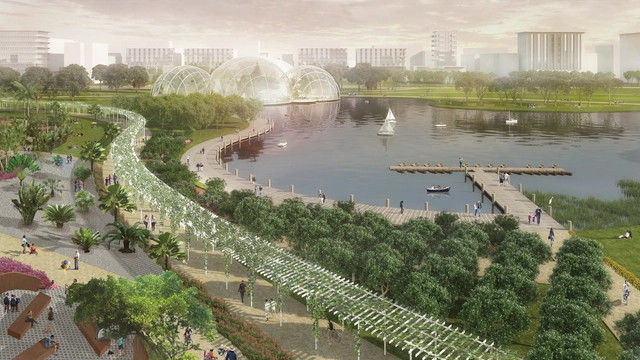
Jardín botánico en distrito central. Image Cortesía de Perkins Eastman
José Joaquín de Olmedo Airport—Ecuador's second busiest—will relocate to the outskirts of Guayaquil in 2022, freeing up 240 hectares in the city center. In response to the unprecedented urban opportunity presented by this relocation, the firm Perkins Eastman has revealed the first images of Nueva Ciudad, a 2-million-square-meter master plan in Guayaquil.
Stephen Forneris, head of the Ecuador office, explained that the project "can be a catalyst for economic growth, cultural activities, and entertainment; it will be the spark that begins Guayaquil's journey to becoming the city of the future."
In conversation with ArchDaily en Español, the founders of the Paraguayan firm Gabinete de Arquitectura, Solano Benítez and Gloria Cabral, spoke about their involvement in Cuatro Cuatros, an ambitious Mexican project led by Mauricio Rocha y Gabriela Carrillo in Ensenada, Baja California.
For a decade, Rocha and Carrillo have worked on the 860 hectares comprising the Cuatro Cuatros project. In this new phase, a group of Mexican and international architects has created a manifesto explaining their collaborative involvement in a 500-home development within the 360 permitted hectares.
Projections for the urban world have been updated. In May, the United Nations released a new edition of the World Urbanization Prospects, a report that takes an in-depth look at the planet's urban centers, concluding that 68% of the world's population will live in cities by 2050. This estimate is 2% higher than the previous study published in 2014, which is part of the series produced by the United Nations Department of Economic and Social Affairs (DESA).
Today, Wednesday, November 21, the winners of the 2018 Gold Medal competition were announced as part of the XXI Pan-American Architecture Biennial of Ecuador (BAQ2018) in Quito.
The jury for the 2018 Gold Medal competition, comprising Astrid Petzold (Venezuela/Mexico), Ana Milovan (Uruguay), and Lucas Fehr (Brazil), determined the winning projects of the contest, which honors the best student work produced at Ecuadorian schools and departments of architecture between November 2016 and October 2018.
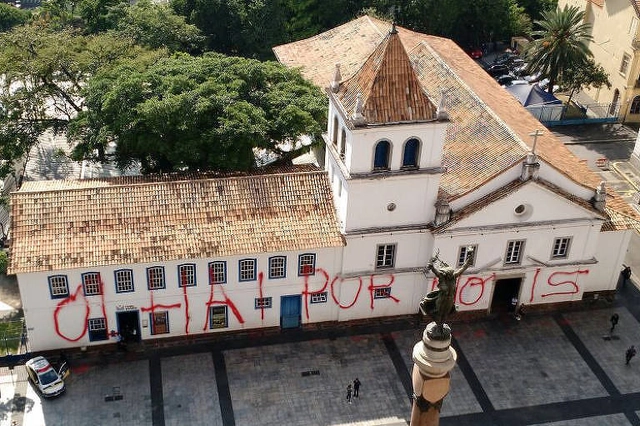
One of São Paulo's primary historical and tourist landmarks, the Pateo do Collegio—the founding site of the state capital—awoke with its facade covered in graffiti. "Olhai por nois" [Look out for us] is the phrase that, in red letters, covers the facade of the Museum of Sacred Art and the chapel of the complex, which belongs to the Society of Jesus.
Under Brazil's environmental crimes law, defacing monuments is a crime, and perpetrators can face up to one year in prison. At the time of publication, those responsible for the act had not been identified by the Metropolitan Civil Guard.
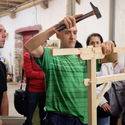
It is another freezing night in Chucuito, and in the restaurant where all the participants of the XV TSL Puno are dining, Jhony Chaves—better known as "El Gato"—tells us stories about impossible places, like Cerro de Pasco, a Peruvian mining settlement even higher, colder, and harsher than Chucuito. He then recalls a village lost in the Peruvian jungle that can only be reached by boat, where the mosquitoes seem as large as birds. Next, he jumps to describing Andean villages that flood and freeze almost year-round, until the weather finally gives a few months of respite to the families who live there simply in houses made of mud.
As El Gato goes through his inventory of Peruvian towns, it is impossible not to think of the magical realism of Macondo. Is all of this real? Indeed, it fits perfectly that this is also a concept coined decades ago, before García Márquez, by a European, for whom his own continent's nature had been entirely domesticated. Of course, Latin America remains a landscape, and our great victory is that we manage to live within it, despite nature and its disasters. Thus, the villages El Gato evokes bring a certain comfort to our shared table, even as the cold and altitude threaten to take their toll on us. "It could be worse," we think before spooning the steaming soup in front of us.
How, then, can we intervene and propose public space in rural, predominantly Aymara settlements like Chucuito, where nature constantly reminds us that it is the main protagonist?

_(1).jpg?1539273048&format=webp&width=640&height=580)
















.jpg?1533572922&format=webp&width=640&height=580)


.jpg?1527695634&format=webp&width=640&height=580)