This discrepancy was highlighted in a petition on Change.org addressed to Jordi Ludevid, then-president of the CSCAE, in which the signing architects called for greater active participation of women at all stages of the process, seeking equal representation with their male colleagues.
https://www.archdaily.com/1113704/women-architects-in-spain-join-forces-to-create-their-own-association-amaeJavier García Librero
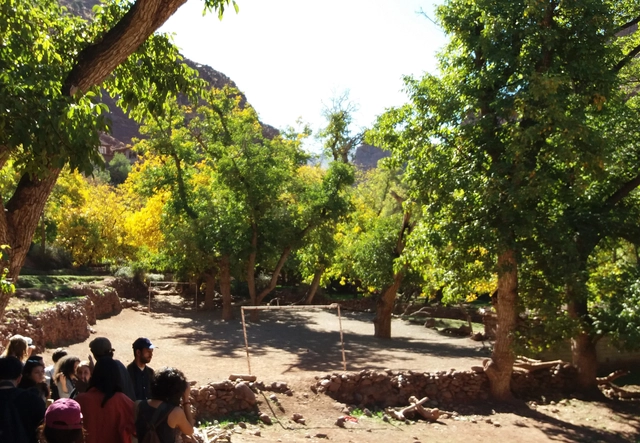
Campo de Magadoz . Image Cortesía de Colectivo ARKRIT
Architects Rafael Pina and Nicolás Maruri, from the ARKRIT Collective, reflect on the soccer fields nestled within the adobe and rammed earth settlements of Morocco's High Atlas. Having barely altered the territory, these spaces integrate and merge into the topography through minimal modifications and actions for a single, simple purpose: to play.
Construction requires mobilizing material resources and human labor, inevitably transforming the territory. Building with what is readily available is a stance that can be driven by ethics, but also by necessity. In either case, the outcome is usually economical and fitting. Resource consumption is kept to a minimum, and adaptation to the environment becomes a natural consequence.
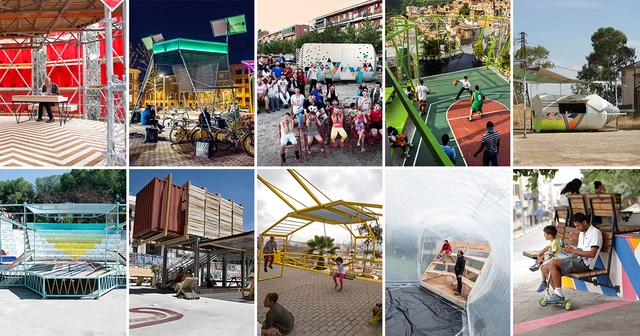
Since the installation of Speculator in 2008 —the year the Spanish real estate bubble burst— the Spanish multidisciplinary collective has been characterized by its collaborative practices, co-production processes, and civic management models. Over ten years, the numbers speak for themselves: 15 countries, 18 agreements, 29 institutions, 43 grassroots organizations, and 96 projects, including Campo de Cebada in Madrid and the La Y Cultural Hub in Caracas (Venezuela), as part of the government project Espacios de Paz.
TXP explains their methodology: "We start with a preliminary diagnosis that allows us to understand the keys, codes, and particularities of each process. We then define a context for collaborative design where the proposal is prototyped based on collective interests."
"In our practice, we propose a dynamic combination of scopes that tailors the project based on available parameters, allowing us to define a consensus-driven model that responds resiliently. We establish frameworks for collective construction that foster learning environments, serving as tools for civic appropriation and empowerment. Finally, we design management models that address the specific needs of each case, establishing protocols for use and maintenance," they add.
On this occasion, architect Jaime Nadal, representing the ARKRIT Collective, brings us an article that delves into the controversial demolition of the famed Casa Guzmán by architect Alejandro de la Sota—a highly praised, widely published, and iconic building of the architectural renaissance in Spain.
https://www.archdaily.com/1113722/the-demolished-guzman-house-by-alejandro-de-la-sotaJaime Nadal Irigüén
When discussing cities like Amsterdam, we inevitably recall its network of canals and streets interwoven with water. Yet water is also one of the most pressing challenges the city faces. With 60% of its territory below sea level, climate change—and the rising sea and river levels that come with it—is a matter of survival not only for Amsterdam, but for the entire country.
An inseparable figure from Brasília, Athos Bulcão is responsible for works that bring color and geometric patterns to the purity of the federal capital's architecture. To promote the artist's work, the National Institute of Historic and Artistic Heritage (Iphan) launched the book Athos, Colorindo Brasília, the first volume of the Patrimônio para Jovens collection, an initiative by Iphan's Federal District office and the Federal District Department of Education (SEDF).
After two editions at the Parque Cultural de Valparaíso, the Chilean Biennial of Architecture and Urbanism will return to Santiago in 2019. On Wednesday, June 6, the Mayor of Santiago, Felipe Alessandri, and the President of the Chilean Association of Architects, Humberto Eliash, signed the official agreement during a ceremony at the Mercado Matadero Franklin, which was attended by city council members, Minister of Housing and Urban Development Cristián Monckeberg, undersecretaries, regional authorities, and other officials.
During the ceremony, organizers confirmed that the 21st Biennial will take place in October 2019, with both the Mercado Matadero Franklin and the Teatro Huemul serving as the main venues for the country's premier architectural event.
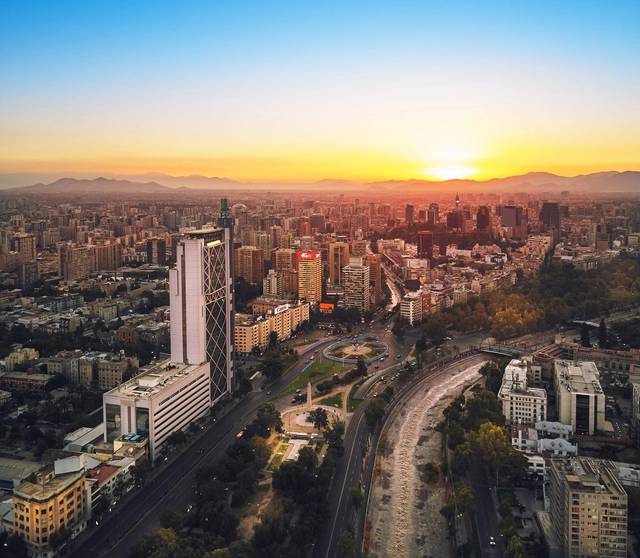
As is tradition, digital travel platform TripAdvisor has released the results of the 2018 Travelers' Choice awards. These accolades are determined by millions of reviews posted on the website, measuring "the year-over-year increase in positive traveler review ratings," the company explains. Additionally, these cities "have also experienced an increase in search traffic and booking interest" for accommodations.
According to Brooke Ferencsik, communications director at TripAdvisor, the selected cities share the fact that "they all have excellent accommodations, wonderful restaurants, and exceptional attractions for every travel budget."
In South America, six countries are represented on this year's list. Below, discover the ten cities chosen by TripAdvisor users:
Dampness from water ingress, condensation, or leaking and burst pipes; cracks and fissures in partition walls, facades, columns, or beams; corrosion, deformation, and spalling are some of the most common building pathologies that can affect a structure throughout its lifespan. Detecting these issues is essential to address them, keep the building in good condition, and prevent accidents or structural failures.
To address this, the Official Association of Architects of Madrid (COAM) has launched its first public awareness campaign, titled ‘Arquitecto de la Casa’ (House Architect). The initiative aims to raise awareness about the necessity and benefits of ongoing building maintenance, highlighting specialized architects as the most qualified professionals for the job.
https://www.archdaily.com/1113684/discover-arquitecto-de-la-casa-coams-new-campaign-to-maintain-building-healthJavier García Librero
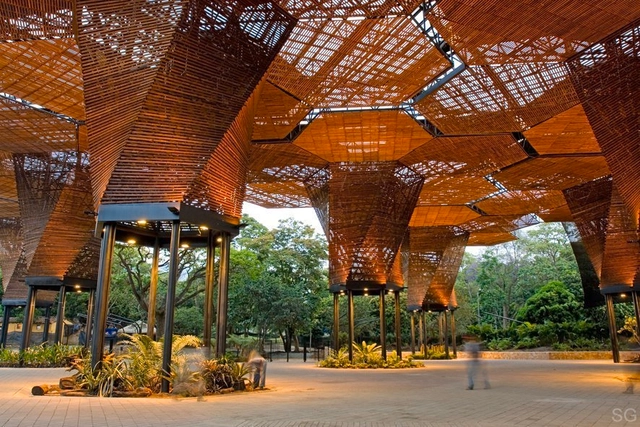
Throughout 2018, we selected thousands of projects for publication on our site, occasionally highlighting a few for their innovative techniques and materials, their integration with their context, or their community engagement. Working daily with editors in Brazil, the United States, Mexico, Chile, China, and Northern Ireland, and thanks to the extensive network we have forged with institutions worldwide, we have the tools to gain a much broader perspective on current architectural production—not only in Mexico, but globally.
Videos
Libro: Desde la resta. Image Cortesía de n`UNDO
More than six years have passed since n´UNDO launched its manifesto, which, through its 11 points, advocates for and promotes a new way of approaching architectural action based on non-construction and reuse. This approach is grounded in the re-architecture of territory and the city through subtraction and renunciation.
Since November 11, 2011, n`UNDO has built a highly active and compelling track record through urban and territorial intervention plans aimed at the social, cultural, environmental, and physical improvement and recovery of our surroundings. In addition, they have participated in several competitions, earning numerous awards and accolades, and have carried out extensive educational work through workshops, courses, lectures, and conferences. Notable among these was the symposium “Empty Space, Subtraction, and Silence: Subtraction and Renunciation in the Creative Process. An Interdisciplinary Perspective,” held in Madrid in November 2016.
https://www.archdaily.com/1113847/through-subtraction-a-different-and-necessary-way-of-shaping-the-cityJavier García Librero
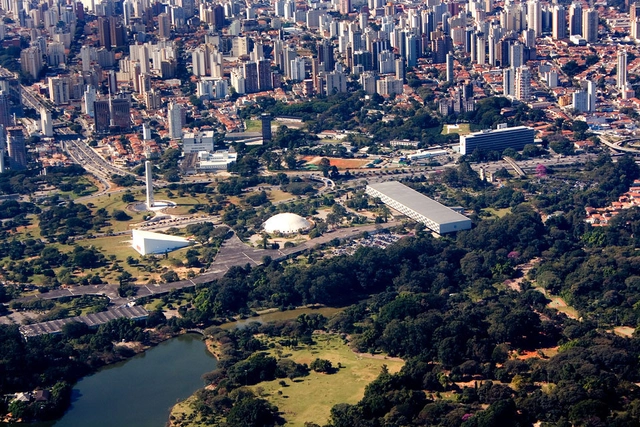
Ibirapuera Park. Photo: Fernando Stankuns on Visual Hunt / CC BY-NC-SA
Paulo Mendes da Rocha is currently the most admired and respected figure in Brazilian architecture. However, his extensive list of works narrowly missed including an intervention project for the work of another master, Oscar Niemeyer. Commissioned in 2015 by São Paulo's previous municipal administration to develop a redesign project for Ibirapuera Park, the proposal by the 2006 Pritzker Prize laureate was shelved in December of last year.
Music is a vital connection to culture. While it serves as a source of entertainment, it is also a medium for communicating ideas and expressing artistic creativity. Through romantic, social, political, or historical themes, every song evokes memories and emotions.
Although there is an endless array of genres today compared to decades past, music still allows us to travel the world without leaving home through its lyrics and music videos. With this in mind, we have compiled a list of 10 songs that not only feature the names of cities in their titles, but also, through their lyrics and visual storytelling, capture the essence of each place—whether capitals or not—bringing to life the magic of their architecture and streets.
Porto Alegre will host the 21st Brazilian Congress of Architects in October 2019. Organized by the Institute of Architects of Brazil, the event will serve as a preparatory meeting for the 27th World Congress of Architects (UIA2020RIO), which will take place in Rio de Janeiro in 2020. The theme of this edition is Space and Democracy.
For this International Women's Day, we have partnered with the Colombian print journal de-Arq (Universidad de Los Andes) to showcase the work of five contemporary Colombian architects. They represent distinct, complementary approaches within our discipline: design, research, teaching, and experimentation.
Today, we meet María Paula González Bozzi, founder and director of Fundación Juligón.
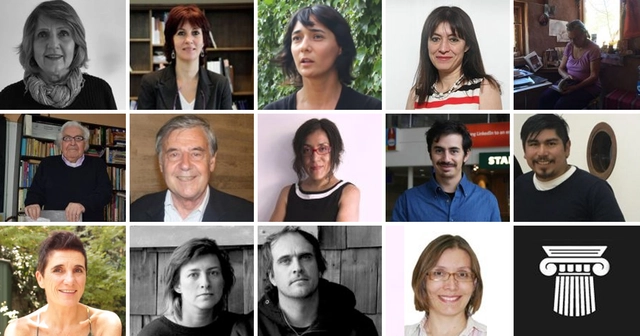
Ganadores de los Premios CA 2018. Línea superior: Beatriz Buccicardi (izq)., Pilar Barba, Verónica Arcos, Claudia Silva, María Magdalena Gutiérrez. Línea central: Osvaldo Cáceres, Gustavo Munizaga, Paulina Villalobos, Juan Pablo Urrutia, José Luis Catalán. Línea inferior: Cazú Zegers, Tania Gebauer, Eugenio Ortúzar, Claudia García Lima. Image Cortesía de Colegio de Arquitectos
On the occasion of the 75th anniversary of the Colegio de Arquitectos de Chile, the professional association has announced the winners of the 2018 CA Awards, the country's most important national honors.
Following a 2017 edition heavily criticized for the absence of women among the honorees, this year's awards not only introduced two new categories promoted by the Mujer Arquitecta organization—the Dora Riedel and Eliana Caraball awards—and another recognizing regional contributions, but women also swept 9 of the 12 categories awarded by the Colegio de Arquitectos to its members.
“It was that one over there, look. That one. See?” Dona Ana pointed to the seventh-floor apartment where, a week earlier, the fire had broken out. Further down, on the fourth floor, Anastasia, Aécio, and Itamar offered strained smiles from a campaign banner .
No one knows how the fire started in one of the subdivided apartments in Tower 100, occupied by a waste picker. But the spectacle that followed played out comme il faut. Panic, screams, flames, flashing lights, a helicopter hovering overhead, journalists accosting the supposedly injured and devoring improbable accounts, sirens, smoke, commotion, action.
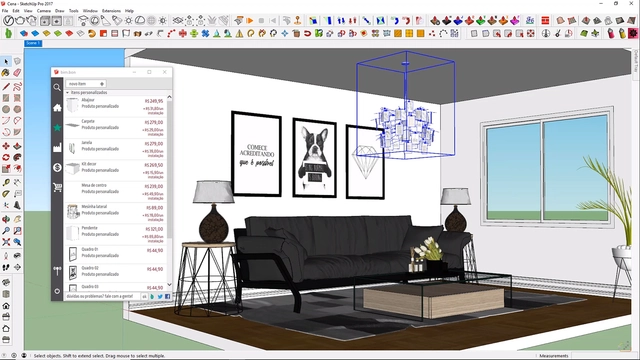
SketchUp is one of the most widely used digital modeling software programs in both professional practice and academia—and undoubtedly the most intuitive. However, the ease of creating orthogonal geometries can quickly turn into a nightmare when the goal is to design curved and organic shapes and objects.
With this in mind, Gabriel Chahoud of Chahoud Cursos released 30 video tutorials for what he called "SketchUp Month," sharing tips on how to model objects that, at first glance, seem complex to create in this software.
The Sustainable Cities Climate Finance Leadership Alliance's new platform brings together tools to help urban managers build more sustainable cities. Photo: Taís Policanti/Flickr
By 2050, more than two-thirds of the world's population will live in cities – hubs that catalyze economic, cultural, and political progress, but also consume vast resources and account for 70% of global greenhouse gas emissions. To avoid catastrophic climate change while ensuring a prosperous and sustainable future, we must act quickly.
https://www.archdaily.com/1113777/new-digital-tools-help-urban-leaders-turn-ideas-into-actionMark Watts e Ani Dasgupta
In this edition of International Women's Day, we have joined forces with the Colombian print publication de-Arq (Universidad de Los Andes) to showcase the work of five contemporary Colombian women architects, who represent different complementary approaches within our discipline: design, research, teaching, and experimentation.
Today we talk with Lina Toro, a Colombian architect, co-founder of dosmasunoarquitectos, current director of linatoro.arch, and professor at IE University in Spain. "I believe the problem lies in the system's inability to recognize excellence," says Toro.
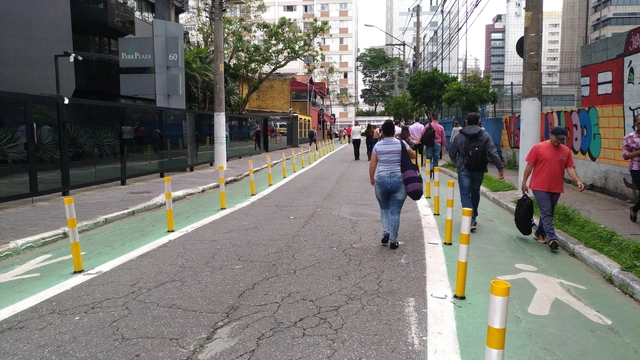
The concept of Complete Streets has gained prominence in recent years and has arrived in Brazil bringing the vision that streets must be planned, designed, operated, and maintained to allow safe, convenient, and comfortable travel for all users, regardless of age, ability, or mode of transportation.
Starting in May, Argentina reaffirms its presence at the Venice Biennale with an invitation to critically rethink the territory.
The "Imagined Lines" exhibition in the Argentine Pavilion, Horizontal Vertigo, curated by architects Javier Mendiondo, Pablo Anzilutti, Francisco Garrido, and Federico Cairoli, is a proposal to rediscover the territory as a collective construction—based on the potential of the relationship we perceive between territory and society—understanding architecture through its capacity to spark unexpected possibilities in each project.
Explore the selected projects and a statement from the curators below.
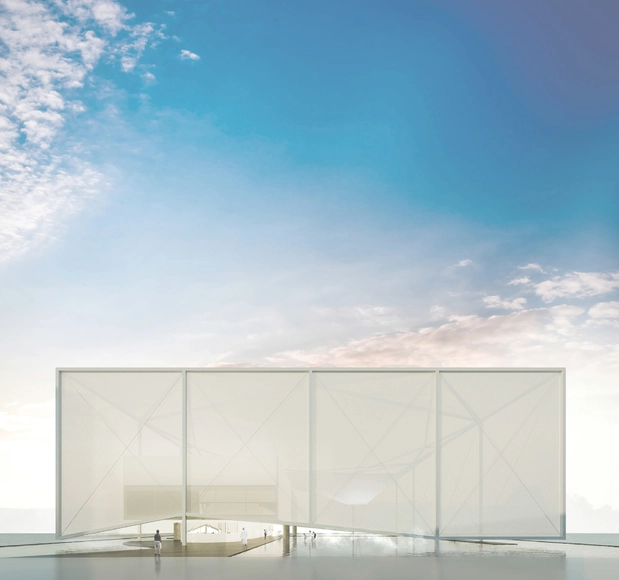
1st Place. Image via official website of the National Public Competition for Architecture and Exhibition Design – Brazil Pavilion at Expo Dubai 2020
The results of the competition for the Brazilian Pavilion at EXPO 2020 were announced today, November 12. The objective of the competition was to select a proposal and subsequently commission the complete Executive Project (Architectural Design, Complementary Engineering Projects, and Exhibition Design), construction supervision, consulting, and related services for the Brazilian Pavilion at the World Expo. The competition was promoted by Apex-Brasil (Brazilian Trade and Investment Promotion Agency) and organized by the Federal District Department of the Institute of Architects of Brazil (IAB/DF).
According to the competition brief, “the Brazilian Pavilion should highlight diversity with the theme TOGETHER FOR DIVERSITY, sub-divided into nature, people, and tomorrow (Together for Nature, Together for People, and Together for Tomorrow). These are the starting points for the architects to showcase the diversity of fauna and flora, the ethnic, creative, and cultural multiplicity of our people, and present Brazil as a unifying country, as well as a key global actor in international sustainability issues. The keyword summarizing the Brazilian theme is sociobiodiversity—and the Brazilian Pavilion, from its conception, must reflect this unique characteristic of the country.”



.jpg?1540313339&format=webp&width=640&height=580)








.jpg?1520271044&format=webp&width=640&height=580)

.jpg?1520271044)