Cortesía de Manuel Segura, Mariano Segura, Martin Bilevicius y Francisco Tineo
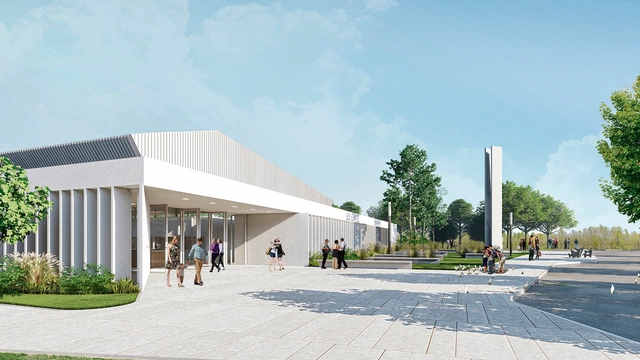
The Municipality of the Villarino District (MPV) and the College of Architects of the Province of Buenos Aires, District 10 (CAPBA, D10), launched the National Binding Preliminary Project Competition for the design of the Pedro Luro Bus Terminal. Sponsored by the Argentine Federation of Architectural Organizations (FADEA), the competition's objectives focused on creating a high-quality space for arrivals and departures of medium and long-distance travel, consolidating the site's character to transform it into a new central hub, and creating a new service space for local identity that engages both the local and regional populations, among others.
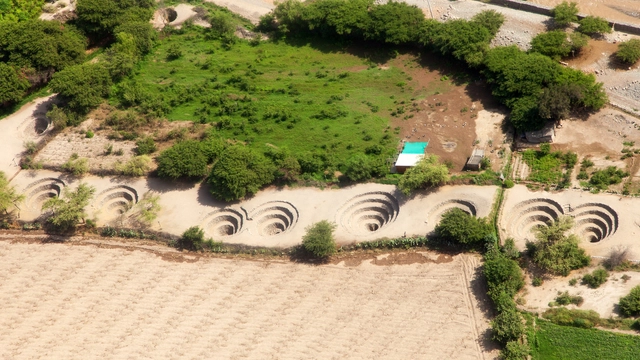
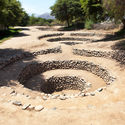
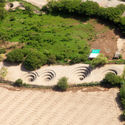
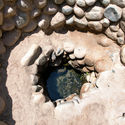
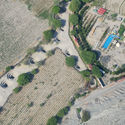
Set in the heart of one of the world's most arid deserts, the Nasca aqueducts form a hydraulic system that, for nearly two thousand years, has demonstrated advanced geological and hydrological knowledge. This system allows water to be sourced for both human consumption and agriculture, creating fertile oases in the desert. The Nasca Aqueducts represent a unique hydraulic system in the Americas, owing to their distinct design, construction technique, location, and function. They serve as an exceptional testament to the capacity of ancient societies to overcome adverse conditions, offering solutions that could be applied to the climate challenges of our time.
What could be more familiar to any human being than food? Food connects landscape with culture, emotion, history, and overall planetary health. Sharing food and cooking for others is a fundamental act of care and a way of expressing generosity and hospitality, reminding us of how much we depend on one another. Food allows us to think simply about the complex relationships of our habitat, providing a common ground for people to connect just as they would in their own homes: around the kitchen table.
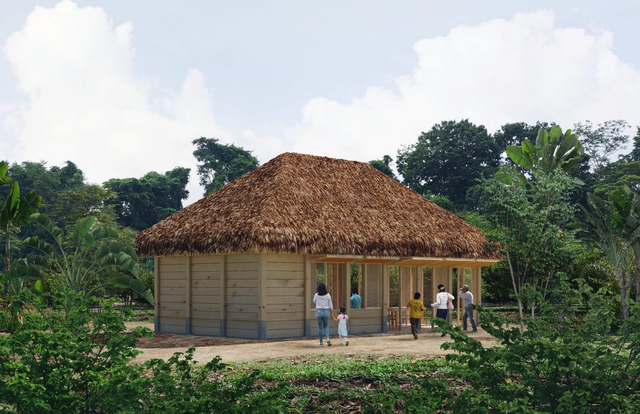
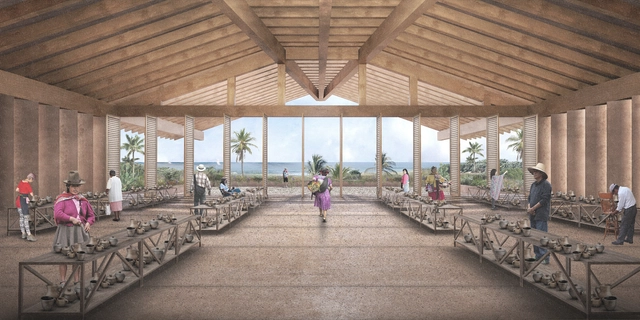
As part of a new collaboration, DF Arquitectos and Taller MRD have unveiled a new project set for the coast of Puerto Escondido, Oaxaca. The proposed 11,300-square-meter multi-use convention center aims to create a space where key cultural and community activities representing the State of Oaxaca can converge.
The event featured two main award categories for built works and projects—national and international—with a selection jury composed of Ivo Renato Giroto (Brazil), Martin Padrón (Venezuela), Fabián Dejtiar (Argentina/Chile), Roberto Ameneiro (Spain), and Carlos Álvarez (Costa Rica). On the final day of the event, the winners were announced; you can view them below.
Florencia Rodríguez, the new director of the School of Architecture at the College of Architecture, Design, and the Arts. Photo by Pablo Gerson. Image via University of Illinois Chicago
The School of Architecture at the University of Illinois Chicago (UIC) has appointed Argentine editor and curator Florencia Rodríguez as its new director, effective August 2022.
Trained as an architect and founder of the magazines PLOT and -NESS, she has dedicated her career to editing, writing, and teaching. Throughout her career, she was a Loeb Fellow and taught architecture at Harvard GSD. Through her work, which focuses on disseminating new narratives and exploring alternative forms of design criticism, she has fostered and strengthened architectural discourse across the Americas.
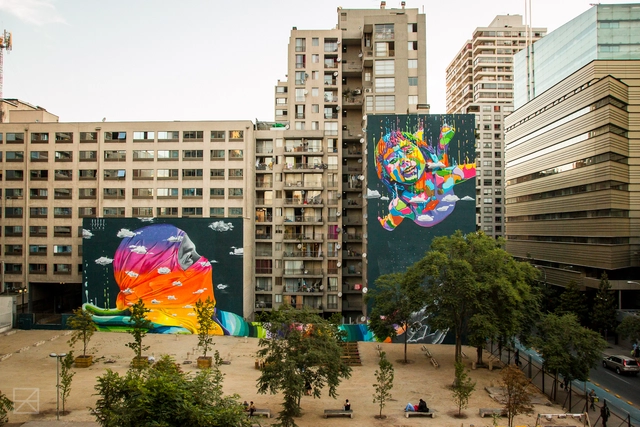
How do we experience cities? What moves us? What do we remember about them? Monuments? Museums? Are we merely tourists, or do we live the city as an experience? Art is part of the urban fabric—a way to create new paths, lifestyles, and reference points that lead us to identify the unique spaces and moments experienced within it. Art is not confined to museums; it is in the streets, on the walls, and on the buildings that shape the city. Public space dialogues with artistic expression, engaging people, neighborhoods, cities, and an interconnected world to create new modes of community within a culture that is attentive to and understands our contexts and ecosystems.
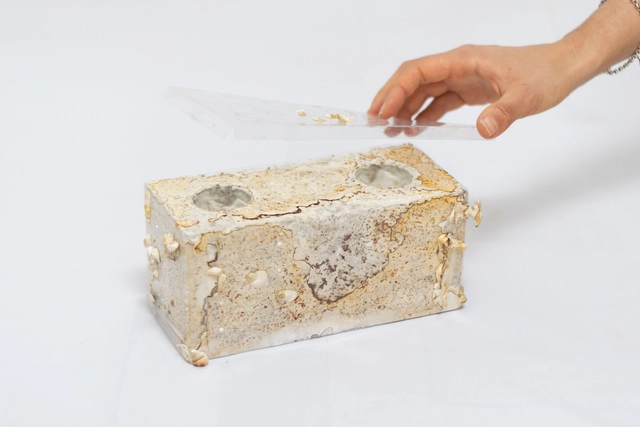
Although the construction industry has spent years making strides in new fields such as biomaterials, nanotechnology, and 3D printing, it simultaneously remains one of the slowest to adopt new technology. Many of these innovations never progress past the experimental stage. How can this situation be reversed?
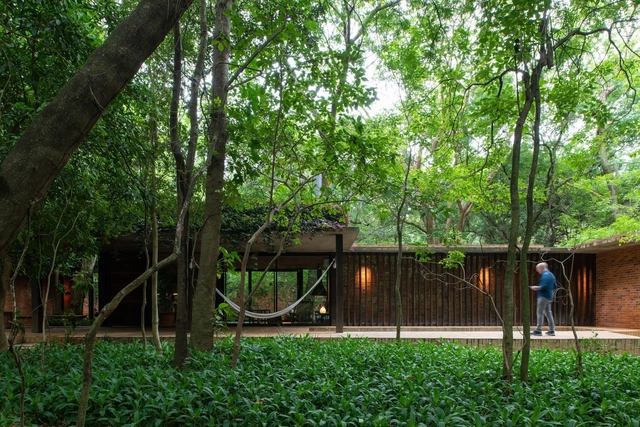
Teresa Moller, José Cubilla, Solano Benítez & Gloria Cabral were honored today with the 2021 Global Award for Sustainable Architecture, organized by the Cité de l’Architecture et du Patrimoine, a French institution dedicated, among other initiatives, to organizing events focused on heritage and architectural education.
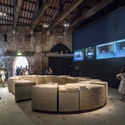
As in previous years, Chile's Ministry of Cultures, Arts, and Heritage has organized the exhibition of Testimonial Spaces, the country's most recent national pavilion presented at the 2021 Venice Biennale, in the lobby of the Museum of Contemporary Art in Parque Forestal (Santiago), making it accessible to the local public.
Although the ministry's open call for each biennale typically focuses on the design of a pavilion, the brief specifies that the selected curator will be responsible for developing both a curatorial concept and an architectural proposal. Certainly, in a contemporary context, the notion of a pavilion is a highly malleable category, making the distinction established in the guidelines particularly intriguing: while a curatorial concept should clearly be associated with some relevant architectural framework, it is not necessarily an architectural proposal in and of itself.
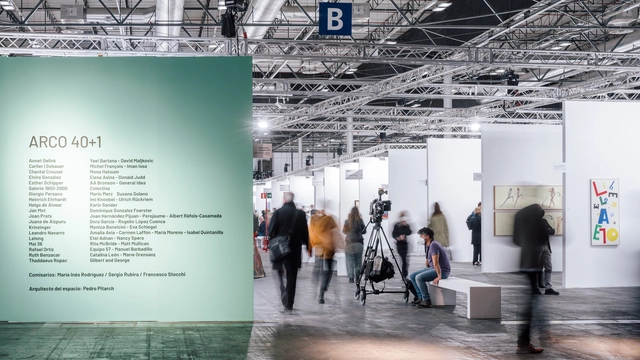
Pedro Pitarch Architectures & Urbanisms, a Madrid-based architecture office, has recently designed a project for the Special 40th Anniversary Section of the ARCO Fair called "ARCO 40+1." This exhibition space commemorates 40+1 years of the art fair. The exhibition, where nineteen galleries present their works, was curated by María Inés Rodríguez, Sergio Rubira, and Francesco Stocchi.
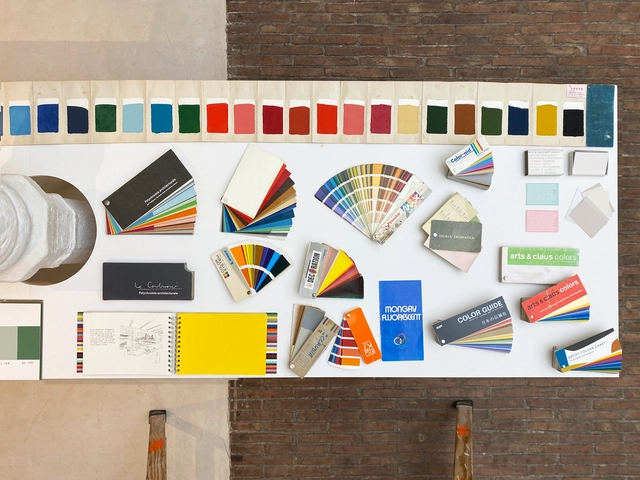
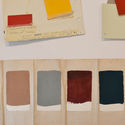
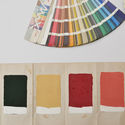
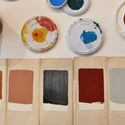
“What's color? for architects and designers” is an exhibition by the artist Claudia Valsells. Curated by Julia Ruiz-Cabello and Gonzalo de Benito, the exhibition brings together testimonials from architecture practices on the use of color in their projects. It took place from December 10 to 14, 2021, at the Pavilion space of the architecture firm PLANTEA, in Madrid. The exhibition design, mirroring the studio where the artist has worked for more than two decades to create her own color chart, shapes the space.
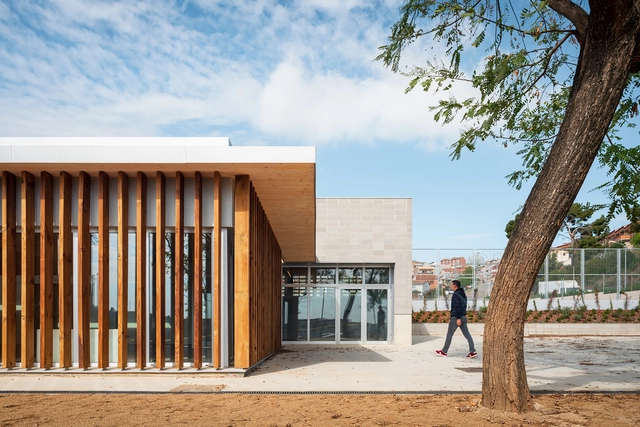
Designed to energize the neighborhood and local organizations, the La Guardia Civic and Cultural Center opened its doors on Saturday, April 9, in Plaza de la Paz in Sant Vicenç dels Horts, Barcelona. Its construction was carried out by the Barcelona Metropolitan Area (AMB), while the project was funded by the Sant Vicenç dels Horts City Council and the Barcelona Provincial Council.
Peru, a country of rich heritage and ancestral wisdom, won two awards at Expo 2020 Dubai for the Peru Pavilion, which captivated visitors through the concept of "Timeless Peru." First, the trade publication Exhibitor presented the pavilion with the World Expo Award in the People’s Choice Awards category, following an online vote where people from around the world selected their best overall experience from the expo.
Additionally, on March 30 of this year, the Peru Pavilion won the Gold Award at the BIE Day Awards in the Self-built pavilions – Category B (between 1,750m2 and 2,500m2) category. The award recognized three key aspects: architecture and landscape, exhibition design, and theme interpretation.
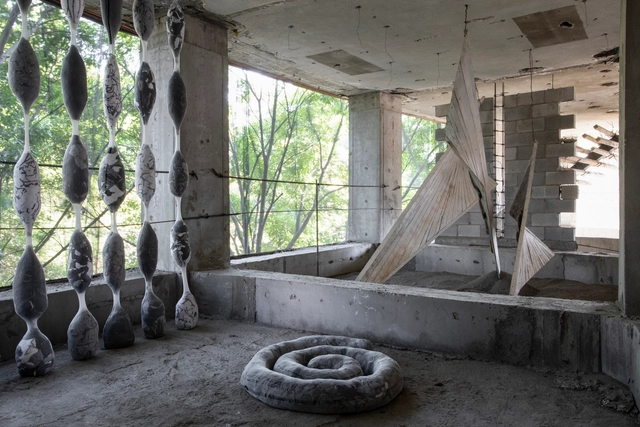
As part of the cultural agenda for Art Week 2022 in Mexico City, guadalajara90210—in collaboration with Michan Architecture and Luis Young—presented the exhibition "YACIMIENTOS," featuring works by 53 artists and architects. The venue, a building currently under reconstruction in the Condesa neighborhood, hosted the exhibition from February 12 to 20.
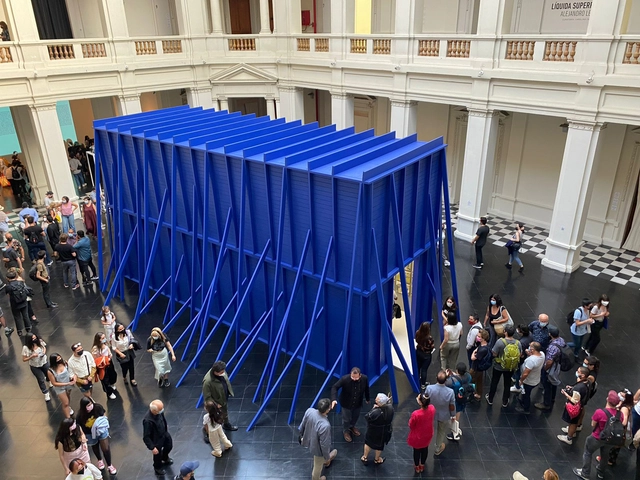
This mobile installation adapts to achieve structural parasitism, prompting us to rethink how we occupy the inert and hidden spaces that make up our cities.
As part of the ideas competition organized by the Buenos Aires Institute of Technology (ITBA), Aisenson Arquitectos, together with associated firm MGHS, won first prize for the design of the institution's main headquarters building, to be located along the central axis of the Innovation Park in the Autonomous City of Buenos Aires.
Today is the day to discover the finalists of ODA2022: the award for the best Spanish-language architecture. Our expert jury—meaning you, our readers—has selected 15 of your favorite projects from nearly 1,000 architectural works built across Latin America and Spain.
This award has become a true tradition, now in its 14th edition. It is an invitation extended to all our readers to recognize the works published during 2021 that inspired them and represent the identity of their local contexts in a globalized planet, shaping the way architecture is made in Latin America and Spain within an increasingly heterogeneous and multicultural world.
Starting today, and until next Wednesday, March 30, at 11:59 PM (GMT -3), you can explore each of the finalists in detail and vote for the work that best represents the Spanish-language architecture that inspires us, defines us, and leaves a mark on us. Discover all the finalist projects below.
The 2022 Obra del Año Award is brought to you by Dornbracht, renowned for its leading architectural designs, which can be found internationally in bathrooms and kitchens.
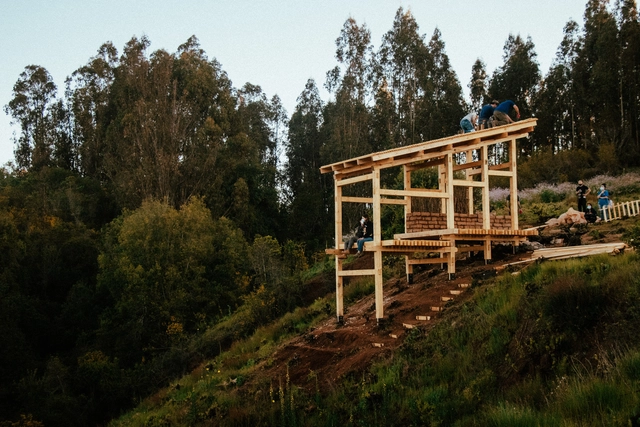
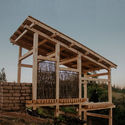
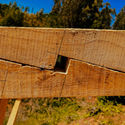
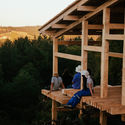
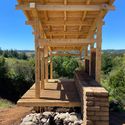
Students and faculty from the Architecture program at UDD SurSur in Concepción, Chile, traveled to the Ñuble Region to build Project 3, the Dañe Üñüm Lookout. This project, led by third- and fourth-year students, introduced them to new construction processes where joinery, timber, and adobe were key to shaping the design. The process was guided by school faculty and subject-matter experts, specifically the Hermanos Ducci collective for mortise-and-tenon joinery and architect Amanda Rivera for earth construction.
For its 43rd edition, the Grand Jury of the 2022 Konex Awards has selected the 100 most outstanding figures of the last decade in Argentine Visual Arts, spanning the period from 2012 to 2021. Honoring five individuals in each of the 21 established disciplines, the awards and diplomas of merit will be presented on Tuesday, September 13.
Celebrating its 35th anniversary, this edition of CasaCor brings together projects by 68 renowned professionals spread across more than 10,000 square meters inside a landmark of São Paulo modernism, the Conjunto Nacional. Under the theme “Particular Infinite,” this year's exhibition focuses on the accumulation of time, on the stories already told and those we tell about ourselves. In this universe of ways of inhabiting the world, and of the traces we leave around us—from finger marks on the walls to the dust we carry on the soles of our shoes—we are always searching for something that is ours alone, inexhaustibly our own.
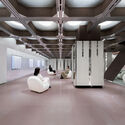
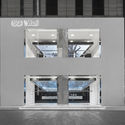
Various Associates, one of the winners of the 2021 ArchDaily Young Architects of the Year. With the evolution of the retail market and the rise of consumerism, a highly visual "photo-ready aesthetic" has come to dominate market values, sparking the mass production of spaces that are visually striking but devoid of functionality or experience. Various Associates refuses to chase market trends or cater to this photogenic aesthetic. Instead, relying on rigorous spatial design methodologies, they meticulously control every detail and material to formulate a site-specific "sole solution" for each brand. Our interest in their work extends beyond final aesthetics; we are drawn to the design strategy and logic articulated through their practice.
https://www.archdaily.com/1132537/tired-of-mass-produced-instagrammable-design-archdaily-young-architect-of-the-year-star-various-associates韩爽 - HAN Shuang



.jpg?1655931607&format=webp&width=640&height=580)














.jpg?1653069637&format=webp&width=640&height=580)