Bryant Park in New York. Image by ymgerman. Image via Shutterstock
One of the greatest challenges of urban planning lies in managing city growth. Year after year, major cities see their populations increase, and it is estimated that by 2050, 70% of the world's population will live in urban areas. But how can we build sustainable, healthy, and equitable cities that foster urban diversity?
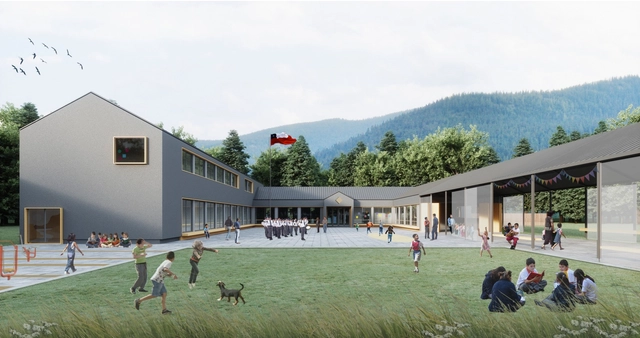
Propuesta Fundación Urbanismo Social, imagen. Image Cortesía de MINVU
The 2015 earthquake that struck the Coquimbo region in Chile resulted in the relocation of 88 households from the Baquedano sector to safe zones. Consequently, the Ministry of Housing and Urbanism (MINVU), through SERVIU, launched a call for proposals to design public rental housing complexes based on general design, energy efficiency, and social participation criteria.
The team composed of Fundación Urbanismo Social and Cristián Fernández Arquitectos won first place in the competition, followed by the proposal submitted by TECHO + Sabbagh Arquitectos. The winning proposal includes a community-support plan that, alongside the construction of public spaces and social housing with mitigation measures, aims to provide displaced families with a safe space to settle and rebuild a sense of community.
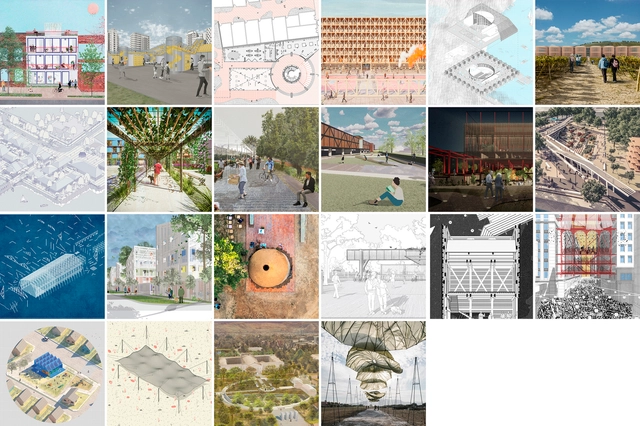
The 2021 National Competition for Undergraduate Projects (CNPP) and National Competition for Thesis Projects (CNPT) by Arquitectura Caliente are open competitions that seek to recognize and reward the best student projects in Chile. In this latest edition, a total of 371 registered projects were submitted, representing 29 schools across the country and 10 different cities.
https://www.archdaily.com/1128139/22-winners-of-the-national-competition-for-undergraduate-and-graduation-projects-cnpp-plus-cnpt-2021ArchDaily Team
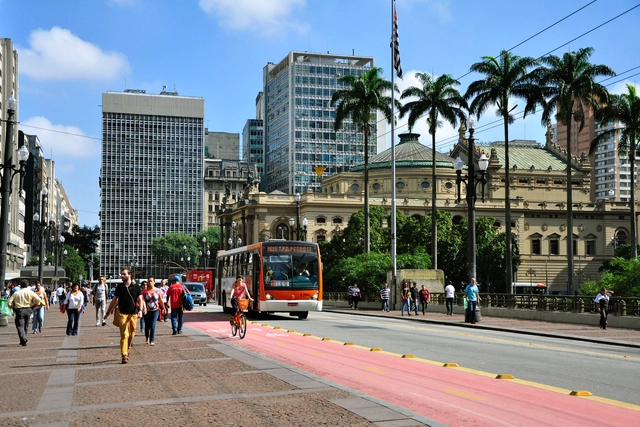
Downtown São Paulo. Image: Mariana Gil/EMBARQ Brasil, via Flickr. License CC BY-NC-SA 2.0
Measures that reduce the vulnerability of natural and human systems to the impacts of climate change are essential for sustainable development. In cities, the increase in climate risks driven by urbanization demands planning and investment from local governments to expand climate adaptation. This challenge transcends the geographical boundaries of urban areas and is directly linked to global prosperity—after all, cities are home to 55% of the world's population and 80% of global GDP.
https://www.archdaily.com/1128145/3-economic-arguments-to-expand-climate-adaptation-in-brazilian-citiesMarina Garcia e Luana Betti
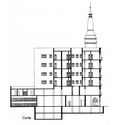
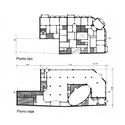
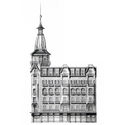
With a century of history, the Confitería del Molino, designed by architect Francisco Gianotti—who was born in Italy in 1881 and arrived in Argentina in 1909—is one of the heritage landmarks of Argentine architecture. After remaining closed for more than 20 years, in July 2018, the National Congress took possession of the property and began restoration efforts. In Argentina in particular, where neglect or disinterest has led to the loss of a vast number of heritage works, projects of this nature invite us to reflect on the role of architecture in building a city's collective memory.
We all know that architecture is a complex field requiring input from multiple disciplines to come to fruition. While design lies at the heart of every project, without technical expertise, many would never have become the structures we know today.
'Heritage and Modernity’ is the main theme of the Euskadi International Architecture Biennale / Mugak 2021 — one of the most significant architectural events in northern Spain. Within this framework, architect and economist Francisco Mangado participated prominently at the Bibat Museum in Vitoria-Gasteiz with a discussion on his architectural work, and we took the opportunity to interview him to learn his views on the subject.
"Domingos Libro" is presented by Carmelo of Enorme Studio. Every two weeks, he delves into forgotten architectural publications, books, and architecture magazines from the 1960s, 70s, and 80s that have the most interesting stories behind them.
This new episode focuses on José Miguel de Prada Poole's book "Las Fuentes del Espacio" (The Sources of Space), published by the COAM in 1977, which proposes that objective reality is unattainable, limited as it is by our sensory perception and the barriers of experimental science.
We spoke with Mexican architect Lucía Villers about her interest in understanding time in architecture through projects and research focused on transformation and restoration. Her work is divided between architectural practice and research projects. Time is an obsession Lucía has had since childhood. “When I went on road trips and watched the landscape, I would suddenly notice that a mountain moved slower, while what was close to me seemed to go faster. I always had many questions about the perception of time. Sometimes it seems to pass very quickly, and then very slowly.”
https://www.archdaily.com/1128134/lucia-villers-architecture-focused-on-understanding-timeBob J. Barraza
Planting trees is one of the simplest and most effective ways to combat climate change, and many companies use tree planting to offset carbon emissions. However, when taking this approach, it is essential to ensure that the trees planted will effectively store sufficient amounts of carbon.
Planting location is a key factor. Trees must be planted where they can live for decades and properly absorb carbon from the air.
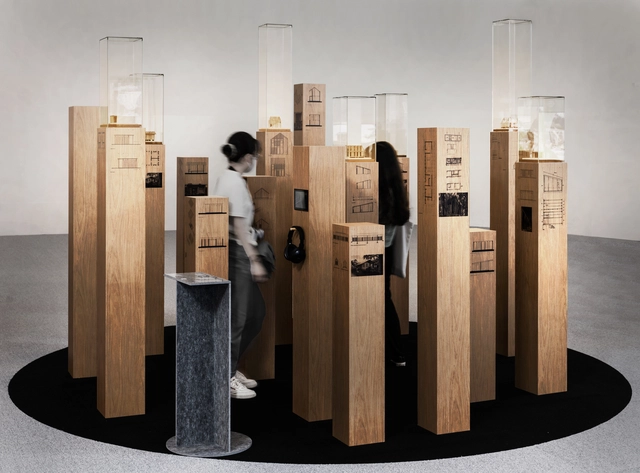
As part of the 3rd Seoul Biennale of Architecture and Urbanism 2021, directed and curated by architect Dominique Perrault, Mexican firm Manuel Cervantes Estudio was invited to participate in an exhibition held at the Dongdaemun Design Plaza (DDP), designed by Zaha Hadid.
https://www.archdaily.com/1128148/discover-manuel-cervantes-estudios-participation-in-the-2021-seoul-biennale-of-architecture-and-urbanismArchDaily Team
This week, we feature two firms currently hiring: a London-founded international practice and a studio led by a female architect with a global educational background. Both are active across diverse architectural sectors, each bringing a unique design ethos and seeking talented professionals to join their teams.
https://www.archdaily.com/1128136/jobs-of-the-week-chapman-taylor-holi-architectural-practiceMilly Mo
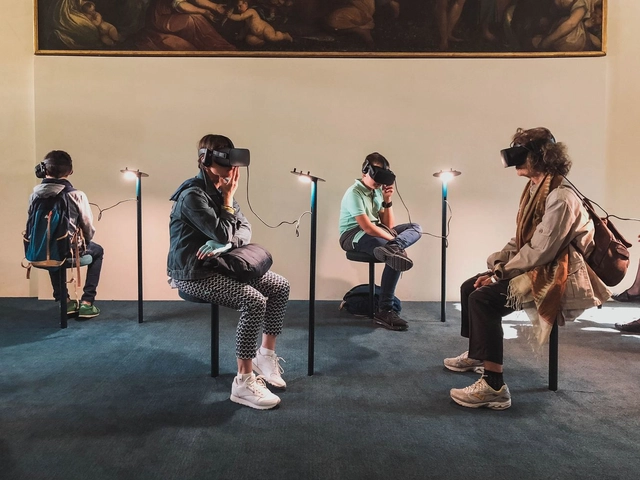
This year marked the 10th anniversary of the release of the first episode of Black Mirror. A dystopian, character-driven science fiction anthology series that explores twisted, high-tech metaverses where, according to IMDb, “humanity’s greatest innovations and darkest instincts collide.” For this reason, the British series, created by Charlie Brooker for Netflix, sparked a wide range of reactions among viewers. While it presented future scenarios, their proximity ended up creating a distinct sense of paranoia, fear, and uncertainty.
https://www.archdaily.com/1127660/metaverses-from-science-fiction-to-the-extreme-presentBob J. Barraza
render of the RIZOMA project. Image via BIALIMA 2021
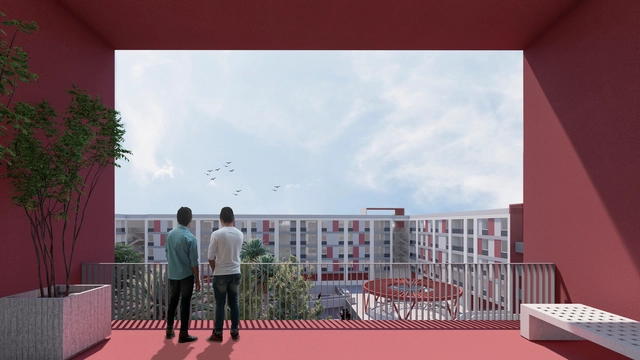
Launched as part of the 1st International Architecture Biennial of Lima – BIALIMA 2021, the call for entries aimed to design public infrastructure that harmoniously integrates with its natural and built surroundings to rehabilitate the stairways connecting different areas within the settlement. The international jury, composed of Michael Smith (Costa Rica), Luis Rodríguez (Peru), and Marta Morelli (Peru), selected 4 winning proposals that stood out for addressing community needs through interventions on the stairways of the San Juan de Lurigancho locality.
As part of the 2021 CNPP National Undergraduate Project Competition organized by Grupo Arquitectura Caliente and Graphisoft Archicad, a total of 127 proposals were submitted from 20 architecture schools across Chile. The jury highlighted three projects that, through their formal and conceptual diversity, achieved the highest recognition within their respective categories. Explore the winning proposals of this latest edition of the competition below.
“Public space expresses democracy in its territorial dimension. It is a space for collective use. It is the realm in which citizens can (or should) feel like citizens, free and equal; where society performs, represents itself, and shows itself as a community that coexists, displaying its diversity and contradictions, and expressing its demands and conflicts. It is where collective memory is built and multiple identities are manifested.”[1]
In the longest public hearing in the history of the Autonomous City of Buenos Aires, 97.23% of participating citizens spoke out against the approval of the bill that seeks to authorize the privatization and subsequent construction on a portion of land along the Río de la Plata waterfront (Buenos Aires, Argentina). The hearings, held between November 27, 2020, and January 28, 2021, featured 2,057 speakers, including members of various foundations, architects, landscape architects, environmentalists, political organizations, the project's authors, and, for the most part, Buenos Aires residents. Of these, only 55 participants spoke in favor.
This week's podcast tackles a topic that, as the saying goes, offers plenty of food for thought. For architects, representing a project is not only a form of artistic expression but also requires mastering a series of tools that must graphically translate the information needed to bring a building concept to life. In this sense, the history of architectural representation is deeply intertwined with the history of design itself, remaining a constant subject of reflection and evolution in our field.
Videos
1er Premio. Image Cortesía de Proyectar a Conciencia 4.0
The Proyectar a Conciencia competition aims to energetically modernize existing buildings through non-intrusive passive solutions, such as EIFS continuous exterior insulation technologies. This fourth edition was particularly special, adding the Chilean Chamber of Construction as a co-sponsor, tripling its prizes, and expanding the call for entries to the professional sphere.
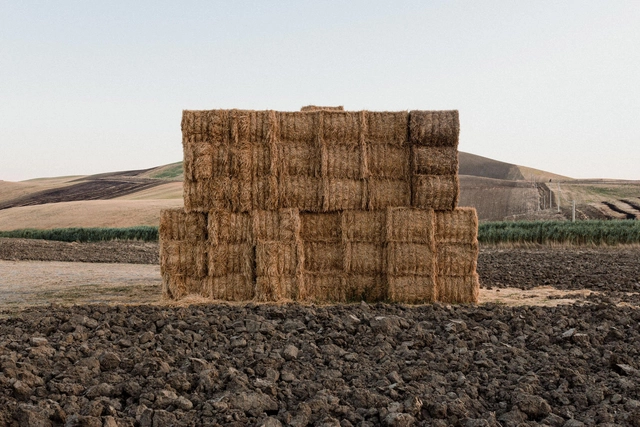
Carlos Hevia Riera is a Chilean architect and photographer driven by highlighting the value of daily life in rural and isolated territories. In this context, his latest project, 'Esto también pasará. Taccone città effimera' (This Too Shall Pass: Taccone, Ephemeral City), is the result of his artistic residency in Taccone, in the municipality of Irsina, from August to October 2019. This residency enabled him not only to build a temporary museum made of straw bales but also to uncover a surprising and little-known history.
In the following interview, he shares an in-depth look at his work, from his initial impressions to each of the steps behind this collective construction of memory.
Archivo de Ideas Recibidas is an interdisciplinary research and dissemination project that seeks to document and connect the ideas of individuals contributing to the contemporary creative ecosystem through art, design, and architecture. It is built upon conversations between the team and various creators, exploring topics related to memory, academia, cultural context, key influences, and working methodologies. This time, they share an interview on cinema and architecture with Mauricio Freyre (Estudio Rien).
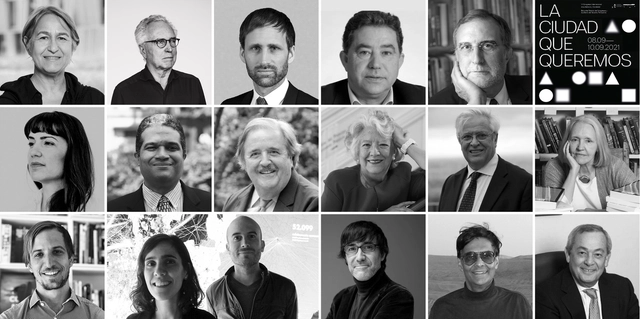
Anne Lacaton, Pablo Martínez y Mar Santamaria, Mohan Munasinghe, Francesc Muñoz, Feniosky Peña-Mora, entre otros ponentes del congreso.. Image Cortesía de Congreso Internacional de Arquitectura: La Ciudad que Queremos
From September 8 to 10, the sixth edition of the International Architecture Congress, titled "The City We Want," will take place. For the first time, the event can be followed live via the Architecture and Society Foundation's YouTube channel.
Disponible. Autor Pol Viladoms Claverol. Image Cortesía de BEAU 2021
The Spanish Biennial of Architecture and Urbanism BEAU 2021 has announced the finalists for its 'Research Exhibition', 'Thesis Projects Exhibition', and 'Photography Exhibition' categories. The winners will be announced on July 2, coinciding with the opening of the event at the Patio Herreriano in Valladolid.
Querétaro is a state located in the north-central region of Mexico, bordering the states of Guanajuato, San Luis Potosí, Hidalgo, the State of Mexico, and Michoacán. Covering an area of 11,684 km², it is the fifth-smallest state in the country. Its capital and largest city is Santiago de Querétaro; other notable localities include Tequisquiapan, Cadereyta, Jalpan de Serra, San Joaquín, and Bernal.
.jpg?1624038503&format=webp&width=640&height=580)









.jpg?1639598900 "Cortesía de Balenciaga Launches a Video Game for Its Fall 2021 Collection")


_11.28.46.jpg?1631197766&format=webp&width=640&height=580)
_11.28.46.jpg?1631197766)
.jpg?1612536479&format=webp&width=640&height=580)
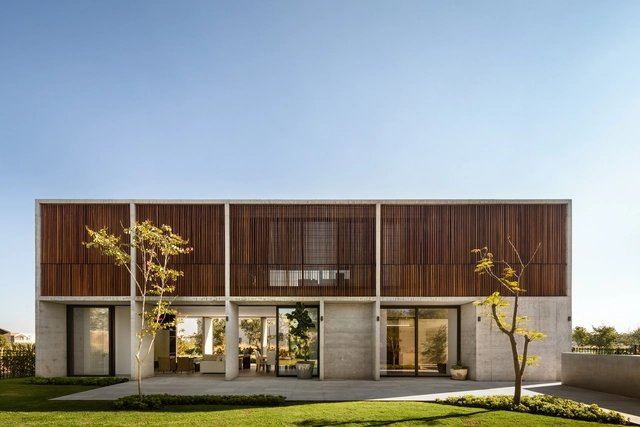
.jpg?1613658867 "Rivera House / Taller de Arquitectura Miguel Montor. Image")