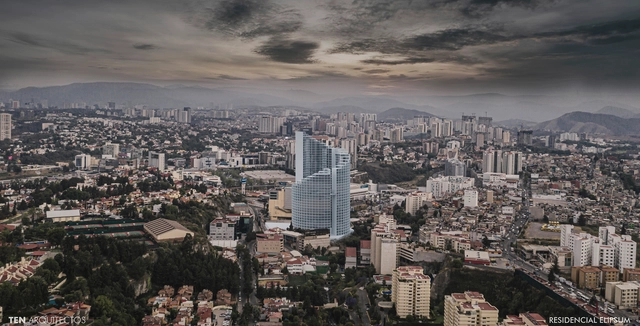
TEN Arquitectos is a practice based in Mexico City, New York, and Miami. Founded by Mexican architect Enrique Norten, the firm has 33 years of experience designing with a global perspective that yields a consistent international sensitivity when creating new spaces. This trajectory has been recognized with various national and international awards, including the Mies van der Rohe Award for Latin American Architecture, honors from the national American Institute of Architects (AIA) and several US chapters, Architectural Record, Architect Magazine, Architizer, Biennials in Mexico, Argentina, and Ecuador, and the Royal Institute of British Architects (RIBA), among others.
Educational master plan designed by OMA in Dubai. Courtesy of OMA
In any planning process, a series of documents—comprising both graphic and textual materials—establishes a framework for future development. In urban planning, the master planstands out as one of the most common instruments for this purpose.
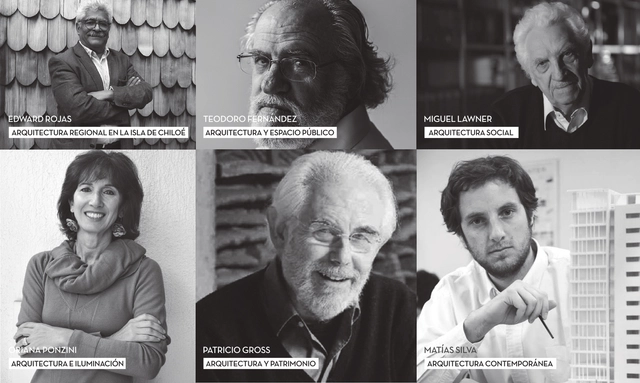
“Arquitectos” is a micro-documentary series produced by AvantVisual and directed by Mauro Alfaro on the life and work of prominent Chilean architects. The series was originally scheduled to premiere at the XXI Chile Architecture and Urbanism Biennial, “The Common and the Everyday.” However, due to the suspension of the Biennial in the wake of the 2019 social uprising, the premiere could not take place.
Paste Up, a festival that brings the selected works of six local visual artists to the streets of Santiago, Chile, launched an outdoor route in early December hosted on a series of iconic buildings in the municipality of Vitacura. Renowned urban artist and photographer Caiozzama, whose artistic interventions became icons of the 2019 social uprisings, curated and edited the pieces. The process of translating various sizes and techniques into large-format works also includes the subsequent recycling of the large-scale prints, which will be on display until the end of February. The artists who participated in this edition of the festival are Fab Ciraolo, Bruna Truffa, Juana Gómez, Cecilia Avendaño Bobilier, and Santiago Ascui. Learn more about the works and the urban art route below.
Out of necessity, buildings change uses over time. Churches become libraries, and abandoned warehouses are transformed into cultural centers. Although much has been written on the subject since N. John Habraken's concept of open building in the 1970s, a fascinating global debate is currently underway. Do we really need so much square footage dedicated to offices when the pandemic proved that much of our work can be done remotely?
Today is the day to announce the finalists for ODA2021. Our expert jury—meaning you, our readers—has selected 15 favorite projects from nearly 1,000 works of architecture across Latin America and Spain.
Now in its thirteenth year, this award has become a true tradition. We invite all of our readers to recognize the projects published during 2020 that inspired them and represent the identity of their local contexts in a globalized planet, shaping architectural practice in Latin America and Spain within an increasingly heterogeneous and multicultural world.
Starting today and until next Wednesday, March 31, at 11:59 PM (GMT -3), you can explore each of the finalists in detail and vote for the work that best represents the "Spanish-language" architecture that inspires us, defines us, and leaves its mark on us.
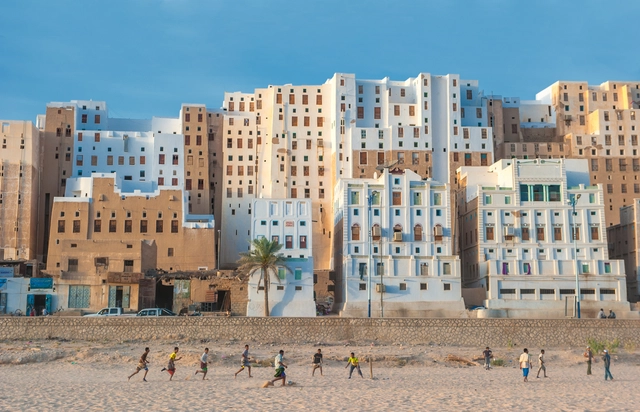
Image: javarman. Shibam, Hadramaut Governorate, Yemen. The buildings' construction method is rammed earth. Image via Shutterstock
The construction sector's contribution to today's climate crisis is deeply concerning: between material production, construction, and building operations, the sector is one of the largest emitters of greenhouse gases. Meanwhile, as urban populations grow at historic rates, we find that in the development of major energy-intensive cities, reducing the discipline's environmental impact seems to rely on niche interests and individual initiatives rather than large-scale actions from academia, the profession, or policymakers.
History has shown us numerous construction techniques and applications of local materials that have proven sustainable over time—relying on the efficient use of resources that require no intensive industrial processing and eliminate the need for long-distance transportation. In some cases, at the end of their life cycle, these materials can even be returned to the environment, as is the case with adobe and wood.
It took nearly 60 years to build the San Carlos Canal, an engineering feat that drew water from the Maipo River to irrigate the lands of southeastern Santiago.
How can we design spaces that are healthy for our minds and bodies? This is the central question we will address this March as we focus on the topic of interiors and well-being.
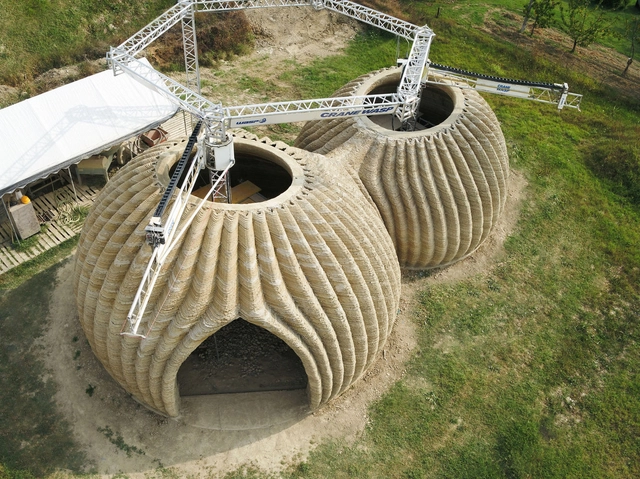
TECLA, 3D Printed Habitat by WASP and Mario Cucinella Architects. Image Courtesy of WASP
This project represents the latest collaboration between Italian firm Mario Cucinella Architects (MC A) and WASP, marking the first time the two teams have used raw earth—a natural, fully recyclable material—for 3D-printed construction. Located in Massa Lombarda (Ravenna, Italy), the completed habitat is named TECLA. The earthen dome was constructed in 200 hours of continuous printing by multiple synchronized 3D printers.
This week's featured career opportunities come from two design firms based in Beijing and Shanghai: IN.X Design and SLT- STUDIOLITE. Specialized in projects of varying scales and themes, both practices are highly active across diverse design sectors and are looking to recruit like-minded design talent to join their teams.
Contrary to popular belief, it is impossible to separate law and urban planning. Both disciplines have served as instruments to establish the rampant inequalities we live in—one through the administration of state force, the other through the accumulation of territorial power. Yet both also hold the keys to creating more equitable cities. The only way to build a true right to the city is through interdisciplinary dialogue, particularly now that a reform proposal seeks to recognize this right in the Political Constitution of the United Mexican States. This article aims to open a space for dialogue among those of us working in law, architecture, and urban planning.
Categoría Viviendas PRO.CRE.AR - Mención: Vivienda en Arturo Seguí. Image Cortesía de Ezequiel Spinelli
The CAPBA Award in Argentina represents an opportunity to showcase the achievements and innovations of architects across their various professional fields. Works located both inside and outside the province of Buenos Aires, completed within the last 10 years, were eligible to enter. Organized by the Association of Architects of the Province of Buenos Aires, the jury for each category evaluated the submissions and awarded first, second, and third prizes, along with several honorable mentions.
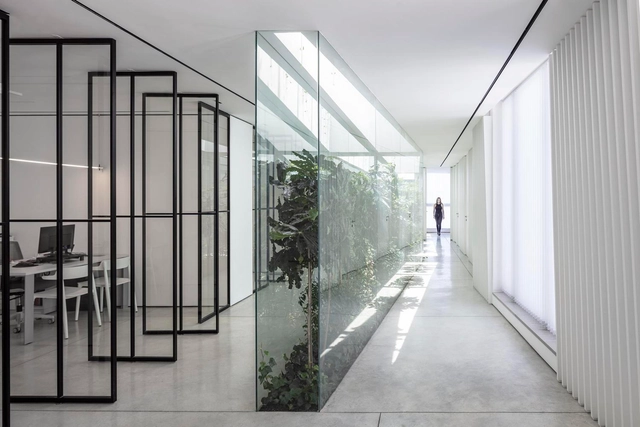
The connection between interior and exterior is almost always cited in architectural projects. After all, bringing glimpses of the outdoor space into a building is one of the most widely used devices when thinking about the well-being of its inhabitants. In addition to contact with the surrounding landscape, an important factor of this strategy is allowing natural light into the space, as it can convey a visual message that transforms spatial perception.
Architect Martín Luis Gutiérrez Martínez was born in Gómez Palacio—a city in the state of Durango, Mexico—in 1927, and he never left behind his Northern roots or any of his lifelong convictions. During the brief and cherished time I shared with him, our conversations were always filled with his exceptional memory, enlivened by an untiring passion for living and feeling architecture.
https://www.archdaily.com/1128314/martin-l-gutierrez-1927-2020-65-years-between-the-practice-and-teaching-of-architecture-in-mexicoJorge Andreas Hernández
Looking to the future, do you have the option to retire and collect a pension to live peacefully in old age? Is it entirely possible for you to recognize when you are working and when you are not? I pose these as questions, but they are actually statements with a small checkbox next to them to choose from 30 criteria. In the form of a quiz, writer Alejandra Eme Vázquez in her book Su cuerpo dejarán begins to question your situation in the labor market, with the clear intent of pointing out the precarity and invisibility of care and domestic work. Ultimately, sooner or later, all women have to care for someone and care for themselves; this care is the foundation that sustains the system in which we live, sustaining public life.
As part of a new strategy to offer an alternative vacation dynamic, and after 14 months of operating in Valle de Bravo, State of Mexico, the company Wander has partnered with Mexican architect Michel Rojkind, Amasa Estudio, and TUUX to create a cabin model designed to help guests disconnect and reconnect with nature.
https://www.archdaily.com/1128298/wander-rojkind-arquitectos-amasa-estudio-and-tuux-present-cabin-modules-to-connect-with-natureArchDaily Team
This article by Lucía de Molina Benavides and Elisa Valero Ramos was originally published under the title "La vivienda colaborativa en la era digital como proceso sostenible" [1] in issue 31 of Dearq journal on September 1, 2021 (DOI: https://doi.org/10.18389/dearq31.2021.03).
The article explores how the digital era has revolutionized the lives of millions of people. Today, technological development is visibly affecting the social sustainability of cities through issues such as exclusion, individualism, and gentrification. Conversely, when applied transversally, this technology can foster inclusion, diversity, and a sense of community. This article addresses collaborative housing, understood as a participatory process that extends beyond the design and construction phases into the management and use of spaces, enhancing social sustainability through digital technologies.
https://www.archdaily.com/1128300/collaborative-housing-in-the-digital-age-as-a-sustainable-processLucía de Molina Benavides y Elisa Valero Ramos
With 'Heritage and Modernity’ as the central theme, curator José Ángel Medina Murua previously highlighted "Carme's ability to amplify all the values with which she acts, working with her surroundings in a way that benefits and improves all elements."
Ahead of the official opening, we present an interview with Carme Pinós discussing her participation in this year's biennial.
Videos
Still from the film "Zaļa iela" by Oto Ozols
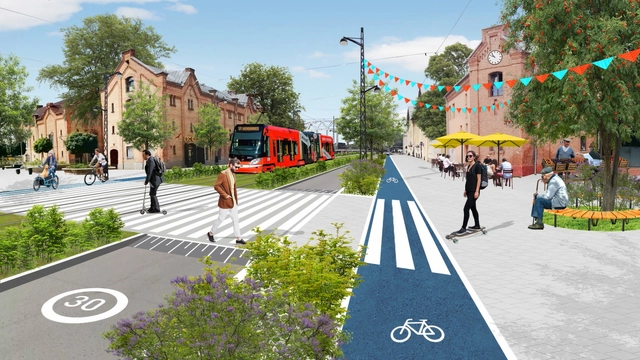
Cars remain one of the primary modes of transportation and a major contributor to the climate crisis, as the vast majority consume fossil fuels and generate emissions—particularly carbon dioxide, which intensifies the greenhouse effect and, consequently, global warming. As such, World Car-Free Day is celebrated internationally on September 22 to encourage people to spend a day without their cars and reflect on car dependency. To offer new perspectives on this issue, we highlight the work of Latvian architect Oto Ozols, who envisions cities designed for people rather than cars through videos that demonstrate how public space can be improved from this perspective.
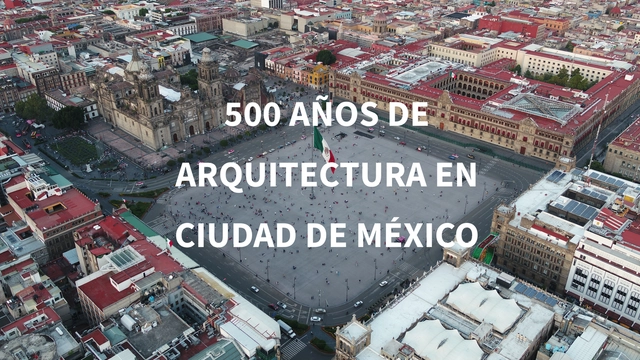
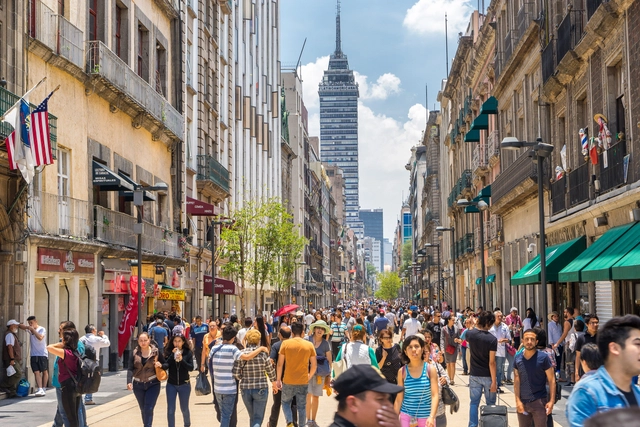
Today, August 13, commemorates two pivotal events in Mexico's history: the approximate founding of Tenochtitlan, capital of the Mexica civilization, around 1325 on an island in Lake Texcoco in the Valley of Mexico; and the fall of this empire in 1521 to the Spanish army led by the conquistador Hernán Cortés.
These are just a few of the many events that shape today's Mexico City, making it nearly impossible to summarize them all. Nonetheless, revisiting some of these milestones helps us understand the very ground we stand on and, above all, reflect on the future of our actions as architecture professionals: from the pre-Hispanic period, colonization, Independence, and the Revolution, to the foreign influences of the Modern Movement and the diverse interpretations that culminate in what we recognize today as contemporary architecture.
Archivo de Ideas Recibidas is an interdisciplinary research and dissemination project that seeks to document and connect the ideas of people contributing to the contemporary creative ecosystem through art, design, and architecture. It is built on conversations between the team and various creators, exploring themes related to memory, academia, cultural context, main influences, and working methodologies.
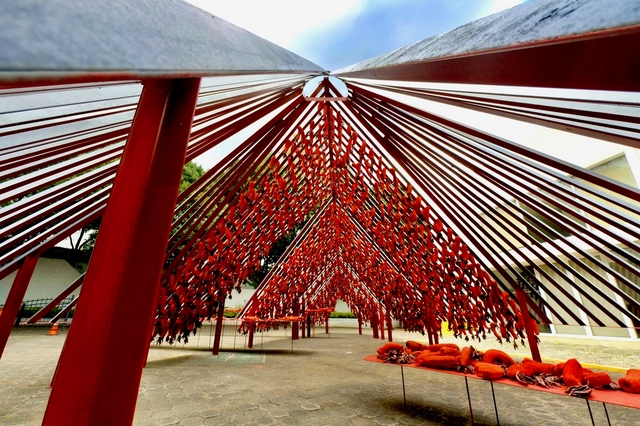
For the eighth time, the MEXTRÓPOLI Architecture and City Festival held the Arquine No. 23 | MEXTRÓPOLI 2021 Pavilion competition, a platform where architecture, urbanism, and art meet to reflect on and celebrate Mexico City. The event also aims to engage citizens by occupying public spaces with architectural interventions that can be activated by visitors. Celebrating public space and offering a fresh perspective on everyday pathways is precisely why MEXTRÓPOLI showcases these ephemeral works of architecture.


_OMA.jpg?1616763505&format=webp&width=640&height=580)

_OMA.jpg?1616763505)






.jpg?1626363543&format=webp&width=640&height=580)
.jpg?1626363518 "Cristóbal Colón School. Image © Archivo Martín L. Gutiérrez Martínez")
.jpg?1626363496 "Revolución Ice Rink. Image © Archivo Martín L. Gutiérrez Martínez")
.jpg?1626363542 "Cristóbal Colón School. Image © Archivo Martín L. Gutiérrez Martínez")
.jpg?1626363655 "UBAC Rectory. Image © Archivo Martín L. Gutiérrez Martínez")
.jpg?1626363543)
.jpg?1626458685&format=webp&width=640&height=580)
.jpg?1626458761 "© Rojkind Arquitectos")
.jpg?1626458848 "© Rojkind Arquitectos")
.jpg?1626458652 "© Diego Lezama")
.jpg?1626458871 "© Diego Lezama")
.jpg?1626458685)

.jpg?1634904973&format=webp&width=640&height=580)