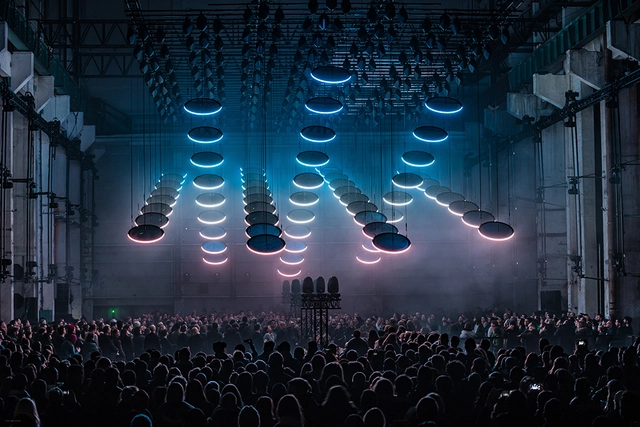
This November, Mexico City cements its status as one of the most exciting creative capitals in the world, featuring a circuit of activities designed to highlight the avant-garde, experimentation, and new digital art models that the city attracts and inspires. After 16 years of continuous work, MUTEK Mexico is proud to be part of this circuit, collaborating with other organizations to offer the public one of the year's most intense and stimulating weeks dedicated to digital art and sound.
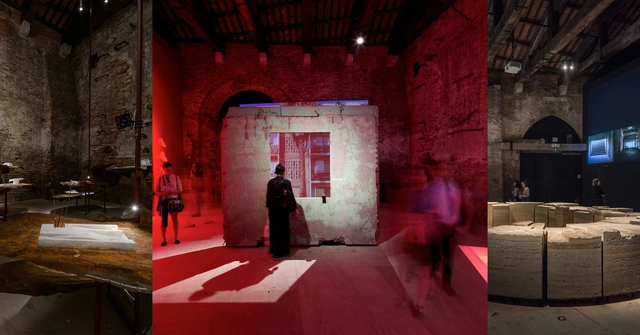
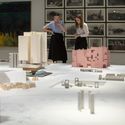
"Horizontal Vertigo" Pavilion for the Venice Biennale 2018. Image
The Venice Architecture Biennale is arguably one of the most influential exhibitions in the world. Established in 1895 as the "Venice International Art Exhibition," the Biennale has become one of the most prominent cultural institutions worldwide, serving as a universal platform for nations to showcase their work. Consequently, every two years, the global spotlight turns to Venice.
However, just as the selection of the Pritzker Prize can shape public debate, it is also influenced by public opinion. Consequently, a month ago we asked our Ibero-American readers from ArchDaily en Español and ArchDaily Brasil to share their thoughts on the potential winners. We conducted a poll on who should win the 2019 Pritzker Prize, offering a selection of architects we thought stood a chance, along with the freedom to nominate their own candidates—always keeping in mind not who is likely to win, but who should win.
https://www.archdaily.com/1120841/our-readers-suggest-who-should-win-the-2019-pritzker-prizeArchDaily Team
The UNESCO World Heritage Committee has decided to remove the Humberstone and Santa Laura Saltpeter Works in northern Chile from the List of World Heritage in Danger, a status they had held since 2005.
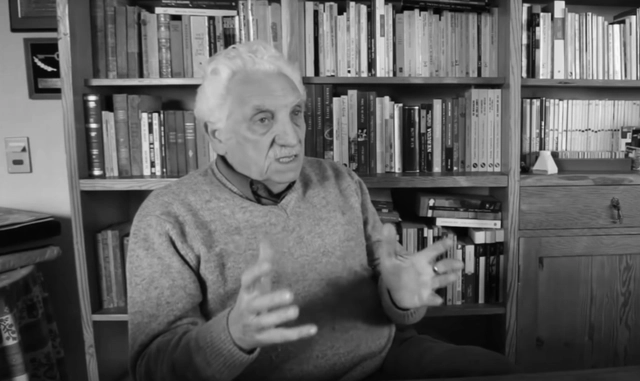
Last month, the National Board of the Association of Architects of Chile announced Miguel Lawner as the winner of the 2019 National Architecture Award, the highest honor an architect can receive in that country. The following interview, conducted in 2015, not only delves into the details of his life story, but also reflects several of his thoughts on the political sphere.
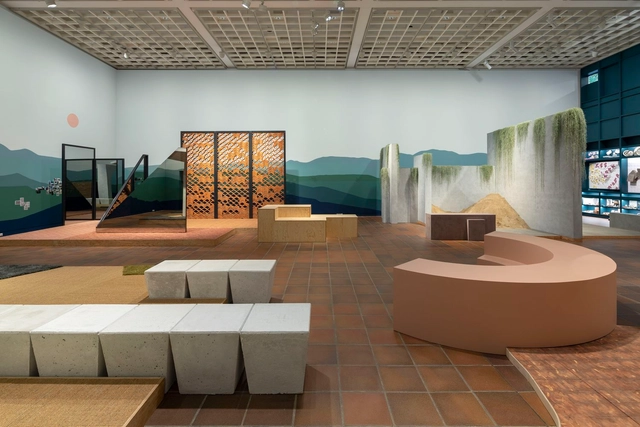
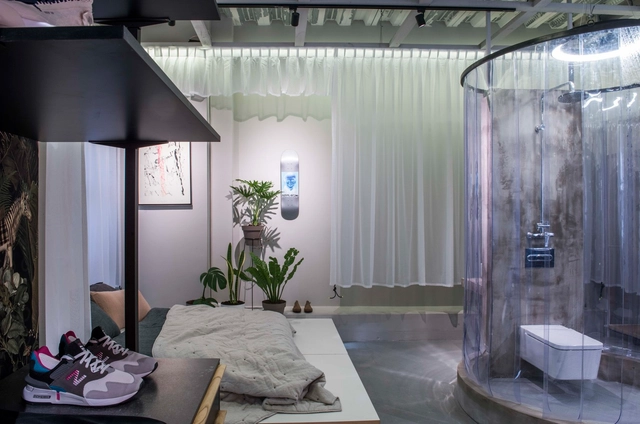
In its fourth consecutive edition in Chile, Casa FOA 2019—the international exhibition that brings together design, interior design, architecture, landscaping, and art—showcased established and emerging design talents who revitalized the forgotten Paseo San Damián in Las Condes.
The exhibition aims to introduce the public to the latest trends in the design industry under the concept of creating, transforming, and rethinking the way we live and work. This year's edition was guided by the concept of Coliving, the current expression of social and generational evolution, pointing toward collaborative living and the construction of collective intelligence through shared workspaces and common home areas.
In 2018, a group of former political prisoners who had been incarcerated at the Punta Carretas prison from 1968 to 1985 formed a "pro-Memorial Site commission" to promote a project that would invite reflection and memory regarding the events that occurred during their years of confinement in the former penitentiary. Seeking to create a site that fosters memory for current and future generations, they launched a call for proposals to develop a Memorial. This project honors the victims, their families, and the entire community, continuing the struggle for truth, memory, and justice in Uruguay.
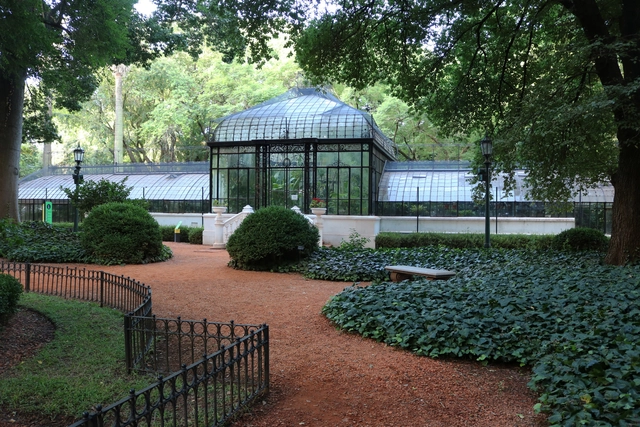
In the heart of Palermo, a large iron and glass structure houses species whose origins date back to distant eras predating the dinosaurs. This is the main greenhouse of the Carlos Thays Botanical Garden in Buenos Aires.
In September, we launched the fourth edition of our open call in Colombia, inviting architects to submit their undergraduate thesis projects. In this edition, the call received 104 submissions from more than 15 cities and 25 universities across the country, marking an 11% increase in proposals compared to 2018.
Following an exhaustive evaluation, and to celebrate Architects' Week in Colombia, we present the 13 thesis projects selected as winners by our editorial jury (Fabián Dejtiar, Mónica Arellano, and Santiago Baraya). The evaluation criteria prioritized projects that directly addressed current issues, such as urban, local, social, and environmental contexts.
How did a house designed by the world’s most renowned engineer—the Frenchman Gustave Eiffel, designer of the tower that bears his name in Paris—end up in Argentina?
How did this structure settle in one of Córdoba’s most culturally active neighborhoods, only to open its doors a century later as a cultural space thanks to the intervention of local residents?
On October 18, during the 17th edition of the Buenos Aires International Biennial of Architecture and concluding a series of keynote lectures, debates, and exhibitions held at the Usina del Arte in Buenos Aires, the winners of the “Evolución Ladrillo” (Brick Evolution) award, the CICA (International Committee of Architectural Critics) awards, the Bienal BA category awards, and the Grand Biennial Prize were announced, honoring a total of 28 architecture firms, institutions, and organizations for their work in the field of architecture.
1° Premio - Perspectiva Interior. Image Cortesía de Federico Canavese, Martin Rodriguez Frank y Fernando Vignoni
On August 2, the winners of the International Ideas Competition for the design of the new Argentine Pavilion for Expo 2023 were announced. Organized by the Central Society of Architects(SCA) and the Association of Architects of the Province of Buenos Aires (CAPBA), and sponsored by the Argentine Federation of Architect Entities (FADEA), the Argentine Pavilion is the first of six international competitions launched in recent months as part of Expo 2023.
May 3 is a holiday originating from the Feast of the Finding of the Holy Cross, also known as the May Cross (Cruz de Mayo) or Festival of the Crosses (Fiesta de las Cruces), which has its roots in the Roman Rite celebrating the devotion to the Cross of Christ. Over time, this commemoration has evolved and been adopted across cities in Mexico, Chile, Spain, Ecuador, El Salvador, Guatemala, Paraguay, Peru, Trinidad and Tobago, Argentina, Colombia, and Venezuela, where the festivities typically include floral decorations, processions, and dances.
Today, discussing infrastructure means discussing geopolitics and connectivity as a key driver of global competitiveness. Connectivity, however, should not be understood solely as physical infrastructure, even if we are talking about roads for autonomous vehicles or hyperloop tunnels.
The following project is the winning entry of the National Architectural Design Competition "Enhancement of the Cerro San Cristóbal Tourist Circuit and Creation of the Virgen de Cocharcas Santísima Theme Park."
https://www.archdaily.com/1120815/threshold-between-the-sacred-and-the-everyday-project-for-the-valorization-of-the-tourist-circuit-of-san-cristobal-hill-in-peruArchDaily Team
The recent book 'Plan de desarrollo urbano de la zona noroeste de la ciudad de Mar del Plata' by Guillermo Tella, Beatriz Cuenya, Martín Delucchi, and Laura Corbalán Vieiro synthesizes the results achieved through the technical assistance and institutional coordination experience carried out during 2017-2018 for the Municipality of General Pueyrredón (province of Buenos Aires, Argentina) by the Center for Urban and Regional Studies (CEUR-CONICET) and the Inter-American Development Bank (IDB).
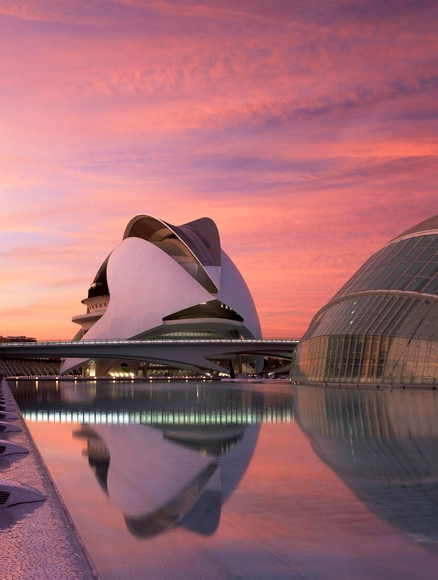
The World Design Organization has selected Valencia, Spain, as the next World Design Capital for 2022, following a competition with finalist city Bangalore, India.
Mexico City, considered one of the largest and most populous urban areas in the world, is in fact the largest city in the Americas and the Spanish-speaking world. Given this vast footprint, its immense population has led to sprawling peripheral settlements, highlighting the urgent need for a denser, more inclusive city. Various factors—such as the abandonment of downtown buildings following historic earthquakes like the one in 1985, compounded by a lack of basic habitability—have drawn the attention of diverse actors. Through clear, targeted interventions, they seek to restore a cohesive urban fabric that empowers residents to reclaim their city.
In light of the social crisis currently unfolding in Chile, ArchDaily has launched a series of conversations with various urban and spatial planning specialists to understand its impact on our cities and the contributions our discipline can make. On this occasion, we spoke with Chilean architect Liliana de Simone, PhD in Urban Studies, director of the Observatory on Culture, Consumption, and Society (OCCS), coordinator of the Gender and City network, and professor at the Pontificia Universidad Católica de Chile.





.jpg?1559517037&format=webp&width=640&height=580)







.jpg?1569892192&format=webp&width=640&height=580)