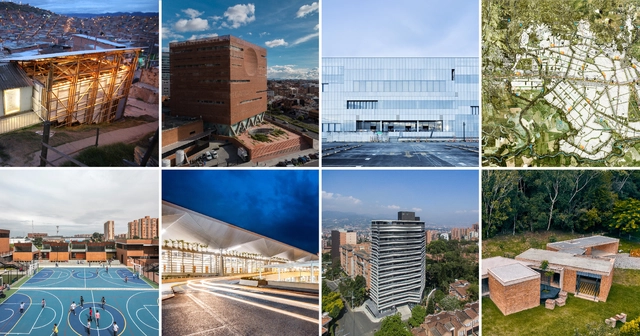
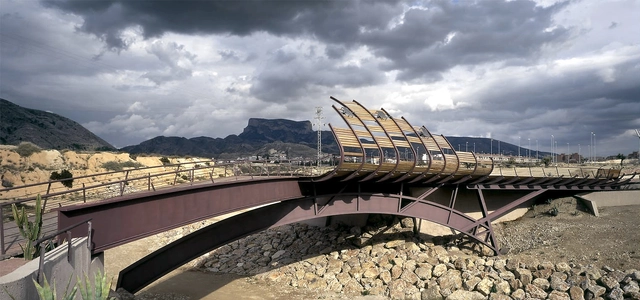
ALCUADRADO Arquitectos + Habitar Colectivo won first place in the national public competition for the environmental, landscape, and urban design of the Cali River urban environmental corridor in Colombia. The competition aimed to explore how to integrate the city with the river, seeking to coordinate the main and complementary ecological structures through the integration of pre-existing elements. Read on to discover the winning project in the words of its designers.
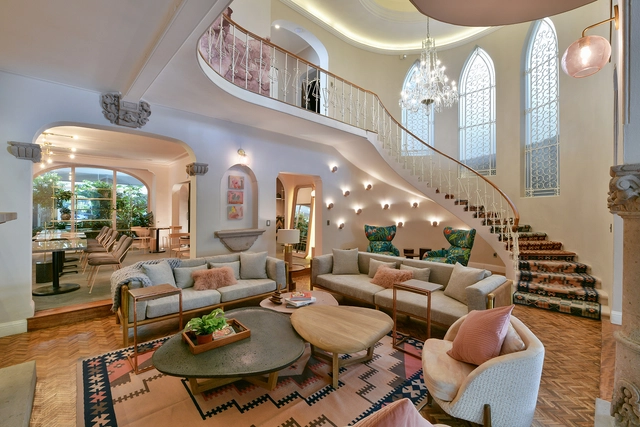
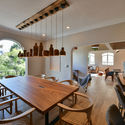
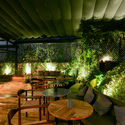
Residencia WW is a project in Mexico born from the idea of fostering community among women. Located in a 1920s house at 102 Edgar Allan Poe Street in Polanco, Mexico City, the space functions as a social and business club designed to build and support this community's growth.
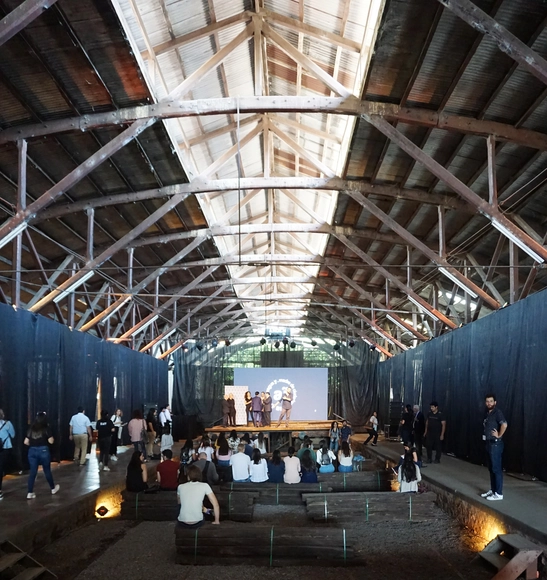
Today marks the opening of the XI BIAU in Asunción, Paraguay, along with the presentation of the 17 winners of the Panorama Obras Award—a recognition that explores architecture and urbanism projects built in Ibero-America.
The XI Ibero-American Biennial of Architecture and Urbanism (XI BIAU) recently announced the 210 projects selected for its upcoming edition, which will be held for the first time in Asunción this October.
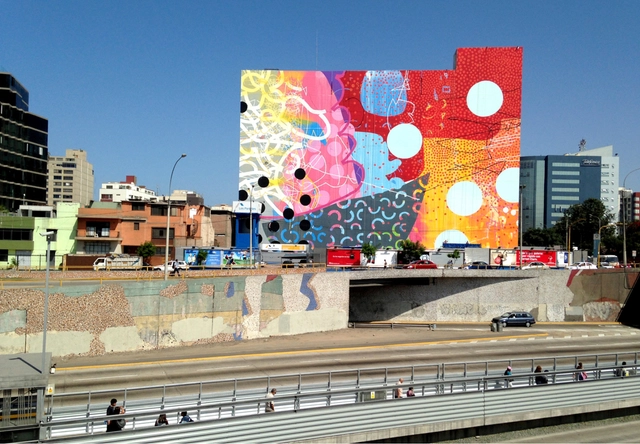
Blind walls that speak: a highly impactful intervention is underway, notable for its history, scale, and relevance.
The Paseo de la República Vía Expresa was inaugurated in 1967, more than 50 years ago. Coincidentally, its route aligns with one of the main branches of the Qhapaq Ñan (Inca Trail) that once crossed the Rímac Valley. As one of Lima's most vital thoroughfares, it spans 66 blocks, cutting through the city from north to south across the districts of Lima Centro, Lince, La Victoria, San Isidro, Surquillo, Miraflores, and Barranco. It is popularly known as the zanjón ("the ditch") because of its sunken, multi-lane design. While critics initially argued that low traffic volumes did not justify its construction, today the highway is heavily congested. In addition to hosting the Metropolitano bus rapid transit system along its entire length, bumper-to-bumper traffic jams are a daily reality during rush hour.
Today, the zanjón has a distinctly gray appearance, serving as a prominent showcase of concrete in Lima. Although it was once a canvas for mosaic murals—some fragments of which survive to this day—the walls now appear neglected amid spontaneous graffiti. Notable artists such as Fernando de Szyszlo, José Carlos Ramos, Bárbara Kukier, and Enrique Bustamante participated in these original mosaic murals along the Vía Expresa. During the 1980s, the mayor of Lima at the time, Eduardo Orrego, supported the creation of the "world's largest mural," which was intended to span Paseo de la República from Plaza Grau to the exit in Barranco. Although ambitious for its time, the project was left unfinished and remains pending.
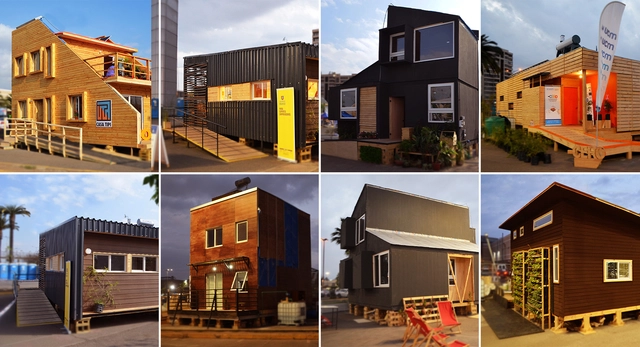
Las siete viviendas participantes de Construye Solar 2019. Image Cortesía de Construye Solar
A sustainable social housing unit featuring productive and commercial spaces is the winner of the third edition of the Chilean competition Construye Solar. The project, known as Casa Mercado, was developed by a team of students from Universidad Mayor.
https://www.archdaily.com/1121119/mercado-house-winner-of-construye-solar-2019ArchDaily Team
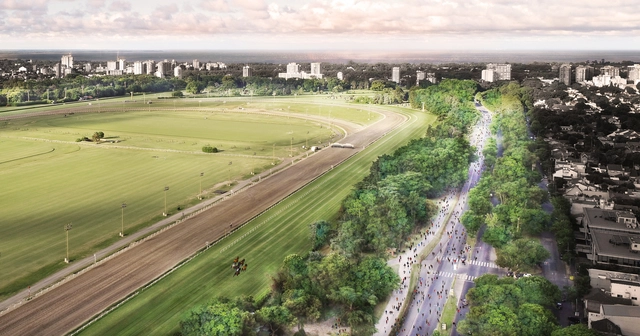
The project emerged as an opportunity to increase accessibility to Buenos Aires's Hipódromo de San Isidro—currently privately managed—through minimal interventions. By creating a linear park around the perimeter, the proposal makes this urban green lung more inclusive, transforming it into a social hub that enhances both the environment and quality of life.
Figura 1. Diagrama de estructura de los 10 criterios de diseño para edificios (Fuente: elaboración propia). Image Cortesía de Dra. María Beatriz Piderit M.- Ms. Matías Tapia Maureira
The following research, developed within the Master's in Sustainable Habitat and Energy Efficiency program at the Universidad del Bío-Bío by C. Matías Tapia Maureira and María Beatriz Piderit M., addresses the integration of resilience and sustainability criteria in the design of educational buildings in Chile. Read a summary of their work below.
https://www.archdaily.com/1121178/resilience-criteria-for-the-design-of-educational-buildings-in-chileMaría Beatriz Piderit M. y Matías Tapia Maureira
The final thesis project represents a major milestone in earning an architecture degree, and one of the fairest ways to honor it is through promotion and visibility. To discover the valuable output of Peruvian universities, in January we launched our open call, inviting architects to submit their respective final graduation projects (PFC) defended through 2018. Although we originally published a compilation of undergraduate theses in 2015, this is the first official call in Peru on par with previous editions held in other Latin American countries such as Argentina, Mexico, Colombia, and Brazil, placing us at the heart of this international dialogue.
This first edition received 75 submissions from 17 universities across various cities nationwide. After an exhaustive evaluation, 15 final projects were selected by the editorial jury of ArchDaily en Español. The selection values precision and detail, a cohesive line extending from the design to its presentation, and above all, the boldness to advance revolutionary ideas in the face of a seemingly harsh yet diverse reality. They do not necessarily result in a building; rather, they suggest the promise of architecture without limits, demonstrating critical thinking and a firm stance on the country's major (and urgent) issues. In doing so, they pave the way for multidisciplinary, collaborative work that strongly emphasizes the social role of the architect. All of these architectural projects maximize the capacity to imagine, experiment, and design, proving to be not only the culmination of a well-learned academic chapter but also the beginning of building those dreams. Let us not forget this transformative spirit as we cross the threshold.
The city of Asunción hosted the XI Ibero-American Biennial of Architecture and Urbanism (XI BIAU). To mark the occasion, ArchDaily spoke with Paraguayan architect and coordinator of this edition of the international event, José Cubilla.
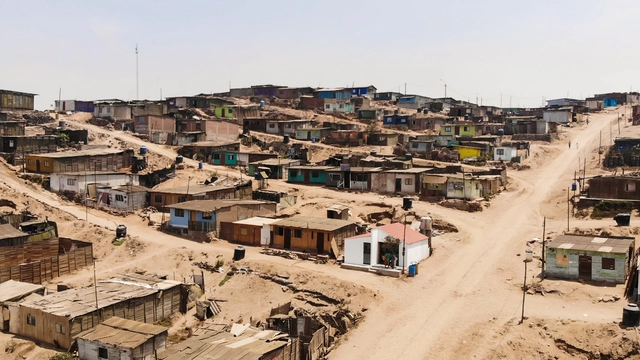
An exceptional small house, right there among all the other homes dotting the hillsides of Lima. At first glance, it might seem out of place, but once we learn its history and process, it couldn't be more relevant.
As the Egyptians, Aztecs, Greeks, and Incas well knew, nature holds within itself the answers to life's great mysteries. We only need to observe it closely to decipher the enigma. Often, we move heaven and earth searching for what has been right in front of our eyes all along. Immersed in our cell phones and concrete cities, when was the last time we walked on the grass or gazed at the stars?
Ancient civilizations did so constantly. By studying the path of the sun, the seasons, and the rain, they left a legacy of structures that have survived for millennia and still stand today. Without Google or computers, they acquired knowledge through the observation and study of their surroundings: nature.
Photographer Manuel Sá shared with us his perspective on the Coati Restaurant, designed in 1987 by Lina Bo Bardi, João Filgueiras Lima - Lelé (precast reinforced mortar), Marcelo Ferraz, and Marcelo Suzuki.
The entire complex—comprising a restaurant, a bar, and three historic houses converted into nine apartments with ground-floor commercial space—is located in the Pelourinho district of Salvador, and is part of the pilot project for the Bahia Historic Center Recovery Plan proposed by Lina. The restaurant is unfortunately abandoned and falling into disrepair, as is the rest of the complex.
https://www.archdaily.com/1121142/coati-restaurant-by-lina-bo-bardi-and-lele-through-the-lens-of-manuel-saPedro Vada
Today, January 27, marks the 113th birthday of Félix Candela—of Spanish and Mexican nationality—who is one of the most globally recognized architects of the 20th century. His career was defined by his exploration of reinforced concrete through experiments that resulted in his famous cascarones (concrete shells): key structural and design elements that support many of his works, such as the Cosmic Rays Pavilion at UNAM, Mexico City (1951); the Palmira Chapel in Cuernavaca (1958); the Los Manantiales Restaurant, Xochimilco (1958); and the Palacio de los Deportes for the 1968 Olympic Games in Mexico City.
Bamboo is a building material that has been used since antiquity in various structures. Thanks to its countless benefits, it has proven superior to newer materials like plastic and steel, while its unique aesthetic appeal has established it as one of today's most prominent architectural trends.
The National Academy of Architecture is a non-profit civil association whose primary objective is to study, promote, and recognize contemporary architecture, as well as to acknowledge, honor, and reward the outstanding performance of architects. The association has local chapters across various states of the Mexican Republic. It invites architects to join its ranks who, through the high caliber of their professional careers, have contributed to the advancement of architecture, the arts, and culture.
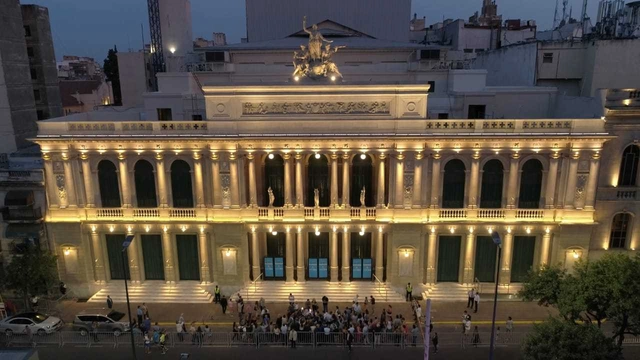
Teatro del Libertador General San Martin. Image Cortesía de Natacha Escarguel
The construction of theaters in the Province of Córdoba, Argentina, was closely tied to the second wave of immigration that arrived between 1880 and 1930, alongside the expansion of the country's railway network. Today, the city boasts a large number of theaters, most of which date back to this period and form an integral part of Córdoba's cultural heritage, despite having suffered for many years from the neglect of successive governments.
The open call for the Panorama of Works section sought architecture and urban planning projects built in Ibero-America by architects, either individually or in teams, completed between January 1, 2016, and December 31, 2018, that had not been submitted in previous editions.
Valdivia, Región de los Ríos, Chile. Image via Wikipedia user: Vicpablo11 licensed under CC BY-SA 3.0
The City Image Barometer, conducted by the consulting firm Visión Humana, measures the perceived image of 24 Chilean cities through a survey designed to identify the best cities to live, work, study, and visit in Chile.
Sometimes, architecture presents itself as an object of responsibility—an exercise in recognizing authorship, aiming to define and delimit it. We feel an urgent need to know who its author was, to credit whoever was capable of such inventions. Just as often, however, architecture does not claim any author; hence the terms anonymous architecture or "architecture without architects"—that is, a merely vernacular architecture. In the case of Carme Pinós, what is built inevitably speaks of who built it. Her architecture offers a glimpse of the energy that emanates from her persona: a vibrant, direct, tense architecture, swept by a continuous, dominating agitation. Within it, elements are in constant motion in a completely ungrounded way, rather than by their own virtue.
Color is considered one of the most influential phenomena when it comes to human emotions, attitudes, and decisions. It can impact an environment both positively and negatively, and workspaces are no exception.
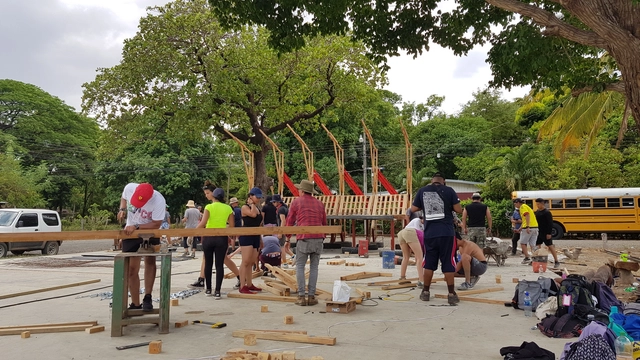
Nearly 200 students from 18 countries are currently working on TSL Costa Rica 2019 in the city of Santa Cruz, organized by the Latin American Coordinator of Architecture Students (CLEA) and the local organization Estudiantes de Arquitectura en Movimiento (EAM).
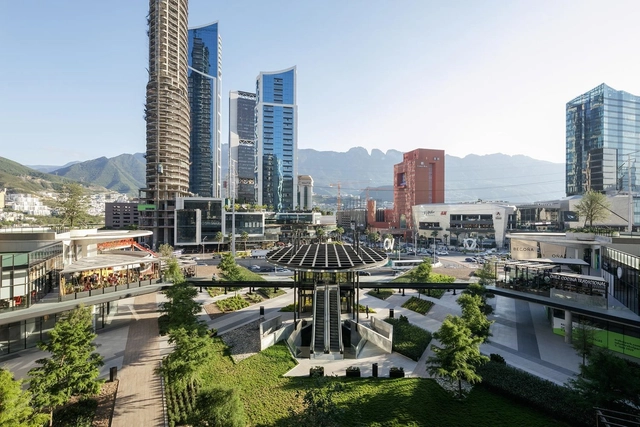
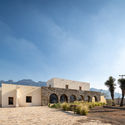
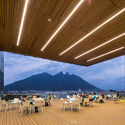
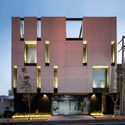
Since 1979, the Colegio de Arquitectos de Nuevo León has organized the Bienal de Arquitectura de Nuevo León, one of Mexico's longest-running events recognizing and promoting regional architectural production. To celebrate this year's milestone twentieth consecutive edition and the 40th anniversary of the Colegio de Arquitectos, the organization partnered with CONARTE, Parque Fundidora, and Cultura de San Pedro to present activities centered on the theme *Urgent City, Alternative City, and Possible City* (Ciudad Urgente, Ciudad Alterna y Ciudad Posible), reflecting on the motivations driving different urban stakeholders. This year's jury—composed of Aarón Seward, Arch. Carlos Rodríguez Bernal, Dr. Daniela Frogheri, Eugenia González Gómez, Dr. José Manuel Prieto, Lorenzo Díaz Campos, and Arch. Marcelo Espinosa—selected one Overall Gold Medalist, 17 Calli Medals, and 24 Honorable Mentions across 21 professional categories. Read on to discover the winning projects.
.jpg?1554402886)