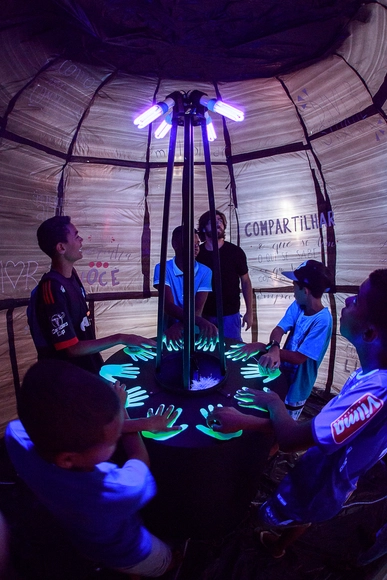
FLUTUA, instalação artística e arquitetônica, Luiza Dalvi e Rayssa Carvalho, com a colaboração de Isabela Magro, Rodrigo Pereira, Ariane Freitas e Alexandre Machado (UFU - MG). Image Cortesia de Instituto Tomie Ohtake
On January 23, 2019, during the opening of the exhibition showcasing the 20 selected projects out of 127 entries from 16 Brazilian states and the Federal District, the three winners of the 1st Instituto Tomie Ohtake Leroy Merlin Design Award and one honorable mention were announced.
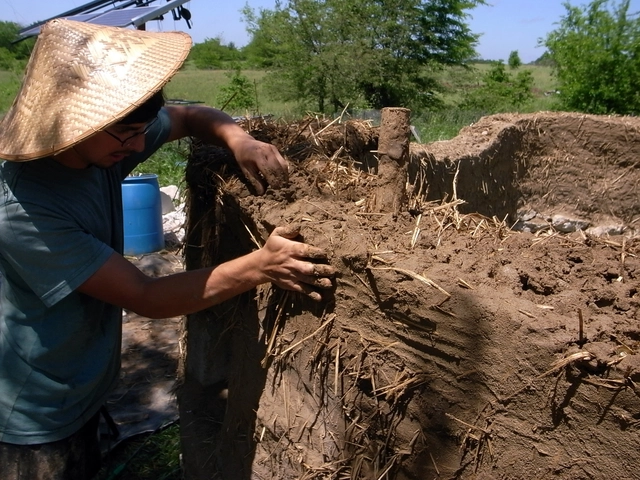
Bioconstruction refers to a building process utilizing materials and techniques with low environmental impact, alongside adapting architecture to local conditions and managing waste during the building's lifecycle. Consequently, building according to these principles does not necessarily mean using so-called sustainable materials—which often must be transported over long distances or undergo prefabrication before use—but rather utilizing local materials, techniques, and labor, drawing on vernacular strategies that address these very factors.
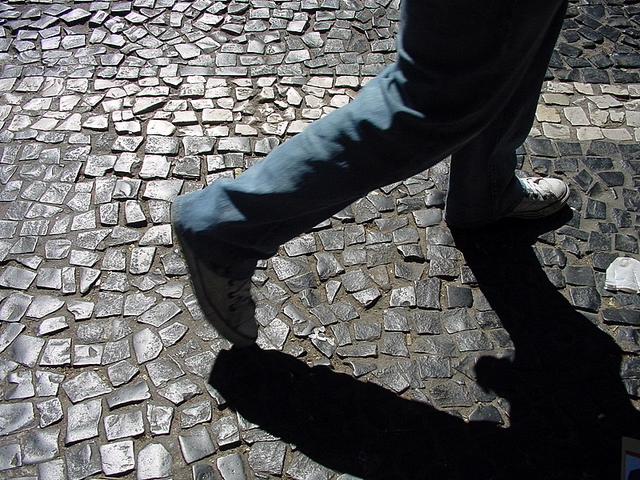
Sidewalk in São Paulo. Image: Marina Burity, via Flickr. License CC BY-SA 2.0
Walking is the simplest, most lightweight, economical, and low-impact way to travel in urban areas, especially for trips under two kilometers. More people walking means a better quality of life for residents and their cities, resulting in reduced government spending on public health. These concepts are universally accepted by urban planners and other contemporary thinkers.
Photography Otto Stupakoff via Felipe SS Rodrigues Archive. ImageInstituto Moreira Salles Poços de Caldas - MG, 1990
The research project Aurelio Martinez Flores: The Work of the Mexican Architect in Brazil (1960-2015) investigates the life and architectural career of Mexican architect Aurelio Martinez Flores (1929–2015) from 1960 to 2015, aligning with Latin American architectural history and the growing interest in recovering architects whose careers ran parallel to the mainstream movements in Brazil over the last several decades. Although little known, his work exerts a significant influence on one of the most successful currents of contemporary Brazilian architecture.
https://www.archdaily.com/1121711/do-you-know-the-architect-aurelio-martinez-floresFelipe SS Rodrigues
Estação Júlio Prestes, 1938. São Paulo, Brasil. Image Cortesia de SouthAmerica.travel
Trains are not the primary mode of transportation in South American countries, whether for cargo or passengers. The rail networks across the continent are poorly connected and, even domestically, are largely outdated or in disrepair. Nevertheless, from an era when transportation relied primarily on rail, beautiful railway stations remain, still serving cargo and passenger trains today.
This year, the Pritzker Prize announced Japanese architect Arata Isozaki as its 2019 laureate. Since the 1960s, the architect has been considered a visionary by his peers, with work that bridges Western and Eastern cultures, reinterpreting global influences in his architecture. In this episode #71, our conversation spans both the multicultural ground Isozaki trod across more than 100 built works and the uniqueness of the concept of “Ma,” an interpretation of interstitial spaces in architectural work.
On March 1, 2019, MAM’19 - Maia Architecture Month - Fast Forward will open, curated by Portuguese architect Andreia Garcia. The event aims to envision the territory 100 years from now and will feature eight emerging architecture practices and four architecture critics. As part of a partnership between ArchDaily and MAM'19, we will publish a series of articles by guest critics in the coming days. See below for Andreia Garcia's introduction to the event.
https://www.archdaily.com/1121776/on-the-future-opening-of-maia-architecture-month-2019Pedro Vada
After graduating in 1960, Ruy Ohtake has practiced architecture for over five decades, having worked alongside other major names in Brazilian architecture, such as Vilanova Artigas and Paulo Mendes da Rocha. Until the mid-1980s, his work was characterized by projects closely aligned with what was being produced in São Paulo at the time—a highly Brutalist architecture, defined by a limited material palette and a well-defined vocabulary.
Since 2017, the extraction and sale of asbestos has been banned in Brazil by the Supreme Federal Court (STF). However, this ruling did not prevent the state of Goiás from authorizing the extraction of chrysotile asbestos last Tuesday (16). The law stipulates that the extracted material must be used exclusively for export.
Throughout the entire construction process—from the conception of the architectural design to its physical realization—the job site is perhaps where most issues arise. Varying widely in nature, construction setbacks become less frequent the more time is dedicated to the design and planning stages; in other words, the more time invested off-site, the lower the likelihood of major disruptions during construction.
Bulevar e mercado. Image Cortesia de Estúdio Módulo
The City of São Paulo has begun the first phase of interventions to revitalize Largo do Arouche, a busy area in the city's central district. The project includes paving and leveling the square's promenade and installing new street furniture, including benches, bike racks, drinking fountains, bollards, and guardrails.
Over the course of a building's history, it may take on functions other than those for which it was originally designed. This is the case, for example, with houses that have become museums—either because they became architectural icons or because they eventually lost their original purpose and underwent renovation to host an exhibition space.
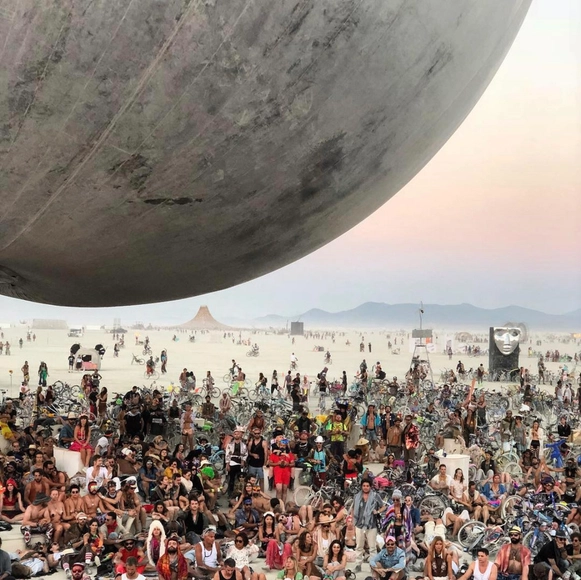
The 2018 edition of Burning Man featured a giant mirrored ball designed by Bjarke Ingels. Courtesy of Bjarke Ingels
Imagine a setting worthy of Mad Max, but filled with high-tech art installations. This is what the landscape of Burning Man looks like, the American art and counterculture festival that every year builds—and immediately afterward destroys—an entire city in the middle of the Nevada desert to host the event. Now, however, Brazil is joining the lineup, hosting its own annual edition of the festival: Tropical Burn.
Architectural modernism emerged in the wake of the early 20th-century European avant-gardes. The movement was fueled by industrial capitalism and the thrilling technological progress unfolding before everyone's eyes. The break with the past had been deliberately ushered in by intellectual, artistic, and technical movements since the mid-19th century. The Crystal Palace, for instance, designed by Sir Joseph Paxton, was built in London to host the Great Exhibition of 1851 and represented a structural revolution in the use of lightweight materials such as iron and glass.
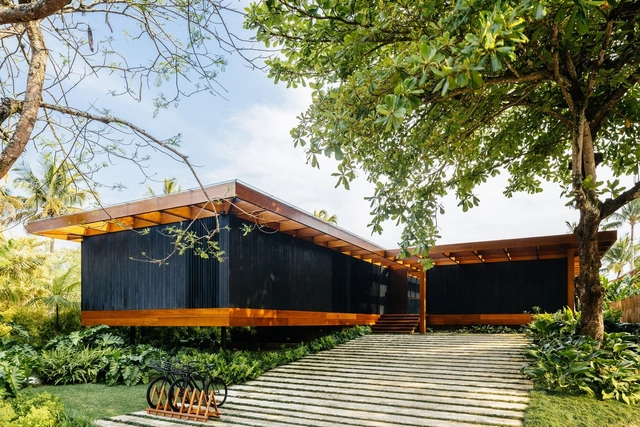
Tekôa is a space within Ekôa Park that explores solutions by bridging theory and practice. It is a hub for integrative permaculture practices based on two principles: developing a practical ecology and experimenting with low-environmental-impact solutions that yield positive social impacts, thereby inventing new ways of living, building shelter, and producing food. Sem Muros believes that to achieve an ecologically sound and socially just life, people must develop autonomy. To this end, the techniques used are simple, easily replicable, and tailored to the environmental context of the project's territory.
https://www.archdaily.com/1121765/tekoa-a-way-of-dwelling-that-integrates-permaculture-practices-bioconstruction-and-food-productionMarcella Arruda e Tomaz Lotufo
Since 1980, with the first exhibition dedicated exclusively to architecture, titled The Presence of the Past and directed by Paolo Portoghesi, the Venice Biennale has positioned itself as a turning point in the history of contemporary architecture. Since then, 16 editions have occupied the spaces of the Giardini and the Arsenale, addressing themes ranging from the fundamental elements of architecture to the future of the discipline.
Anyone who has ever taken an interest in mobility knows that the advent of the car brought about several major changes to the built environment of cities and to people's lives. These transformations have been, and continue to be, widely discussed across various fields of study. In history, for instance, the car serves as a lens for the period of industrialization; in engineering, it is key to engine technology; and in urban planning, it is studied for its role in the process of urbanization. From its invention to the present day, the car has continuously gained ground and become increasingly ubiquitous in streets and buildings, embedding itself into daily life and the popular imagination.
One of the constant considerations in residential design is how to divide spaces or define zones based on daily uses and dynamics without compromising the spatial quality of the building. While this exercise is inherent to architectural practice as a whole, when it comes to residential projects—particularly houses—the pursuit of comfort elements like natural light, ventilation, noise control, and privacy gains layers of complexity tied to the wide range of situations a home must accommodate.
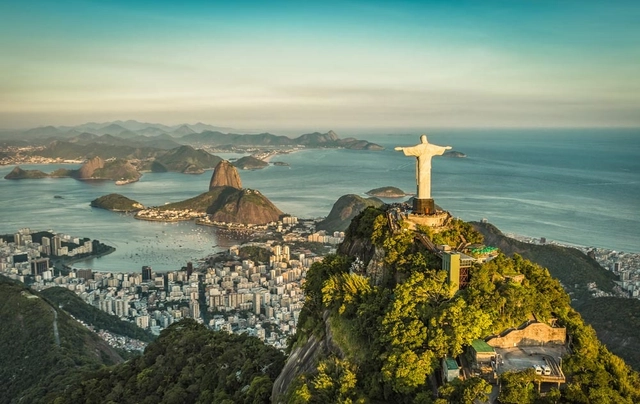
The International Union of Architects (UIA) has launched a global competition to select the logo for the World Capital of Architecture, whose inaugural host city is Rio de Janeiro. The initiative aims to transform Rio, and future designated capitals, into open and creative platforms to discuss, exchange, and find solutions to urban challenges.
The 12th São Paulo International Architecture Biennale took over two of the most iconic public buildings in the capital of São Paulo. A major exhibition featuring works from various parts of the world remains open until December 8 at the Centro Cultural São Paulo (CCSP), while Sesc 24 de Maio has been occupied by a dozen installations and devices designed specifically for the building and its surroundings.
Here, we present the 10 devices that transformed the space of Sesc 24 de Maio, creating tension and establishing narratives in one of the most intensely used public spaces in downtown São Paulo. The works are divided into the three axes guiding the Biennale: Everyday Tales, Everyday Materials, and Everyday Maintenance.
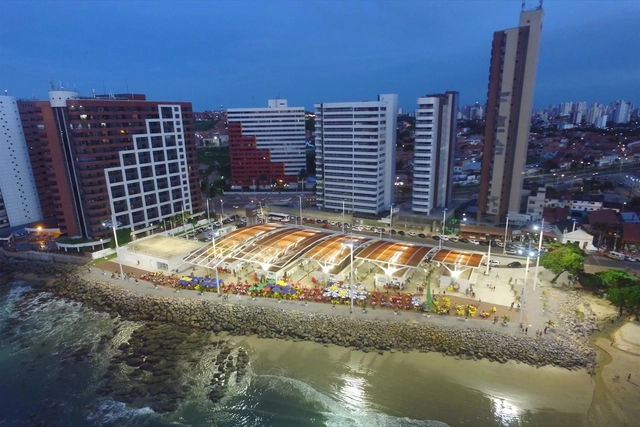
Mercado dos Peixes, Fortaleza (CE), vencedor do 10º Prêmio AsBEA de Arquitetura, na categoria Edifícios Comerciais. Projeto dos escritórios Arcosanti Arquitetura, Esdras Santos Arquitetura e Fausto Nilo Arquitetura.. Image Cortesia de CAU/BR
Architects and urban planners evaluated the services offered by CAU/BR and the state-level CAU/UFs. Out of nine services analyzed by the professionals, seven received an average score above 7 on a scale of zero to 10. These and other findings are part of the CAU Evaluation Survey conducted by the Datafolha Institute in May. The study interviewed 1,500 architects and urban planners and 500 architecture and urban planning firms by telephone to assess the effectiveness of the Council's communication channels with professionals and society, as well as to gather information to support initiatives ensuring access to the entity's information.
The streets of Los Angeles will serve as a testing ground for a new asphalt compound made from recycled plastic. Developed by TechniSoil Industrial, the material incorporates plastic waste that would typically be discarded, mixing it with recycled asphalt reclaimed directly from the streets.
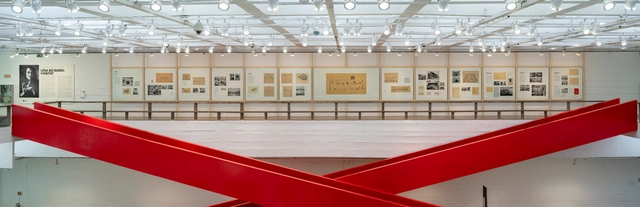
Through their narrative forms, architecture exhibitions promote the dissemination of knowledge and inquiries within the theory and practice of the discipline. Beyond the direct appreciation of a specific object or architectural ensemble by experiencing that space, architecture exhibitions present content structured through narrative paths, classifications, associations, or juxtapositions. This expands architectural knowledge, if not through in-situ experience, then through the way graphic materials are displayed. In this light, curatorial and exhibition design practices can foster new questions in the field of architecture, encouraging visitors to engage in critical reflection.
Brazil has just surpassed the 2,000-megawatt (MW) milestone of operational capacity in centralized solar photovoltaic generation systems—large-scale plants connected to the National Interconnected System (SIN).
According to data from the Brazilian Association of Solar Photovoltaic Energy (ABSOLAR), solar photovoltaic power—based on the direct conversion of solar radiation into electricity in a renewable, clean, sustainable, and increasingly competitive way—reached a total of 2,056 MW of operational installed capacity, equivalent to 1.2% of the country's electricity mix. As a result, it becomes the 7th largest energy source in Brazil, surpassing nuclear power, which accounts for 1,990 MW (1.2%) from the Angra I and Angra II plants located in Rio de Janeiro.

.jpg?1577129635 "Catenarius / Ramiro Meyer. Image © Federico Cairoli")







.jpg?1563898173&format=webp&width=640&height=580)

.jpg?1549026286&format=webp&width=640&height=580)
.jpg?1549029133 "Cortesia de Sem Muros arquitetura integrada")
.jpg?1549029152 "Courtesy of Ekôa Park")
.jpg?1549029125 "Cortesia de Sem Muros arquitetura integrada")
.jpg?1549026266 "Courtesy of Lúcio Ventania")
.jpg?1549026286)
_Cidade_Ativa.jpg?1548766874&format=webp&width=640&height=580)


.jpg?1569867443&format=webp&width=640&height=580)

.jpg?1553011212&format=webp&width=640&height=580)