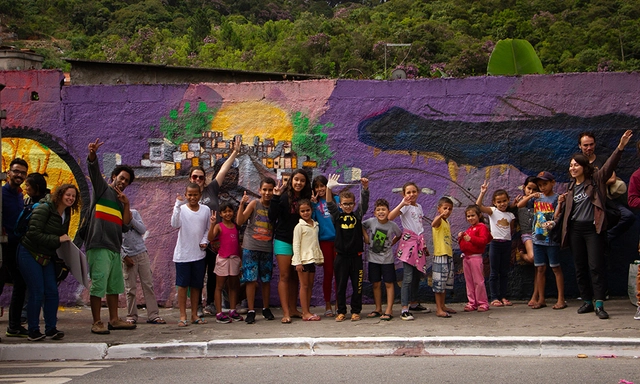
Índia painting a graffiti piece about the bond of motherhood (Personal Archive) / Credit: Personal archive
Anyone walking through São Paulo is already accustomed to the colorful walls scattered across the capital. Generally, the graffiti that colors the city's streets is signed by men, and rarely by women. However, this scenario is changing in the city's outskirts. More and more women are bringing art to the streets, balancing motherhood with graffiti.
https://www.archdaily.com/1121418/women-graffiti-artists-occupy-the-walls-of-sao-pauloDanielle Lobato, Erica Pacheko, Ira Romão e Priscila Gomes
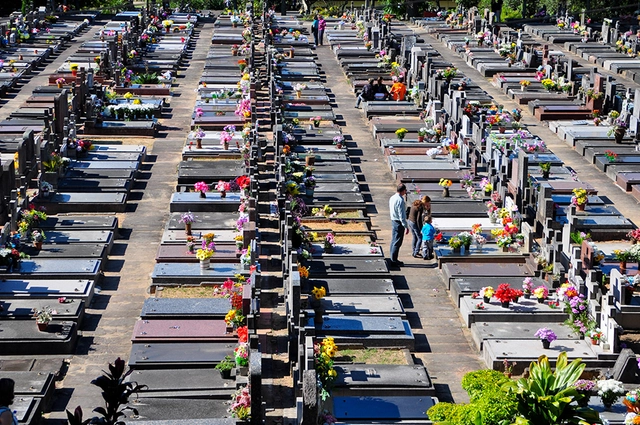
São João Cemetery, Porto Alegre-RS. Image: Lívia Stumpf/Flickr. Via Caos Planejado
“The following day, no one died.” Thus begins the novel Death with Interruptions, by Nobel laureate José Saramago. In it, death suspends its services and, for a time, everyone remains alive in an imaginary country. This masterly metaphor conceived by the Portuguese author, already in his final pairs of shoes, serves as the foundation for discussing the dilemmas and conflicts of the end of life.
Cortesia de Luiza de Souza Santos, Marcus Barbosa e Gabriel Thomé de Oliveira
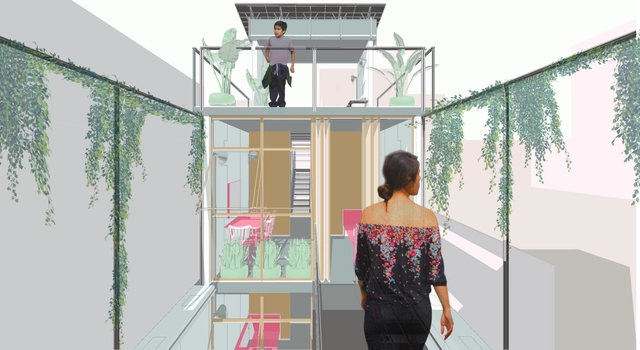
The Brazilian student team, comprising Luiza de Souza Santos, Marcus Barbosa, and Gabriel Thomé de Oliveira from UFMG, was awarded an honorable mention in the SkyCity Challenge 2019 international competition, which aimed to "explore sustainable ways of living, working collectively, and having fun." Learn more about their proposal below.
Paraisópolis. Credit: Fernando Stankuns on Visual Hunt / CC BY-NC-SA
In 2018, anyone who passed by an empty lot in the heart of Paraisópolis—São Paulo's second-largest community—on Mondays and Thursdays encountered children with dirt-dusted knees, playing with objects like tires, paper boats, and twigs in endless games. This was the Brincreto project, an initiative by the Coletivo LUB – Laboratório de Urbano de Brincadeiras.
The Passeia, Jardim Nakamura project is a pilot initiative focused on citizen legibility. By leveraging community engagement to build local connections, the project co-created and implemented a neighborhood signage system alongside residents of Jardim Nakamura, located in Jardim Ângela, São Paulo. The project was developed by Instituto COURB and SampaPé!, with financial support from Fundo Casa Cidades. With this proposal, the objective was to foster residents' sense of recognition of their neighborhood, while also ensuring greater comfort and safety for pedestrian mobility, encouraging spatial connection, and promoting the appropriation of local history. In this light, the initiative sought to make the territory easier to read, fostering appreciation for local history and neighborhood actors, while also mapping key locations, walking distances, and the local boundary.
https://www.archdaily.com/1121407/civic-legibility-and-community-engagement-the-passeia-jardim-nakamura-projectCOURB Brasil
Venice is undoubtedly one of the most sought-after destinations in Europe for travelers from around the world. The city boasts attractions in many areas, from gastronomy to art, and naturally, architecture—an art form deeply woven into the city's fabric, most prominently showcased at the Architecture Biennales, held since 1980. Beyond the Biennale, the island has much to offer those interested in exploring places that epitomize the relationship between past and present, the preservation of historical memory, and new technologies serving buildings in constant relation with the water.
Carolina Maria de Jesus, 1960. Documentary collection: Correio da Manhã. Image via Wikipedia
In this doctoral dissertation, architect and urban planner Gabriela Leandro Pereira explores the accounts and contested urban narratives of the writer Carolina Maria de Jesus, from Minas Gerais, Brazil. Carolina is one of the country's pioneering and most prominent Black female writers; her best-known work is the book Quarto de Despejo: Diário de Uma Favelada—the raw account of the harsh daily reality experienced by a Black woman, waste picker, and resident of the Canindé favela in São Paulo. Defended in 2015 at the Federal University of Bahia under the advisement of Professor Ana Maria Fernandes, PhD, the dissertation received the Rodrigo Simões Doctoral Dissertation Award from the National Association of Postgraduate Studies and Research in Urban and Regional Planning (ANPUR) in 2017. Read the abstract provided by the author below.
https://www.archdaily.com/1121419/body-discourse-and-territory-the-contested-city-in-the-folds-of-carolina-maria-de-jesuss-narrativePedro Vada
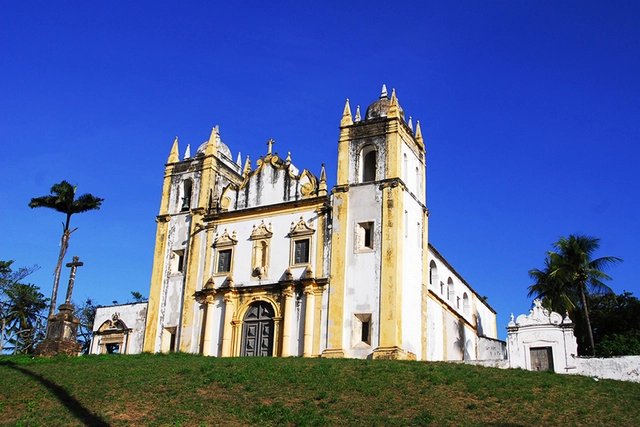
Olinda, PE. Photograph: Prefeitura de Olinda on Foter.com / CC BY
Aiming to train graduate professionals from various fields of knowledge over a 24-month period to work in the field of cultural heritage preservation, the Professional Master's Program in Cultural Heritage Preservation of the National Historic and Artistic Heritage Institute (Iphan) has launched the call for applicationsfor 10 fellowship positions. Interested applicants can apply until March 1, 2019.
Cortesia de Bruno Cabral Arquitetura, RGB Estudio e Jakelyne Martins Arquitetura
The firms Bruno Cabral Arquitetura, RGB Estudio and Jakelyne Martins Arquitetura were awarded second place in the national competition for the new headquarters of the Association of Engineers and Architects of Sorocaba (AEAS). Discover the proposal below, accompanied by the project description.
According to the 2016 report by the United Nations Human Settlements Programme (UN-Habitat), there are 881 million people living in slums in cities across the developing world, and it is estimated that by 2025, another 1.6 billion people will likely need adequate and affordable housing. In light of these projections, there has been much discussion about Social Interest Housing (referred to as HIS in Brazil) and how projects in this field can help address the housing deficit. But what, exactly, does this term mean?
The second edition of the award, a partnership between the Tomie Ohtake Institute and Leroy Merlin, has extended its registration deadline. Until October 15, university students from any field can submit design projects related to product, furniture, fashion, interiors, landscape, web, graphic, and service design, among others, under the theme CIRCULAR.
Portuguese firm MASS lab, led by architects Diogo Rocha, Duarte Fontes, and Lourenço Rodrigues, has been announced as the winner of the Ideas Competition for the Former Monte Pedral Barracks, organized by the Porto City Council, Portugal. The winning design combines a new network of public spaces with a variety of housing typologies, forming a sort of archipelago in the middle of the city: a set of urban islands that structure the urban fabric, where the relationship of proximity prioritizes the space in-between—a space that will be filled by time and people.
Developed by researchers from the Federal Universities of Rio de Janeiro (UFRJ) and Bahia (UFBA), Cronologia do Pensamento Urbanísticois an online platform active since 2003 that brings together historical events, projects, key facts, and publications related to the history of urbanism in Brazil and worldwide.
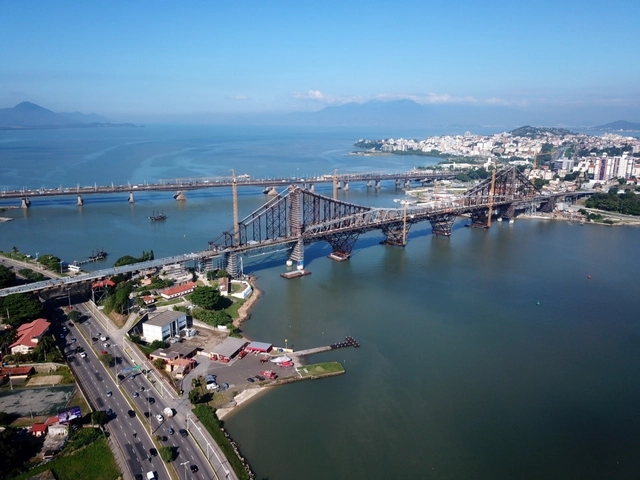
Ponte Hercílio Luz. Image Cortesia de Prefeitura Municipal de Florianópolis / Divulgação
The City of Florianópolis and the Santa Catarina State Government plan to inaugurate the first phase of the urban redevelopment project for the famous Hercílio Luz Bridge and its surroundings by the end of the year. Named Ponte Viva: Hercílio Luz Para as Pessoas (Living Bridge: Hercílio Luz for People), the project encompasses not only the restructuring of the iconic landmark as road infrastructure, but also its activation for other uses, such as sports, leisure, and culture.
Keys to facing a studio presentation or exam in the first years of architecture. Image via Facultad de Arquitectura, Planeamiento y Diseño UNR
Quacquarelli Symonds (QS) has released the 2019 edition of its annual ranking of the world's top universities in the field of architecture. This year, UCL (University College London) took the lead, a position held by the Massachusetts Institute of Technology (MIT) in the United States for the past four editions.
In Latin America, institutions from Chile, Brazil, and Mexico occupy the top three spots, respectively. See the top 10 below:
The Brazilian delegation from the Special Secretariat for Culture of the Ministry of Citizenship and the National Institute of Historic and Artistic Heritage (Iphan) on a mission to Portugal has brought updates regarding Cultural Heritage. In May 2019, the European country will host an exchange mission with Brazilian city managers, mayors, and tourism trade representatives. The goal is to study benchmarks in Portuguese Interpretation Centers to bring models to the 13 Brazilian cities that host World Heritage cultural sites.
The city of Asunción hosted the XI Ibero-American Biennial of Architecture and Urbanism (XI BIAU). To mark the occasion, ArchDaily spoke with Paraguayan architect and coordinator of this edition of the international event, José Cubilla.
As the Egyptians, Aztecs, Greeks, and Incas well knew, nature holds within itself the answers to life's great mysteries. We only need to observe it closely to decipher the enigma. Often, we move heaven and earth searching for what has been right in front of our eyes all along. Immersed in our cell phones and concrete cities, when was the last time we walked on the grass or gazed at the stars?
Ancient civilizations did so constantly. By studying the path of the sun, the seasons, and the rain, they left a legacy of structures that have survived for millennia and still stand today. Without Google or computers, they acquired knowledge through the observation and study of their surroundings: nature.
Hospital Venado Tuerto. Foto Gustavo Frittegotto. Image Cortesía de Mario Corea Arquitectura
The Dr. Gutiérrez Hospital and the Specialty Outpatient Medical Center of Santa Fe (CEMAFE) recognize the work of Mario Corea and his team, having received the ex–aequo Award from the Central Society of Architects of Argentina, the First Prize ARQ FADEA 2018, and the ORO Gran Premio Nacional.
Utilizing a new typological system, the projects accommodate potential future transformations without altering the buildings' intrinsic characteristics, such as circulation and structure. Flexibility, sustainability, the rational use of resources, and environmental impact assessments are among the core design premises of these evolutionary hospitals.
Learn more about the projects in the authors' own words.
The National Academy of Architecture is a non-profit civil association whose primary objective is to study, promote, and recognize contemporary architecture, as well as to acknowledge, honor, and reward the outstanding performance of architects. The association has local chapters across various states of the Mexican Republic. It invites architects to join its ranks who, through the high caliber of their professional careers, have contributed to the advancement of architecture, the arts, and culture.
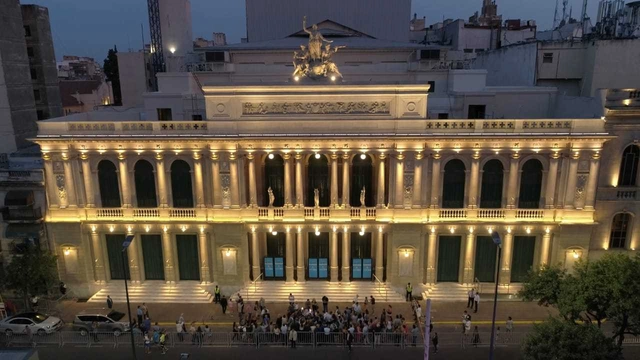
Teatro del Libertador General San Martin. Image Cortesía de Natacha Escarguel
The construction of theaters in the Province of Córdoba, Argentina, was closely tied to the second wave of immigration that arrived between 1880 and 1930, alongside the expansion of the country's railway network. Today, the city boasts a large number of theaters, most of which date back to this period and form an integral part of Córdoba's cultural heritage, despite having suffered for many years from the neglect of successive governments.
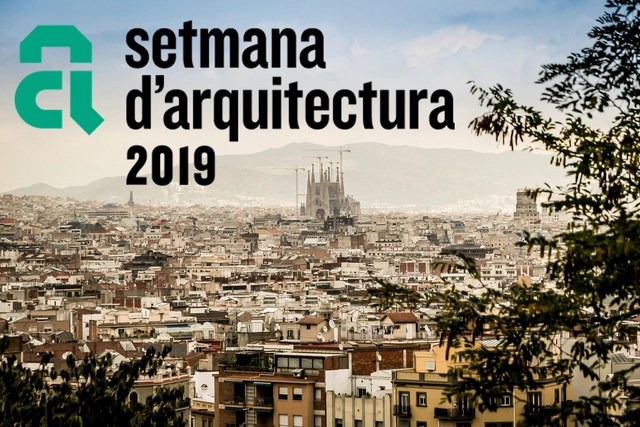
During this time, Barcelona will become the epicenter of a wide range of activities related to architecture and the city, transcending disciplinary and territorial boundaries. Additionally, marking the centenary of the founding of the Bauhaus school of design and architecture, this year's edition will highlight the legacy of various early-20th-century architectural movements.
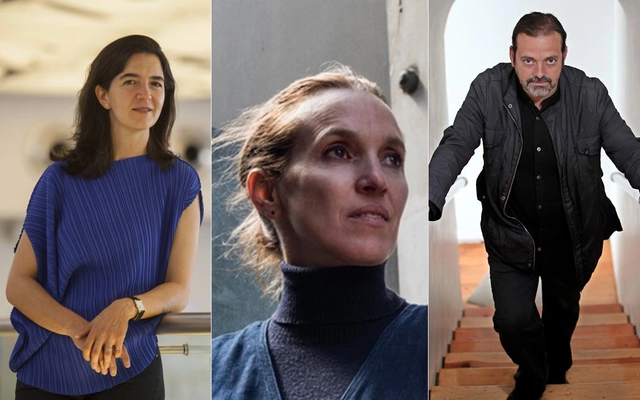
Sometimes, architecture presents itself as an object of responsibility—an exercise in recognizing authorship, aiming to define and delimit it. We feel an urgent need to know who its author was, to credit whoever was capable of such inventions. Just as often, however, architecture does not claim any author; hence the terms anonymous architecture or "architecture without architects"—that is, a merely vernacular architecture. In the case of Carme Pinós, what is built inevitably speaks of who built it. Her architecture offers a glimpse of the energy that emanates from her persona: a vibrant, direct, tense architecture, swept by a continuous, dominating agitation. Within it, elements are in constant motion in a completely ungrounded way, rather than by their own virtue.
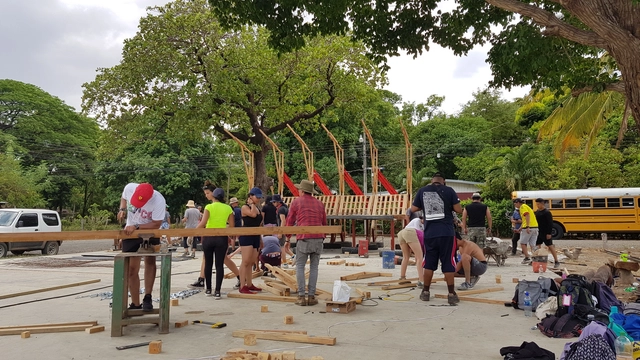
Nearly 200 students from 18 countries are currently working on TSL Costa Rica 2019 in the city of Santa Cruz, organized by the Latin American Coordinator of Architecture Students (CLEA) and the local organization Estudiantes de Arquitectura en Movimiento (EAM).

.jpg?1548078349&format=webp&width=640&height=580)




.jpg?1570148721&format=webp&width=640&height=580)