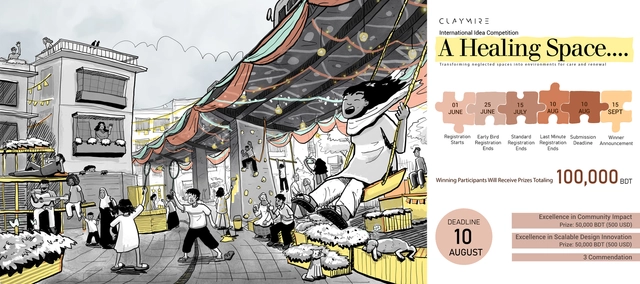
Title: A Healing Space – International Design Competition


Title: A Healing Space – International Design Competition

The Vienna Architecture Summer School (VAS²) aims to provide an open learning space and prototypical infrastructure for the exchange and negotiation of knowledges in architecture, reaching beyond dominating institutions and mainstream discourses. VAS² invites local and international participants to exchange with young architects and established experts all practicing in Vienna and beyond.

1. Background
- The current Daegu City Hall in Dongin was constructed in 1993, and the City Council building in 1956. Due to aging facilities and a shortage of administrative space, the city has been leasing nearby office buildings and operating in a dispersed manner since 2004.
- Among these, the former Gyeongsangbuk-do Provincial Government Office, built in 1965 and currently used as the Daegu City Hall in Sangyeok, is located approximately 4 km or a 15-minute drive from the Daegu City Hall in Dongin. This facility is also fragmented across several buildings, making it inconvenient for citizens to visit, significantly reducing administrative efficiency, and resulting in considerable unnecessary expenditures.
- As a result, the necessity of constructing a new city hall was brought into public discussion. Since the initial construction plan was established in 2004, a Citizen Participation Committee consisting of 250 citizens took part in the site selection process in 2019, ultimately selecting the Duryu Water Purification Plant site in Dalseo-gu as the final project location.
In this issue of Dearq "Perennial: Architecture's Timeless Dimensions" we are particularly interested in the relationships between materials, architectural elements, spatial and formal arrangements, as well as the instruments and methods we use to describe and classify these connections in order to better understand what stands the test of time and what does not.

D-arc BUILD is India's premier Exhibition for the Design Architecture Engineering Building and Construction Material industry. The event brings together leading professionals from around the world to showcase the latest products technologies and trends in the industry.
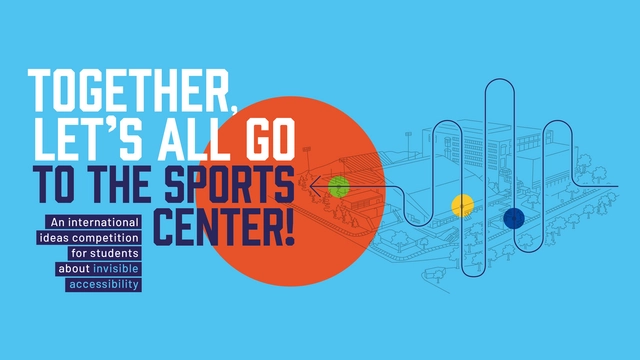
The Faculté de l'aménagement at the Université de Montréal is pleased to announce the launch of an international, multidisciplinary and anonymous ideas competition, reserved for students, to create inclusive experiences at the CEPSUM, the Université de Montréal's sports center.
With a total of $31,500 in prizes, the competition promotes the idea of invisible accessibility, an experience of the built environment that is of high quality to all, where the design of accessibility is integrated in an indistinguishable manner, and where universal accessibility is envisaged as a global state of the project experience, rather than a dedicated path made up of identifiable and visible solutions.
Participants are invited to propose transformative ideas that offer inclusive and equitable experiences for all users. The competition is structured around three typical sports center experiences that are not currently universally accessible:
1. The main entrance - Rethinking the entrance and reception of the sports center;
2. Carabins stadium - Improve the game-going experience;
3. The pool - Creating an inclusive swimming experience.
The proposals received over the summer will be evaluated by a multidisciplinary jury of eight experts. For each of the three experiences, three winning projects will be selected, making a total of nine winners.
All proposals will be presented in October 2025 at a conference organized by the Faculté de l'aménagement, bringing together researchers working on accessibility in the built environment.
« We warmly welcome students from around the world to propose bold, creative ideas that reimagine universal accessibility—not as an add-on, but as an integral, seamless, and uplifting experience for everyone, says Carmela Cucuzzella, Dean of the Faculté de l'aménagement. We are looking for designs that are not only inclusive, but also invisible in their accommodation, free of stigma, and full of delight and safety. Think beyond the box—then break it wide open. »
« A public space that is not accessible to everyone cannot be considered public, says Bechara Helal, Associate Dean of Research and Scientific Life. It is high time to rethink the place of universal accessibility in design disciplines, and that is what this competition aims to do: define innovative ways of designing the built environment so that it can become the setting for quality public experiences for all. »
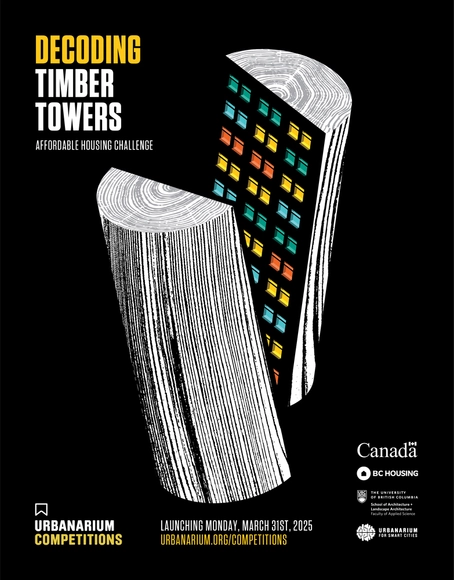
Decoding Timber Towers is the fourth ideas competition presented by Urbanarium to foster dialogue and encourage design investigations that promote housing affordability and address the effects of climate change. Entrants are asked to consider design solutions for mass timber residential and mixed-use buildings that, as with the earlier Missing Middle, Mixing Middle, and Decoding Density competitions, also explore how housing innovations and higher densities are constrained by building code, zoning, and other regulations.

For this edition, the foundation will grant two fellowships of up to €75,000 each and invites prospective fellows from around the world to apply in partnership with a host institution. The proposed courses should preferably begin in 2026 (or shortly thereafter) and revolve around the 2025 OBEL Award theme: Ready Made. The aim is to foster deeper exploration, development, and dissemination of knowledge on this key topic within the built environment.

Saudi Arabia is undergoing an extraordinary transformation, stepping boldly into a future shaped by innovation, creativity, and opportunity. Guided by Vision 2030, the Kingdom is diversifying its economy beyond oil, with significant investments in tourism, culture, technology, and sustainability. This national evolution is redefining Saudi Arabia's identity on the global stage, blending modern progress with deep-rooted heritage.
Across the country, ambitious initiatives are revitalizing cities and landscapes, honoring the past while embracing the future. Historic sites are being preserved, new urban developments are emerging, and cultural projects are flourishing—all working together to create a contemporary Saudi Arabia that is both forward-thinking and proud of its traditions. As the Kingdom grows into a global hub for art and creativity, it provides new platforms for artists, architects, and designers to contribute to its evolving landscape.
As part of Saudi Arabia's broader cultural transformation, the Mujassam Watan Urban Sculpture Challenge, organized by Buildner in partnership with the Mujassam Watan Initiative (an initiative by Al Fozan Social Foundation), provides a platform for architects and artists to shape the Kingdom's evolving public spaces. Since its launch in 2018, this prestigious competition has welcomed creative minds from around the world to design sculptures that reflect Saudi Arabia's culture, heritage, and aspirations. These works of art are envisioned as meaningful additions to the urban landscape, enhancing public spaces and celebrating the Kingdom's identity.
This year's theme, "The Inspiration Around You," challenges participants to reflect on their environment and create sculptures that embody Saudi Arabia's unique story. Designers will choose from two distinct sites:

Reimagining London's High-Rise Green Spaces: A Design Contest by EnviroBuild
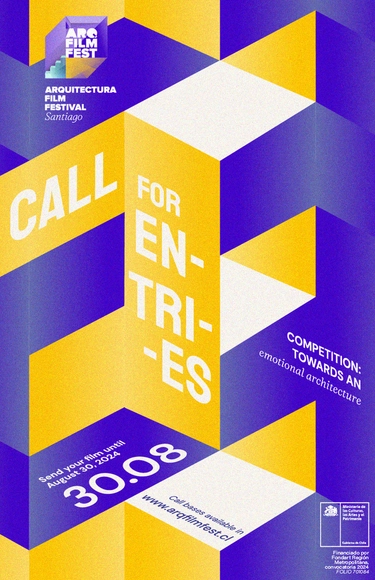
The Arquitectura Film Festival Santiago puts its foot firmly in its second decade with this version that invites us to reflect on how we live and relate to each other in the current changing scenario. The call for the international competition will be open until August 30, 2024 and filmmakers from all over the world can participate in it through www.arqfilmfest.cl

50 years after the pioneering exhibition, Monumenta, opened in Newport in 1974, The Preservation Society of Newport County will honor its anniversary with a symposium at Rosecliff. Monumenta was a groundbreaking event that showcased 54 large-scale outdoor sculptures across the Newport landscape by 40 artists, including Willem de Kooning, Robert Indiana, Louise Nevelson, Jules Olitski, Henry Moore, Barnett Newman, Richard Fleischner, David Smith, Christo, Claes Oldenberg, Barbara Hepworth and Alexander Calder.

Opening August 2nd, 2024 at the Imagine Butte Resource Center
(IBRC) in historic Uptown Butte, Construction Ecologies presents architectural
research exploring construction supply chains in Montana, tracing the flow of raw
materials from their original sites of extraction through production to their final use in the built environment. Sponsored by the nonprofit Building Bureau and the School of Architecture at Montana State University (MSU), the show features research by eleven graduate architecture students conducted this spring in Building Bureau’s Visiting Scholar Advanced Architectural Studio at MSU. The work on display includes diagrams, text, mineral samples, material experiments and physical models, and represents both industrially produced construction materials ranging from gypsum to copper – for which Butte is famed – and renewable resources such as timber, wool, and straw.

The PA Editorial Fellowship aims to encourage new editors and writers to contribute to the field of architecture and design. We want to ensure that diverse voices from different backgrounds have visibility in this field.
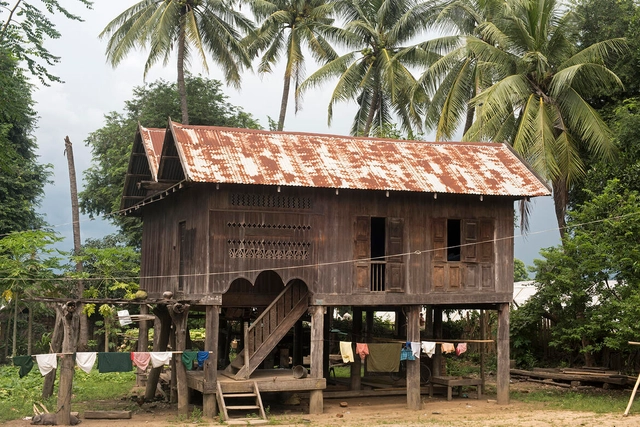
Myanmar’s traditional teak farmhouses, included on the 2020 World Monuments Watch, embody the country’s unique vernacular building traditions.
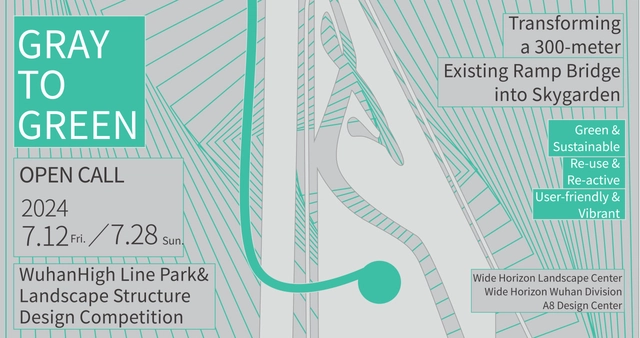
In this competition jointly initiated by A8 Design Center, Wide Horizon Landscape Center, and Wide Horizon Wuhan Division, it is expected that through thetransformation of the existing municipal ramp bridge and the design of the landscape structure connected to it, after the municipal traffic function of the ramp bridge is cancelled in the future, it can be converted into an aerial urban greenway in the large park system, and further through the vertical traffic line of the landscape structure, a connection between the urban elevated greenway interface and the ground park can be formed. With the elevated bridge park and the landscape structure as anchor nodes, a flexible conversion and connection from the rapid urban traffic interface to the ground park system can be achieved, creating a user-friendly activity space, and becoming a display interface for the city's riverside expressway.
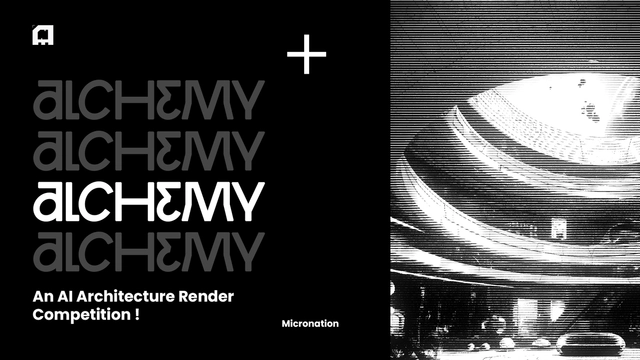
Challenge
History whispers through the weathered stones of monuments, each one a testament to a bygone era. But what if these grand structures, once bustling centers of power or worship, could find a new purpose in the modern world? The "Reimagining History: AI Competition" challenges you to do just that. Participants are invited to embark on a journey of creative exploration, selecting a historical monument – a majestic castle, a sprawling palace, or a serene temple – and envisioning a new, relevant use for it in the 21st century. The task lies not just in finding a function, but in seamlessly integrating it with the existing architectural style and historical significance of the monument. Can you breathe new life into these architectural giants, ensuring they not only stand as testaments to the past but also thrive as vibrant spaces in our present? Utilize the power of AI rendering to showcase your vision, and together, let's reimagine the future of historical preservation.

Join us for a summer workshop on earth building! We will construct a rammed earth pavilion and explore ways to use natural materials in architecture. Special attention will be given to hemp as a building material. No prior knowledge is required! The workshop will take place at the Center for Earth Building in Dobrava pri Škocjanu 23.