Discover Germany's biggest interior design fair! From 14.01- to 18.01.2024, the imm cologne will once herald the new interior design year and set the trends of tomorrow. With a clear focus on business, inspiration and networking, the fair offers the international interior world a unique platform and the central access point to the European furnishing market. The imm cologne represents the entire spectrum of products and services of the industry - from innovative furnishing solutions from up-and-coming start-ups to the high-end designs of established market leaders.
Saint-Gobain Transparence 18.0 - Art and Science of Building Responsibly
Saint-Gobain Transparence is India's Biggest Design Competition for students of architecture and design. For the past 18 years, Saint-Gobain in association with Ethos has been striving to provide a platform for aspiring designers to showcase their ingenuity on topics in design relevant to our times as well as apt for the future. Participate in Saint-Gobain Transparence 18.0 Architecture Category this year and win a chance to represent your country in the Global Architecture Student Contest in Finland, Europe.
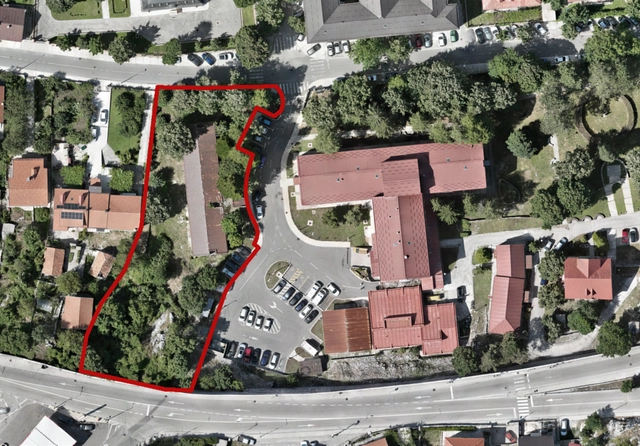
Ministry of Spatial Planning, Urbanism and State Property of Montenegro has announced an International Competition for a Conceptual Architectural Design of the Hospital Facility within “Danilo I” General Hospital Complex in Cetinje (Montenegro).
One-of-a-kind inclusive community grounded in neurodiversity, India Autism Center (IAC) is a multidisciplinary non-profit organization for individuals with autism spectrum disorder and other related conditions. The competition site of 3000 sq ft (built up of 4500 sq ft) is located within the campus, an integrated 39-acre community neighborhood, currently under construction at Sirakole, West Bengal.The project is envisioned to create an inclusive community - with the provision of residential, educational, vocational, clinical, and recreational services as well as employment avenues.
Videos
Imagine your chair made from Andean bamboo (Chusquea Scandens). Plan on coming to the Andean forest to build it. Be part of the publication with the collection of participating chairs and aspire to be elected by an international jury.
SIT DOWN AND FEEL One of humanity’s most important contributions, and one that supports, literally and often to the extreme, our choice not to move, is the chair. Disregarding the hip joint’s capacity for permanent movement, we adopt from an early age a sitting posture that in adulthood can account for an average of 7 hours of every day, according to studies by experts in workplace ergonomics, who also recommend changing positions from time to time, lest we begin to take root. Our body spends so much time in a chair that the challenge for designers has been to create one with a backrest and seat that merge with the body to unload its weight, distributing it over four legs. The process of imagining, recreating, developing, and producing a new chair is summarized in each iconic model that scholars of the history of design have placed on the timeline of humanity —which since the industrial revolution seems to spend increasingly more time seated— and of a profession exploding with endless creativity and rife with proposals for furniture that contradicts, complies with, reformulates, and varies the possibilities of our bodily actions when we stop moving around to rest, find ourselves, feel, and sit down.
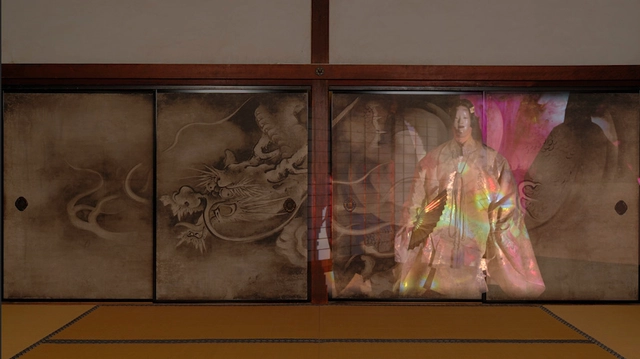
Japanese art has an allure that transcends time, from the resplendent beauty of paintings on golden screens to the elegant lines of ikebana flower arrangements. In modern times, new technologies are revolutionizing our engagement with these art forms. High-precision replicas of precious paintings can be created, allowing the originals to be safely preserved, while still being accessible to the public. Meanwhile, contemporary artists are using technology to express traditional Japanese artistic concepts in novel ways. At this talk, Frank Feltens, Curator of Japanese Art at the Smithsonian’s National Museum of Asian Art, and Japanese new media artist and Professor of Kyoto University Naoko Tosa, creator of Sounds of Ikebana, examine the applications of technology in the world of Japanese art today. Moderated by Monika Bincsik, Diane and Arthur Abbey Curator for Japanese Decorative Arts at the Metropolitan Museum of Art.
The TRANSFER Architecture Video Award is an independent award organized by TRANSFER Global Architecture Platform and supported by Sotto Voce Foundation
The TRANSFER Architecture Video Award is an independent award, launched in 2019, to recognise the most creative and innovative short films in the field of architecture, city or landscape worldwide.
Architecture, Technology, Sustainability, Smart Buildings, Green Architecture, Climate Change, Design, Building Structures
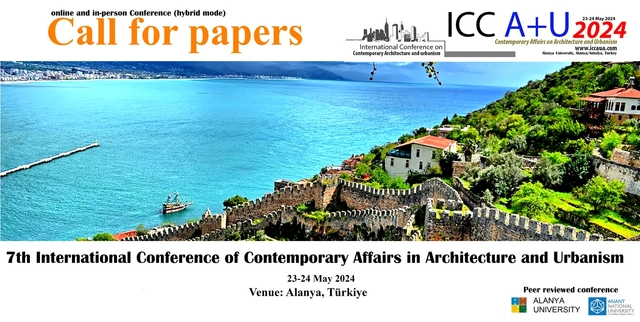
7th International Conference of Contemporary Affairs in Architecture and Urbanism, ICCAUA2024 23-24 May 2024 Alanya, TÜRKİYE Hybrid Conference (Both online and In-person presentations will be available)
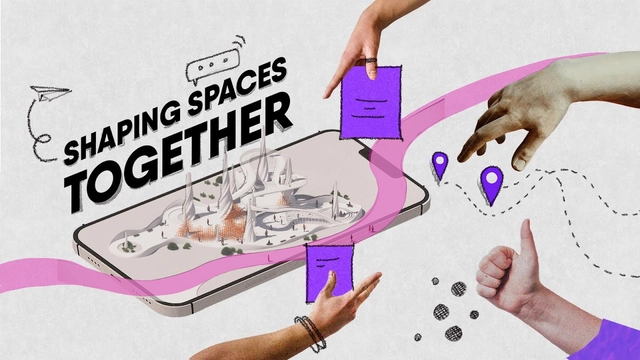
How do we design for impact? In a world bustling with innovation, we often overlook the potential within our own communities. This competition is a chance to harness your community’s spirit and design something with local value.
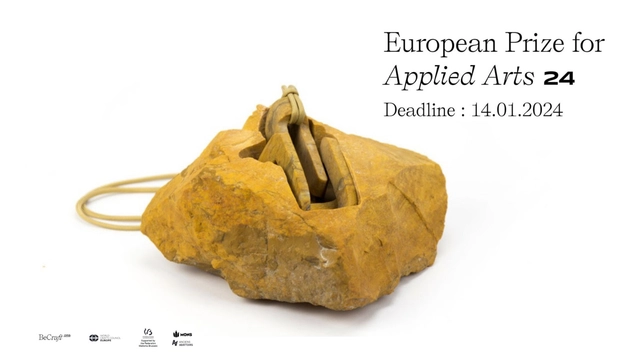
The European Prize for Applied Arts aims to reward the best creations of contemporary expression in applied arts and artisanal design on the basis of criteria of artistic merit, technical mastery and innovation. This competition is for all artists working in the field of applied arts and crafts, residing in a country member of the Customs Union from the European Union and not subject to customs charges for transport to and from Belgium.
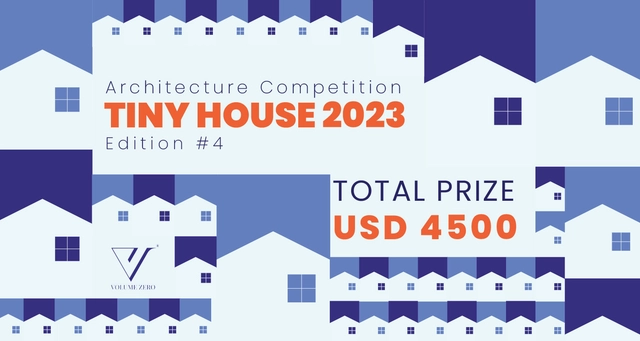
Tiny House Architecture Competition aims to celebrate individuality, redefine sustainability and exalt simple, resourceful living.
Volume Zero invites each one of you to participate in the 22nd edition of our architectural competitions and the 4th edition of Tiny House Architecture Competition. This year’s Tiny House aims to celebrate individuality, reimagine sustainability and to exalt simple, innovative yet resourceful living. The Tiny House Movement is also a platform that not only explores the avenues of ‘mobile’ or ‘Off the Grid’ Living spaces but also the freedom and independence they would offer. Come be a part of this movement; join a new wave of habitat designers!
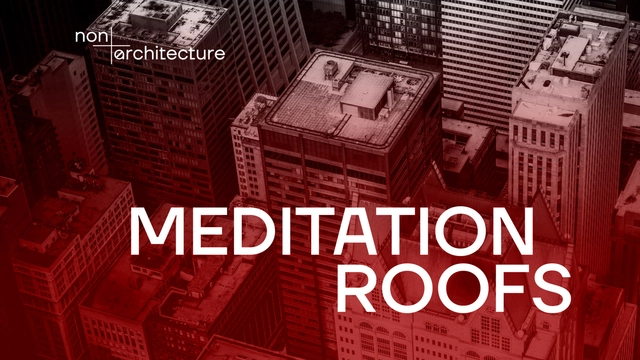
🔖 Propose innovative rooftop designs that not only offer a sanctuary for meditation, but also actively endorse and uplift the practice of mindfulness in an urban setting — only 1 drawing, with absolute freedom of scale, site or program.
Architecture competition | Reinterpreting the Space
With the beginning of the full scale war in Ukraine, we feel the urgent need to preserve the identity of our heritage, and to popularize it in the world. Architecture competition Reinterpreting the Space is looking for the conceptual ideas for revitalization the historical space of the Potocki Palace complex in Ivano-Frankivsk (Ukraine) with the creation of a public cultural space.
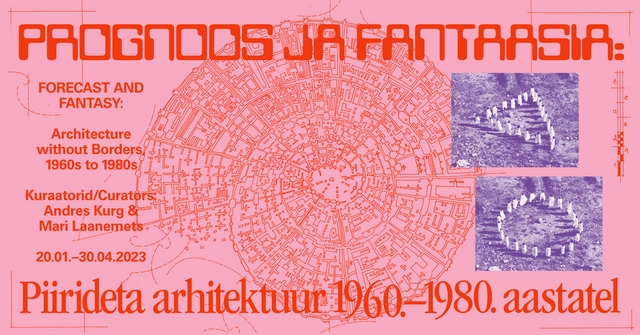
This exhibition stages a meeting point for scientific predictions and futuristic fantasies that were manifested in architecture and art from the 1960s to the 1980s. Bringing together authors from Eastern Europe and the West, the exhibition will display works that emerged from the new technological reality that followed the Second World War, and which took it along unexpected paths: foreseeing the replacement of work with games and collective pleasures in computerised societies, turning away from the overarching machine logic and replacing it with myths and romantic ideas of the human being, or looking for traces of other civilizations from space, instead of conquering it. A utopia of quantification and of scientific planning, of the separation of life and work, was replaced by a striving towards harmony between the machine and nature, the mind and the body. These projects are extensions of a technologicised world, ironic and absurd situations that present a critique of rationalism and speak of the contradictions of late modern society, demonstrating at the same time both its intellectual horizons and the limits of its utopian fantasies.
Prof. Sharon Rotbard from Bezalel Institute of Jerusalem presided the inaugural session of Avani Dissertation Symposium 2023 and addressed foundation studio students on January 23rd 2023. He also organized a workshop for selected faculty members of Avani Institute of Design. Prof. Sharon Rotbard is an architect, academician, author of several books, including the much acclaimed "Black City, White City" and a publisher. He has conducted several studios in India and also taught at CARE, Trichy for over a year.
An urban space quipped to handle residents and strangers alike and to make safety an asset in itself. A thriving city neighborhood must have three main qualities: First, there must be a clear boundary between what is public space and what is private space. Public and private spaces can not ooze into each other as they do typically in suburban settings or projects. Second, there must be eyes upon the street, eyes belonging to those we might call the natural proprietors of the road. The buildings on an urban street should be equipped to handle strangers and ensure the safety of both residents and strangers. They must be oriented to the street. They cannot turn their backs or blank sides on it and leave it blind. Third, public spaces must have users on them reasonably continuously, both to add to the number of effective panopticons and to induce the people in buildings surrounding the space to perform as active characters responsible for the safety of the space.