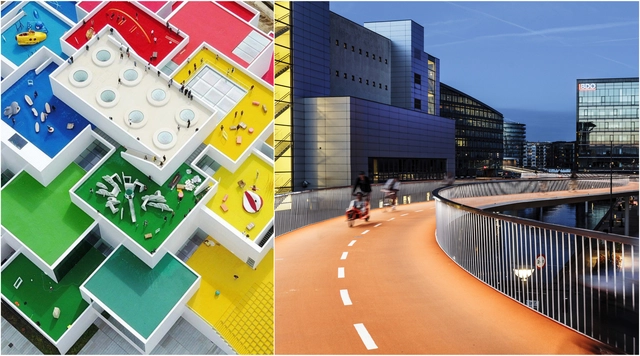
Bjarke Ingels Group’s LEGO House and DISSING + WEITLING’s Bicycle Snake have been recognized by the 2018 Danish Design Awards, an initiative which “highlights the impact and value of design, celebrates companies and designers across the country and showcases the difference their solutions make to industry, everyday life, and society at large.”
The LEGO House was victorious in the “Feel Good” category, while the Bicycle Snake was awarded the “Icon Award.”
I spent four glorious days in Copenhagen recently and left with an acute case of urban envy. (I kept thinking: It’s like... an American Portland—except better.) Why can’t we do cities like this in the US? That’s the question an urban nerd like me asks while strolling the famously pedestrian-friendly streets, as hordes of impossibly blond and fit Danes bicycle briskly past.
Copenhagen is one of the most civilized cities on the planet. The world’s “most livable,” it’s often called, with some justification. (Although a Danish relative did caution me, “Spend a few weeks here in January before you make that pronouncement.”) But the seemingly effortless civility, Copenhagen’s amazing level of grace, is not an accident of place or happenstance. It’s the product of a shared belief that transcends urban design, even though the city is a veritable laboratory for pretty much all of the best practices in the field.