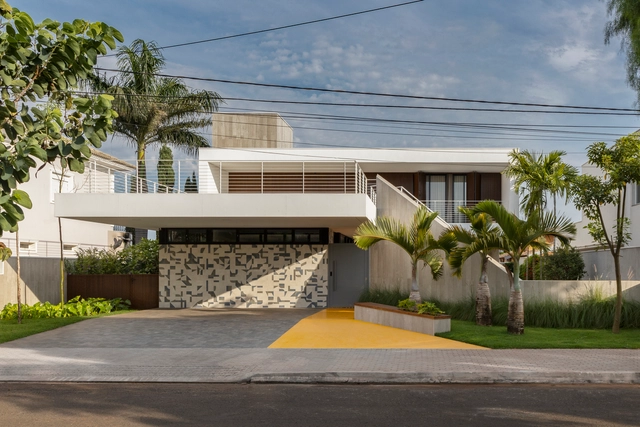
The Arquicast Interview series aims both to showcase the work of architectural practices from different regions of Brazil and to shed new light on established architects. Through casual conversations about daily professional life, behind-the-scenes insights, and stories behind their projects, it explores the personal experiences that have shaped their worldviews.
In this episode, the team speaks with Francisco Spadoni, from Spadoni & Associados Arquitetura. Founded in 1996 upon his return from Paris after working with Kenzo Tange, the firm is led by Spadoni and Tiago de Oliveira Andrade. The practice regularly participates in architectural competitions in Brazil and abroad, earning recognition in several of them. Their projects are characterized by confronting challenges and complexities across multiple scales, always from a reflective and critical standpoint.
The Ordem dos Arquitectos proposes a dialogue regarding current challenges for a post-pandemic future, intersecting architecture, art, the city, and politics in response to the European Commission President’s call for a New European Bauhaus. The event serves as a debate on new ways of inhabiting space, grounded in the premise of sustainability.
The Center for Studies and Research in Indigenous Technologies, Tecnoíndia—founded by UFMT professor José Afonso Botura Portocarrero, an architect with a PhD from the School of Architecture and Urbanism at USP, and retired UFMT anthropologist Maria Fátima Roberto Machado, who holds a PhD from the National Museum of the Federal University of Rio de Janeiro—is releasing a new book that compiles articles produced over 20 years of research and teaching on Indigenous technologies and architecture in Mato Grosso.
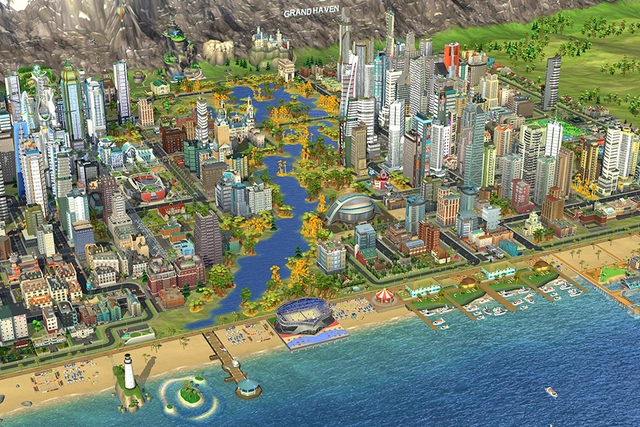
While working on Raid on Bungeling Bay—a game about bombing cities—legendary game designer Will Wright discovered he had more fun designing the cities than destroying them. He then wondered if players would enjoy having that same opportunity.
Four years later, the result was SimCity, a game that broke away from traditional gaming conventions by swapping levels for open-ended gameplay and clear objectives for a sandbox—a blank slate for creativity. Players were given an empty plot of land, a pile of cash, and a few basic planning tools, and then left to do as they pleased.
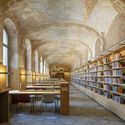
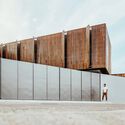
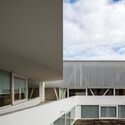
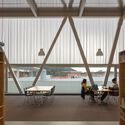
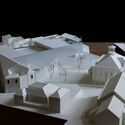
Far beyond mere repositories for books, libraries are spaces that, through the preservation of culture and knowledge, transform into places for gathering and exchange. Much like a book, they provide fertile ground for cultivating new ideas. To mark World Book Day, we present a selection of recently built libraries from around the world.
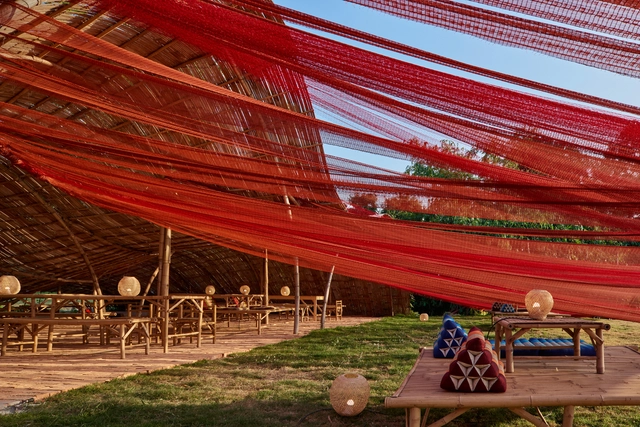
In primitive huts thousands of years ago, humans used animal skins and tree branches to build their shelters—the very same materials used to protect their bodies from the elements. From clothing to housing, these textile elements have accompanied human history, evolving alongside technology and securing a place in architectural production that goes far beyond membrane structures made of polyester/PVC and canvas. Today, they can be seen in other applications such as facade panels, interior partitions, openwork canopies, and more.
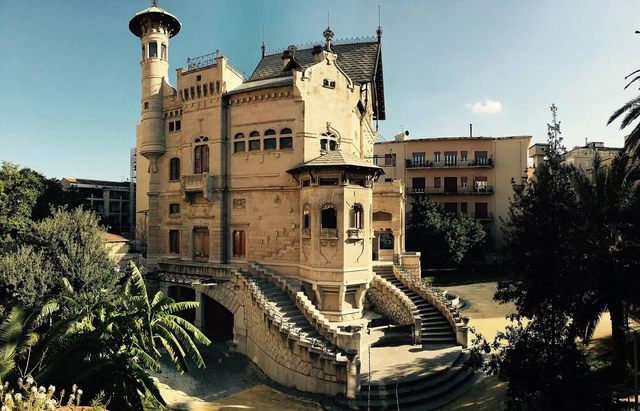
Villino Florio, in Palermo. Liberty style building, combining medieval, Baroque, Nordic, and contemporary elements. Work by architect Ernesto Basile. Credits: GiuseppeT on Wikimedia Commons
Art Nouveau, or new art, was an artistic movement that emerged in Belgium in the late 19th century and rapidly spread across several European countries and the United States. It was "new" art because it rejected academic canons and marked a break with the past. Spurred by the developments and societal changes brought about by the Second Industrial Revolution, the movement's artists sought to create a visual language that aligned with the advancements of their time, transcending antiquity, academicism, and aesthetic conservatism. Consequently, their works combined classical elements with contemporary details, merging different styles to form an original whole.
Photo: Governo do Estado de São Paulo, via VisualHunt.com
The Ipiranga Museum, located in São Paulo's south zone, has launched a virtual tour that allows users to follow the progress of the restoration and expansion of the building and its immediate surroundings. The digital tour features 360-degree camera footage captured across various spaces of the building and construction site, providing an overview of the renovation's progress.
Methods of shading facades and preventing direct solar radiation from entering a building's interior have been present since ancient architecture. However, modern architecture popularized the use of the brise-soleil, one of the most widespread passive climate control devices, which shades spaces while allowing for cross-ventilation when necessary.
Portugal is the host country for the 2021 European Conference on Architectural Policies — CEPA, and as such, will organize, through the Portuguese Association of Architects (Ordem dos Arquitectos), a discussion forum to analyze, discuss, and present proposals for architectural policies at the European level. CEPA 2021 presents an opportunity to respond to the challenge launched by the President of the European Commission, Ursula von der Leyen, toward building a New European Bauhaus, proposing a dialogue on current challenges for a post-pandemic future at the intersection of architecture, art, the city, and politics.
Today, the IABsp announced the winning team of the co-curatorship competition for the 13th International Architecture Biennale of São Paulo. Titled Travessias, the team comprises nine Brazilian members from various fields: Carolina Piai Vieira, Larissa Francez Zarpelon, Louise Lenate Ferreira da Silva, Luciene Gomes, Pedro Cardoso Smith, Pedro Vinícius Alves, Raíssa Albano de Oliveira, Thiago Sousa Silva, and Viviane de Andrade Sá.
With the goal of discovering the architects, projects, and stories behind landmark Portuguese architecture, Sara Nunes, of the architectural film production company Building Pictures, launched the podcastNo País dos Arquitectos, where she talks with key figures of contemporary Portuguese architecture.
In its first episóde, Sara spoke with architect João Luís Carrilho da Graça about his Lisbon Cruise Terminal, and then welcomed João Mendes Ribeiro for a conversation on heritage, the reuse of old structures, and landscape architecture, based on the rehabilitation project of the Coimbra Botanical Garden greenhouse. In this third episode, Sara talks with architect Inês Lobo about the Public Library and Regional Archive of Angra do Heroísmo. Read the full interview or listen to the podcast below.
Cheonggyecheon Stream in Seoul, South Korea. Image: ep_jhu/Flickr
Throughout the 20th century, road construction was primarily based on the premise that more infrastructure eases traffic. However, evidence shows that instead of reducing congestion, building more roads actually increases traffic. When driving times are reduced, convenience increases. Consequently, alongside the appeal of private vehicles as status symbols of wealth and social standing, people tend to make more trips by car. A recent study by researchers at the University of Barcelona analyzed data from 545 European cities between 1985 and 2005. It confirmed that efforts to expand road capacity over those two decades led to an increase rather than a reduction in vehicle traffic, and failed to ease congestion.
The magazine bears the welcoming name of Engawa. It is welcoming because, as a transitional space, it suggests ideas like hospitality and invitation, or, conversely, projection and openness.
Solar farm in South Harrison Township, USA. Created by @dailyoverview, image source: @nearmap
The global transition to a green economy could create 18 million jobs, with the potential to generate quality employment and livelihoods worldwide. But what about the people and communities whose livelihoods currently depend on fossil fuels and high-carbon sectors?
An estimated 6 million jobs in coal-fired power generation, oil extraction, and other sectors could disappear by 2030. Many of these new green job opportunities will require different skills than those needed for previous roles, or will be located in new areas.
At a time when urbanization has become planetary and humanity has become a geological force capable of profoundly altering Earth's thermodynamic cycles, it is urgent to reinvent the urban way of life and rehearse other forms of coexistence between humans, animals, and plants—between cities, forests, rivers, and mountains. Furthermore, it is urgent to design, with our feet on the ground and in collaboration with the peoples and sciences of the Earth, the conditions for future habitability.
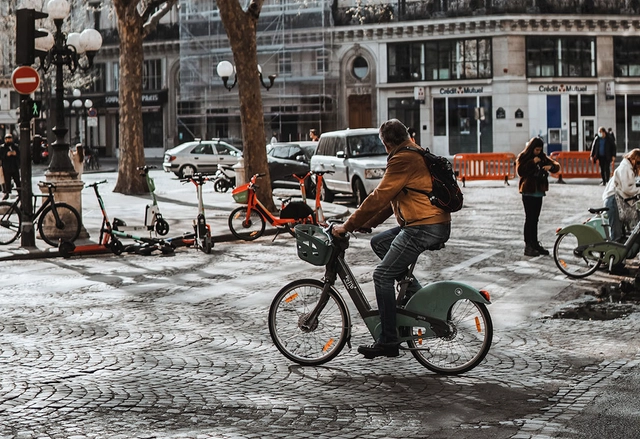
France is investing in initiatives to combat climate change, including shifting to more sustainable modes of transport. Owners of older cars can now receive a government subsidy of up to 2,500 euros to trade in their vehicles for electric bicycles.
“For the first time, it is recognized that the solution is not to make cars greener, but simply to reduce their number,” noted Olivier Schneider of the French Federation of Bicycle Users.