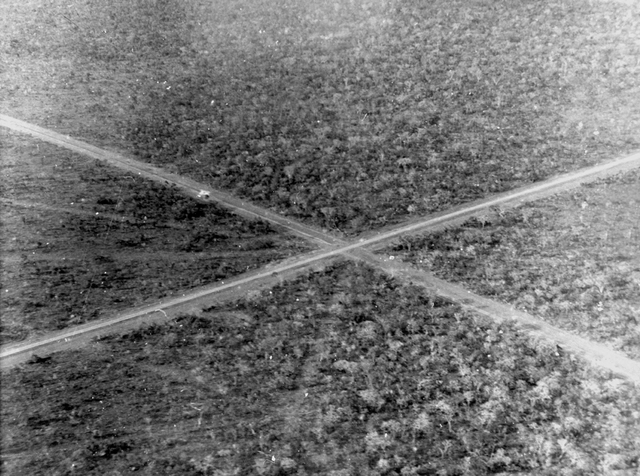
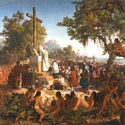
Opening of the road axes that define the Plano Piloto of Brasília, ground zero of the new capital, in 1957. As Lúcio Costa described in the descriptive memorial of the Plano Piloto, the city was born from “a gesture that was still pioneering in spirit, in the style of the colonial tradition. [...] Two axes crossing at right angles, that is, the very sign of the cross.” Mario Fontenelle/ Arquivo Público do Distrito Federal – ArPDF
As it celebrates its 60th anniversary, Brasília has an opportunity to draw inspiration from the anti-racist and anti-colonial movements worldwide that have challenged the monumentality of official history, confronting the memorialization of colonialism within its own urban landscape. Rather than celebratory events that reiterate official narratives, marking the city as a *bandeirante* milestone of national modernity, we should pause—a pause moreover imposed by the pandemic—to reflect on how certain memories are eternalized while others are erased, and thus trace new memorial cartographies onto the urban fabric of the capital.
During the pandemic, major cities became some of the most vulnerable environments; moreover, the global health crisis validated remote work and called into question the necessity of living in dense urban centers. Consequently, the urban exodus is likely to remain a constant theme in the near future, sparking major discussions within the fields of architecture and urban planning on how to manage this shift.
In one of the country's hardest-hit cities by the Covid-19 pandemic – São Paulo – and in the face of the suffocating socio-environmental crisis plaguing our world and our time, how can architects and urban planners take a stand and effectively act against widespread asphyxiation and for the fundamental right to breathe, to exist, and to inhabit the Earth?
One of the most iconic selection tools for architecture and urban planning projects in Brazil is the design competition. Firmly established in the country's architectural culture, they provide, on the one hand, an environment of stimulation, opportunity, and revitalization for both practice and the debate of ideas—an important condition for reaffirming a democratic and horizontal approach to choosing winning proposals. On the other hand, they are the subject of heated debate due to how they have evolved, their evaluation methods, and, above all, because they frequently award proposals that reiterate a certain type of architecture linked to a modern formal vocabulary, neglecting proposals that seek some form of renewal of this formal imagery.
The Institutional Security Office (GSI) has signed a R$ 2.49 million contract for a drone detection and "neutralization" system that includes installing antennas up to 20 meters tall atop the Planalto, Alvorada, and Jaburu Palaces to protect the President of the Republic and the executive branch leadership. However, despite the urgency claimed for the project by the agency led by General Augusto Heleno, the National Institute of Historic and Artistic Heritage (IPHAN) is blocking the work.
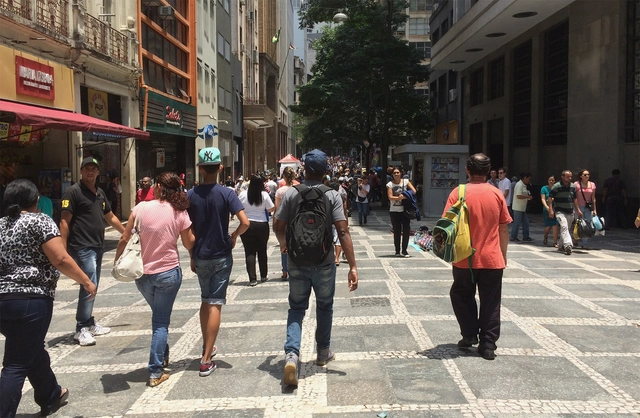
Today, August 8, marks World Pedestrian Day. The date is famous for the iconic photo of the Beatles crossing Abbey Road in 1969. It is now 2020—more than fifty years later—and we still face immense challenges as pedestrians in our cities. How many times have you faced the hazard of crossing the street? Or had to navigate narrow, poorly lit sidewalks?
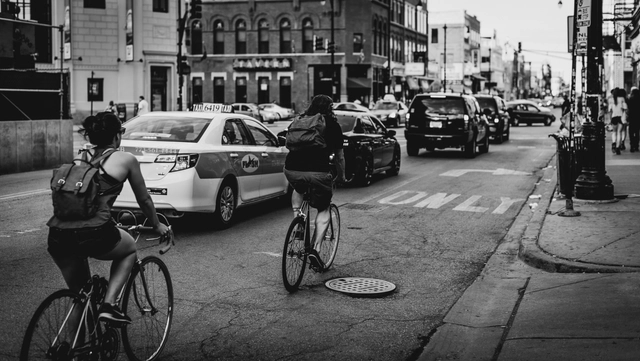
Cyclists on a metropolitan street. Photo by Adrian Williams, via Unsplash
Twenty-first-century urbanism will be marked by an increase in both the number and scale of global megacities—urban agglomerations with over 10 million inhabitants, according to the UN—alongside a geographical shift. By 2100, African metropolises such as Lagos (Nigeria) and Kinshasa (Democratic Republic of the Congo) are projected to exceed 80 million residents. The rise of these new, larger metropolises, especially in Africa and Asia, compounded by the urgent need to address the ongoing climate crisis, demands immediate changes in the discourse surrounding urban mobility.
The public transit system in large Brazilian cities was already in crisis long before the coronavirus pandemic. Transit operators have seen passenger demand steadily decline over recent decades, driven by a combination of factors: urban policies that incentivize private vehicle use; urban sprawl, which dilutes economies of scale when serving peripheral areas; rising congestion; transit routes increasingly disconnected from actual urban mobility patterns; a growing need for transfers along passenger routes; deteriorating fleets and service quality; rising incomes leading to alternative choices like private cars, motorcycles, and ride-hailing services; and, above all, steadily rising fares.
https://www.archdaily.com/1123363/how-to-avoid-the-collapse-of-public-transit-post-pandemicAnthony Ling, Marcos Paulo Schlickmann e Gabriel Lohmann
While the architecture and construction industry has been advancing in new fields for years, it remains one of the most lagging in terms of automation and efficiency. And indeed, while many of these innovations never progress past the experimental stage, we face a sobering reality: the sector is one of the largest producers of pollutants and waste worldwide. How can we reverse this trend?
Sesc São Paulo has made a series of catalogs, educational materials, and booklets produced for the institution's exhibitions available for free on its website. Fittingly, several of these themes intersect with thinking on architecture and the city.
Movable doors, windows, and panels operate through various mechanisms that determine not only how they open and close, but also their classification and terminology. Among the array of systems used for operable architectural elements—ranging from the simplest to the most ingenious—the mechanism found in folding or bifold doors and windows is frequently adopted to blend aesthetics and functionality.
Confirmed as a keynote speaker for UIA2021RIO, Tatiana Bilbao, one of Mexico's most prominent architects today, shared some of her thoughts on current challenges. Tatiana was interviewed by the co-president of IAB-RJ, Tainá de Paula, on the UIA2021RIO YouTube channel.
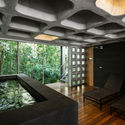
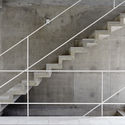
Concrete is a key symbol of a highly celebrated era in Brazilian architecture. To this day, it remains one of the preferred materials for architects and designers seeking to explore the flexibility and expressiveness it brings to their work. Although primarily associated with building structures, concrete can also take center stage due to its materiality, thermal feel, color, and other qualities that transcend its structural role. When left exposed, concrete imparts a striking character to interiors, establishing a dialogue with the other elements that shape the space.
The 13th São Paulo International Architecture Biennial has adopted reconstruction as the central theme for its 2022 edition. As a preparatory activity for the co-curatorship competition, IABsp organized three debates that promote a discussion on the very essence of art and architecture exhibitions, while also inviting us to reflect on the role of architects, urban planners, and many other professionals in building more just and democratic cities.
The Municipal Secretariat of Culture, through the Department of Historical Heritage (DPH), is hosting the 15th Heritage Appreciation Week. On August 12, 13, and 14, three online sessions will explore the theme "Our City, Our Memories." The free broadcast will be available on the DPH YouTube and Facebook channels.
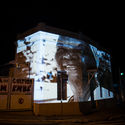
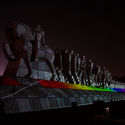
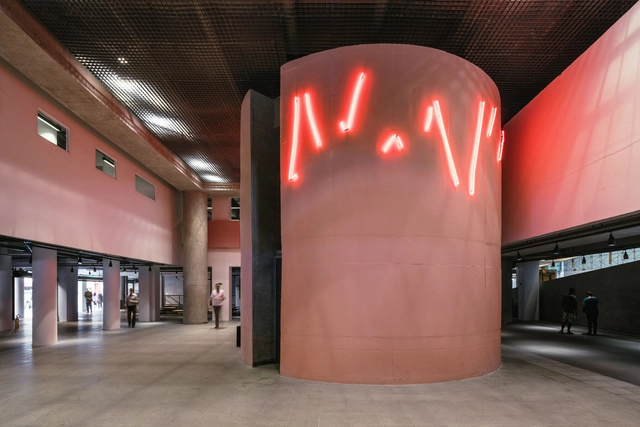
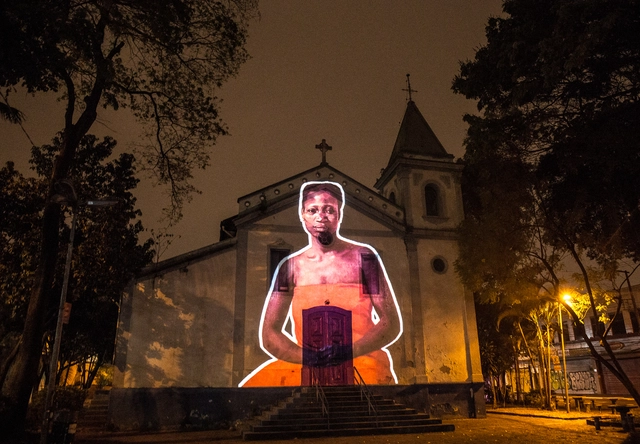
Other bodies, spaces, and languages that have been rendered invisible or simply do not seem to fit into present-day São Paulo are being projected onto its landscape. "Voices Against Racism" is an exhibition and proposition that introduces new imaginaries to a city where narratives are constantly contested. Running until August 24, the event transforms streets from mere transit areas into spaces for art, buildings into canvases, and monuments into backdrops for artistic expressions that showcase paths usually obscured by history.

.jpg?1596827058&format=webp&width=640&height=580)
.jpg?1596827331 "© Ivan Araújo")
.jpg?1596827150 "© Ivan Araújo")
.jpg?1596827362 "© Ivan Araújo")
.jpg?1596827181 "© Ivan Araújo")
.jpg?1596827058)























.jpg?1597324648 "Cohab © Coletivo Coletores")