Exposição "Refundações". Image Cortesia de Micrópolis
Throughout 2019, the Minas Gerais-based architecture collective Micrópolis partnered with Museu Paulista and SESC Ipiranga to carry out the project Refundações [Refoundations]—a series of public programs that create new readings and meanings for the museum's collection, based on the desires and demands found in the urban practices of contemporary activists and thinkers in São Paulo.
The municipality of Rio do Antônio, located about 700 kilometers from the capital of the state of Bahia, still retains remnants from the era of slavery in Brazil. This period left deep marks that remain visible in the town's daily reality, including its architecture.
The City of Florianópolis organized an initiative on the Hercílio Luz Bridge that uses comparative photos to show the space occupied by different modes of transportation carrying the same number of passengers. Led by the Institute of Urban Research and Planning of Florianópolis (IPUF) and the Municipal Secretariat for Mobility and Urban Planning, the initiative is part of the Ponte Viva (Living Bridge) Program.
Elizabeth de Portzamparc, one of the few women leading large-scale architectural projects in a field dominated by men, will speak this Thursday, February 6, at 6:30 PM at the IAB on "New Architecture, New Worldview." Elizabeth de Portzamparc is a member of the Honorary Committee and a spokesperson for the 27th World Congress of Architects (UIA 2020), affiliated with UNESCO, which will be held in July in Rio de Janeiro.
Courtyards are open-air areas located inside buildings, with their perimeters defined by walls or galleries. These outdoor yet contained spaces often play a crucial role in configuring and organizing the floor plan. In some cases, they function as a central lung, organizing the surrounding spaces along their perimeter. They can also be designed to organize circulation flows or as articulating elements, simultaneously connecting and separating different areas of the project.
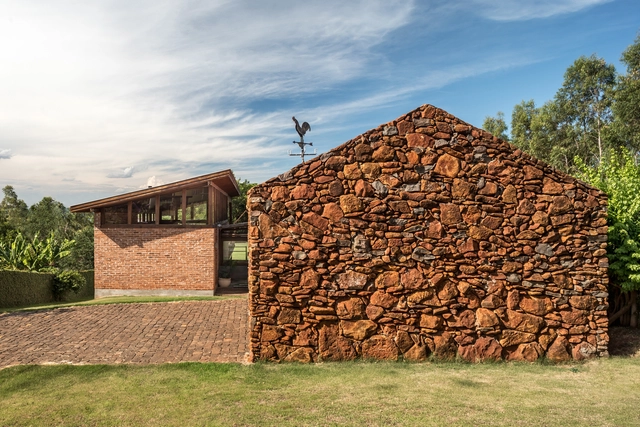
One of the oldest building materials, stone has endured throughout architectural history due to its strength and durability. Frequently used in protective structures such as fortifications and walls, stone has also historically served as the foundation for a variety of buildings—including residential ones, where it has been employed since the earliest shelters.
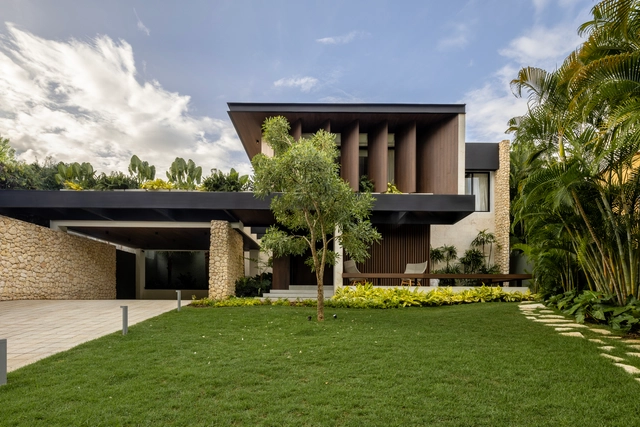
Few materials respond as well to a multiplicity of uses as wood. It ranges from the smallest decorative objects to the structural elements of high-rise buildings, bringing a distinctive character to architectural designs when left exposed. Its rich variety of tones, densities, and patterns, combined with its organic nature, make wood a unique and singular element that instantly lends warmth, coziness, and hospitality to any space.
On February 11, 2020, at 7:00 PM, the IED (Istituto Europeo di Design) will host the first IED Parla of the year in Higienópolis, São Paulo. Moderated by José Carlos Carreira, the lecture “Design, Value, and Purpose” brings together the experiences and insights of the coordinators of the postgraduate programs in Fashion Marketing and Communication (Juliana Lopes and Caline Migliato), Strategic Design and Innovation (Francisco Albuquerque), Contemporary Interior Design (Alexandre Salles), and User Experience (UX) (Ricardo Couto).
The right to fully experience urban space and all the possibilities it offers has always been a distant reality for the vast majority of Brazilians. Recently, however, we seem to be drifting further and further from this reality. There is a sense that every day we witness more threats to the population's right to the city, ranging from fundamental issues, such as the freedom of movement in São Paulo, to symbolic dimensions like the presence of low-income populations in wealthy neighborhoods, as seen in Salvador. We must speak openly about these threats and name them as such (words have power!), while also imagining pathways for confrontation and political resistance. What is on the horizon at the start of 2020?
https://www.archdaily.com/1123388/the-right-to-fully-experience-urban-spaceRodrigo Faria G. Iacovini
Artist André Chiote has shared his latest series of illustrations with us, this time portraying the Art Deco and modern architecture of Goiânia. Commissioned for the 31st Brazilian Congress of Dermatological Surgery, organized by the Brazilian Society of Dermatological Surgery in the state capital, Chiote's illustrations use the colors of the official congress logo to represent some of the most celebrated landmarks of Goiânia's heritage.
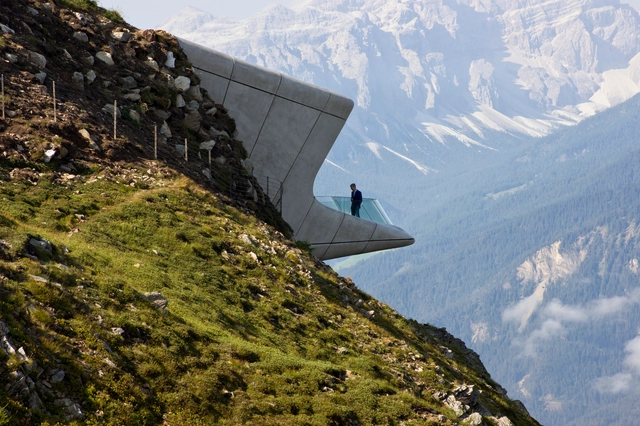
During architectural training and practice, we encounter countless examples of works that, for a wide variety of reasons, have shaped the history of the discipline. These examples become major references in an architect's repertoire, shaping how they view and design architecture. However, understanding a place is incomplete without experiencing it in person; therefore, when traveling, we seek out iconic works to enrich our perspective.
Yet, these works are not always easily accessible or close to established itineraries, which can turn the quest to visit them into true pilgrimages.
The "Novos Talentos Brasileiros - Design e Arte" exhibition is set to host its highly anticipated 8th edition, promising once again to captivate the public by showcasing national creativity. In this annual event, talented Brazilian artists and designers have the opportunity to present their innovative creations and unique visions to the world.
Lagos, Nigeria. Photo: Dami Akinbode, via Unsplash
African countries have issued a stark joint declaration calling on major polluting nations to help poorer countries develop without further destroying the planet's climate and ecosystems, as wealthy nations did. They advocate for a global carbon tax as the primary mechanism to enable sustainable investment in vulnerable countries.
This year will be pivotal for climate action. The growing impacts of climate change — from floods and droughts to hurricanes and heatwaves — are causing profound damage to human lives and economies around the world, especially in vulnerable developing countries with few resources to protect themselves.
Currently, climate actions are not even close to what is needed to keep global warming below the 1.5°C threshold and avoid the worst of these impacts — countries must significantly accelerate their efforts to get on track. The latest report by the Intergovernmental Panel on Climate Change (IPCC) warns that actions taken this decade will have impacts "for thousands of years."
https://www.archdaily.com/1136314/what-is-the-paris-agreements-global-stocktake-and-how-it-can-drive-action-in-countriesJamal Srouji, Felipe Borja Diaz e Deirdre Cogan
The "Pressão de Borda" collective presents the exhibition "Whispered News from a World Without Direction" at the Galeria Paulo Branquinho. The show opens on October 7 in Lapa, Rio de Janeiro.
As part of an initiative by Tec de Monterrey, this year's first prize for the 215th Traditional Sorteo Tec features a residential project designed by Mexican architect Cristina Grappin. With this home, the university raffle of Tecnológico de Monterrey furthers its support for the Líderes del Mañana (Leaders of Tomorrow) program, an initiative aimed at driving change, social mobility, and the development of outstanding young scholars.