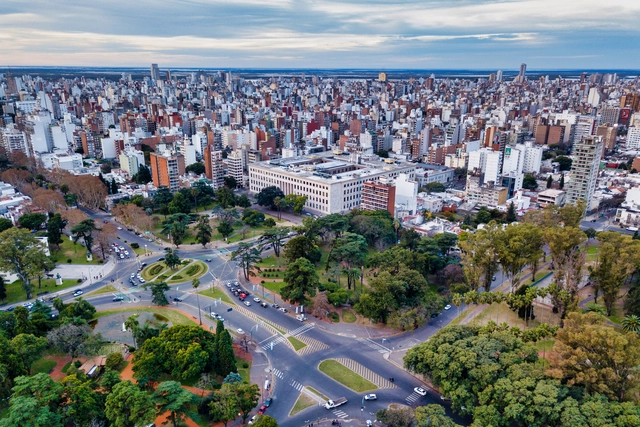
Aerial view of Independencia Park and the city skyline in Rosario, Santa Fe, Argentina. Image by buteo. Image via Shutterstock
Aiming to build a more sustainable, inclusive, and resilient future, the U.S. Department of State, ICLEI-Local Governments for Sustainability, Resilient Cities Catalyst, and the Institute of the Americas recently announced the list of Latin American, Caribbean, and U.S. cities that will participate in the “Cities Forward” program. The city of Rosario, Argentina, was selected to work in connection with Chattanooga, Tennessee, in the United States.
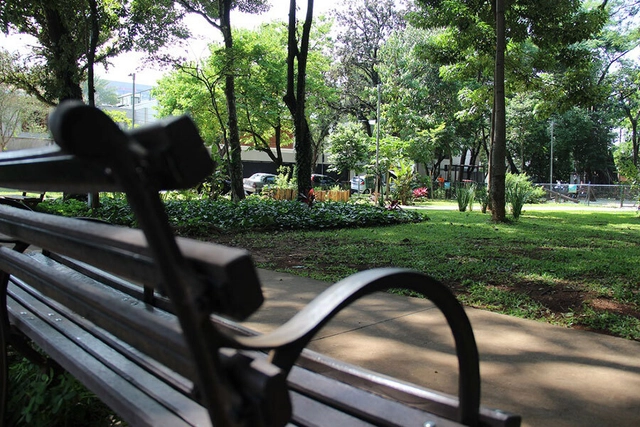
One of the things that catches my attention most when I visit major cities in other countries, whether they are European capitals or our neighbors here in South America, is how people occupy public spaces.
And I don't just mean parks or squares. Whether in Buenos Aires, Santiago, Paris, or Amsterdam, for instance, at least on sunny days, almost any patch of grass is occupied by people—children running and playing, friends having picnics, young people reading stretched out in the sun.
https://www.archdaily.com/1136266/in-sao-paulo-is-the-square-oursVitor Meira França
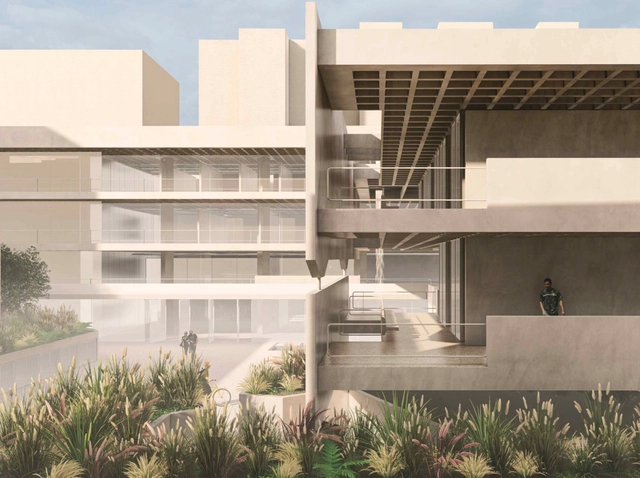
A Drug Rehabilitation Center in the Cracolândia region of São Paulo. This was the theme of the first design competition organized by Labideias, open to students and recent graduates in architecture and urbanism with up to two years since graduation.
Architecture can play a critical role in questioning existing possibilities. It can be a voice that, through the built environment, proposes more humanized, creative, and inclusive approaches. Based on this premise, the organization invited participants to develop a proposal that addresses the needs of a marginalized and increasingly persecuted population. Discover the winners and honorable mentions of the #001 Labideias Competition below.
In the design of open spaces, I consider one of the most important concepts—and one of the most difficult to explain—to be the shaping of “positive” open spaces. As far as I have been able to establish, this term was coined by Alexander et al. (1977) in A Pattern Language and continues to be used by other authors (see, for example, CARMONA et al., 2003), although it is not a widely adopted term.
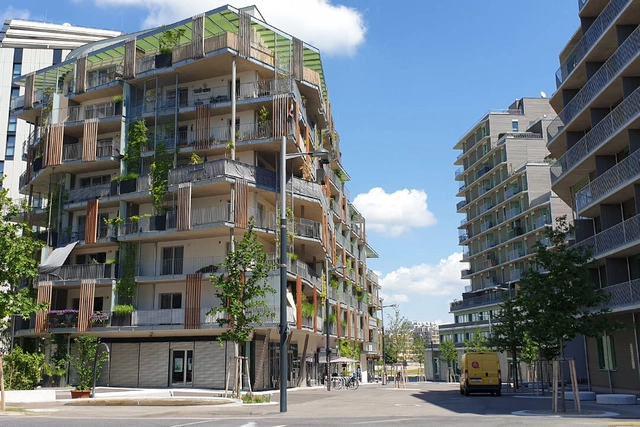
The city of Vienna has a highly praised housing policy. While it certainly has many merits, it is not necessarily perfect. In fact, Vienna's housing policy has taken a different path than other European cities, sparking interest among those who study the subject. In this episode of the Housing Voice podcast, produced by UCLA, Justin Kadi presents several features that make the Austrian capital a unique case. The episode also provides a series of academic articles for anyone wishing to delve deeper into the subject.
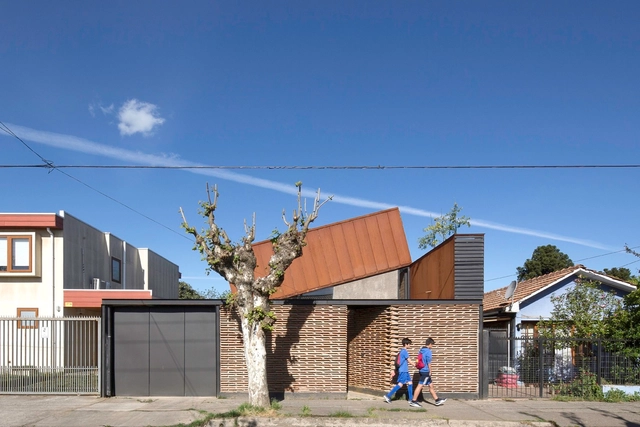
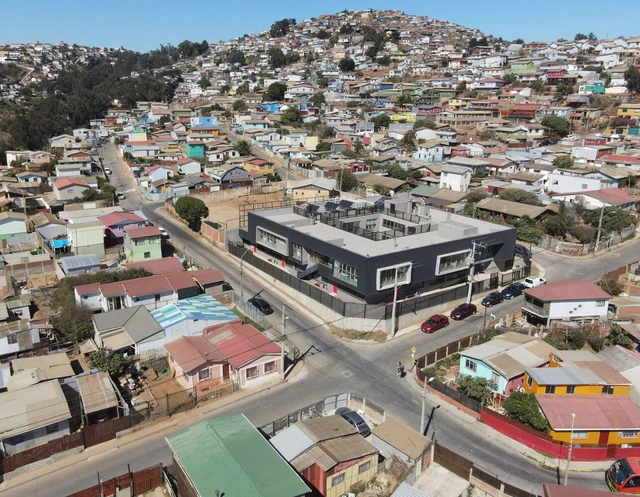
Courtesy of Raúl Goycoolea. ImageGolondrina Kindergarten and Nursery School in Valparaíso
While Chile is recognized as having one of the best education systems in Latin America, it also maintains a dual public and private system where disparities can often be significant. To address this issue, the Ministry of Education (MINEDUC) launched the Educational Reactivation Plan, which aims to allocate 100 billion Chilean pesos to preserve the infrastructure of public educational facilities.
Suburbs of Mumbai, India, with metal roofs on houses. An analysis by WRI India shows that while vegetation can mitigate surface temperatures in cities, a large portion of Mumbai's homes have metal roofs, contributing to higher surface temperatures. Photo: KishoreJ/Shutterstock
The current summer in the Northern Hemisphere has been so hot, with temperatures reaching record highs—including in the sea—that discussions are already revolving around the limits of human survival. Even in Antarctica, sea ice has failed to reform, a drastic departure from normal winter patterns. It is not just an impression that extreme heat events are occurring more frequently. As a result of climate change, the frequency of these events has increased—and is expected to worsen.
In fact, in most years, heat is the most lethal weather phenomenon, killing an average of 490,000 people worldwide and causing serious health problems for many others. According to the World Health Organization, heat-related deaths are projected to increase by 50% by 2050. However, this impact is not distributed equally, either globally or within communities: populations already living in more vulnerable conditions face the greatest risks.
https://www.archdaily.com/1136253/how-to-cool-cities-on-an-increasingly-hot-planetEric Mackres, Gorka Zubicaray e Bina Shetty
Videos
Rio de Janeiro - Special Group samba schools perform at the Marquês de Sapucaí Sambadrome on the second day of parades (Fernando Frazão/Agência Brasil) - [CC BY 3.0 br (https://creativecommons.org/licenses/by/3.0/br/deed.en)]
Last year, the samba school Unidos da Tijuca announced the theme for its 2020 parade at the Marquês de Sapucaí: "Architecture and Urbanism." The choice was inspired by the unprecedented title Rio de Janeiro received from UNESCO as the World Capital of Architecture, as well as the city's selection to host the World Congress of Architects—an event organized by the International Union of Architects (UIA) that is expected to draw around 15,000 professionals this July. In addition to honoring architects and urban planners, the school will bring critical issues facing the field to the parade, such as the right to the city, the construction industry's role in the climate crisis, heritage preservation, and even ancestral architectural knowledge.
Primeiro Lugar. Image Cortesia de IAB-DF e Consórcio Arena BSB
The Institute of Architects of Brazil - Federal District Department and the Arena BSB Consortium have announced the results of the National Architecture and Landscape Competition for the Redevelopment of the Arena BSB Sports and Leisure Complex, which includes, among other facilities, the Mané Garrincha National Stadium.
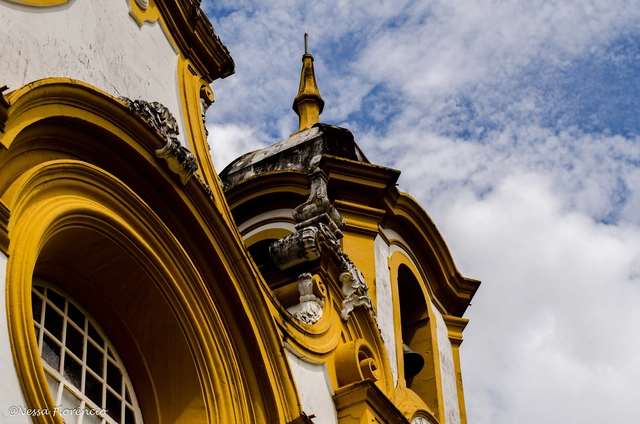
Photo: Nêssa Florencio on Visualhunt / CC BY-NC-ND
The National Institute of Historic and Artistic Heritage - Iphan has opened applications for 10 fellowships for the Professional Master's in Cultural Heritage Preservation. Interested candidates can apply until March 2, 2020.
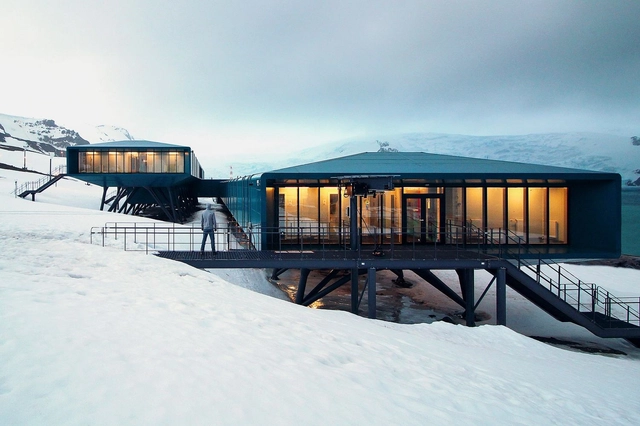
Estação Antártica Comandante Ferraz. Image Cortesia de Estúdio 41
Nearly eight years after the project's inception, the Comandante Ferraz Research Station, Brazil's Antarctic research base designed by Curitiba-based firm Estúdio 41, will soon be inaugurated. With construction completed since March of last year, the official opening is scheduled for this January.
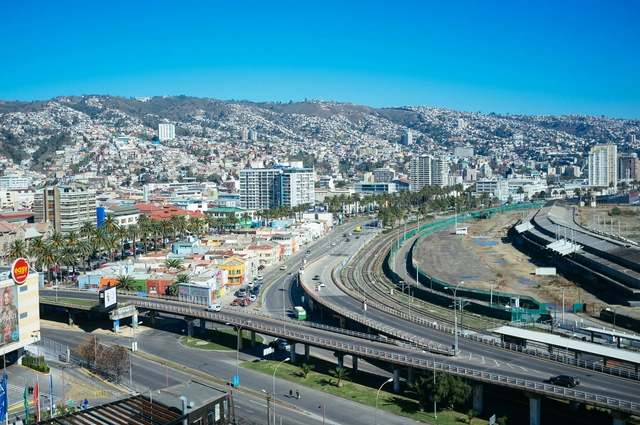
City of Valparaíso, Fifth Region, Chile. May 21, 2017. Image via Shutterstock / MARCELODLT
Several new projects have been introduced this year that bring significant changes to transit options for Chile's residents. These include the addition of the new Santiago Metro Lines and a new preliminary cable car project designed to connect Valparaíso with Placilla de Peñuelas.
In August, the Colegio de Arquitectos de Chile celebrated its 81st anniversary at its National Headquarters in Santiago. To mark this anniversary, the 2023 CA Awards ceremony was held.
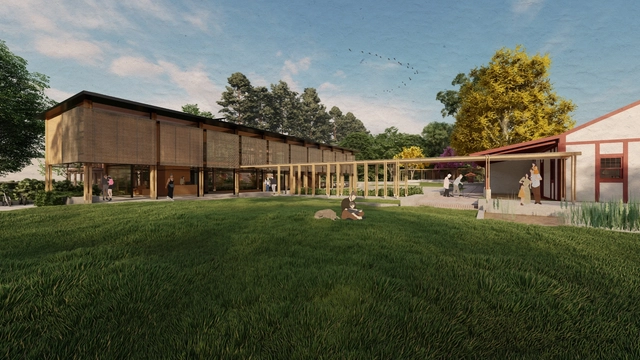
The firm Solss Arquitetura was awarded first place in the national competition Iconicidades, organized by the State Government of Rio Grande do Sul and launched in April this year. The initiative sought to select the best proposals for transforming public spaces into hubs that foster the creative economy in the cities of Pelotas, Rio Grande, Santa Maria, Cachoeirinha, and São Leopoldo.
The firm won the competition in São Leopoldo, which aimed to choose the best revitalization project for the Casa da Feitoria and the Immigrant Museum, preparing the site for the bicentennial celebrations of German immigration in Brazil. Discover the project below:
https://www.archdaily.com/1136008/solss-arquitetura-wins-competition-for-the-requalification-of-casa-da-feitoria-and-the-immigrant-museum-in-sao-leopoldoArchDaily Team
Tokyo is a chaotic city, in the sense that it did not develop from city-wide coordinated urban planning. By the 18th century, it already had around 1 million inhabitants, with most of the population living in conditions similar to modern Brazilian favelas. Tokyo's dense suburbs resemble Brazilian peripheries, with low-rise but closely packed buildings on narrow plots and a wide variety of uses. Furthermore, Tokyo features a multiplicity of architectural typologies, different modes of transportation sharing the same space, and—not unlike Brazilian cities—billboards and exposed overhead wires clashing with the urban landscape.
Edifício sede dos meliponários. Image Cortesia de Equipe de projeto
This “unsolicited architecture” project is driven by the pursuit of professional practice that makes an active contribution, an ethical commitment to promoting the field of architecture and urbanism, and a desire to address pressing local and global challenges through a distinct, positive, and multidisciplinary approach.
Professionals registered with the Council for Architecture and Urbanism (CAU) are invited to participate in the 2020 Census of Architects and Urban Planners. Much like the 2012 Census, this survey aims to map the profile of the architecture and urbanism sector as well as inform CAU's initiatives. In addition, it will update the data collected in the first survey, which saw participation from 90% of registered professionals at the time.
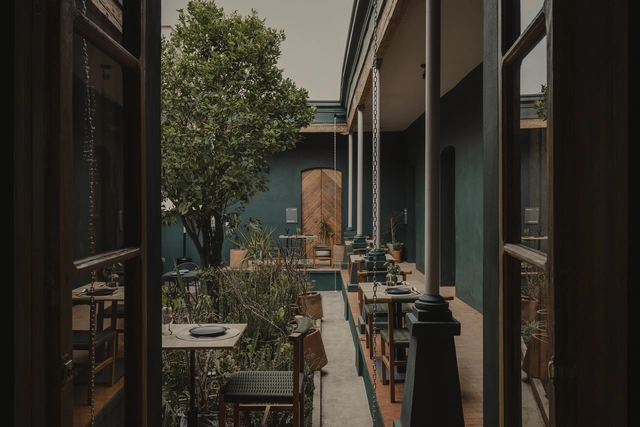
As part of a new project by the architecture firm WORC, "Moradores" emerges: a space located just steps from Jardín Zaragoza in Toluca, State of Mexico. Housed within a 342-square-meter residence with nearly a century of history, it is one of the few surviving structures from the evolution of a representative neighborhood in the city's historic center. The studio, directed by Ricardo Martínez and Camila Ureña, describes the space as a “public house” comprising a restaurant, art exhibitions, and a community gathering point.
The international architecture and city festival Open House will take place in Madrid from September 21 to 24, 2023, inviting residents to visit and explore some of the capital's most iconic buildings. Extending beyond Madrid to open several spaces in San Lorenzo de El Escorial, this ninth edition will open the doors of over 120 buildings and studios, while also offering 13 outdoor routes and itineraries to discover Madrid's architecture.
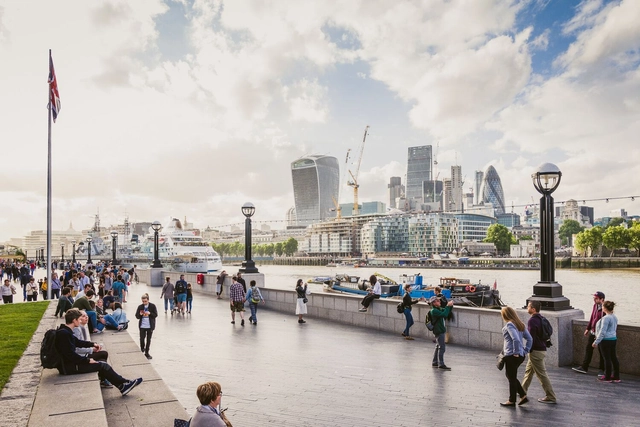
London is one of the world's great metropolises and faces a challenge common to urban centers: air pollution caused by fossil fuel vehicles. To combat this issue, the city established Low Emission Zones in 2008, fining large vehicles operating with pollutant emissions above established limits.
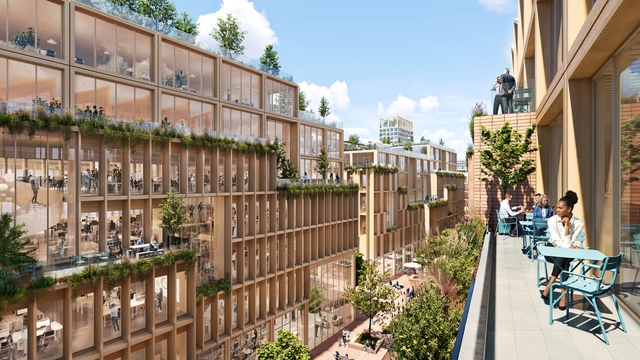
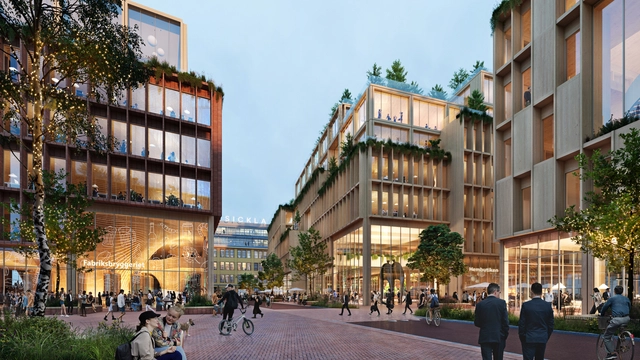
Stockholm Wood City. Courtesy of Atrium Ljungberg | White Arkitekter
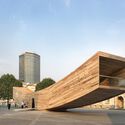
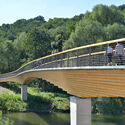
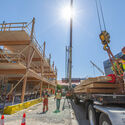
With studies estimating that by 2050 nearly 70% of the global population will live in cities, planning for more sustainable and balanced urban development has become imperative for the coming decades. This discussion invariably hinges on a more assertive choice of construction materials that yield greater urban and environmental benefits. In this context, a material re-emerging as a more sustainable choice for urban infrastructure is wood, particularly when paired with new technological advancements, which is being reintroduced into cityscapes due to its versatile characteristics and its ability to align with the construction of tomorrow.
La construcción del proyecto de desarrollo urbano de madera más grande del mundo comenzará en 2025. Image Cortesía de Atrium Ljungberg | White Arkitekter







.jpg?1578439538&format=webp&width=640&height=580)

![Paola Masera + Campos Studio and [H] Arquitectos, among the winners of the Region V / FCARM 2023 Architecture Biennial - Featured Image](https://snoopy.archdaily.com/images/archdaily/media/images/64ef/815f/5286/7b4f/7ea0/5523/slideshow/ganadores-de-la-ii-bienal-de-arquitectura-de-la-region-v-de-la-federacion-de-colegios-de-arquitectos-de-la-republica-mexicana-ac_2.jpg?1693417830&format=webp&width=640&height=580)