Videos
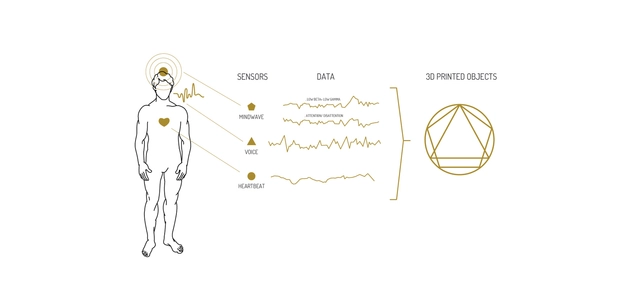
Experience #1. Image Cortesia de Guto Requena
The First Industrial Revolution took place in the United Kingdom in the late 18th century with the mechanization of the textile industry. Over the following decades, instead of making things solely by hand, the use of machines spread across the globe.
The Second Industrial Revolution began in the United States in the early 20th century with the assembly line, ushering in the so-called Era of Mass Production.
Today, we are living through a new industrial revolution, driven by digital culture and technology, with 3D printers serving as one of its key catalysts. And believe it or not, you will eventually own one. As they become increasingly affordable, these machines are capable of printing three-dimensional objects. The most common technique involves depositing and bonding, layer by layer, minute particles of materials such as plastic, ceramic, glass, or metal.
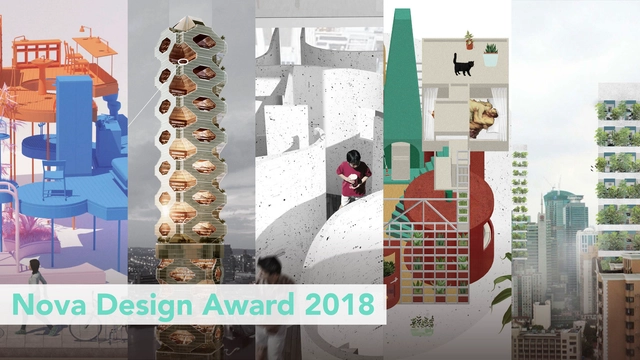
On August 6, the NOVA Design Award 2018 announced its competition finalists. The NOVA Design Award 2018 is the inaugural edition of the NOVA Design Award (NDA). Under the theme of "Future Living Space," the competition explores the possibilities of residential living over the next decade within a residential space of under 50 square meters with a ceiling height of no more than 6 meters in a first-tier Chinese city, aiming to build a physical prototype of "future living."
The competition selected five finalists from 131 submissions across more than 20 countries to enter the final round of judging.
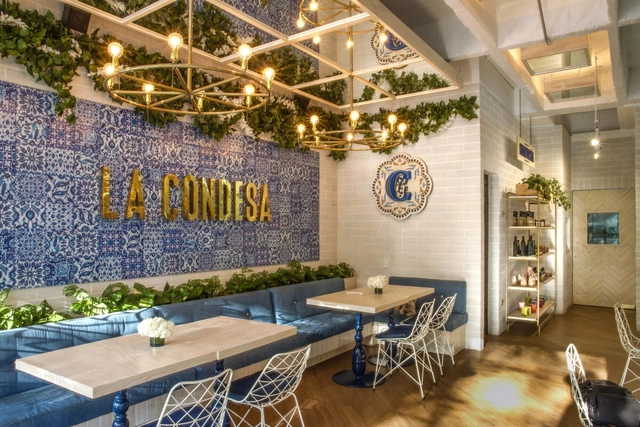
In interior design, striking a balance between aesthetic style and the functional needs of a project is essential. In this regard, it is fascinating to see the diverse solutions that Colombian architects and designers have recently proposed. We have selected eight local projects that demonstrate a compelling balance between functionality and aesthetics in interior design.
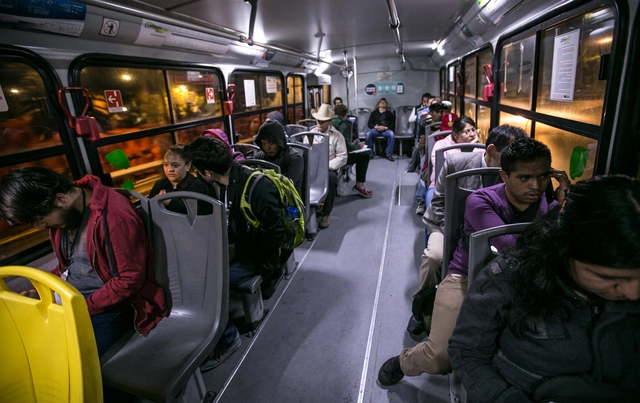
Can you imagine arriving at a bus stop in the early hours of the morning—after a party, work, or school—and knowing the exact minute your public transit will arrive? Cities like London, New York, Madrid, and Melbourne have successfully implemented night transit systems with fixed schedules, yielding various financial and safety benefits for residents while boosting tourism and encouraging sustainable mobility. What would happen if this system were applied to the second-largest avenue in the Americas, after Buenos Aires' Avenida 9 de Julio?
Mexico City already has a night transit service: the Nochebús. With 11 routes operating between midnight and 5:00 a.m., it serves late-shift workers, night-lifers, and others needing late-night transportation. However, the service faces several challenges, many of which stem from uncertainty around arrival times—largely due to a much lower frequency than daytime public transit.
Yesterday, the citizen forum "Modern Landscape, Transforming Territories" began in Chillán, an event that aims to reflect on the city's architectural and cultural heritage through various actions in the city.
Three main venues have been chosen to host all of the event's activities: the Municipal Theater, the Escuela México, and the iconic Copelec building, a landmark of modern Chilean architecture.
https://www.archdaily.com/1113790/signals-in-a-modern-landscape-republica-portatil-will-intervene-in-public-spaces-for-number-forochillanPola Mora
The more hidden and remote, the greater the magic; the more land, sky, and water come into view, the deeper the mystery. To know its towns is to enter el Perú profundo, a territory spanning coast, highlands, and jungle. Alongside the vast ocean lies the coastal desert, the towering peaks of the Andes Mountains traversing the country from north to south, and the expansive rainforest harboring the source of the Amazon River. Upon this landscape rest the settlements and structures of ancient cultures. Imagine, then, how many atmospheres remain to be discovered in the most remote corners of this biodiversity. The climatic variety is proportional to the diverse typologies of its towns: towns of sorcerers, ghost towns, lost towns, floating towns, towns of ancient or forgotten languages, of musicians, of stone, of clay, of colors...
On this occasion, the Arquia Foundation Blog, alongside architect Sabrina Gaudino Di Meo, presents an article on the urban antipathy of our cities—which has unfortunately become a daily experience, a naturalized condition, and a fixture of the collective imagination. Faced with this situation, who is responsible? Where are urban planning and social policies when it comes to making our cities friendlier?
https://www.archdaily.com/1113865/experiencing-urban-antipathySabrina Gaudino Di Meo
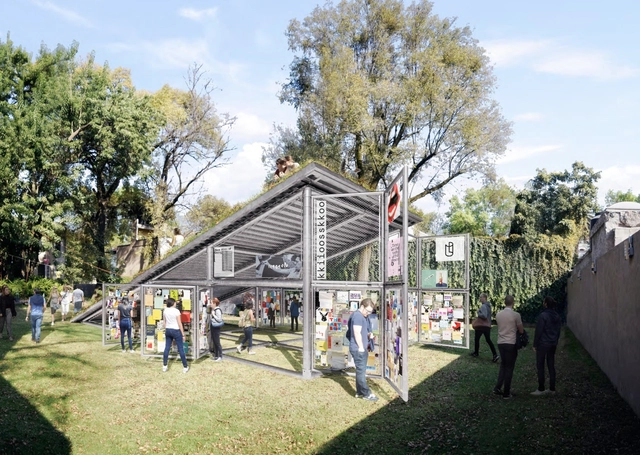
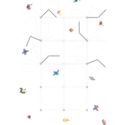
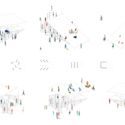
Kiosko, the Alumnos47 initiative that explores publications outside of publishing, now has a winning design for its pavilion. Following the launch of the open call last year, forty-nine proposals were received from different states across Mexico, as well as one from abroad. After a lengthy and rigorous deliberation, the jury—composed of Chus Martínez, Daniel Garza Usabiaga, Tiago Pinto de Calvalho, and Fermín Espinosa—awarded an honorable mention and selected five finalists, from which a winner was chosen.
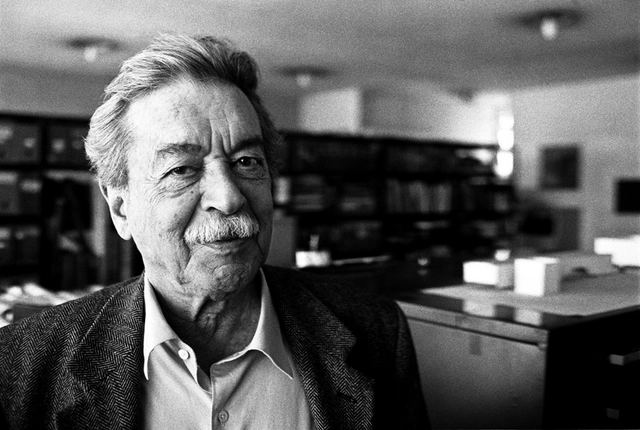
Invited by the organizers of UIA2020Rio, architect Paulo Mendes da Rocha will chair the Honorary Committee of the World Congress of the International Union of Architects, which will take place in two years in Rio de Janeiro under the theme "All worlds. Just one world. Architecture 21."
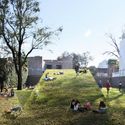
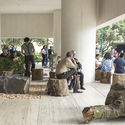
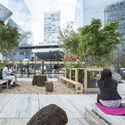
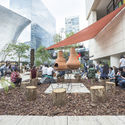
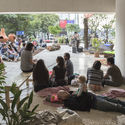
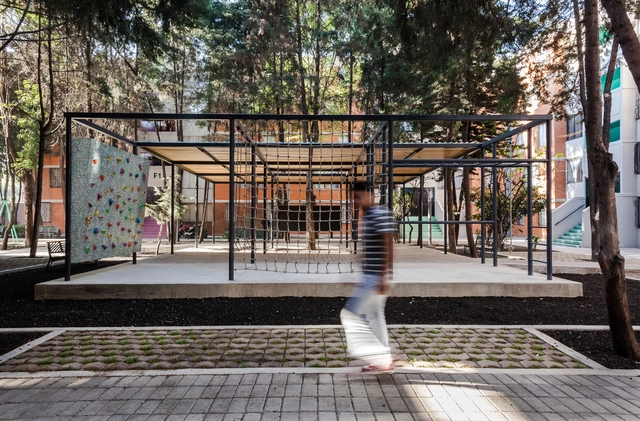
Museo Jumex presents 'Proposals for a Plaza,' a collaborative project by artists Fritz Haeg (United States, 1969) and Nils Norman (United Kingdom, 1966). This temporary installation, commissioned as part of the series 'Agora: A Blueprint for Utopia,' will invite the public to imagine and participate in an alternative vision of the museum's plaza.
Inspired by the outdoor spaces of Mexico City, the project draws elements from public parks and the wildlife areas surrounding the city, while also integrating informal uses of open space. It features seating and sleeping areas, a kiosk, a fire pit, bleachers, and outdoor spaces designed for contemplation, gathering, resting, and play.
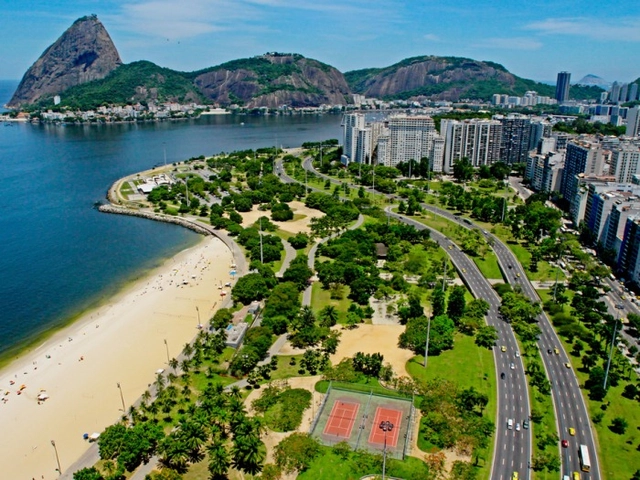
The Council of the International Union of Architects (UIA), meeting in Oaxaca, Mexico, unanimously approved on May 18 the nomination of the city of Rio de Janeiro as the UIA/UNESCO World Capital of Architecture for 2020. Securing this title is part of the program proposed by the City of Rio, with support from the Institute of Architects of Brazil (IAB), for 2020, when the city will host the 27th World Congress of Architects.
Paraty, RJ. Photo: Chaval Brasil on Visual hunt / CC BY-NC-ND
With the aim of promoting the care and recognition of cultural heritage, the Cultural Heritage Law Research Group of the Federal University of Ouro Preto (UFOP), the Technical Office of the National Institute of Historic and Artistic Heritage (Iphan) in Ouro Preto (MG), and the Public Ministry of Minas Gerais (MP-MG) have developed the Manual for Residents of Heritage-Listed Houses.
Researchers recently announced the discovery of the world's largest termite mound complex, located in northeastern Brazil. The total volume of excavated soil is estimated to equal 4,000 Pyramids of Giza, with the complex itself averaging 4,000 years of age and covering an estimated area of 230,000 square kilometers—equivalent to the size of Great Britain.
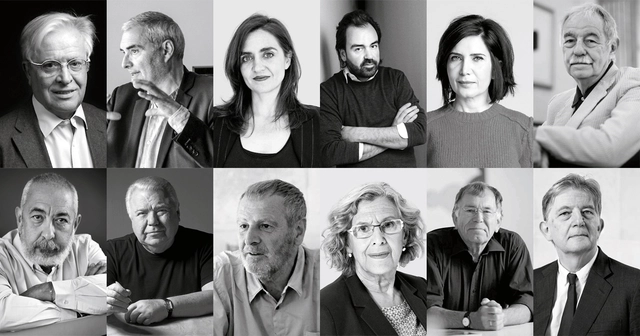
Protagonistas del V Congreso Internacional de Arquitectura y Sociedad. Image Cortesía de Fundación Arquitectura y sociedad
Yesterday, June 13, marked the opening of the 5th International Congress of Architecture and Society, an event presided over by King Felipe VI for the second consecutive edition. The President of the Government of Navarra, Uxue Barkos, and the Minister of Development, José Luis Ábalos, also participated in the official opening.
Architect Francisco Mangado was responsible for opening the event, which in its fifth edition will focus on cities and the challenges architecture faces in addressing urban demands. The architect from Navarra stated that “Architecture is not an isolated event of personal preferences; it is a profoundly cultural and social act, linked to the city as a reality that belongs to the common good,” adding that “the quality of architecture and the city is not a luxury, it is a right for all citizens.”
https://www.archdaily.com/1113864/francisco-mangado-opens-the-v-congress-of-architecture-and-society-the-quality-of-the-city-is-not-a-luxury-it-is-a-rightJavier García Librero
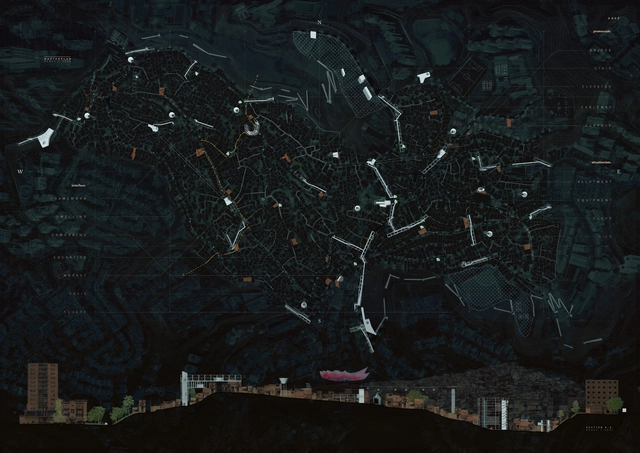
AA48 – Responsive Archipelago. Image Cortesía de TU Delft
Twenty proposals for informal settlements from Brazil to Bangladesh have been awarded in Confronting Informality, the first edition of the competition organized by TU Delft's Department of Urbanism, alongside universities from around the world.
Launched last April, this ideas competition addresses the challenge of urban settlements based on the principles of the New Urban Agenda. Through their projects, architecture and urban planning students from all over the world answered the following question: how can we create healthy, safe, and resilient environments in informal settlements while simultaneously preserving social networks and a sense of community?
"We live in an urban world, but explosive, unplanned urbanization processes in developing countries mean that new informal settlements are growing in population and size—often without infrastructure, access to sanitation, or quality public spaces," the organizers explained in the competition brief.
In this edition of International Women's Day, we have joined forces with the Colombian print publication de-Arq (Universidad de los Andes) to explore the work of five contemporary Colombian women architects, who represent distinct, complementary approaches within our discipline: design, research, teaching, and experimentation.
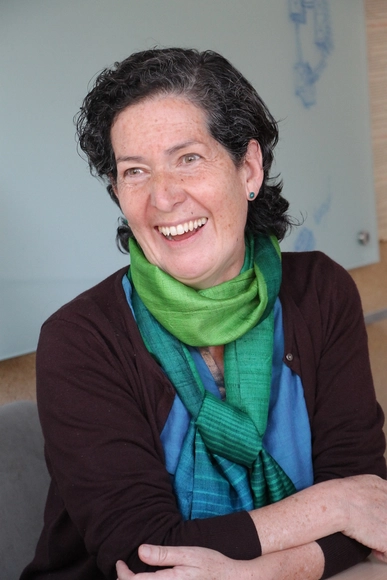
Today, we profile María Cecilia O'Byrne, an architect from the Universidad de los Andes. She is an academic, manager, and researcher with a particular interest in Le Corbusier's legacy both in Colombia and worldwide. "To be able to say anything about Le Corbusier, I had to study, learn, and understand both his work and the vast world of knowledge that it encapsulates," O'Byrne comments. "I have Le Corbusier to thank for turning me into a person with a certain cultural background," she adds.
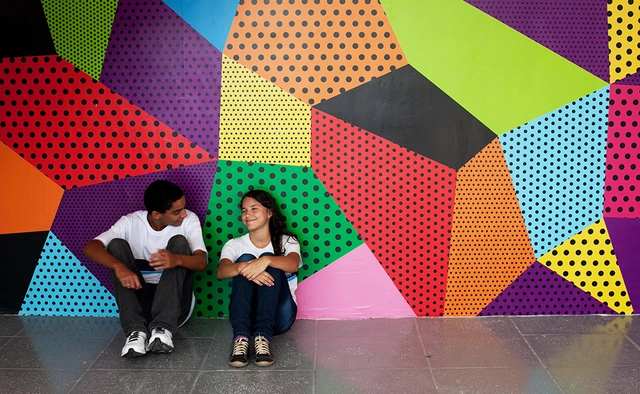
GENTE – Experimental Gymnasium of New Educational Technologies, located at the André Urani school, in the Rocinha community (RJ). Photo credit: Agência Grupo do Rio.
Over 469 years after the construction of the first Brazilian school—built in Salvador, Bahia, by Jesuits who taught reading, writing, arithmetic, and Catholic doctrine—school architecture remains indistinguishable within the urban fabric of most Brazilian cities. Characterless and rigid buildings, unable to connect with their surroundings due to enclosing walls, were once described by architect Mayumi Souza Lima as "structures [that] could just as easily be meant for children, bags of beans, or cars, since they are merely covered areas, with a ceiling and a floor."
On Thursday, October 25, we celebrated the first three years of ArchDaily Colombia in Bogotá. The Lamazone Gallery served as the setting for some of the local scene's most influential architects to connect with the ArchDaily Colombia team.
During his presentation, David Basulto, CEO of ArchDaily, highlighted the key milestones of ArchDaily Colombia's first three years, before moving on to an insightful analysis of Colombian architecture driven by the big data generated by our readers worldwide.
In March of this year, Escola da Cidade, in partnership with Editora Perspectiva, hosted the launch of the book How to Study Public Life by Danish architects Jan Gehl and Birgitte Svarre, alongside a panel discussion with architects Sergio Kon, Fernanda Barbara, Nabil Bonduki, and journalist Leão Serva.
The millions of cars, trucks, and buses on São Paulo's roads account for over 90% of all air pollution. With residents spending up to five hours a day commuting, the metropolis is constantly gridlocked. To address this, What Design Can Do and the IKEA Foundation are calling on creative professionals from around the world to develop radical, innovative solutions for more sustainable flows of people and goods in the city.
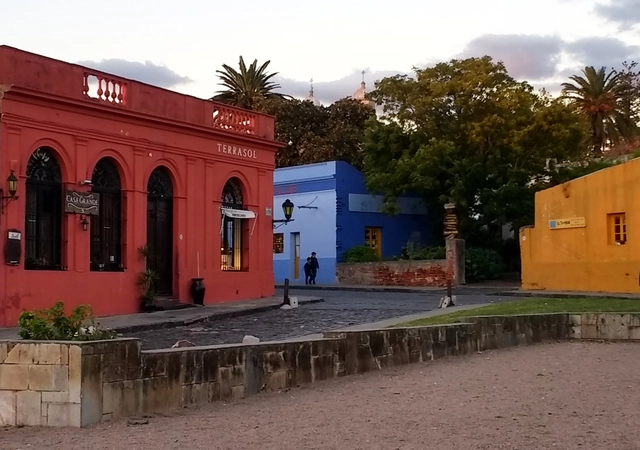
Colonia del Sacramento, on the shores of the Río de la Plata in southern Uruguay. From the ferry—if arriving from Buenos Aires—one can spot the famous lighthouse rising above a cluster of historic stone houses and cobblestone streets; a historic center declared a UNESCO World Heritage Site, which features not only a colonial and post-colonial architecture blending Spanish and Portuguese influences, but also compelling restoration and renovation projects that demonstrate a thoughtful embrace of Uruguayan memory.
Its architectural landmarks emerge naturally from an atmosphere frozen in time as you explore the city on foot along its waterfront and green spaces. Below, discover a list of 10 sites you should visit.
What do dance and architecture have in common? It is difficult to explain how our experience of dance is stored in our bodily memory, yet our core recollection of a performance is often inseparable from the architectural space in which it unfolded. While the dance itself may be the focus, the venue remains integral to the experience. Ultimately, as we explore how cities and urban spaces are conceived and created, both dance and architecture serve as fundamental coordinates.
Unsurprisingly, many choreographers are exploring the intersection of these two disciplines. These works explore how our bodies navigate the built environment. This is far from a purely theoretical pursuit; instead, it engages specific communities and cultural groups through embodied movement. In the words of philosopher Marina Garcés: “The body no longer confines us to a single place, but instead integrates into and becomes part of the environment of every place. It is the zero point from which we can experience all space, enriching ourselves both materially and spiritually.”
The city of Barcelona remains firm in its fight against speculation and gentrification, which are currently widening the inequality of opportunity for residents seeking access to decent and affordable housing.
To address this, Barcelona's Commission for Ecology, Urbanism, and Mobility has initially approved two new urban planning tools to tackle the housing accessibility crisis and protect the social balance of its neighborhoods. These measures respond to the demands of organizations such as the Federation of Neighborhood Associations of Barcelona (FAVB), the Mortgage Affected People's Platform (PAH), the DESC Observatory, the Neighborhood Assembly for Sustainable Tourism (ABTS), and the Tenants Union.
https://www.archdaily.com/1113887/barcelona-to-increase-social-housing-construction-in-its-fight-against-gentrificationJavier García Librero

















.jpg?1536593816&format=webp&width=640&height=580)
.jpg?1535964102&format=webp&width=640&height=580)
