According to the American Society of Heating, Refrigerating and Air-Conditioning Engineers (ASHRAE)—which organizes global data and supports research in this field—thermal comfort is defined as the condition of the mind that expresses satisfaction with the thermal environment. Why is it important to study adaptive comfort in Latin American climates? Given that 40% of the population lives in the tropics, designing architecture capable of adapting to tropical climates is essential. Consequently, in line with human-centered design, strategies must be tailored to the specific local conditions in which they are implemented.
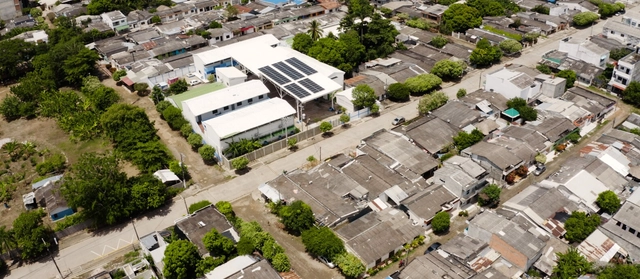
Franco Morales, technical director of EBP Chile, who plays a cross-cutting role across the company's various departments (construction, climate change, and local energy), frequently collaborates with the CEELA Project. Following his participation in the energy retrofitting project for the Juan XXIII School in Montería, Colombia, and identifying a widespread challenge—namely, schools built without an architecture suited to their climatic context—he has begun developing a sustainable design manual for educational institutions in hot-dry and hot-humid climates.