Videos
Libro: Desde la resta. Image Cortesía de n`UNDO
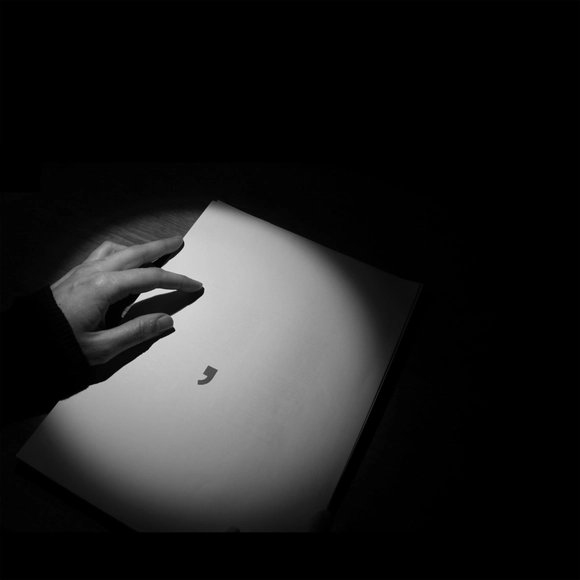
More than six years have passed since n´UNDO launched its manifesto, which, through its 11 points, advocates for and promotes a new way of approaching architectural action based on non-construction and reuse. This approach is grounded in the re-architecture of territory and the city through subtraction and renunciation.
Since November 11, 2011, n`UNDO has built a highly active and compelling track record through urban and territorial intervention plans aimed at the social, cultural, environmental, and physical improvement and recovery of our surroundings. In addition, they have participated in several competitions, earning numerous awards and accolades, and have carried out extensive educational work through workshops, courses, lectures, and conferences. Notable among these was the symposium “Empty Space, Subtraction, and Silence: Subtraction and Renunciation in the Creative Process. An Interdisciplinary Perspective,” held in Madrid in November 2016.
https://www.archdaily.com/1113847/through-subtraction-a-different-and-necessary-way-of-shaping-the-cityJavier García Librero
For this International Women's Day, we have partnered with the Colombian print journal de-Arq (Universidad de Los Andes) to showcase the work of five contemporary Colombian architects. They represent distinct, complementary approaches within our discipline: design, research, teaching, and experimentation.
Today, we meet María Paula González Bozzi, founder and director of Fundación Juligón.
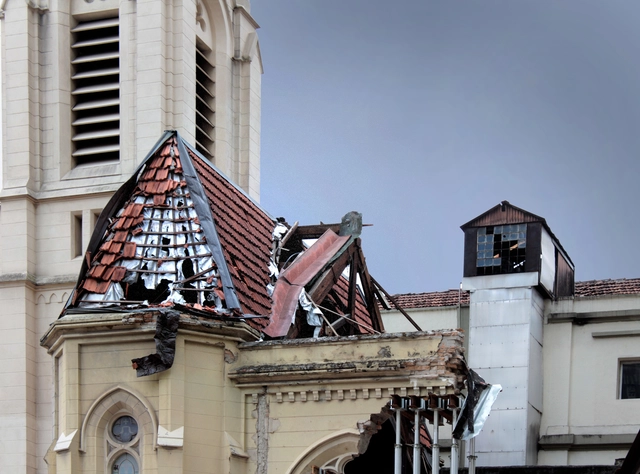
Exactly five months ago, residents of São Paulo witnessed the tragic collapse of the Wilton Paes de Almeida Building. Following a massive fire, the structure of the iconic 24-story modern building came down, leaving dozens dead and injured, and hundreds homeless. Located at the intersection of Rio Branco Avenue and Largo Paissandu, the collapse also affected three other adjacent buildings, including the headquarters of the Lutheran Church of São Paulo.
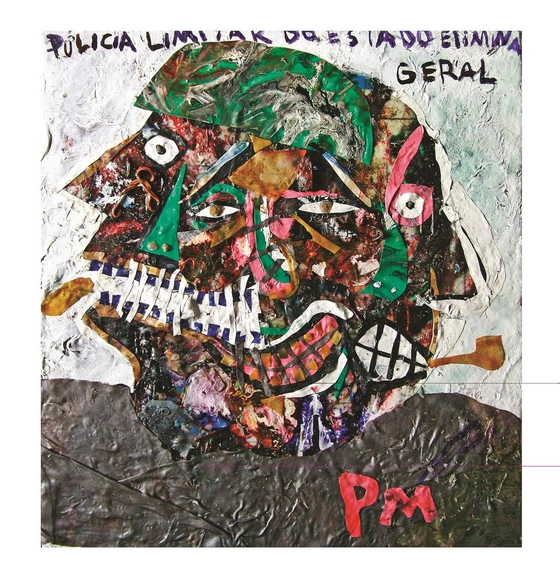
The noias, identified by their abject bodies, evoke and challenge physical, social, spatial, symbolic, and moral boundaries, driving the creation of policies aimed at both their rehabilitation and their elimination. This article, organized by PISEAGRAMA based on the extensive ethnographic fieldwork conducted by the author up to 2012 and published in 2014 in the book Nas tramas do crack, offers an immersion into São Paulo's *cracolândia* (crackland), the most famous in the country, whose conflicts have replicated the term across the many others multiplying in various cities. There, the *De Braços Abertos* (With Open Arms) program and heavy-handed repression have marked municipal and state administrations in recent years, highlighting the political conflict that emerges at the extremes of the territorial management of crack.
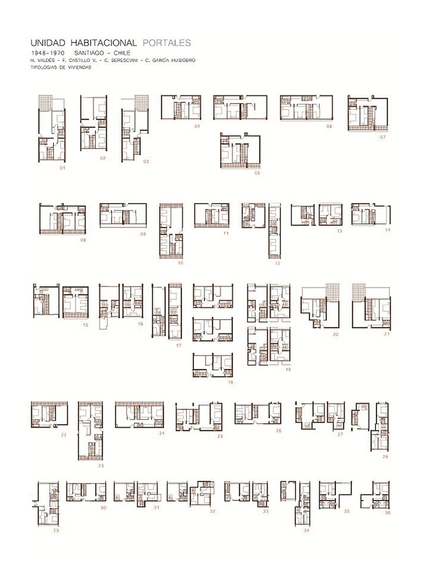
A mint that became the government palace of Chile. A pavilion in Paris that became a children's museum. The first work of the Modern Movement in Chile, and a revolutionary urban master plan that never materialized.
These and other examples in our selection of Chilean architectural classics, explained through their floor plans.
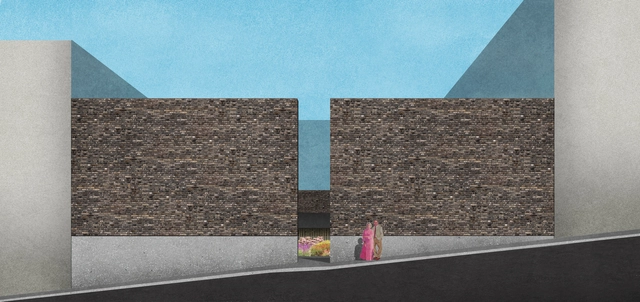
1º lugar. Image Cortesia de Concurso Público Nacional de Arquitetura para o Memorial às Vítimas da Kiss
The results of the National Public Architecture Competition for the Memorial to the Victims of Kiss were announced this Tuesday morning (April 10) in a ceremony held in Santa Maria. The project unanimously awarded first place was by the firm Motta e Zene Engenharia e Arquitetura, from São Paulo (SP), represented by architect Felipe Zene Motta. The ceremony also recognized the five ranked projects and the five that received honorable mentions.
According to the jury, the proposal stands out for its appropriate urban integration and placement at the average level of the terrain, its symbolic character, and the delicacy of placing its focal point in a flower garden at the center of the exhibition. The project reinforces the emotional significance of the site of memory, while offering the city a narrative of the event that contributes to healing. Ease and simplicity of construction and maintenance are supported by the spatial organization of functions on a single level.
The São Paulo City Government has resumed discussions regarding property tax (IPTU) exemptions and discounts for landmarked buildings. Previously debated during the administrations of Gilberto Kassab and Fernando Haddad, the issue is currently the focus of a newly drafted bill.
The proposal limits the IPTU exemption to landmarked properties located in downtown São Paulo, within a perimeter that is still being defined. It will not apply to properties subject to general zoning restrictions, such as those in historically preserved neighborhoods like Jardins and Pacaembu.
Imagine the scale of effort required to prevent 1.24 million deaths annually. This is the average number of traffic fatalities worldwide. Cities must urgently improve protection for their citizens to ensure that, amidst current urban population growth trends, this figure does not climb even higher. Yet, what if just eight actions were enough to prevent hundreds of deaths and serious injuries?
The publication “Cities Safer by Design” outlines “eight actions to improve road safety,” and we have looked at best practices and research that reflect some of these measures.
On the morning of March 10, 2018 (Beijing time), at the 2018 Civic Trust Awards ceremony held at Manchester's iconic Old Trafford stadium (home of Manchester United), OPEN's completed project, the “Tsinghua Ocean Center,” was honored with a Civic Trust Award!
Established in the UK in 1959, this prestigious award is highly regarded, because it recognizes not only outstanding project design but also its value to the public. From urban planning to public art, the awards consider the built environment within a broader context, driven by the belief that design must serve its users.
https://www.archdaily.com/1113669/uks-2018-civic-trust-awards-announced-tsinghua-ocean-center-designed-by-open-architecture-wins韩爽 - HAN Shuang
Alongside Tiê, an adventurous capybara, Lina sets off on a journey through ten public spaces around the world – such as the High Line in New York or Paulista Avenue in São Paulo – to discover the secrets of how cities are built. The two are the main characters of the book Casacadabra – Cidades para Brincar (Cities to Play), a new release from Pistache Editorial, which launches its crowdfunding campaign on April 16 on Catarse. The book features text by Bianca Antunes and Simone Sayegh, with illustrations by Luísa Amoroso. This is the second title in the Casacadabra series – the first, titled Invenções para morar (Inventions for Living), presented the architecture of ten houses around the world.
'Monumento: Humanity Behind the Concrete' is a documentary by Fernando Díaz on the construction of the National Holocaust Memorial in Buenos Aires, designed by architects Gustavo Nielsen and Sebastián Marsiglia.
The film establishes a dialogue between Holocaust survivors living in Buenos Aires and the construction of the monument, addressing the need to keep humanity's memory alive.
As you know, ArchDaily has joined forces with Spotify, the world's largest music streaming platform. From the start, we have been sharing our own playlists for those moments in the lives of all architects. We have also invited architects from Latin America and Spain to share the music that inspires them, or better yet, the sounds that have shaped their careers.
In this installment of ArchDaily en Español + Spotify, we share an ad hoc playlist to close out the year: Fiesta para Arquitectos. A constantly updated playlist to get the party started... while you edit your plans.
The more hidden and remote, the greater the magic; the more land, sky, and water come into view, the deeper the mystery. To know its towns is to enter el Perú profundo, a territory spanning coast, highlands, and jungle. Alongside the vast ocean lies the coastal desert, the towering peaks of the Andes Mountains traversing the country from north to south, and the expansive rainforest harboring the source of the Amazon River. Upon this landscape rest the settlements and structures of ancient cultures. Imagine, then, how many atmospheres remain to be discovered in the most remote corners of this biodiversity. The climatic variety is proportional to the diverse typologies of its towns: towns of sorcerers, ghost towns, lost towns, floating towns, towns of ancient or forgotten languages, of musicians, of stone, of clay, of colors...
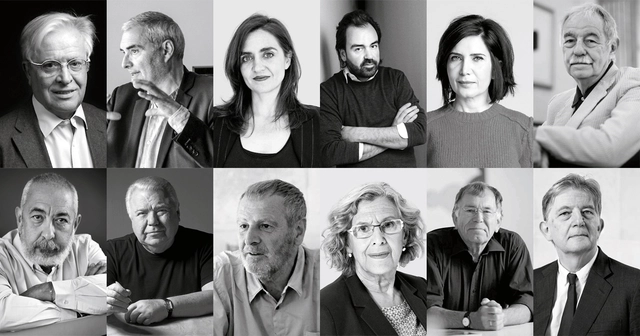
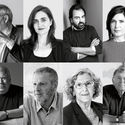
Protagonistas del V Congreso Internacional de Arquitectura y Sociedad. Image Cortesía de Fundación Arquitectura y sociedad
Yesterday, June 13, marked the opening of the 5th International Congress of Architecture and Society, an event presided over by King Felipe VI for the second consecutive edition. The President of the Government of Navarra, Uxue Barkos, and the Minister of Development, José Luis Ábalos, also participated in the official opening.
Architect Francisco Mangado was responsible for opening the event, which in its fifth edition will focus on cities and the challenges architecture faces in addressing urban demands. The architect from Navarra stated that “Architecture is not an isolated event of personal preferences; it is a profoundly cultural and social act, linked to the city as a reality that belongs to the common good,” adding that “the quality of architecture and the city is not a luxury, it is a right for all citizens.”
https://www.archdaily.com/1113864/francisco-mangado-opens-the-v-congress-of-architecture-and-society-the-quality-of-the-city-is-not-a-luxury-it-is-a-rightJavier García Librero
On this occasion, the Arquia Foundation Blog, alongside architect Sabrina Gaudino Di Meo, presents an article on the urban antipathy of our cities—which has unfortunately become a daily experience, a naturalized condition, and a fixture of the collective imagination. Faced with this situation, who is responsible? Where are urban planning and social policies when it comes to making our cities friendlier?
https://www.archdaily.com/1113865/experiencing-urban-antipathySabrina Gaudino Di Meo
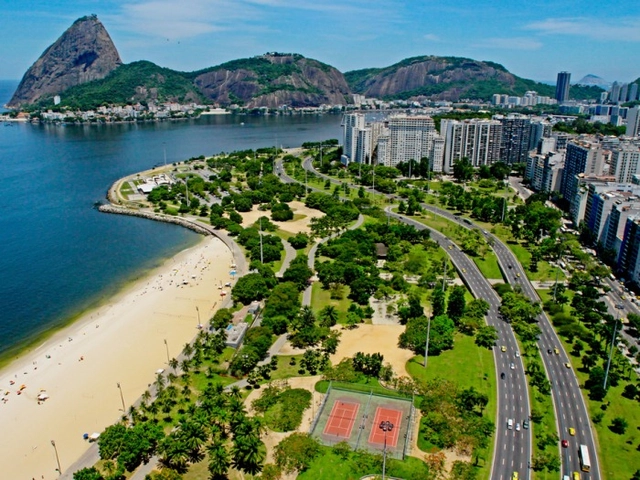
The Council of the International Union of Architects (UIA), meeting in Oaxaca, Mexico, unanimously approved on May 18 the nomination of the city of Rio de Janeiro as the UIA/UNESCO World Capital of Architecture for 2020. Securing this title is part of the program proposed by the City of Rio, with support from the Institute of Architects of Brazil (IAB), for 2020, when the city will host the 27th World Congress of Architects.
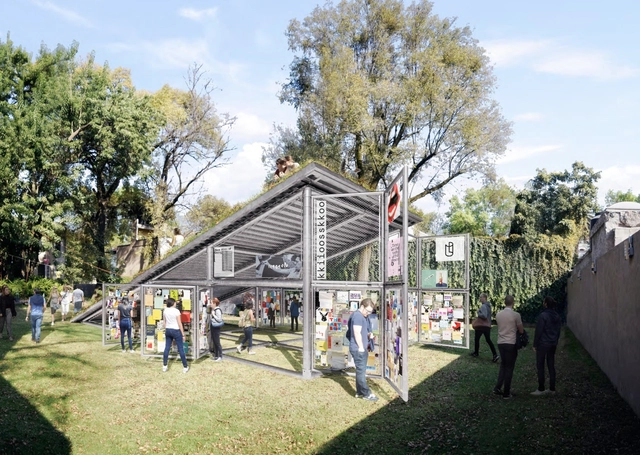
Kiosko, the Alumnos47 initiative that explores publications outside of publishing, now has a winning design for its pavilion. Following the launch of the open call last year, forty-nine proposals were received from different states across Mexico, as well as one from abroad. After a lengthy and rigorous deliberation, the jury—composed of Chus Martínez, Daniel Garza Usabiaga, Tiago Pinto de Calvalho, and Fermín Espinosa—awarded an honorable mention and selected five finalists, from which a winner was chosen.
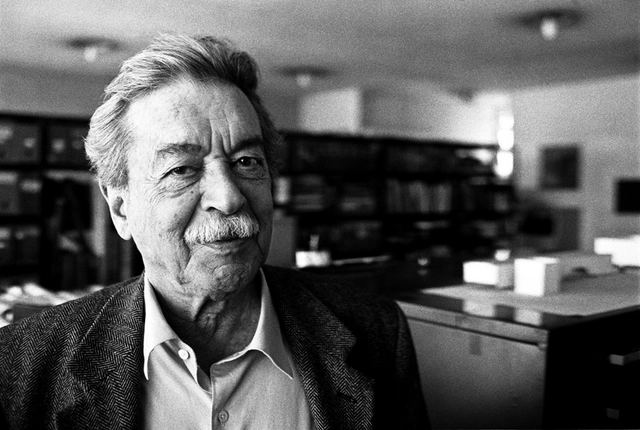
Invited by the organizers of UIA2020Rio, architect Paulo Mendes da Rocha will chair the Honorary Committee of the World Congress of the International Union of Architects, which will take place in two years in Rio de Janeiro under the theme "All worlds. Just one world. Architecture 21."
In this piece, the Arquia Foundation Blog, alongside an article by architect and educator Santiago de Molina, calls on anyone wishing to become an architect in the near future to maintain a cultivated skepticism of almost everything, to have the courage to trust nothing, and to make the effort to maintain and nourish a cultivated imagination.
https://www.archdaily.com/1113870/should-future-architecture-students-distrust-everythingSantiago De Molina
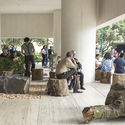
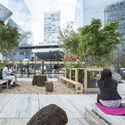
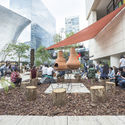
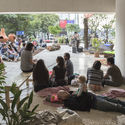
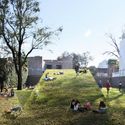
Museo Jumex presents 'Proposals for a Plaza,' a collaborative project by artists Fritz Haeg (United States, 1969) and Nils Norman (United Kingdom, 1966). This temporary installation, commissioned as part of the series 'Agora: A Blueprint for Utopia,' will invite the public to imagine and participate in an alternative vision of the museum's plaza.
Inspired by the outdoor spaces of Mexico City, the project draws elements from public parks and the wildlife areas surrounding the city, while also integrating informal uses of open space. It features seating and sleeping areas, a kiosk, a fire pit, bleachers, and outdoor spaces designed for contemplation, gathering, resting, and play.
Paraty, RJ. Photo: Chaval Brasil on Visual hunt / CC BY-NC-ND
With the aim of promoting the care and recognition of cultural heritage, the Cultural Heritage Law Research Group of the Federal University of Ouro Preto (UFOP), the Technical Office of the National Institute of Historic and Artistic Heritage (Iphan) in Ouro Preto (MG), and the Public Ministry of Minas Gerais (MP-MG) have developed the Manual for Residents of Heritage-Listed Houses.
Researchers recently announced the discovery of the world's largest termite mound complex, located in northeastern Brazil. The total volume of excavated soil is estimated to equal 4,000 Pyramids of Giza, with the complex itself averaging 4,000 years of age and covering an estimated area of 230,000 square kilometers—equivalent to the size of Great Britain.
At the end of March, 250 students from across Latin America gathered to reflect, share, design, and build three projects in the town of Chucuito, Peru. This was the 15th edition of the Latin American Social Workshop (TSL), a workshop organized by the Latin American Coordinator of Architecture Students (CLEA) and partnered on this occasion with the Peruvian Organization of Architecture Students (OPEA).
Over ten days, the students worked intensively alongside architects Enrique Villacís (ENSUSITIO, Ecuador), Juliana López and Daniel Buitrago (Ruta 4, Colombia), Jhony Chávez (Peru), and Lucio Torres (Peru). Divided into three teams, the students and workshop leaders addressed issues related to heritage restoration, landscape, and public space, while also learning about the places, traditions, and inhabitants of the region known as the folklore capital of Peru.




.jpg?1520927101&format=webp&width=640&height=580)








.jpg?1523848316&format=webp&width=640&height=580)