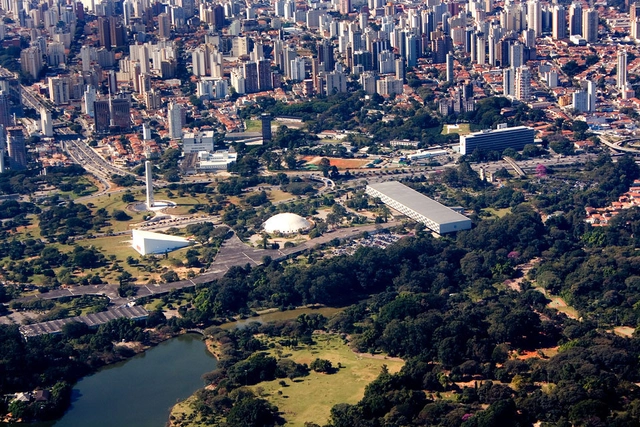
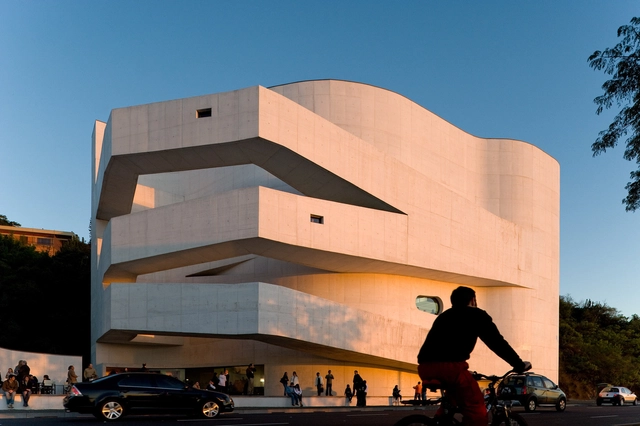
Ibirapuera Park. Photo: Fernando Stankuns on Visual Hunt / CC BY-NC-SA
Paulo Mendes da Rocha is currently the most admired and respected figure in Brazilian architecture. However, his extensive list of works narrowly missed including an intervention project for the work of another master, Oscar Niemeyer. Commissioned in 2015 by São Paulo's previous municipal administration to develop a redesign project for Ibirapuera Park, the proposal by the 2006 Pritzker Prize laureate was shelved in December of last year.
Music is a vital connection to culture. While it serves as a source of entertainment, it is also a medium for communicating ideas and expressing artistic creativity. Through romantic, social, political, or historical themes, every song evokes memories and emotions.
Although there is an endless array of genres today compared to decades past, music still allows us to travel the world without leaving home through its lyrics and music videos. With this in mind, we have compiled a list of 10 songs that not only feature the names of cities in their titles, but also, through their lyrics and visual storytelling, capture the essence of each place—whether capitals or not—bringing to life the magic of their architecture and streets.
Porto Alegre will host the 21st Brazilian Congress of Architects in October 2019. Organized by the Institute of Architects of Brazil, the event will serve as a preparatory meeting for the 27th World Congress of Architects (UIA2020RIO), which will take place in Rio de Janeiro in 2020. The theme of this edition is Space and Democracy.
For this International Women's Day, we have partnered with the Colombian print journal de-Arq (Universidad de Los Andes) to showcase the work of five contemporary Colombian architects. They represent distinct, complementary approaches within our discipline: design, research, teaching, and experimentation.
Today, we meet María Paula González Bozzi, founder and director of Fundación Juligón.
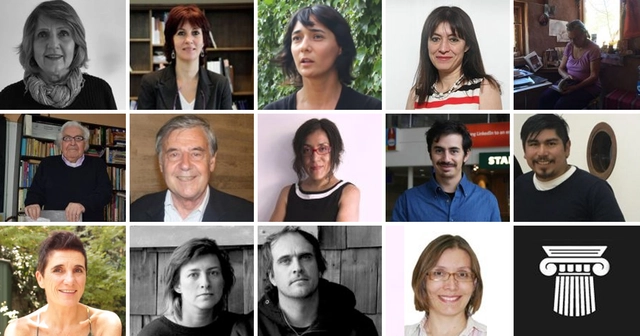
Ganadores de los Premios CA 2018. Línea superior: Beatriz Buccicardi (izq)., Pilar Barba, Verónica Arcos, Claudia Silva, María Magdalena Gutiérrez. Línea central: Osvaldo Cáceres, Gustavo Munizaga, Paulina Villalobos, Juan Pablo Urrutia, José Luis Catalán. Línea inferior: Cazú Zegers, Tania Gebauer, Eugenio Ortúzar, Claudia García Lima. Image Cortesía de Colegio de Arquitectos
On the occasion of the 75th anniversary of the Colegio de Arquitectos de Chile, the professional association has announced the winners of the 2018 CA Awards, the country's most important national honors.
Following a 2017 edition heavily criticized for the absence of women among the honorees, this year's awards not only introduced two new categories promoted by the Mujer Arquitecta organization—the Dora Riedel and Eliana Caraball awards—and another recognizing regional contributions, but women also swept 9 of the 12 categories awarded by the Colegio de Arquitectos to its members.
“It was that one over there, look. That one. See?” Dona Ana pointed to the seventh-floor apartment where, a week earlier, the fire had broken out. Further down, on the fourth floor, Anastasia, Aécio, and Itamar offered strained smiles from a campaign banner .
No one knows how the fire started in one of the subdivided apartments in Tower 100, occupied by a waste picker. But the spectacle that followed played out comme il faut. Panic, screams, flames, flashing lights, a helicopter hovering overhead, journalists accosting the supposedly injured and devoring improbable accounts, sirens, smoke, commotion, action.
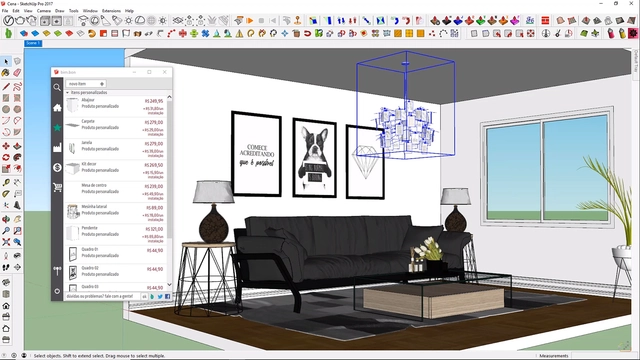
SketchUp is one of the most widely used digital modeling software programs in both professional practice and academia—and undoubtedly the most intuitive. However, the ease of creating orthogonal geometries can quickly turn into a nightmare when the goal is to design curved and organic shapes and objects.
With this in mind, Gabriel Chahoud of Chahoud Cursos released 30 video tutorials for what he called "SketchUp Month," sharing tips on how to model objects that, at first glance, seem complex to create in this software.
The Sustainable Cities Climate Finance Leadership Alliance's new platform brings together tools to help urban managers build more sustainable cities. Photo: Taís Policanti/Flickr
By 2050, more than two-thirds of the world's population will live in cities – hubs that catalyze economic, cultural, and political progress, but also consume vast resources and account for 70% of global greenhouse gas emissions. To avoid catastrophic climate change while ensuring a prosperous and sustainable future, we must act quickly.
https://www.archdaily.com/1113777/new-digital-tools-help-urban-leaders-turn-ideas-into-actionMark Watts e Ani Dasgupta
In this edition of International Women's Day, we have joined forces with the Colombian print publication de-Arq (Universidad de Los Andes) to showcase the work of five contemporary Colombian women architects, who represent different complementary approaches within our discipline: design, research, teaching, and experimentation.
Today we talk with Lina Toro, a Colombian architect, co-founder of dosmasunoarquitectos, current director of linatoro.arch, and professor at IE University in Spain. "I believe the problem lies in the system's inability to recognize excellence," says Toro.
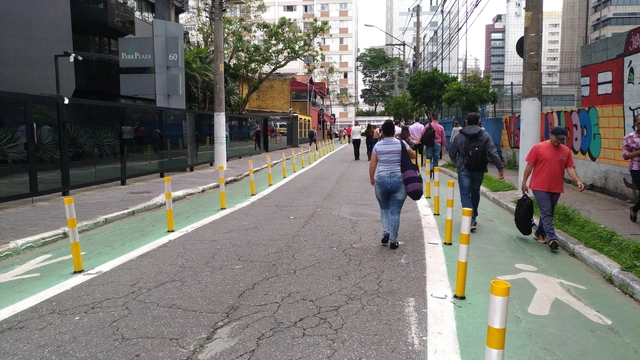
The concept of Complete Streets has gained prominence in recent years and has arrived in Brazil bringing the vision that streets must be planned, designed, operated, and maintained to allow safe, convenient, and comfortable travel for all users, regardless of age, ability, or mode of transportation.
Starting in May, Argentina reaffirms its presence at the Venice Biennale with an invitation to critically rethink the territory.
The "Imagined Lines" exhibition in the Argentine Pavilion, Horizontal Vertigo, curated by architects Javier Mendiondo, Pablo Anzilutti, Francisco Garrido, and Federico Cairoli, is a proposal to rediscover the territory as a collective construction—based on the potential of the relationship we perceive between territory and society—understanding architecture through its capacity to spark unexpected possibilities in each project.
Explore the selected projects and a statement from the curators below.
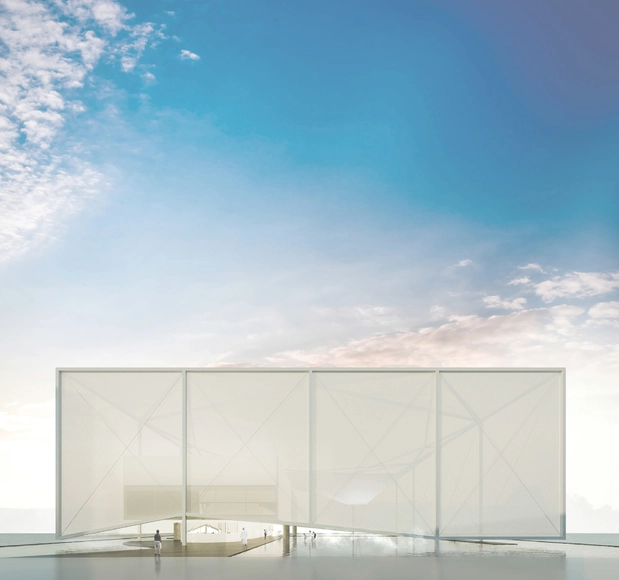
1st Place. Image via official website of the National Public Competition for Architecture and Exhibition Design – Brazil Pavilion at Expo Dubai 2020
The results of the competition for the Brazilian Pavilion at EXPO 2020 were announced today, November 12. The objective of the competition was to select a proposal and subsequently commission the complete Executive Project (Architectural Design, Complementary Engineering Projects, and Exhibition Design), construction supervision, consulting, and related services for the Brazilian Pavilion at the World Expo. The competition was promoted by Apex-Brasil (Brazilian Trade and Investment Promotion Agency) and organized by the Federal District Department of the Institute of Architects of Brazil (IAB/DF).
According to the competition brief, “the Brazilian Pavilion should highlight diversity with the theme TOGETHER FOR DIVERSITY, sub-divided into nature, people, and tomorrow (Together for Nature, Together for People, and Together for Tomorrow). These are the starting points for the architects to showcase the diversity of fauna and flora, the ethnic, creative, and cultural multiplicity of our people, and present Brazil as a unifying country, as well as a key global actor in international sustainability issues. The keyword summarizing the Brazilian theme is sociobiodiversity—and the Brazilian Pavilion, from its conception, must reflect this unique characteristic of the country.”
The Council of Architecture and Urbanism (CAU) has re-released the free guidebook on Technical Assistance for Social Interest Housing (ATHIS), originally published by CAU/SC. The 60-page document contextualizes this assistance work in relation to public authorities, the general public, and professionals, presenting different service delivery scenarios.
Brazil's greatest living architect, Paulo Mendes da Rocha does not appreciate architecture alone. Music is also part of his daily life, and this playlist—shared with us by his daughter, Joana Mendes da Rocha—features some of the musical preferences of our Golden Lion.
The Institut Ramon Llull has presented the project RCR. Dream and Nature_Catalonia in Venice in Barcelona, an exhibition showcasing RCR Arquitectes as part of the collateral events of the 16th Venice Architecture Biennale, set to open on May 26.
Representing Catalonia at the 2018 Venice Biennale, the project is co-curated by journalist Pati Núñez and architect Estel Ortega alongside the 2017 Pritzker Prize-winning firm. Together, they have created a space free of scale models or blueprints to "investigate and rethink humanity's relationship with the world, located at the La Vila estate in Vall de Bianya (Girona, Catalonia)," according to an official statement from the Catalan institute.
Thanks to its geographical and climatic characteristics, Bogotá has great potential for the development and enjoyment of nature tourism. The Colombian capital is bordered by the beautiful Eastern Hills, which connect with countless parks and trails that welcome visitors.
Among its natural wonders is the Sumapaz Páramo, the largest of its kind in the world. Exploring each of these places is undoubtedly an experience that few have the opportunity to enjoy and admire. As a result, numerous activities have sparked public interest in weaving together a city rich in environmental assets, including parks, rivers, wetlands, and gardens.
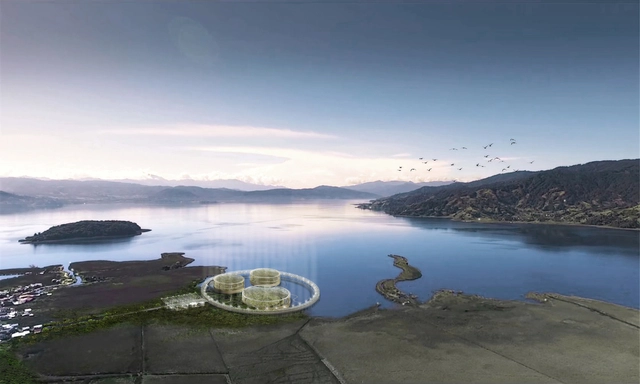
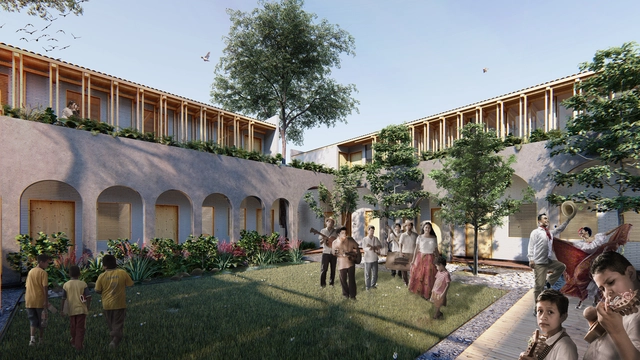
Placing five low-income families from a settlement in southern Lima, Peru, at the center of local and global design. That is the vision behind CIUDADES [en] VISIBLE.
The competition focuses on designing homes for five low-income families within the 3 de Diciembre settlement in Lurín. The Acarraz, Huamán, López, Salazar, and Teccse families will be the protagonists of this architectural challenge.
Murales en Pasarela Parque del Ebro. Image Cortesía de La Calle es un Museo
At FITUR, the Logroño City Council presented LA CALLE ES UN MUSEO (The Street is a Museum), a project aimed at revitalizing tourism and cultural visits in the city by showcasing public artworks and their creative processes, narrated by the artists themselves.
https://www.archdaily.com/1113768/logrono-promotes-art-tourism-by-turning-its-streets-into-a-museumPola Mora
The Mirador La Cocha Botanical Garden proposal by students Germán López, María Echeverry, and Julián Villescas was awarded second place in the ninth edition of the steel design competition for architecture students in Colombia (Alacero Colombia), which focused this year on a greenhouse pavilion for a botanical park.
Under a unified structural concept, the project is divided into three blocks—an entrance building, a circulation ring, and greenhouse pavilions—and aims to establish itself as "a space of high educational and research value that seeks to promote the preservation and conservation of representative and threatened botanical species" in the Colombian department of Nariño.
The graduate program Architecture, Education, and Society hosted philosophy professor Lorenzo Mammì to discuss the development of interpretations of works of art and architecture.
Lorenzo Mammì approaches the interpretation of architectural works from a perspective related to philosophy, music, and the visual arts, which are key areas of interest. The discussion addresses the varying readings of works, as well as the relationship between these analyses and the production process.
Media and technology have been revolutionizing content creation across diverse niches, and architecture is no exception. YouTube channels, television shows, and specialized playlists on architecture and urbanism are just a few examples. Over the last few years, however, podcasts have emerged as a powerful alternative. Unlike other media, podcasts are an audio-only format shared across a wide range of platforms—from specialized websites to blogs. Today, there are countless listening options available, both Brazilian (as listed below) and international, as previously published by ArchDaily.
Finding specialized podcasts can be a daunting task. To help, we have gathered a list of nine Brazilian podcast channels for you to listen to. Put on your headphones and check them out:
The Son Jarocho Documentation Center is a cultural venue in the city of Jáltipan de Morelos. Dating back to 1998, its former headquarters suffered severe structural damage during the 2017 earthquakes in Mexico, which affected several regions. As a result, municipal authorities determined that it was necessary to rebuild the facility.
Bringing this project to fruition required the involvement of various institutions and fundraising events. Among these was a campaign led by Mexican singer Natalia Lafourcade titled 'Un Canto por México' in Anaheim, California.
The 2018 CEMEX Pavilion competition was conceived to provide the student community of Guadalajara with an opportunity and a voice to express their aspirations, interests, concerns, and critiques of the profession, channeling them into an intervention within the courtyard of a heritage house in the city's historic center, which functions as a workshop and cultural center. The event is organized by eSCALA, CENTROmx, and TEMAdc—groups made up of students and alumni of the Centro Universitario de Arte, Arquitectura y Diño of the Universidad de Guadalajara—and the winners of the 2018 CEMEX Pavilion Competition, which included one first-place and two second-place projects, were recently published.
Listed as a World Heritage Site, the Historic Center of Salvador, Bahia, in the heart of the Pelourinho neighborhood, is home to the city's Cathedral Basilica, which dates back to the 17th century. One of Brazil's most significant sacred buildings, the basilica underwent a three-year-and-eight-month restoration process. Beyond returning its celebrated features to public view, the intervention revealed spaces and artifacts previously unknown or long thought lost.




.jpg?1520271044&format=webp&width=640&height=580)

.jpg?1520271044)




![Architects and Families Unite to Build Social Housing in Peru: CITIES [in] VISIBLE - Featured Image](https://snoopy.archdaily.com/images/archdaily/media/images/5a84/5052/f197/ccdd/ce00/0001/slideshow/526x500_sin_call.jpg?1518620752&format=webp&width=640&height=580)