Few cities worldwide have had the courage to tax vehicle circulation—even though existing examples have, so far, been positive. It has fallen to Buenos Aires to launch the first policy of this kind in Latin America. Starting now, the city government will charge for the time saved by those who insist on driving in the historic center (known as Microcentro) of the Argentine capital and in the Retiro neighborhood between 11 a.m. and 4 p.m. The city joins a list whose prominent names include Singapore, London, Stockholm, and Milan.
A few days ago, FIFA announced that Mexico, the United States, and Canada will host the 2026 World Cup. The news came as a surprise to some, as it will be the first World Cup to be played across three countries, featuring a new format with 48 teams divided into 16 groups of three. Consequently, further details on the organization will not be available until 2020, when FIFA is scheduled to announce the event's logistics.
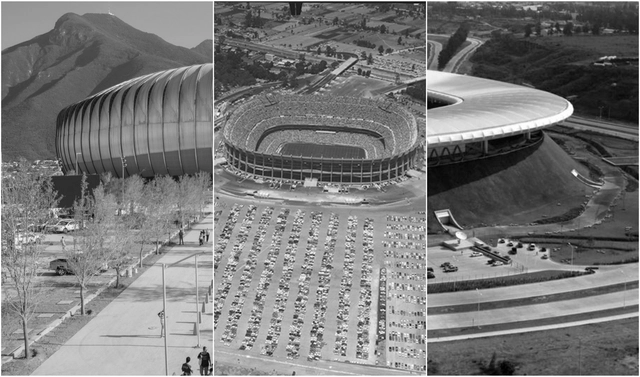
Knowing that many of our readers are fans of both soccer and Mexican architecture, we present this special feature on the three Mexican stadiums that will host the 2026 World Cup. Don't miss it!
The CitYzens Collective and the Arkco-CUC research group at the Universidad de la Costa (CUC) conducted a collective mapping exercise in the Plaza de la Paz, located in the historic center of Barranquilla, Colombia. The event took place on June 1, 2018, at this emblematic public square.
The initiative not only involved collaboration with urban design collectives like Colectivo 016, but also drew the participation of dozens of citizens and passersby. They made symbolic contributions to "Save Barranquilla" by mapping their experiences, identities, appropriations, uses, and collective imaginaries of the city.
Videos
Cortesía de Ciro Miguel + Vanessa Grossman + Charlotte Malterre-Barthes
For the first time in its history, the São Paulo International Architecture Biennale opened a call for proposals to select the curators for its next edition. Consequently, on August 31, the Instituto de Arquitetos do Brasil - Departamento São Paulo (IABsp) announced the curatorial team that will lead the XII São Paulo International Architecture Biennale.
With the proposal Todo Dia, the winning team is composed of Brazilian architects Ciro Miguel and Vanessa Grossman, alongside French architect Charlotte Malterre-Barthes.
Below is an excerpt from the winning proposal's statement:
https://www.archdaily.com/1114031/iabsp-announces-the-curatorial-team-for-the-xii-international-architecture-biennale-of-sao-pauloEquipe ArchDaily Brasil
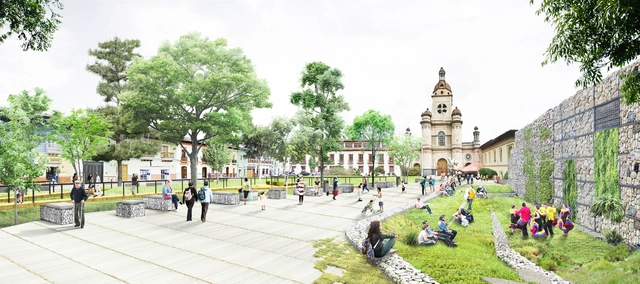
Perspectiva general. Image Cortesía de Taller Alterno
The Colombian firm Taller Alterno, alongside Laura Flórez and Alexander Jiménez, won the competition for the Rumipamba Park in Pasto, Colombia. Sponsored by the Mayor's Office of Pasto and the Colombian Society of Architects (Nariño Chapter), the architectural competition awarded first place to the proposal “Rumipamba | Parque Botánico” (Rumipamba | Botanical Park), a project that proposes a green oasis in the heart of the capital of Nariño, aiming to make a positive environmental impact while simultaneously offering a recreational space for citizens.
Germán Tamayo, one of the lead designers, told Diario del Sur: “This is an understated proposal, using simple and sustainable materials, where we wanted to evoke the city's topography and bring it inside the park. As a result, we designed spaces for community life, encounters, small events, and gatherings.”
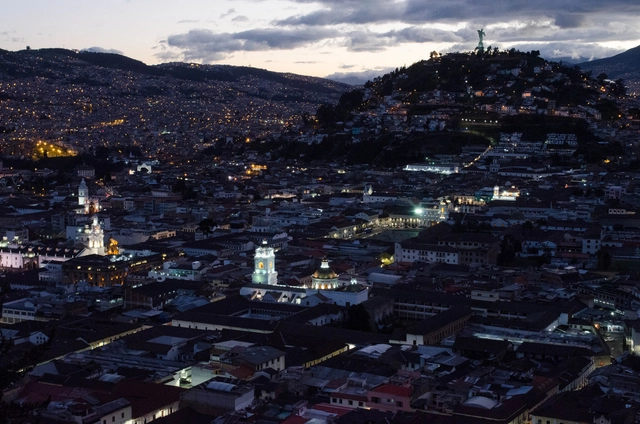
With one month to go before its opening, the details of the official program for the 21st Pan-American Architecture Biennial of Quito (BAQ2018) have been announced. Marking its 40th anniversary, the event will focus its dialogue and debate on architecture itself.
To be held from November 19 to 23 in the Ecuadorian capital, the event offers a prime opportunity to discuss and debate a discipline that, in recent years, has seen a decline in the spaces dedicated to fostering such encounters and dialogue.
https://www.archdaily.com/1114028/discover-the-details-of-the-program-for-the-2018-pan-american-architecture-biennial-of-quitoJavier García Librero
The strong influence of Le Corbusier's work and philosophy on Spanish architect Josep Lluís Sert established him as a key figure in local architectural history, sparking one of Spain's first rationalist movements. In 2013, thirty years after Sert's passing, filmmaker Pablo Bujosa Rodríguez released the documentary Josep Lluís Sert: un sueño nómada, which Radio Televisión Española is now making available to the public on its program Imprescindibles.
This documentary traces the life and career of one of the leading figures and benchmarks of 20th-century Spanish architecture—a tireless champion of the Modern Movement who advocated for a functional architecture integrated with other visual arts, such as painting and sculpture.
https://www.archdaily.com/1114030/a-nomadic-dream-relive-the-legacy-of-josep-lluis-sert-in-this-online-documentaryJavier García Librero
Designed by Ángel Arroyo Aguilar, the Muelle del Cochayuyo project was selected as one of the 10 winners in the Thesis Projects category of the 2018 Concurso Arquitectura Caliente (CAC 2018), a Chilean competition organized by Grupo Arquitectura Caliente and funded by the Ministry of Cultures, Arts, and Heritage.
My intention was never to reinvent the wheel, but rather to bring it to this remote place.
It has been 453 days since I arrived on these shores, where I was initially not welcome, seeking to immerse myself in the traditions and ways of inhabiting unfamiliar territories. I discovered incredible people and landscapes steeped in craft, and I set out to change the constraints under which the local inhabitants lived.
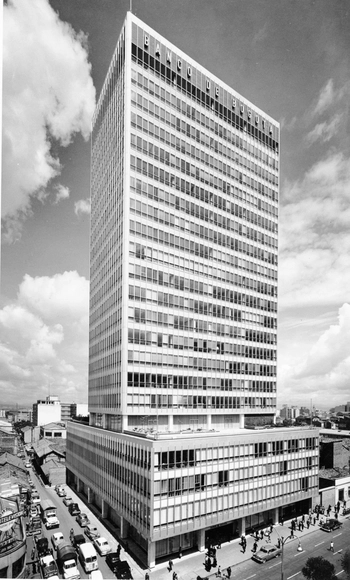
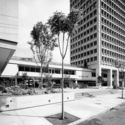
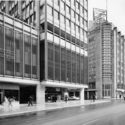
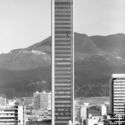
The modernization of Bogotá between 1940 and 1970, captured in urban and architectural photographic reportages, has been documented in various books, magazines, and photobooks of the era, as well as in images from the city's public and private archives. All these shots reveal an intentional, and even critical, approach to how modern architecture reconfigured city centers and connected new buildings and urban spaces with the existing cityscape.
When analyzing the impact of photography from an architectural perspective, it is essential to discuss Paul Beer and Germán Téllez. Within their broad spectrum of subjects, these two photographers dedicated themselves specifically to architectural photography. They received commissions from the most prestigious architecture firms of the time, and their shots reveal different, complementary values, relationships, and aspects of modern architecture and the city.
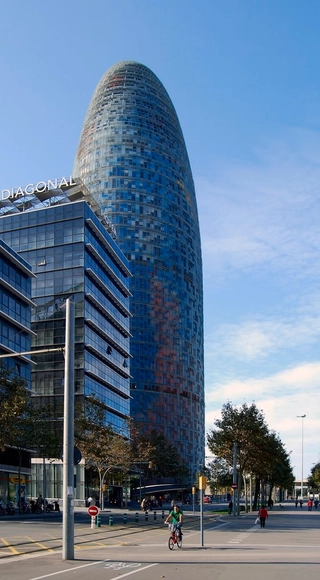
Although the Catalan political situation remains mired in uncertainty, companies seem to be regaining confidence in Barcelona as a location for their corporate headquarters, following the city's 2017 loss of the opportunity to host the European Medicines Agency (EMA) at Torre Glòries (formerly known as Torre Agbar) to Amsterdam.
Now, however, Facebook has chosen this tower—designed by architects Jean Nouvel and Fermín Vázquez (b720)—as the site for an operations center to combat and eliminate harmful content, such as fake news, on the social network.
https://www.archdaily.com/1114033/facebook-sets-up-offices-to-combat-fake-news-in-barcelonas-agbar-towerJavier García Librero
0-VOID is an inflatable pavilion developed as part of the third-year Architectural Design studio taught by BASE studio (Bárbara Barreda + Felipe Sepúlveda) at the School of Architecture and Art of the Universidad del Desarrollo in Santiago, Chile. The pavilion synthesizes and embodies the themes explored throughout the semester, centered on the potential inherent in pneumatic systems for formulating unconventional geometric, material, and spatial responses.
Its design was developed through an iterative process between 1:1 material exploration and digital tools, informed by a series of preceding exercises conducted by the students during the semester.
https://www.archdaily.com/1114025/invertebrate-pavilion-challenges-the-notion-of-structural-resistance-associated-with-rigidityArchDaily Team
National Architect and Urban Planner Day, celebrated on December 15, has officially become law. Law 13,627/2018, which adds the date to the official Brazilian calendar, was signed into law by the Presidency of the Republic on January 16. This marks an important step in the process of professional recognition initiated by CAU/BR and regional CAUs since their creation in 2011. The Council began operating precisely on December 15 so that its establishment would coincide with the birth date of Oscar Niemeyer.
The open course Arquitetura Paulistana, organized by Estúdio Artigas, offers guided tours of prominent contemporary projects in São Paulo. Accompanied by the architects behind the designs, participants gain insight into each work through the eyes of those who conceived them.
The Brazilian Institute of Geography and Statistics (IBGE) released last week the 2017 edition of the Profile of Brazilian Municipalities (Munic). According to the document, fewer than half of Brazilian cities have structured planning for housing. The report points out that last year, of the country's 5,570 municipalities, 59.6% had some type of housing-directed initiative, but only 39.7% had a Municipal Housing Plan.
A historical platform available online offers a look at the last one hundred years of architectural competitions in Uruguay, exploring the shape of the city its society set out to imagine.
100 Years of Architecture Competitions in Uruguay is a project created by authors Virginia Delgado, Francisco Magnone, and Marcelo Staricco (architects and design instructors, DEAPA - FADU, UdelaR) along with research advisor Mag. Arch. Diego Capandeguy.
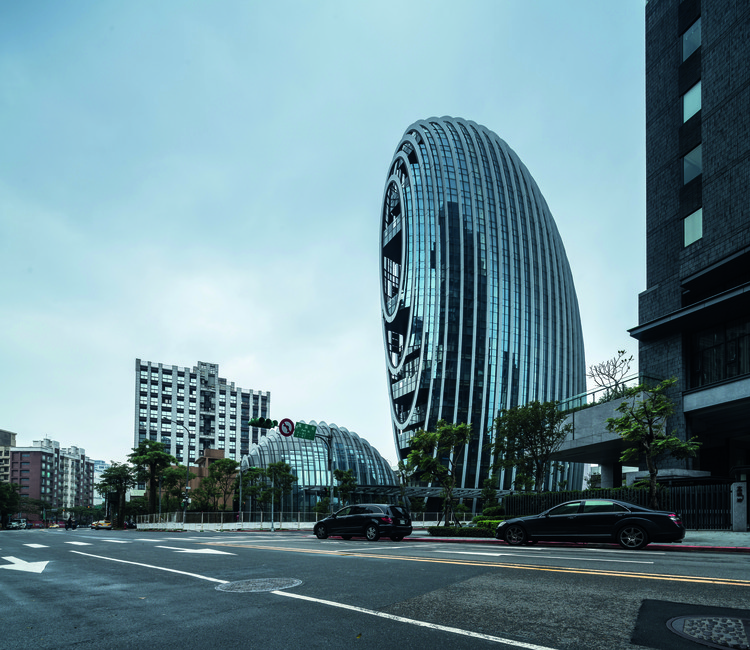
Lè Architecture in Taipei, China, designed by Andy Wen. Image
Since its founding in Hong Kong in 1985 and the establishment of its first mainland office in Beijing in 2002, the globally renowned architecture firm Aedas has spent the past 15 years leading the industry across various sectors, particularly in large-scale mixed-use developments and high-rise typologies. Among its most recognizable projects are the Midfield Concourse at Hong Kong International Airport and the recently completed Landmark Center in Shanghai.
According to the World Architecture 100 (WA100) 2017 ranking by UK-based Building Design, Aedas topped the charts in China and ranked ninth globally, boasting 788 registered architects across 13 global offices and generating annual revenues of $230 to $290 million. The firm’s meteoric rise is intimately tied to its site-specific design solutions and efficient execution.
ArchDaily recently spoke with Dr. Andy Wen, Global Design Principal at Aedas, to discuss the operational strategy and philosophy behind a leading global practice.
The crowdfunding campaign to produce the 2019 Athos Bulcão Illustrated Calendar is now live. Through November 28, the public can contribute to the production and distribution of 6,000 copies of the calendar. In return, supporters will receive copies of the publication alongside rewards featuring the artist's work, such as bookmarks, postcards, books, tote bags, magnet sets, mouse pads, silver jewelry, and even framed tiles, as well as having their names printed in the acknowledgements section. Supporters can view the rewards and make their contributions on Catarse.
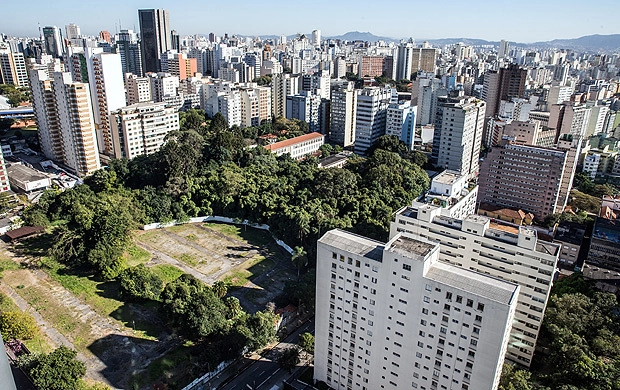
A happy ending to one of the disputes over the appropriation of urban space in São Paulo: the land that will house Augusta Park is finally becoming a public and common asset. After decades of impasse, the social, environmental, and cultural function of the city's last central woodland has prevailed over the right of the developers owning the land to exploit it by building high-rises.
https://www.archdaily.com/1113977/sao-paulo-gets-augusta-park-finallyRaquel Rolnik e Augusto Aneas
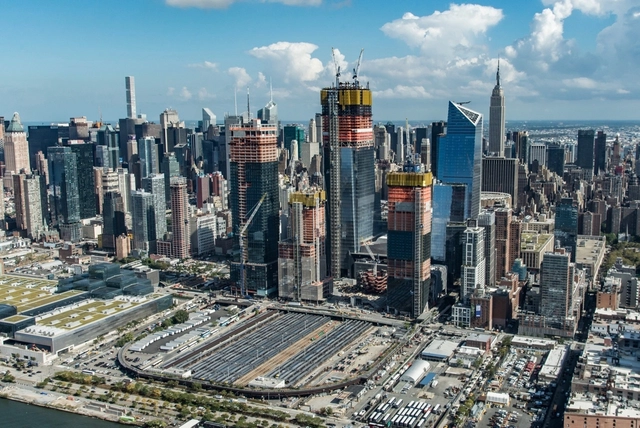
Colectivo ARKRIT has shared a chronicle by Kosme de Barañano on the physical—and perhaps also social and economic—reconstruction of New York in 2018, following the devastation of the Twin Towers attacks and the 2008 financial crisis. His extensive, wide-ranging work spans surprising European references, New York management systems, contemporary formal architectural exuberance, and bold proposals for public space design.
In this first chapter, Kosme de Barañano describes the new development known as 'Hudson Yards.'
https://www.archdaily.com/1113976/reflections-on-the-changes-in-new-york-city-hudson-yardsKosme de Barañano
Dresden-based architecture collective ruestungsschmie.de has shared another large-scale video mapping project, this time on the facade of the Church of St. Ludmila in Prague. Titled NUCLEUS³, the project uses audiovisual media to raise the question: what do we expect for the future?
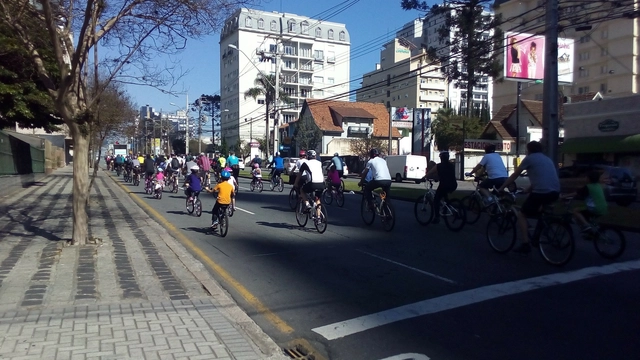
As has been discussed in several countries around the world, promoting cycling as a mode of transportation brings diverse benefits to cities and their citizens, such as: a reduction in chronic illnesses (like hypertension and cardiorespiratory diseases), lower rates of overweight and obesity, fewer traffic fatalities and injuries, and lower levels of air pollution, among others. Despite the continuous dissemination of these positive impacts, in Latin America less than 10% [1] of the adult population uses the bicycle as a means of transportation, whereas in European countries like the Netherlands and Denmark, this figure exceeds 25% of all trips [2].
To better understand the relationship between the built environment and the promotion of cycling in Brazil, a study [3] sought to understand the associations between cycling for transportation and bike paths and mass transit in the city of São Paulo. The research was
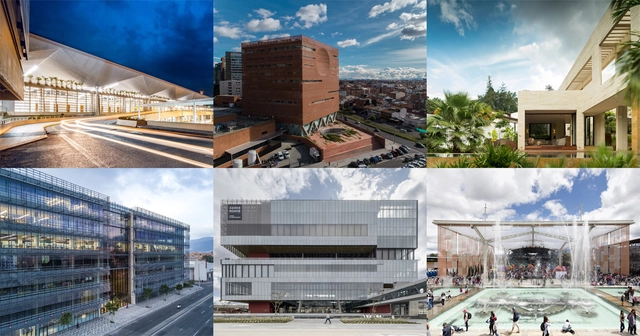
The Jury of the XXVI Colombian Biennial of Architecture and Urbanism has presented the list of projects and publications selected for the next edition of the event, which will be held once again in Cartagena this year.
Divided into eight categories, the 283 submitted projects were evaluated by an international jury comprised of Iñaqui Carnicero (Spain), Alejandro Beals (Chile), and Fabián Farfán (Bolivia), alongside local architects Germán Fonseca, Julián Rincón, Sara Giraldo, and Diego Aguilera.
The 108 finalist projects for the upcoming Colombian Biennial are:
The documentary FILME PAISAGEM, um olhar sobre Roberto Burle Marx (Landscape Film: A Look at Roberto Burle Marx) opens in theaters on November 15, showcasing the Brazilian landscape architect's profound contribution to the country's native flora. Written and directed by João Vargas Penna, the film is a journey through the art and personality of Roberto Burle Marx, who was also a painter, cook, and singer—lesser-known facets of his life to the general public.

.jpg?1530823155&format=webp&width=640&height=580)








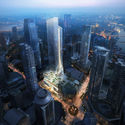
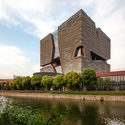
.jpg?1516787641 "Hengqin Headquarters Complex (Phase II) in Zhuhai, China, co-designed by Andy Wen and Keith Griffiths. Image")
对谈Archdaily.jpg?1516787623 "Aedas Global Design Principal Andy Wen in conversation with ArchDaily. Image")