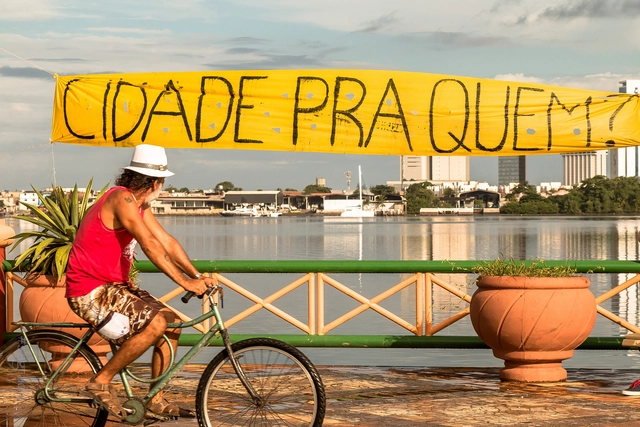
The term ‘right to the city’ was on the lips of participants in the June 2013 protests, which were sparked by public transit fare hikes across several Brazilian states. It was also emblazoned on banners hanging from occupied vacant towers and abandoned buildings by the Ocupe Estelita movement, which has fought since 2008 to preserve the José Estelita Pier in Recife. Abroad, the phrase was splashed across Turkish signs when trees were felled in Istanbul’s Gezi Park to make way for a shopping mall.
But what, after all, does the right to the city actually mean—an expression vehemently invoked by social movements in recent years and one that, in Brazil, gained territoriality following the 2013 mobilizations?
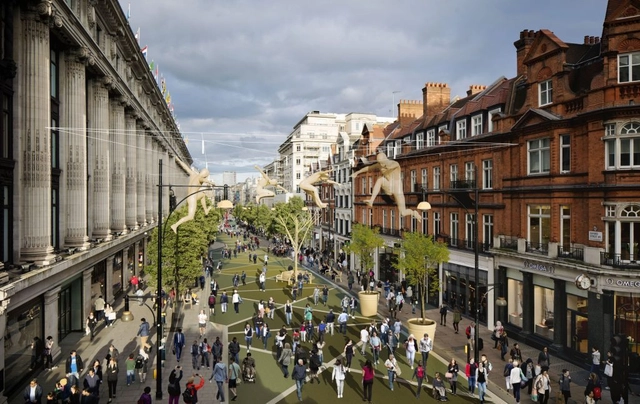
Futura identidade visual da Oxford Street pedestrianizada ainda não está pronta. Imagem: TfL. Image Cortesia de TheCityFix Brasil
This month, Mayor of London Sadiq Khan released the draft of the new plan for the city which, according to him, marks a clean break from previous strategies. And he is not exaggerating, given that the targets to be pursued by 2029 include a near-total ban on new parking spaces and the construction of 650,000 new homes. While the plan is still in its initial draft, the British capital's efforts to curb air pollution are pushing forward the pedestrianization of one of its main central thoroughfares, Oxford Street, and even betting on biofuel derived from coffee to power buses across the country.
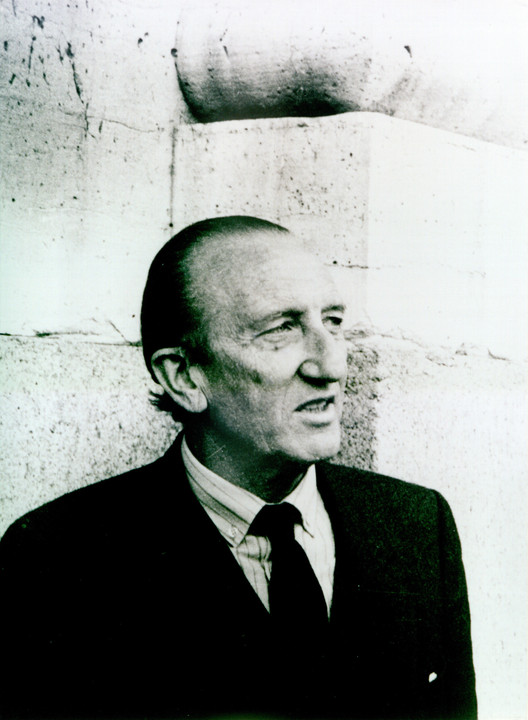
Francisco Javier Sáenz de Oiza. Image Cortesía de COAM
Architect Francisco Javier Sáenz de Oiza is undoubtedly a pivotal figure in 20th-century Spanish architecture. Designer of iconic works like Torres Blancas and the current Castellana 81, Sáenz de Oiza was twice awarded the National Architecture Award (1946 and 1954), served as Director of the Madrid School of Architecture (1981–1983), and was a figure whose work and theoretical reflections shaped the course of the Modern Movement in Spain.
This year marks the centenary of his birth in the town of Cáseda (Navarra). To celebrate this milestone, the 15th Architecture Week will pay tribute to him with a major exhibition charting his entire career. Titled Centenario Sáenz de Oiza. 1918-2018 (Sáenz de Oiza Centenary. 1918-2018), the exhibition is organized by the COAM Architecture Foundation in partnership with the Directorate-General for Architecture of the Ministry of Development, and curated by his children, architects Vicente, Javier, and Marisa Sáenz Guerra.
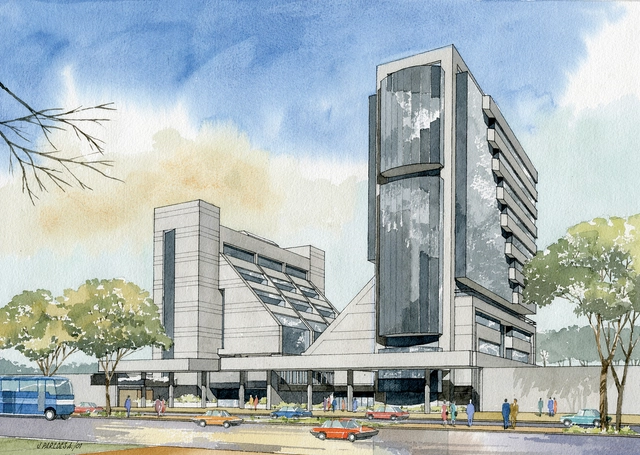
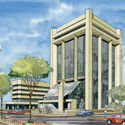
Banco Holandés / Rafael Vélez Calisto. Image Cortesía de J. Paredes para Rafael Vélez Calisto
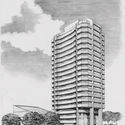
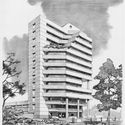
The 1970s and 1980s witnessed a new urban image in the Ecuadorian capital. Rafael Vélez Calisto graduated in 1970, going on to become one of its most prominent and prolific architects. He expressed his architecture for a thriving country and capital that offered unique opportunities to professionals, driven by oil exploitation, the growth of the public and private sectors, and rapid urban expansion.
The capital shifted the profile of its main corridors, gradually shaping itself as a vertical city. Along Quito's Avenida Amazonas, the dominant presence of large, still-functional estates gradually disappeared, replaced by high-rise buildings (1)—an urban landscape that continued to spread along new arteries toward the north.
In these areas, several of his notable, contemporary, and cosmopolitan buildings stand out.
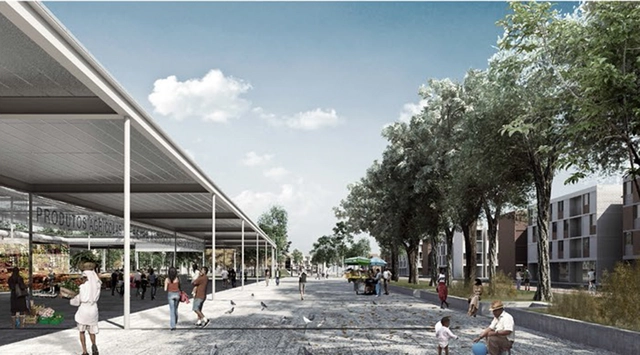
The Housing Development Company of the Federal District (CODHAB/DF) continues to release the results of design competitions, establishing itself as a benchmark for institutions across the country by holding competitions to ensure high-quality construction through a clear and democratic selection process for the most qualified technical, scientific, or artistic proposals. This latest edition features the National Public Urban Planning and Architecture Design Competition for the QNR 06 Housing Sector, in the Administrative Region of Ceilândia.
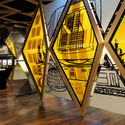
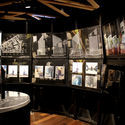
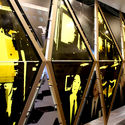
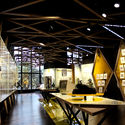
A new interactive museum is opening its doors at the Mexican Stock Exchange. The Mexican Stock Exchange Museum, “MUBO”—inaugurated in May 2018—is a space dedicated to a historical narrative focused on the country's financial market culture, utilizing interactive modules to enhance the understanding of the curatorial script. Through this new space, the Bolsa Mexicana de Valores Group brings together efforts initiated just over a year ago alongside the "Escuela de la Bolsa" to disseminate financial topics and foster an understanding of the country's history and development.
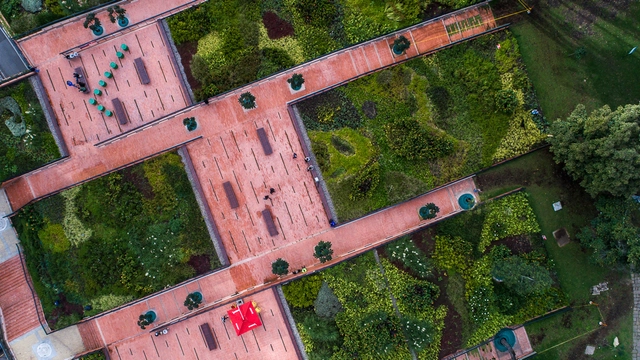
Originally published in Metropolis Magazine as El Equipo Mazzanti Heals a Gash in Bogotá’s Urban Fabric. With a Patchwork of Verdant Gardens, Anna Fixsen writes about Bicentennial Park in Bogotá. "Once a lightning rod for controversy, the innovative park now reconnects two areas at the heart of the city's historic center," she writes.
It is impossible to experience Bogotá without encountering the aura of Rogelio Salmona. Perhaps more than any other architect, Salmona shaped the urban identity of this Andean city through civic and poetic buildings. From a small balcony in his last office—located at the top of a tower he designed himself—a tableau of Salmona's legacy unfolds: directly ahead, the massive volumes of the Torres del Parque, a three-tower residential complex completed in 1970; and to the south, MAMBO, the Museum of Modern Art of Bogotá.
Located on São Paulo's most iconic avenue, after eight years of construction, the new Sesc Avenida Paulista branch finally opened its doors last Sunday, April 29. Guided by the triad “Art, Body, and Technology,” the institution—which expects approximately 18,000 visitors per week—has already seen these expectations begin to materialize.
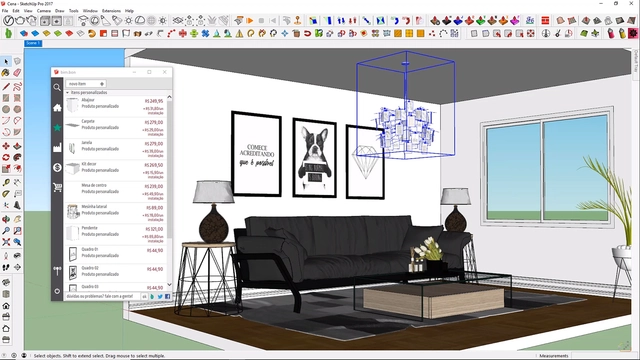
SketchUp is one of the most widely used digital modeling software programs in both professional practice and academia—and undoubtedly the most intuitive. However, the ease of creating orthogonal geometries can quickly turn into a nightmare when the goal is to design curved and organic shapes and objects.
With this in mind, Gabriel Chahoud of Chahoud Cursos released 30 video tutorials for what he called "SketchUp Month," sharing tips on how to model objects that, at first glance, seem complex to create in this software.
The Sustainable Cities Climate Finance Leadership Alliance's new platform brings together tools to help urban managers build more sustainable cities. Photo: Taís Policanti/Flickr
By 2050, more than two-thirds of the world's population will live in cities – hubs that catalyze economic, cultural, and political progress, but also consume vast resources and account for 70% of global greenhouse gas emissions. To avoid catastrophic climate change while ensuring a prosperous and sustainable future, we must act quickly.
https://www.archdaily.com/1113777/new-digital-tools-help-urban-leaders-turn-ideas-into-actionMark Watts e Ani Dasgupta
In this edition of International Women's Day, we have joined forces with the Colombian print publication de-Arq (Universidad de Los Andes) to showcase the work of five contemporary Colombian women architects, who represent different complementary approaches within our discipline: design, research, teaching, and experimentation.
Today we talk with Lina Toro, a Colombian architect, co-founder of dosmasunoarquitectos, current director of linatoro.arch, and professor at IE University in Spain. "I believe the problem lies in the system's inability to recognize excellence," says Toro.
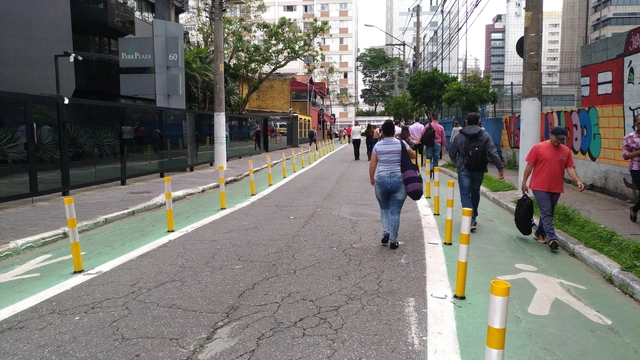
The concept of Complete Streets has gained prominence in recent years and has arrived in Brazil bringing the vision that streets must be planned, designed, operated, and maintained to allow safe, convenient, and comfortable travel for all users, regardless of age, ability, or mode of transportation.
Based at the Universidad Europea de Valencia, MArch. Architecture, Design and Innovation offers postgraduate training in Architecture and Design through three educational programs.
Starting in May, Argentina reaffirms its presence at the Venice Biennale with an invitation to critically rethink the territory.
The "Imagined Lines" exhibition in the Argentine Pavilion, Horizontal Vertigo, curated by architects Javier Mendiondo, Pablo Anzilutti, Francisco Garrido, and Federico Cairoli, is a proposal to rediscover the territory as a collective construction—based on the potential of the relationship we perceive between territory and society—understanding architecture through its capacity to spark unexpected possibilities in each project.
Explore the selected projects and a statement from the curators below.
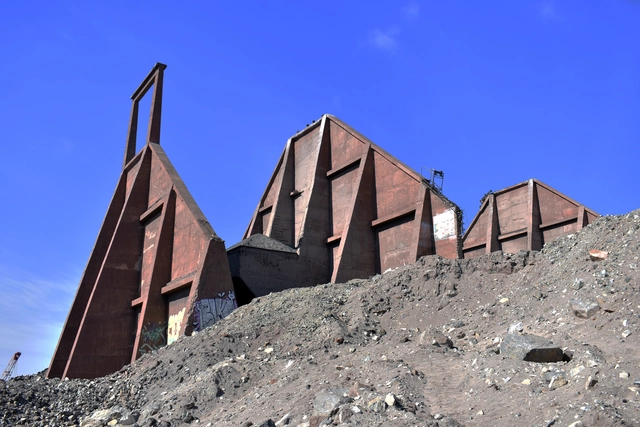
Alongside an archaeologist and a visual artist, the team led by architect and University of Chile academic Claudia Torres has documented a series of industrial ruins in rural areas throughout Chile. These are structures where geography and nature have played a fundamental role, both as a productive resource and as witnesses to their progressive deterioration after being abandoned decades ago.
Titled “From Noise to Silence: Valuing Industrial Ruins in Rural Areas,” this research, funded by Fondart 2017, selected nine cases across Chile: from the historic use of the coastline associated with mining in the northern desert (Caldera) to logging in the Patagonian forests of the far south (Contao). Each site features unprecedented photographic and audiovisual documentation that showcases the rich natural environment where they were built to spark or secure productive processes that have shaped the socioeconomic and cultural history of each region.
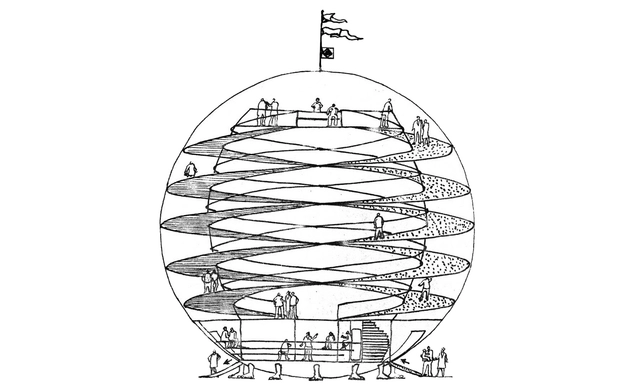
Pavilhão da Utopia. Image Cortesia de Eduardo Longo
Describing the work of an architect is sometimes an arduous task. Categorizing a production based on the various criteria to which a body of work is tied often subjects it to the constraints of its historical context. Eduardo Longo, however, represents a clear exception, as his work actively rejected the prevailing principles of his time in pursuit of continuous experimentation. Entering the School of Architecture and Urbanism at Universidade Presbiteriana Mackenzie in São Paulo in 1961, he encountered a unique moment in Brazilian architecture: the formation of the so-called “Escola Paulista” (São Paulo School) alongside national political instability, marked by the onset of the military dictatorship and the construction of the new federal capital, Brasília.
As a student, he distanced himself from the canons of the Escola Paulista, seeking instead to experiment and foster new architectural discourse. Against this backdrop, during his fourth year of university, Longo designed the Mar Casado beach house. Intended for his aunt and uncle, the project was heavily criticized by both faculty and peers due to its “independent way of interpreting architecture” [1] and its structural configuration—which featured a non-orthogonal design with acute and obtuse angles beneath a multifaceted roof—openly defying Paulista Brutalism. Despite the backlash, the house was built and eventually gained recognition: art critic Pietro Maria Bardi praised its relevance in 1967, followed by a feature in *Domus* magazine in 1968 and its inclusion in Yves Bruand’s seminal 1981 book [2].
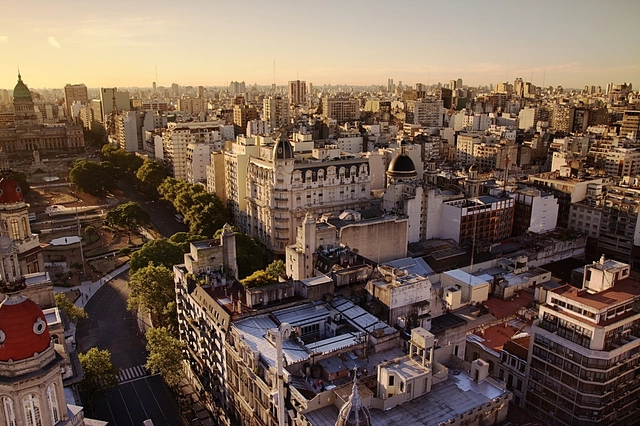
More than 100 buildings will open their doors during Open House Buenos Aires 2018, the architecture festival that, over the course of two days—October 27 and 28—will grant access to numerous buildings of architectural value that are normally closed to the public.
As is the case every year, the festival is completely free, offering a unique invitation and opportunity to rediscover both the architecture of the Autonomous City of Buenos Aires and the stories of its citizens.
Discover all the buildings you can visit during the event below.
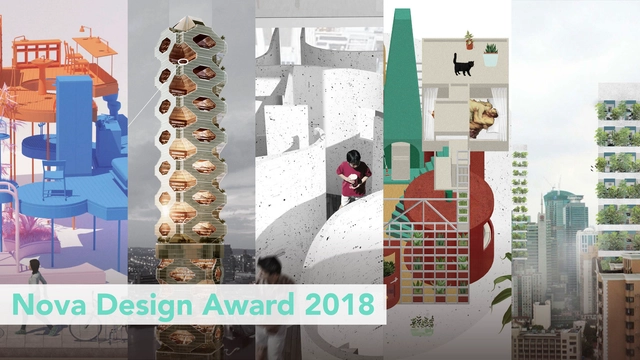
On August 6, the NOVA Design Award 2018 announced its competition finalists. The NOVA Design Award 2018 is the inaugural edition of the NOVA Design Award (NDA). Under the theme of "Future Living Space," the competition explores the possibilities of residential living over the next decade within a residential space of under 50 square meters with a ceiling height of no more than 6 meters in a first-tier Chinese city, aiming to build a physical prototype of "future living."
The competition selected five finalists from 131 submissions across more than 20 countries to enter the final round of judging.
The graduate program Architecture, Education, and Society hosted philosophy professor Lorenzo Mammì to discuss the development of interpretations of works of art and architecture.
Lorenzo Mammì approaches the interpretation of architectural works from a perspective related to philosophy, music, and the visual arts, which are key areas of interest. The discussion addresses the varying readings of works, as well as the relationship between these analyses and the production process.
Media and technology have been revolutionizing content creation across diverse niches, and architecture is no exception. YouTube channels, television shows, and specialized playlists on architecture and urbanism are just a few examples. Over the last few years, however, podcasts have emerged as a powerful alternative. Unlike other media, podcasts are an audio-only format shared across a wide range of platforms—from specialized websites to blogs. Today, there are countless listening options available, both Brazilian (as listed below) and international, as previously published by ArchDaily.
Finding specialized podcasts can be a daunting task. To help, we have gathered a list of nine Brazilian podcast channels for you to listen to. Put on your headphones and check them out:
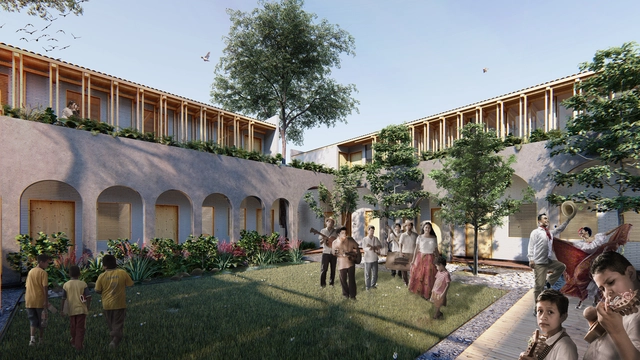
The Son Jarocho Documentation Center is a cultural venue in the city of Jáltipan de Morelos. Dating back to 1998, its former headquarters suffered severe structural damage during the 2017 earthquakes in Mexico, which affected several regions. As a result, municipal authorities determined that it was necessary to rebuild the facility.
Bringing this project to fruition required the involvement of various institutions and fundraising events. Among these was a campaign led by Mexican singer Natalia Lafourcade titled 'Un Canto por México' in Anaheim, California.
Brazil's National Urban Mobility Policy (PNMU), the requirement for municipal mobility plans, investments in cycling infrastructure, not to mention the new mobility services that hit the streets every day—the sector has undoubtedly made significant strides in recent years. Nevertheless, numerous challenges remain.
https://www.archdaily.com/1113776/3-challenges-for-sustainable-mobility-in-brazilian-citiesWRI Brasil
In interior design, striking a balance between aesthetic style and the functional needs of a project is essential. In this regard, it is fascinating to see the diverse solutions that Colombian architects and designers have recently proposed. We have selected eight local projects that demonstrate a compelling balance between functionality and aesthetics in interior design.
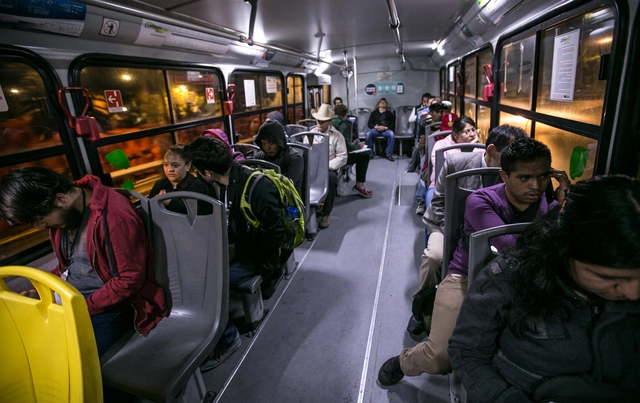
Can you imagine arriving at a bus stop in the early hours of the morning—after a party, work, or school—and knowing the exact minute your public transit will arrive? Cities like London, New York, Madrid, and Melbourne have successfully implemented night transit systems with fixed schedules, yielding various financial and safety benefits for residents while boosting tourism and encouraging sustainable mobility. What would happen if this system were applied to the second-largest avenue in the Americas, after Buenos Aires' Avenida 9 de Julio?
Mexico City already has a night transit service: the Nochebús. With 11 routes operating between midnight and 5:00 a.m., it serves late-shift workers, night-lifers, and others needing late-night transportation. However, the service faces several challenges, many of which stem from uncertainty around arrival times—largely due to a much lower frequency than daytime public transit.










.jpg?1520271044&format=webp&width=640&height=580)

.jpg?1520271044)