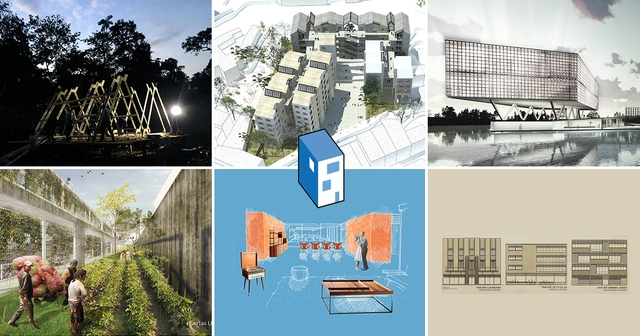
São Paulo is one of the Brazilian cities that have established fees for on-demand transport services. Photo: Arnaud Matar/Flickr
As ride-hailing services like Uber continue to gain popularity and draw attention for their impact on traffic congestion and other urban ills, cities around the world, from Washington, D.C., to São Paulo, are moving toward the inevitable next step: targeted fees.
This comes as no surprise. Recent research shows that these services are contributing to declining public transit ridership and an increase in private vehicles on the streets. However, new taxes and fees should do more than just raise revenue. They have the potential to make cities more livable and transport more sustainable. If ride-hailing services are taxed, this revenue must be allocated carefully, in ways that improve urban mobility as a whole.
https://www.archdaily.com/1113948/some-cities-are-taxing-ride-hailing-apps-is-this-a-good-thingBen Welle, Guillermo Petzhold e Francisco Pasqual
The exhibition "Women Architects XIX-XX" on the role of women in the history of the profession, installed at the University of Beira Interior (UBI) in Portugal, was vandalized between last Friday night and Saturday morning. Held by the Integrated Master's in Architecture of the university's Department of Civil Engineering, the exhibition occupied the building's lobby and was destroyed, likely by punches and kicks, according to an article published by the Portuguese newspaper Expresso.
Aiming to reflect on how "the visibility of women architects in the context of established architectural history is minimal and does not do justice to their actual and real presence in building cities and architecture," the exhibition, organized by Patrícia Santos Pedrosa, showcased the results of research on the production and presence of female architects over the past two centuries who contributed to expanding "the way we make, think, and question architecture."
Earlier this year, the full list of nominees for the 2018 Oscars—selected by the Academy of Motion Picture Arts and Sciences—was announced, and anticipation is building to see which films will take home the top honors in this edition.
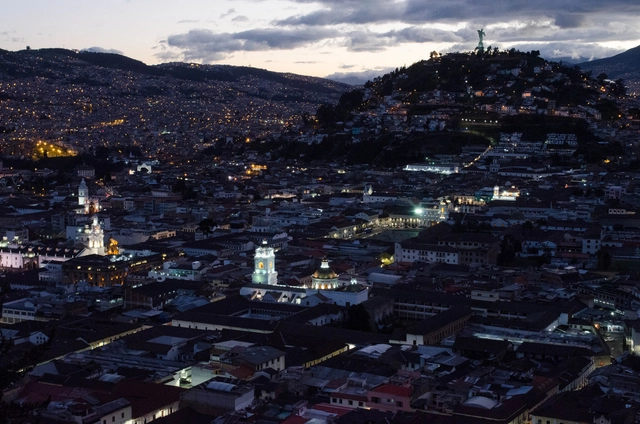
0-VOID is an inflatable pavilion developed as part of the third-year Architectural Design studio taught by BASE studio (Bárbara Barreda + Felipe Sepúlveda) at the School of Architecture and Art of the Universidad del Desarrollo in Santiago, Chile. The pavilion synthesizes and embodies the themes explored throughout the semester, centered on the potential inherent in pneumatic systems for formulating unconventional geometric, material, and spatial responses.
Its design was developed through an iterative process between 1:1 material exploration and digital tools, informed by a series of preceding exercises conducted by the students during the semester.
https://www.archdaily.com/1114025/invertebrate-pavilion-challenges-the-notion-of-structural-resistance-associated-with-rigidityArchDaily Team
National Architect and Urban Planner Day, celebrated on December 15, has officially become law. Law 13,627/2018, which adds the date to the official Brazilian calendar, was signed into law by the Presidency of the Republic on January 16. This marks an important step in the process of professional recognition initiated by CAU/BR and regional CAUs since their creation in 2011. The Council began operating precisely on December 15 so that its establishment would coincide with the birth date of Oscar Niemeyer.
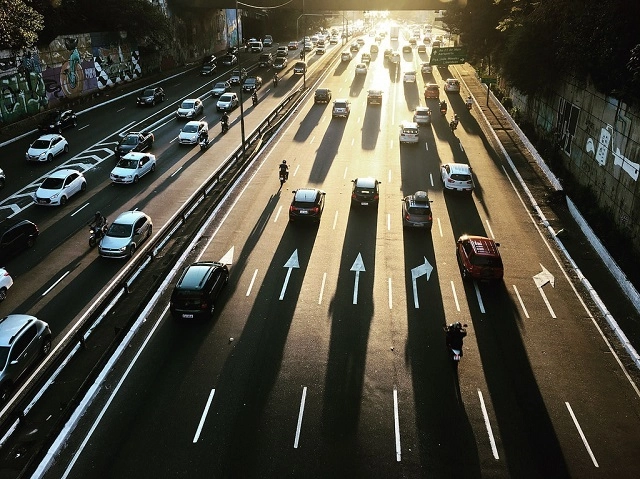
With one month to go before its opening, the details of the official program for the 21st Pan-American Architecture Biennial of Quito (BAQ2018) have been announced. Marking its 40th anniversary, the event will focus its dialogue and debate on architecture itself.
To be held from November 19 to 23 in the Ecuadorian capital, the event offers a prime opportunity to discuss and debate a discipline that, in recent years, has seen a decline in the spaces dedicated to fostering such encounters and dialogue.
https://www.archdaily.com/1114028/discover-the-details-of-the-program-for-the-2018-pan-american-architecture-biennial-of-quitoJavier García Librero
The strong influence of Le Corbusier's work and philosophy on Spanish architect Josep Lluís Sert established him as a key figure in local architectural history, sparking one of Spain's first rationalist movements. In 2013, thirty years after Sert's passing, filmmaker Pablo Bujosa Rodríguez released the documentary Josep Lluís Sert: un sueño nómada, which Radio Televisión Española is now making available to the public on its program Imprescindibles.
This documentary traces the life and career of one of the leading figures and benchmarks of 20th-century Spanish architecture—a tireless champion of the Modern Movement who advocated for a functional architecture integrated with other visual arts, such as painting and sculpture.
https://www.archdaily.com/1114030/a-nomadic-dream-relive-the-legacy-of-josep-lluis-sert-in-this-online-documentaryJavier García Librero
Designed by Ángel Arroyo Aguilar, the Muelle del Cochayuyo project was selected as one of the 10 winners in the Thesis Projects category of the 2018 Concurso Arquitectura Caliente (CAC 2018), a Chilean competition organized by Grupo Arquitectura Caliente and funded by the Ministry of Cultures, Arts, and Heritage.
My intention was never to reinvent the wheel, but rather to bring it to this remote place.
It has been 453 days since I arrived on these shores, where I was initially not welcome, seeking to immerse myself in the traditions and ways of inhabiting unfamiliar territories. I discovered incredible people and landscapes steeped in craft, and I set out to change the constraints under which the local inhabitants lived.
Videos
Cortesía de Ciro Miguel + Vanessa Grossman + Charlotte Malterre-Barthes
For the first time in its history, the São Paulo International Architecture Biennale opened a call for proposals to select the curators for its next edition. Consequently, on August 31, the Instituto de Arquitetos do Brasil - Departamento São Paulo (IABsp) announced the curatorial team that will lead the XII São Paulo International Architecture Biennale.
With the proposal Todo Dia, the winning team is composed of Brazilian architects Ciro Miguel and Vanessa Grossman, alongside French architect Charlotte Malterre-Barthes.
Below is an excerpt from the winning proposal's statement:
https://www.archdaily.com/1114031/iabsp-announces-the-curatorial-team-for-the-xii-international-architecture-biennale-of-sao-pauloEquipe ArchDaily Brasil
It is inevitable that heavy, static structures come to mind when we think of architecture. However, columns, beams, and slabs are by no means the only elements that define it.
Pneumatic architecture is characterized by lightweight, flexible materials supported on fixed bases. Due to their lightweight nature, these structures cannot support themselves on their own; instead, they span openings through the injection of air. In other words, they are structures shaped by pneumatic membranes inflated by air systems that operate much like a hot-air balloon or historic zeppelins filled with a gas less dense than air. These systems fall into two main categories: those supported by internal air pressure and those stiffened by it.
Bogotá is well-known for its diverse public markets, which not only host the sale of meat, grains, fruits, and vegetables, but also serve as spatial representations of Colombian culture.
These traditional establishments have grown alongside the city's population, undergoing significant spatial transformations over time. For locals, they remain the essential place for grocery shopping, while for tourists, they are major attractions offering a sensory exploration of Colombia's diverse flavors, aromas, and textures.
Opened last Saturday (16) at the Museu da Casa Brasileira in São Paulo, the exhibition “Experimenting Le Corbusier – Contemporary interpretations of modernism”—curated by Pierre Colnet and Hadrien Lelong of design publisher Cremme, with exhibition design by the São Paulo-based office MNMA Studio—seeks to foster a reflection on the implications of the Franco-Swiss architect's work for the architectural, urban, ideological, and social development of Brazilian modernism.
Featuring 20 guest artists—architects, designers, and visual artists—who developed various works and research based on the canons of the architect's work, the exhibition seeks to operate through the “transdisciplinarity of art,” as noted by Mariana Schmidt, the partner-architect responsible for the exhibition design.
The impact of the Santiago Metro's new lines, recognition for a new metropolitan park in the capital, and the final design for the Barón Pier in Valparaíso. Indeed, a week dedicated to major metropolitan projects is the focus of this edition of La ciudad chilena en la prensa, the ArchDaily column where we cover what is happening in Chile's major cities.
Videos
Escala 1:5. Documental nueva Sala Beckett. Image Cortesía de Architecture Player
The Catalan architecture firm Flores & Prats Architects presents the launch of the documentary series ESCALA 1:5, which explores the design process of the international drama center at the new Sala Beckett in Barcelona. Produced by the independent production company 15-L, the documentary consists of five 10-minute episodes directed by Patricia Tamayo and Albert Badia.
Following its premiere on December 14, 2017, at the Girona Cinema in Barcelona before an enthusiastic crowd of about 200 spectators, the episodes are now available on demand on The Architecture Player channel on Vimeo.
https://www.archdaily.com/1114041/scale-1-5-the-new-documentary-on-the-sala-beckett-designed-by-flores-and-prats-architectsJavier García Librero
The city of Lima and the Rímac River seem to be at odds, despite the river crossing (and nourishing) the city from east to west. This is why we highlight the word “friendship” as an added value for addressing this issue: a way of understanding this relationship with the solidity and integration it deserves. This is the premise of the project presented here, which we have retrieved from our archives to bring to light. As summer begins and the El Niño phenomenon approaches, bringing inevitable rising water levels to the Rímac, it is impossible not to recall the mudslides (huaycos) that caused disaster a year ago. Little to nothing has been done to address this disconnect between the city and the river; thus, let us take a fresh look.
Colombian architect Konrad Brunner passed away this Tuesday, September 25, in Bogotá. Grandson of the historic urban planner Karl Brunner, Konrad was born on November 17, 1950, in the Colombian capital and graduated from the Universidad de los Andes in 1974.
Brunner founded his own architecture firm in 1978, a practice noted for projects such as the Plaza de Jubileo at Compensar, the master plan for the Ciudadela El Recreo (alongside Germán Samper and Gustavo Perry), the Arroyoviejo and El Vigía residential buildings, and the Casa Vélez. Additionally, the architect balanced his private practice with teaching at the Universidad de los Andes starting in the 1980s.
The president of the Venice Biennale, Paolo Baratta, and directors Yvonne Farrell and Shelley McNamara presented, via videoconference, the official curatorial proposal of the Artistic Direction for the 16th International Architecture Exhibition of the Venice Biennale.
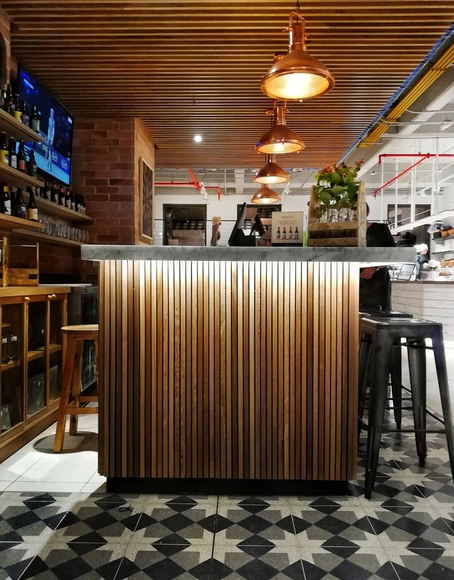
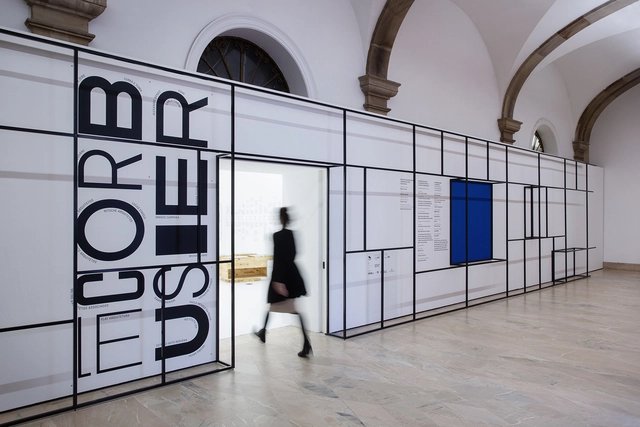
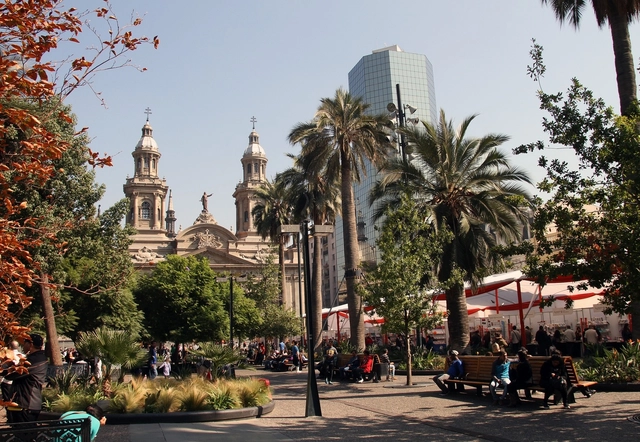
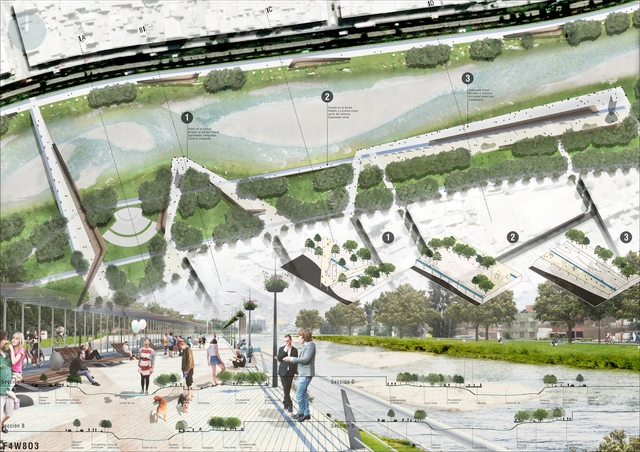
The 21 projects making up the Official Selection of the Mexican Pavilion at the 16th International Architecture Exhibition of the Venice Biennale converge across latitudes, geographical regions, and territorial echoes, rooted in the curatorial concept of "Freespace." In four installments, we will share the work and ideas of each participant representing Mexico in Venice. Read on to discover the fourth part of these projects.
Most architects tend to begin explaining their projects by pointing to the entrance. "You enter here," they usually say. As if nothing had happened or existed before entering. As if the user's life, or that of the building itself, began at that very threshold which many assume separates the exterior from the interior. A strange conception of time.
Enric Miralles made an interesting observation regarding this: it is not about entering, but about accessing—something that will also be marginalized later. We must assume that in architecture, accessing means "to enter a place or pass into it," as the dictionary explains. Yet we also find other, more compelling interpretations, such as "to gain access to a superior situation, condition, or degree; to attain it," which imbue the act of accessing with meaning and time.
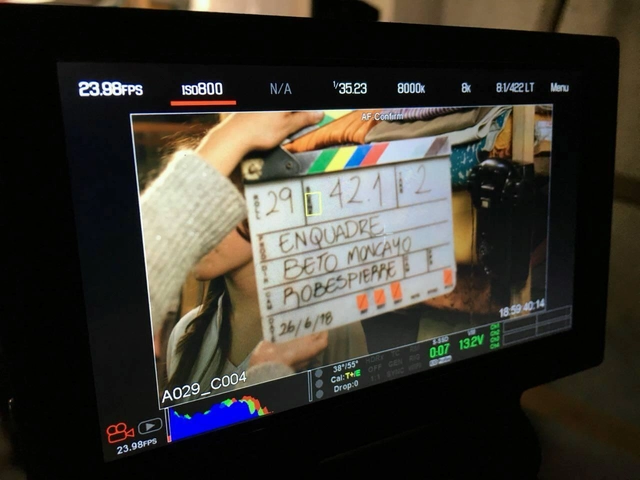
Filming of the movie 'De topos y sapos' by Colombian architect and filmmaker Alberto Moncayo. Image via 'De topos y sapos' Fan Page
What began as an audiovisual production for an architectural project—Vive Bambú—turned into a lifelong passion. This is the story of Colombian architect and professor Alberto Moncayo, who shared details of his latest film project with the newspaper El Espectador.
"Architecture earns me a living, but I live for cinema," comments Moncayo, while working on the filming of "De topos y sapos," inspired by the historic Banco de la República heist of 1977. In this event, two brothers dug a tunnel to the vault of the bank branch in the city of Pasto, stealing 82 million Colombian pesos at the time (equivalent to USD 38.2 million today).
The controversial "sun tax," a measure implemented several years ago by the Spanish government, has been eliminated thanks to the new Royal Decree-Law 15/2018 on energy transition. Approved by the Council of Ministers, this measure comes at a time when Spain remains far from meeting the targets set by the European Union in this area.
Among other measures, the Royal Decree establishes the right to self-consume electricity free of charge; recognizes the right to shared self-consumption (multiple users sharing a single installation); simplifies administrative procedures; limits electricity bill prices; and introduces measures to promote electric vehicles.
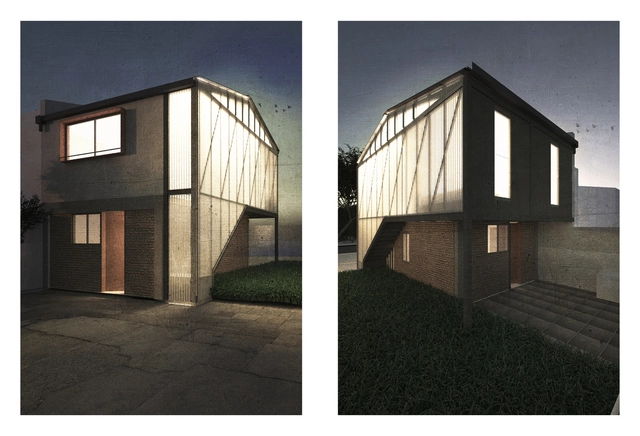
Casa Huechuraba. Image Cortesía de Encargos Comunes
The Chilean firm TALLER25 has launched the first edition of the des_VINCULADOS workshop in Santiago. This project-based academic initiative addresses an emerging theme in Chilean practice: middle-class architecture. To this end, students were assigned a specific design intervention—extension, renovation, or new construction—and a budget estimated by the original clients: five middle-class families living in Santiago's inner ring and periphery.
"Currently, projects built for the vast majority of the country's population tend to be the result of architectural practice treated as a mere commercial service, rather than an opportunity to contribute to the discipline, improve the users' quality of life, or build a more equitable context," explain Fabiola González, Yair Estay, and Jessica Torres, the organizers of the workshop, which is part of the Encargos Comunes academic research project.
In partnership with the Department of Architecture of the Faculty of Architecture and Urbanism at the University of Chile, and with ArchDaily as a media partner, the first edition of the workshop involved 43 students from across Santiago. They developed the following proposals after a series of sessions that included a panel discussion and five thematic sessions: practice, regulations, budget and construction, and market.
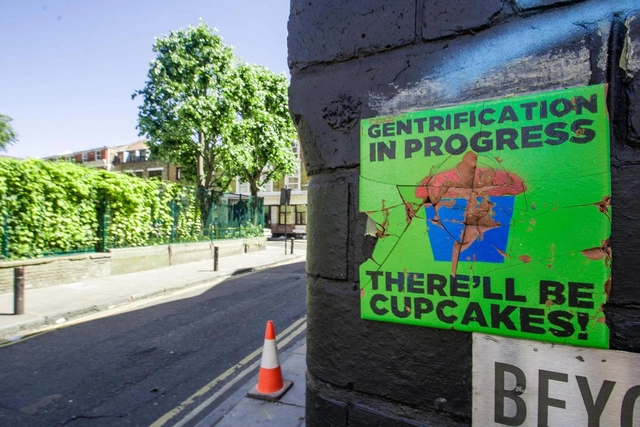
Gentrification is not only a timely topic, but a widespread concern. Today, it might make more sense to speak of touristification, or perhaps the phenomenon itself has evolved. Nevertheless, the term gentrification can broadly encompass all these concepts related to the displacement of a neighborhood's "original" inhabitants, who are replaced by residents with higher purchasing power or by vacation rentals.
This is an issue that interests people from all walks of life, not just professionals in urban planning or architecture. It draws the attention of citizens who, like myself, set out to find explanations or try to gather clues about what the future may hold under this trend.
From my perspective as an engineer—but above all as a Madrid resident—I decided to research the data published by the City Council on the city's commercial premises to see if it was possible to draw any conclusions on the matter. The purpose of this study was purely exploratory, conducted without any external commission. I had no preconceived hypothesis or goal beyond identifying certain neighborhoods as gentrified; the analysis simply grew from there, keeping all possibilities open.
https://www.archdaily.com/1114102/how-gentrified-is-your-neighborhood-luis-nadal-explores-the-case-of-madridLuis Nadal
In September, we launched the third edition of our open call in Colombia, inviting architects to submit their graduation thesis projects (as final degree projects are known there). In this edition, the call received 94 submissions from more than 10 cities and 22 universities across the country, representing a 34% increase in proposals compared to 2017.
Following a thorough evaluation, six graduation theses were selected as winners by our editorial jury (Fabián Dejtiar, Mónica Arellano, José Tomás Franco and Nicolás Valencia). Built works, historical research, and master plans make up our selection: from a rural residential prototype to a comprehensive study of the Edificio de Renta (rental building), a popular residential format in Bogotá between the 1940s and 1970s.
Additionally, for the first time we included a high-level external jury tasked with selecting the Grand Winner2018. The jury comprised Lina Toro (Madrid), Carlos Cano (OPUS, Medellín), and Jorge Noreña (Ruta 4, Pereira). "While architecture requires rigor, dedication, and communication skills, it also demands strengthening connections with urbanism and landscape, as well as with professions that make transformative ideas viable," Cano commented during the jury's evaluation.








.jpg?1520005213&format=webp&width=640&height=580)
.jpg?1520005166 "© Mexico Pavilion")
.jpg?1520005196 "© Mexico Pavilion")
.jpg?1520005136 "© Mexico Pavilion")
.jpg?1520005151 "© Mexico Pavilion")
.jpg?1520005213)