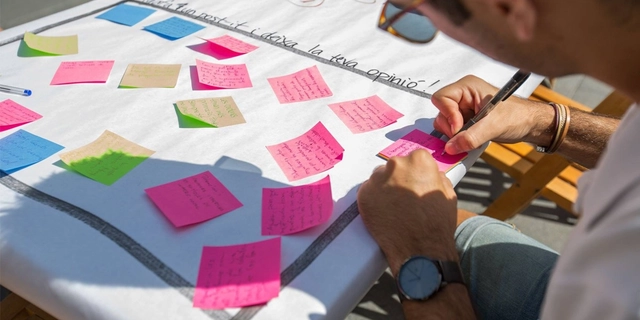
In recent years, we have witnessed the rise of the concept of “citizen participation,” particularly in the political sphere. As is often the case, this surge is not without controversy and carries inherent risks. Much like what occurred with the term “sustainability,” participation can be relegated to a smoke screen used to conceal specific types of political despotism. A clear example of this can be found in the Netherlands; in September 2013, King Willem-Alexander announced “the transition to a participatory society” to justify dismantling the welfare state through neoliberal policies and some of the harshest budget cuts the country has ever faced.
Clearly, urbanism and urban planning have not been immune to this trend. While the development of statutory urban planning instruments (General Plans, Partial Plans, Special Plans, etc.) is legally required to incorporate public participation mechanisms, the reality is that these are often reduced to public comment and exhibition periods. Consequently, actual participation is replaced by mechanisms that belong strictly to the realm of communication and information sharing.
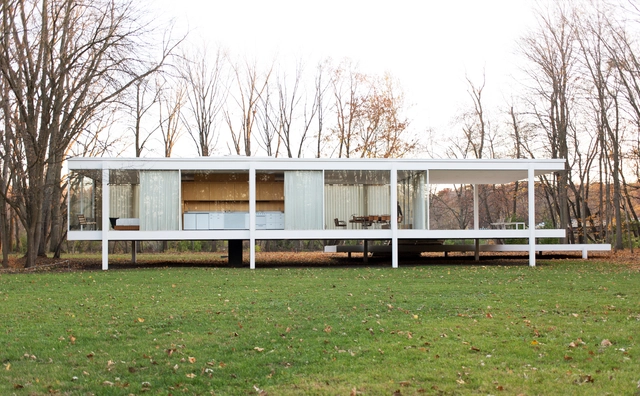
If you are taking your first steps in Revit, or would like to understand its practical integration with BIM, the following tutorial will be of great help. The course was developed by Mexican architect Alan Rodríguez Carrillo, who published a step-by-step tutorial on his YouTube channel to model the famous Farnsworth House, designed by Mies van der Rohe in the 1940s, in Revit .
Divided into six videos, the tutorial explains in detail how to model columns, walls, floors, doors, furniture, facades, ceilings, lighting, and even the visualization options for one of the Modern Movement's most iconic projects in Revit.
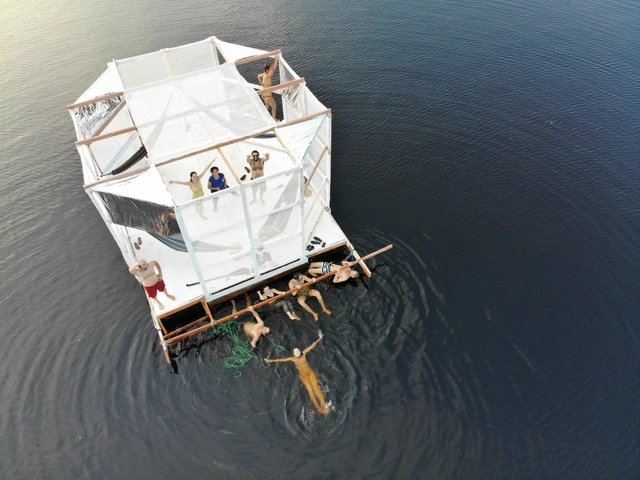
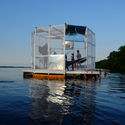
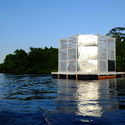
Floating is one of humanity's oldest ways of living and traveling. Today, this ancestral practice is drawing significant interest due to the increasing frequency of flooding caused by climate change.
Riverside communities in the Amazon rainforest have used various floating strategies for centuries. By studying local architectural solutions and utilizing contemporary materials technology, architect Marko Brajovic and designer Nacho Martí, co-directors of the Architectural Association Visiting School Amazon, organized an international workshop to experiment with floating architecture.
La Casa Ensamble Chacarrá / Ruta 4. Image Cortesía de Ruta 4
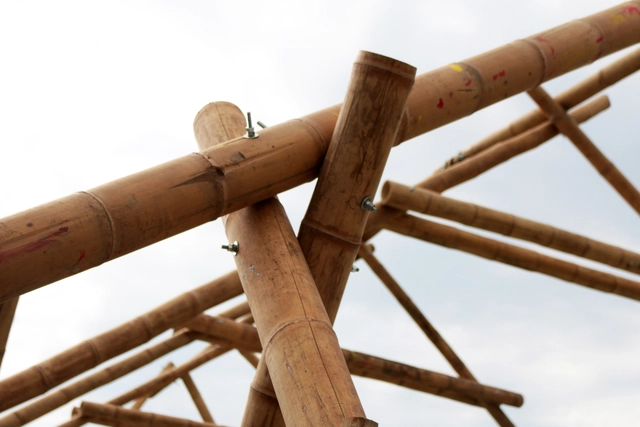
As a subspecies of bamboo, guadua has been used as a construction material from the Spanish conquest to the present day. Its strength, lightweight nature, and flexibility offer numerous structural advantages and applications. Since it is native to the forests of Colombia and Ecuador, it has been widely used in local building projects. Additionally, its ease of cultivation and processing makes it a highly sustainable material.
This selection highlights six projects where guadua has been used as both a structural and aesthetic resource.
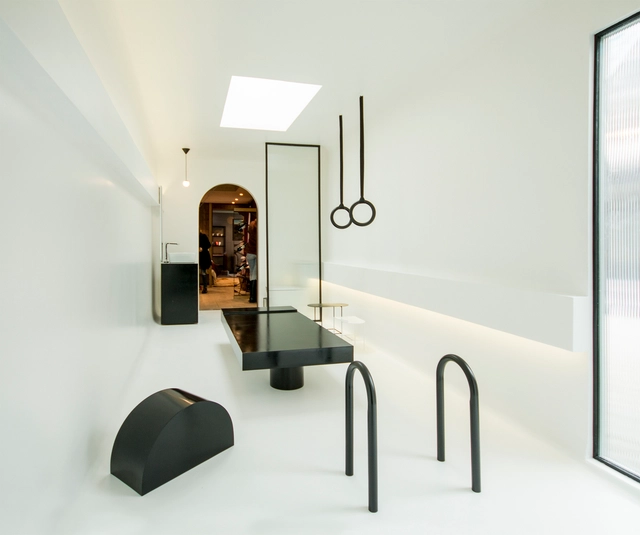
Modern and surreal, yet without compromising on functionality and comfort, the bathrooms designed by emerging architects and designers at the current Casa FOA interior design exhibition in Santiago, Chile, seek to rethink a traditional space within an innovative context, aiming to trigger a different experience for both users and spectators.
On December 20, the final curatorial review of the first National Essay and Research Competition, Written Architecture 2017, took place at the national headquarters of the Colegio de Arquitectos de Chile.
Organized by Grupo Arquitectura Caliente and co-organized by Ediciones ARQ, the competition awarded the 20 best articles out of 87 submissions in the undergraduate and graduate categories, representing 18 architecture schools across 9 different Chilean cities.
The competition was directed by Gabriela García de Cortázar and featured a jury of 30 prominent academics and professionals on the Evaluation Committee.
Below is the article by Universidad de Chile student Pablo Schmidt, winner of the Graduate Category.
Courtesy. Image via Secretaria Municipal de Urbanismo e Licenciamento - SMUL
The new illustrated version of the Building and Works Code (COE) is now available online. Released by the São Paulo Municipal Secretariat of Urbanism and Licensing (SMUL - PMSP), this edition features graphic design by oitentaedois, making the legislation more accessible to the general public.
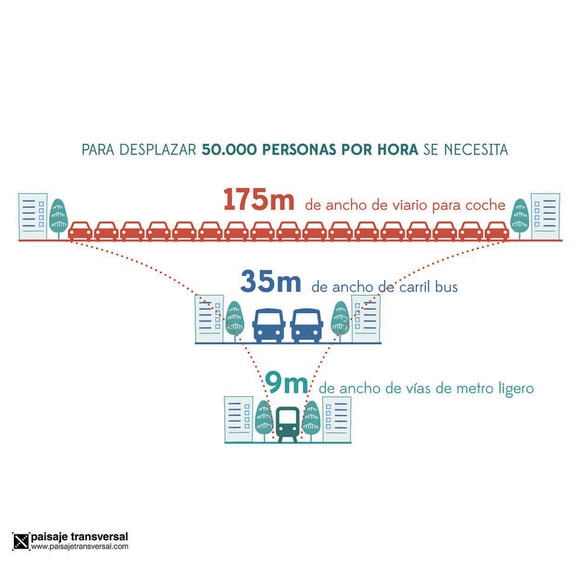
Numerous movements are demanding alternatives to current urban mobility—systems designed by and for vehicular traffic, burdened by an outdated planning mentality that centered everything around the car. Their reasons are equally diverse: improving public health, utilizing economic resources more rationally when commuting, lowering pollution levels (both noise and air), and even increasing efficiency by reducing travel times.
Yes, we are referring to the endless and inevitable daily traffic jams we have all experienced.
If the benefits across all sectors are so clear, why haven't we implemented an alternative mobility system on our streets yet? There are several answers to this question, ranging from public resistance to change and a lack of prioritization in political agendas, to the simple fact that there is no universal, magic formula to solve every issue overnight everywhere. Once we overcome these barriers, we can begin by analyzing who currently uses the streets, who does not, and why.
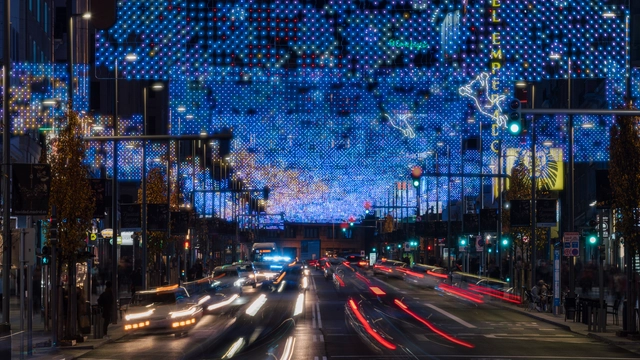
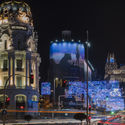
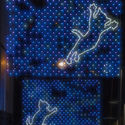
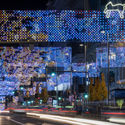
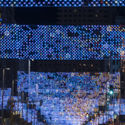
Madrid's Gran Vía is illuminated with LED bulbs along 1,300 meters thanks to a light installation by Brut Deluxe. Commissioned by the city council, the installation is inspired by nebulae and galaxies. Set up for this year's holiday season, the display was captured by Imagen Subliminal.
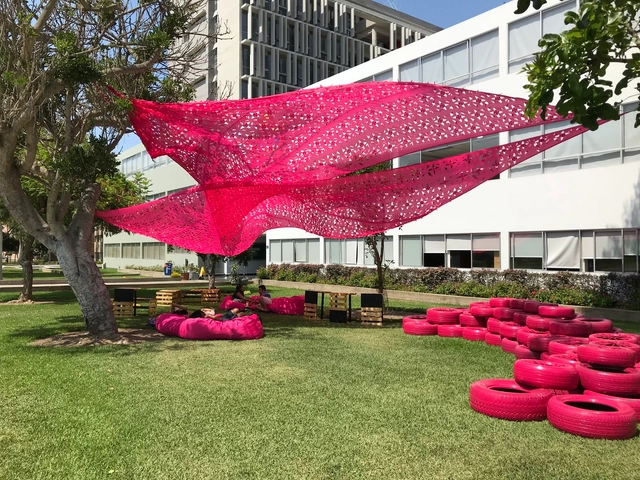
A breath of fresh air, new colors: A FUCHSIA intervention in the Faculty of Social Sciences (CCSS) at the PUCP. In this faculty's striking garden, students have always sat and lain on the grass to debate their ideas; however, with the increase in “social” activities, more seating, equipment, and shade were needed. Featuring a perforated textile canopy floating between the trees and stacked tires that organically integrate with the garden, this project creates a colorful focal point and an ideal gathering space that INTEGRATES in multiple ways: the students of this program and their ideas, all the campus students with one another, and the various recycled materials that culminate in FUCCSSIA-INNTEGRA.
The emergence of such a project right in the middle of the “tontódromo”—a busy campus street where students from la cato hang out—is highly significant, both for the project's inherent message and for the visibility and accessibility of its location. “Ocupa Tu Calle”, a citizen-led initiative that typically carries out urban interventions in Lima's public spaces, has now intervened on a university's main thoroughfare, partnering with the Faculty of Social Sciences to invite students to help design and improve their own campus through an ideas competition. In addition, the project prompts a reflection on the appropriation of private space using public space principles. The winning proposal reinterprets the Greek agora into a flexible, playful area for students to debate and simply be. Below, we explore the details of the project, from the design process to its construction.
Cortesia de Secretaria Municipal de Cultura de São Paulo
To celebrate the diverse groups that built the cultural heritage of São Paulo and helped shape the city's identity, the Municipal Secretariat of Culture will host the Jornada do Patrimônio (Heritage Journey) on August 18 and 19, under the theme "One City, Many Hands."
The event offers a free, diverse program aimed at connecting the public with historical and emotionally significant spaces that define the city's history. In total, 320 activities will take place, including tours, lectures, workshops, building visits, guided tours, and book launches.
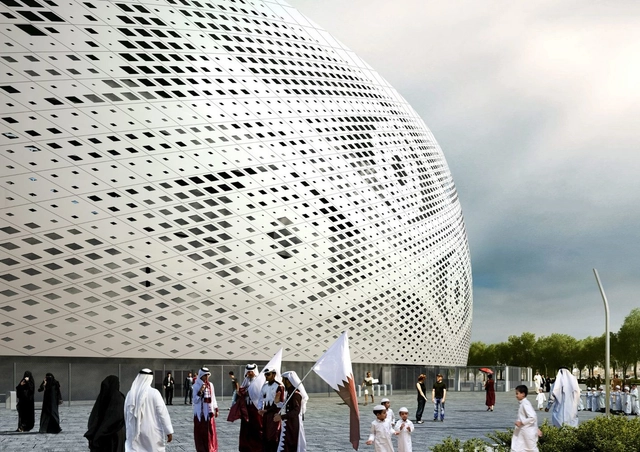
Al Thumama Stadium, designed by Ibrahim M. Jaidah, explores Qatari history, symbolism, and culture. Courtesy of the Supreme Committee for Delivery & Legacy
The 2022 World Cup takes place in Qatar from November 21 to December 18, promising to amaze spectators with its stadiums. There are eight projects in total—some built from scratch, while others are existing structures undergoing renovation.
In May 1999, 17 historic buildings in Santiago opened their doors to launch the very first edition of Chile's Cultural Heritage Day. Nearly two decades after that inaugural event, the upcoming edition will span an entire weekend for the first time, taking place on Saturday, May 26, and Sunday, May 27.
Videos
Work / Proyecto Habitar. Image via Proyecto Habitar
Across nine episodes, the series Proyecto Habitardelves into the privacy of homes to explore the reality of housing in Chile. Through the perspective of its protagonists, the series explores a range of housing-related issues, as directors Joaquín Mora and Verónica Wüst aim to spark a long-overdue discussion.
"Housing is a crucial issue that will soon come to the forefront, as we live within an economic system that raises various challenges we must discuss as a society," Mora comments.
This time, we invite you to watch three new episodes of the series: health, work, and occupation.
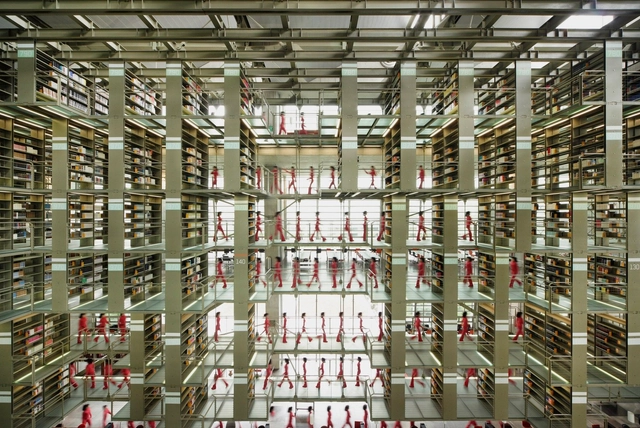
José Vasconcelos Library / Alberto Kalach. Image courtesy of Alberto Kalach
The establishment of an architectural drawing language throughout history is a tool that allows, for instance, a Japanese architect to design a building in Brazil, or makes it possible, by lingering over plans, sections, and elevations, to imagine the spatiality and character of a project that has not yet been built. This means that, despite local singularities, in terms of graphic representation, the field of architecture has successfully established itself as a common, international language.
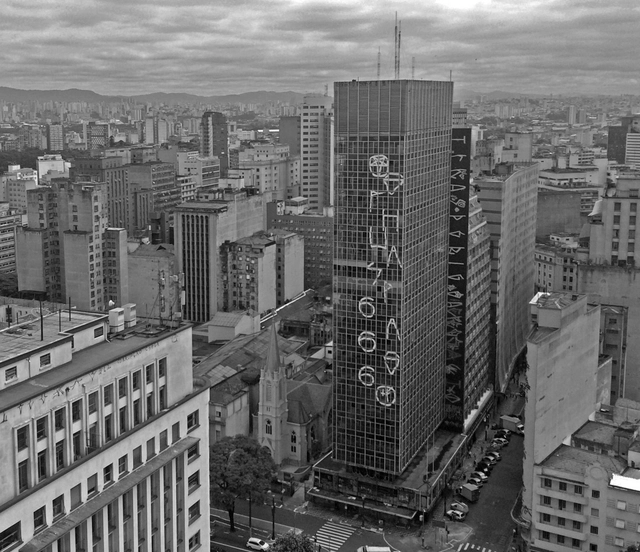
The collapse of the Wilton Paes de Almeida Building on May 1, 2018, exposed a glaring housing emergency. Compounding the cuts in public funding for the sector, in São Paulo alone during 2017, at least 14,000 families were evicted from their homes, and at least another 30,000 face displacement due to public works projects, according to the Eviction Observatory of the Faculty of Architecture and Urbanism (FAU/USP).
Walls of Air is the theme guiding Brazil's participation at the 16th International Architecture Exhibition in Venice. Jointly curated by Laura González Fierro, Sol Camacho, Gabriel Kozlowski, and Marcelo Maia Rosa, the Brazilian Pavilion features 17 projects from different regions of the country, selected through an open call, as well as a series of large-scale cartographic drawings addressing various aspects of the country's urbanization through the lens of architecture.
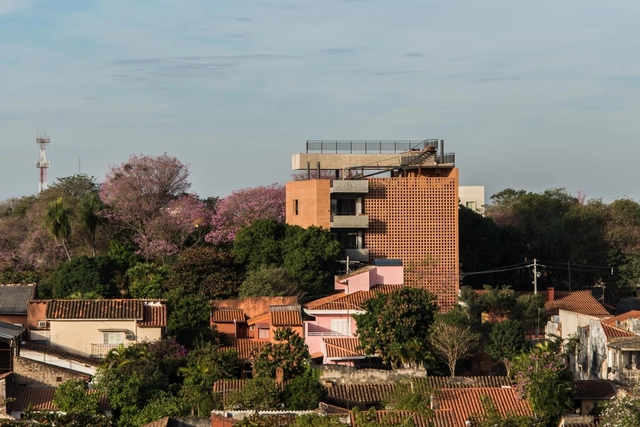
What began as a project to promote Paraguayan art has turned into a compelling showcase for local architecture. This is how The Society Paraguay was born in 2014, a collective currently made up of Mauricio Paiva, Salma Abraham, Leonardo Méndez, and Verónica Díaz de Vivar.
"Our beginnings stemmed from the desire to produce, document, and disseminate information on the architectural, artistic, and design worlds in Paraguay," the founders explain in a conversation with ArchDaily en Español. Although it is currently a purely digital project, they explain that their goal is to complement it "with printed material that can achieve a broader reach."
Inaugurated in 1960, Brasília is perhaps the city in the world that most closely followed the principles and guidelines of modern architecture and urban planning in its design and construction. A synthesis of the vision of some of the most respected figures in the history of Brazilian architecture, its layout and buildings drew the world's attention to the nation's economic growth and Brazil's expansion into its own interior.
"Brasília is the dream come true of architects and urban planners. It is the only city in the world built where there was nothing but the cerrado, in central Brazil, and where the builders had complete freedom to apply the principles of the most modern urban planning without restrictions."
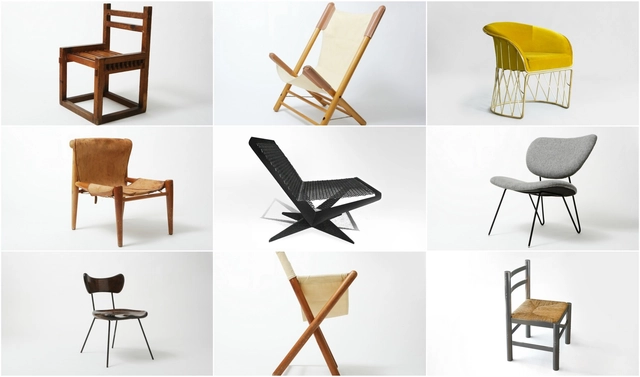
The 20th century in Mexico was a period of vibrant artistic and architectural experimentation. This era marked the establishment of the Modern Movement, bringing with it innovative ideologies that nurtured new talent and shaped the frameworks of artistic and architectural production.
For many years, architects worked as multidisciplinary designers, creating both spaces and furniture under a single, cohesive vision. Yet despite this, some of these pieces have faded into obscurity, overshadowed by major architectural works and the fast pace of modern life, where mass-produced furniture renders these unique designs invisible.
The Norman Foster Foundation is one of 21 institutions and individuals awarded Spain's 2018 Gold Medal for Merit in Fine Arts. Granted by the Spanish government through the Ministry of Culture and Sport, the distinction recognizes those globally who "have stood out in the field of artistic and cultural creation, or have rendered outstanding services in the promotion, development, or dissemination of art and culture, or in the conservation of artistic heritage."
The construction industry consumes more resources than any other sector, and the weight of the Technosphere—the urban and planetary stratum of everything we produce—reaches 30 trillion tons. Engineers, architects, and designers are at the heart of the Anthropocene.
Possibly the largest exhibition dedicated to Brazilian architecture held outside the country since Brazil Builds, shown in 1943 at MoMA, opens today at Casa da Arquitectura in Matosinhos, Portugal. The Portuguese Centre for Architecture is also presenting the exhibition "Duas Casas" (Two Houses) by Paulo Mendes da Rocha, who will receive the title of Honorary Member of Casa da Arquitectura at a ceremony on September 30. This exhibition will feature the Gerassi House and the House on Rua do Quelhas in Lisbon, which was co-designed with Portuguese architect Inês Lobo.
https://www.archdaily.com/1114201/the-exhibition-infinite-span-90-years-of-brazilian-architecture-opens-todayPedro Vada
There is nothing personal against the color yellow, but let us be honest: we were saturated by the monotony.
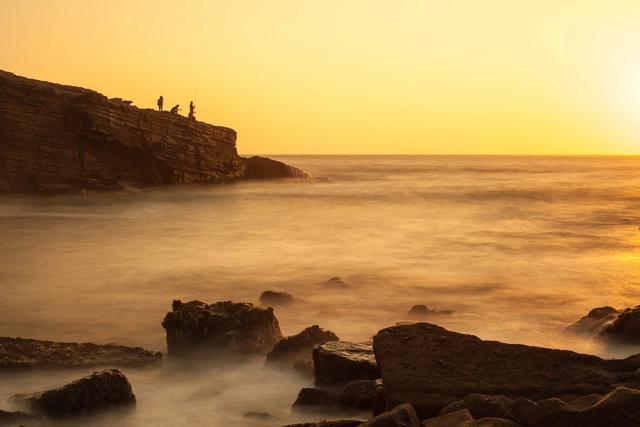
We love yellow, but not when it is used tastelessly and to mask corruption. We like the yellow that is natural to Lima, like the one in the header image—that earthy tone, the tone of every sunset, the one that shines like the sun. In recent years, our city has been forcibly invaded by this color: yellow staircases, yellow bridges, yellow walls, yellow railings... perhaps too much. And even if certain works were not yellow themselves, the intentions behind them carried a distinct whiff of that hue.










.jpg?1519919737 "tda luque Studio / TDA. Image")