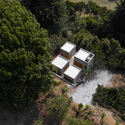
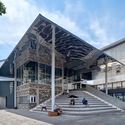
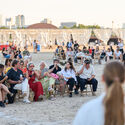
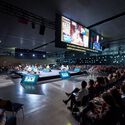
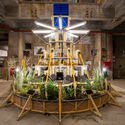
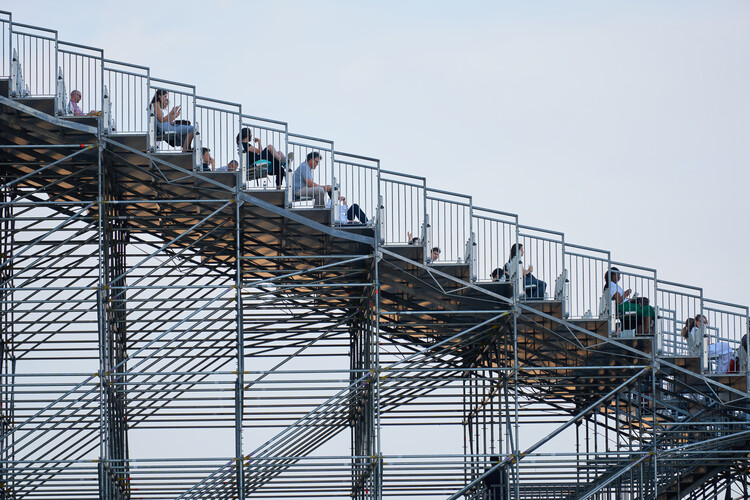
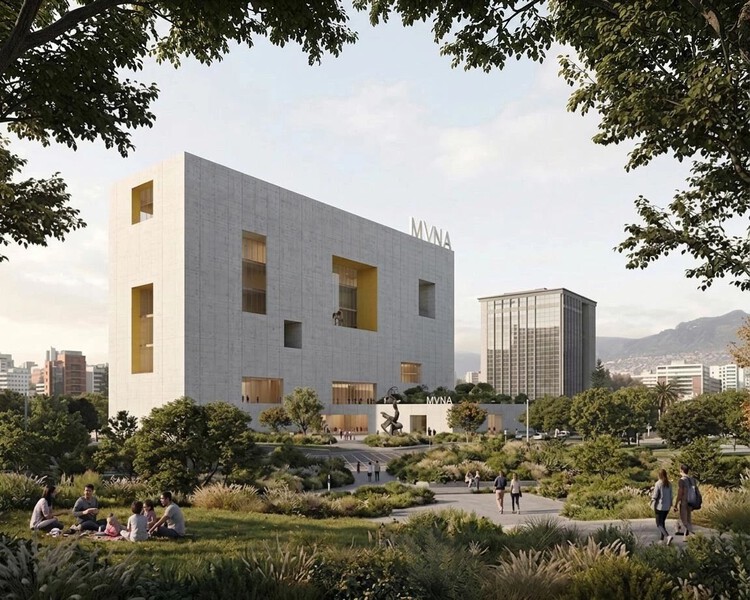
National Museum of Ecuador Proposal (MuNA). Image Courtesy of Studio Campo Baeza
The announcement of the winning proposal for Ecuador's new National Museum (MuNA) sparked one of the country's most significant architectural debates in recent years. The public response has since reshaped the competition itself while also raising broader questions about how a national museum gives architectural form to an interpretation of a nation. While the discussion began with a single design, it exposed a challenge that extends far beyond Ecuador.
National museums are not simply asked to represent a nation. They are asked to give it architectural form. Yet identity cannot be built directly. Before it becomes architecture, it must first be interpreted and translated through architectural decisions.
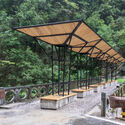
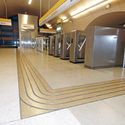
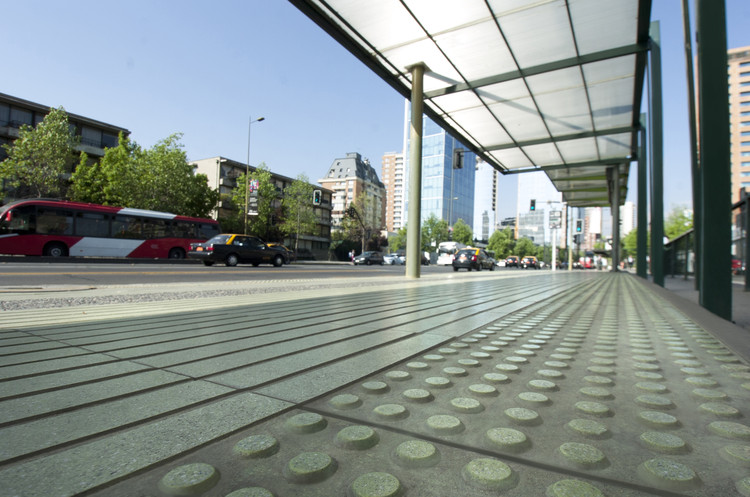
Tactile paving tiles are designed to ensure that everyone can fully utilize urban spaces, navigating all the architectural and everyday variables present in contemporary cities. The "Tactile Path for the Visually Impaired," presented below, was specially designed for people with visual impairments.
An architect's training requires a wide range of knowledge. Various disciplines, such as art, mathematics, history, and sociology, enrich their cultural background, providing the tools and knowledge necessary to make the world around us a better place. Books are an essential resource for this learning process, and thanks to the internet, there are no longer any excuses to stop expanding our knowledge base.
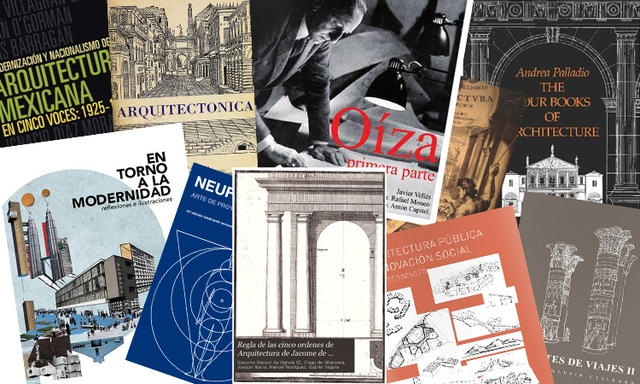
We have searched the web to curate a unique selection of architecture books in Spanish that you can read on your computer or download directly to a tablet. The list includes classics of Vitruvian architecture, drawing manuals, and universal accessibility design guides, along with references to the work of inspiring architects.
We hope you enjoy reading these books!
https://www.archdaily.com/1182690/28-architecture-books-in-spanish-to-download-and-read-onlinePola Mora
In our ongoing commitment to highlight the important academic work being done at universities, we launched an open call last September inviting Mexican architects to share their graduation projects with us. We were looking for academic theses and research addressing issues of significance to the Mexican context—projects that usually remain on paper but deserve international recognition. This open call in Mexico joins the recognition already granted to architects in Colombia and Argentina.
From 60 submissions representing 22 cities and 36 architecture schools in Mexico, our editorial team conducted an extensive and detailed evaluation, selecting a list of the 15 best projects designed by Mexican students. These works stand out both for their formal solutions and the clarity of their architectural discourse, as well as their understanding of the context and their users.
Featuring themes such as the architectural regeneration of abandoned infrastructure to provide new services, urban interventions on the outskirts of Mexico City, flexible rural housing, and rethinking the public spaces that borders can offer, we present the 15 most outstanding graduation projects.
On June 24, 2026, a severe seismic event consisting of two major earthquakes with magnitudes of 7.2 and 7.5 struck north-central Venezuela just 39 seconds apart. The widespread destruction was concentrated along the country's northern coast, heavily impacting the capital city of Caracas and the neighboring state of La Guaira, where fragile urban infrastructure and vulnerable housing stock led to the collapse or severe damage of thousands of residential structures. This disaster mirrors previous devastating events observed during other major seismic events, including the 2008 Wenchuan earthquake and 2011 landslides in Sichuan, the 2014 Ludian earthquake in Yunnan, and the 2017 earthquake across central Mexico. When high-magnitude natural disasters damage entire communities, architects have the opportunity to help by proposing post-disaster architecture with strategic recovery models. Rather than relying on generic, standardized emergency shelters, conscious architectural design can deliver low-cost, rapidly deployable residential infrastructure that preserves human dignity through culturally contextual and dignified spaces.
Architecture this week looked as much to the past as to the future. Across museums, restored landmarks, and large-scale urban redevelopments, the featured stories explored how architecture is continually reinterpreted through new cultural, political, and urban lenses. From reconsidering the architectural legacy of post-independence West Africa to transforming former prisons into energy-neutral neighborhoods and restoring twentieth-century cultural landmarks, the projects demonstrate how existing buildings and histories remain active participants in contemporary discourse. Alongside these interventions, the announcement of the World Architecture Festival shortlist and renewed attention to global urban growth provide a broader picture of a profession negotiating heritage, environmental responsibility, and rapidly changing cities.
During July and until August 19, Aedes – Architecture and Space in Berlin will be showcasing the exhibition "A Structure of Feeling: On a New Generation of Architects in China." Aedes is a non-profit cultural institution founded in 1980. Focusing on the intersections of architecture, the city, and society, its continuous public program has presented around 600 exhibitions over more than four decades of work. In 2001, the space presented TUMU, an exhibition bringing a generation of young independent Chinese architects to international attention. Twenty-five years later, "A Structure of Feeling" showcases the work of a new generation working under changed conditions. Nine practices are represented in twelve projects transforming the existing urban fabric, rural development, and contemporary forms of spatial production.
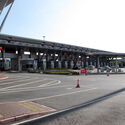
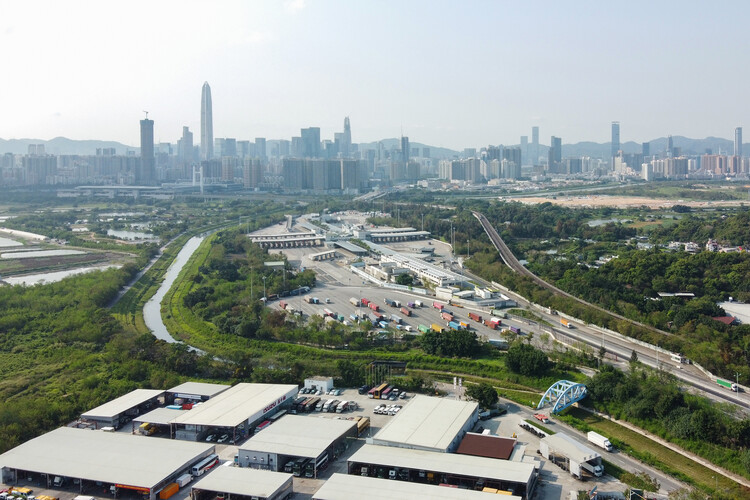
For most children, the journey to school is an everyday geography of street life and traffic, repeated so often that it becomes almost invisible, folded into the background of childhood and growing up. Yet for cross-boundary students who live in Shenzhen and attend school in Hong Kong, the school day begins much earlier, and much farther from the classroom. It begins at the border.
Their commute is not simply a matter of distance. It is shaped by two legal systems, two administrative cultures, and a set of infrastructures designed to make daily crossing a little bit more feasible for individuals under 18. On a typical morning, the route to school may pass through a boundary control point before it reaches a classroom. It may involve a government-approved school coach, a restricted access road, an immigration hall, a fingerprint scanner, or a clearance procedure that takes place while the child remains seated on the bus. What appears from a distance as a school commute is, in spatial terms, a carefully managed architectural corridor between two cities.
What will the future of steel be?How can this material build the foundation for sustainable economic development and the transition to a low-carbon society?
Steel plays an essential role in modern societies, shaping countless aspects of daily life and supporting sustainable development through its contribution to the built environment, transportation, and energy infrastructure. From automobiles and buildings to cargo ships and refrigerators, steel is a durable and versatile engineering and construction material with a distinctive strength-to-weight ratio compared with other building materials. By offering fast, durable, and flexible solutions with temperature control and resistance to extreme weather conditions, steel has become an integral part of modern construction systems. Its long-term performance also places it at the center of the debate on how to transition toward a lower-carbon world.
Ellisse, location: Armando Cose, Designer: Philippe Malouin
Communicating an idea using only the essentials is a far greater challenge than it often appears. From Japanese haikus to the refined sculptures of Constantin Brâncuși, many artistic expressions have sought to condense the maximum meaning with the minimum of elements. This economy of form is not a sign of scarcity, but of intensity: every stroke, every word, every silence gains weight. There is something intrinsically appealing in what presents itself as simple and well-resolved, whether it is a text that wastes no words, a tennis player who moves with purposeful gestures, or a melody that is both direct yet unexpectedly profound.
That same principle, which transcends various artistic languages, resonates deeply in contemporary design. When reduced to the essential, furniture or everyday objects reveal a form of beauty that arises from precision and transcends their function. This is exemplified by HUM, the new collection of taps developed by designer Philippe Malouin for QuadroDesign, in which a simple gesture is transformed into a complete language.
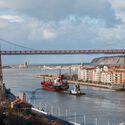
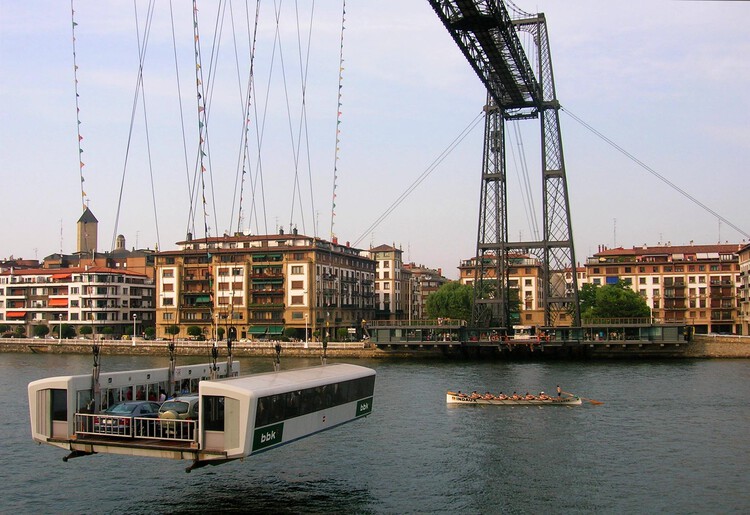
A trainera under the transporter Bizkaia Bridge. Image via Wikipedia user: Javier Mediavilla Ezquibela Licensed under CC BY-SA 3.0
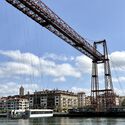
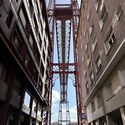
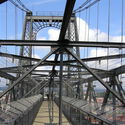
What role do transportation infrastructures play in shaping the culture and economy of societies? How do they bridge cultural, ideological, and geographic divides while transforming the lives of the communities they serve? One of the most remarkable iron structures of the European Industrial Revolution stands west of Bilbao, spanning the Nervión River at the mouth of the Ibaizabal Estuary. It is the Bizkaia Bridge, which combines nineteenth-century ironworking traditions with the innovative use of lightweight alternating-twist steel cables. Recognized as the world's first transporter bridge, it became a model for similar structures built throughout Europe, Africa, and the Americas.
Constructed to connect the opposite banks of the Nervión estuary, it was the first bridge in the world to allow ships, passengers, and vehicles to cross simultaneously by means of a suspended gondola. This innovative system improved communication between two small seaside resort towns while allowing uninterrupted navigation through one of Europe's busiest inland ports.
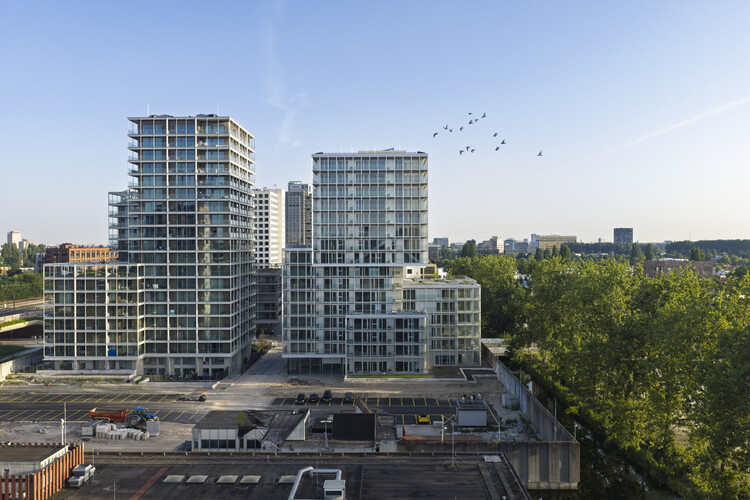
The Martin, a residential building designed by OMA's David Gianotten and Mariano Sagasta, has been completed in Amsterdam's Bajes Kwartier. Located within the Central Cluster of the 7.5-hectare redevelopment, the project is the latest completed component of OMA's master plan to transform the former Bijlmerbajes prison complex, which operated between 1978 and 2016, into a mixed-use, energy-neutral neighborhood. The completion follows that of The Jay in 2025, while a third residential building, The Cardinal, is expected to be finished in 2030.
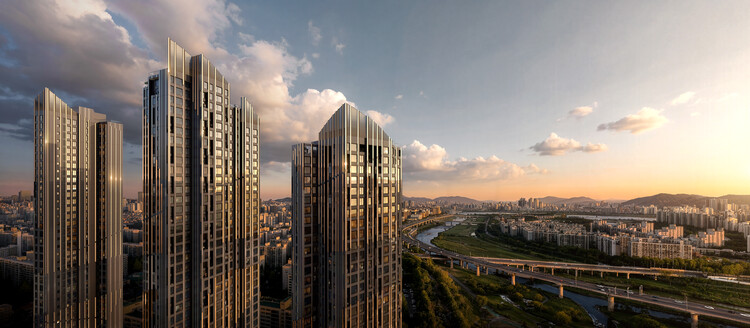
Studio Libeskind, in collaboration with HJ Design Partners and Seoul-based SAMOO Architects & Engineers, has designed a new high-density residential development in Seoul, South Korea. The Daechi Ssangyong 1 Redevelopment Project replaces an existing five-building, 630-unit complex in Daechi-dong, Gangnam-gu, with six new residential towers up to 49 storeys tall and nearly 1,000 housing units. The project is being developed for the Daechi Ssangyong 1 Redevelopment Union by Samsung C&T, with construction expected to begin in 2027 and be completed in 2030.
A profound generational evolution is rewriting the rules of the contemporary landscape, bringing an end to the era where architects and designers merely mimicked the tenets of Western modernism. Recorded live at Milan Design Week 2026 in cooperation with INDX|GLOBAL, the seventh episode of the Room for Dreams podcast leads an insightful session on how a new generation of Indian practitioners is stepping onto the global stage with a confident, self-aware perspective.
Barcelona has just become the first city in the history of the UIA World Congress of Architects to host the event twice. Thirty years separate the two editions, and the distance between them says as much about architecture's changing self-understanding as anything spoken from a stage. In 1996, the congress placed the city at the center of the debate, consolidating a post-Olympic urban model that would go on to be studied and contested for decades.
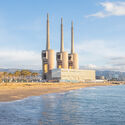
Marina Opatija and the Kvarner Bay shoreline from above. Image Courtesy of Smart & Sustainable Marina Rendezvous
M3 Monaco's Smart & Sustainable Marina Rendezvouscompetition returns for its sixth edition with an open-architecture Call for Ideas centered on Marina Opatija, on Croatia's Kvarner Bay. This article sets out what the competition asks of designers: a focused, high-impact intervention built around three required buildings, the pillars and sustainability criteria behind the brief, the key dates leading to the August 2026 deadline, and how to enter, free of charge, for professionals and students alike, with the top finalists pitching their work at the Yacht Club de Monaco.
The World Architecture Festival (WAF) has announced the shortlist for its 2026 Awards, recognizing completed buildings, future projects, interiors, and landscape works from around the world. The finalists, selected from hundreds of submissions, will compete at this year's festival, taking place at the Broward County Convention Center in Fort Lauderdale, Florida, from November 18–20, 2026. During the first two days of the event, shortlisted teams will present their projects live to international judging panels, with category winners advancing to the festival's Super Jury for the final awards.
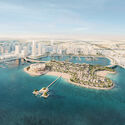
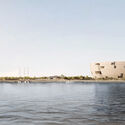
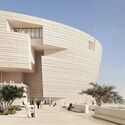
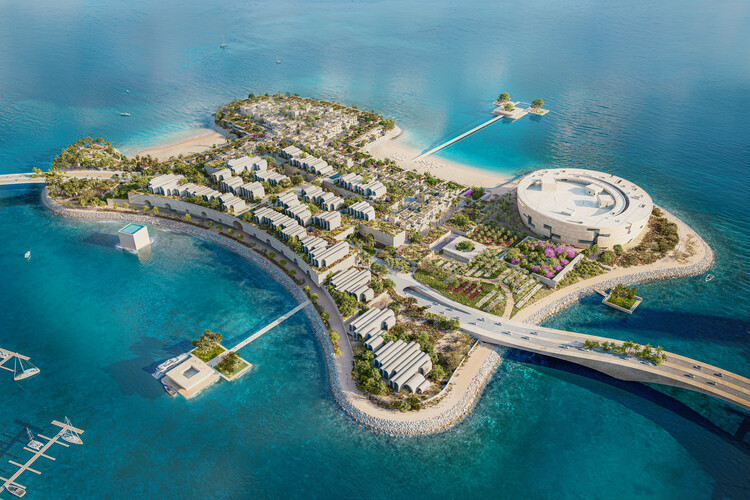
South aerial view of Al Maha Island, 2026. Render . Image Courtesy of Herzog & de Meuron
Al Maha Island is a 230,000 m² human-made island located off the coast of Lusail, Qatar. Built as an entertainment and leisure destination north of Doha, it opened in 2022, just ahead of the FIFA World Cup. In 2024, Qatar Museums released renderings of the future Lusail Museum, designed by Swiss architecture office Herzog & de Meuron and located on the southern tip of the island. Most recently, the firm revealed updated images of the island masterplan and the museum's exterior design. The new Lusail Museum will house a collection of Orientalist art, exploring the movement of people and ideas across the globe, past and present, and will offer opportunities for study and debate on contemporary global issues. It is expected to become the cultural anchor of Lusail City, in a building conceived by Jacques Herzog as "a vertically layered souk, or miniature city contained within a single building."
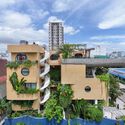
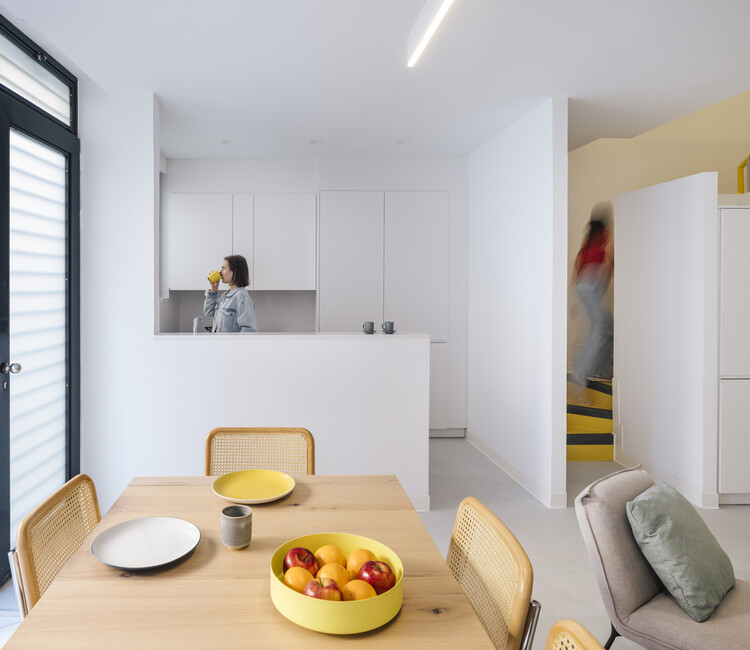
As co-living becomes increasingly associated with students, young professionals, and other mobile residents, it raises a broader architectural question: if home is no longer tied to long-term residence, what should architecture expect the private dwelling to provide?
People move for school, for a temporary job, or for a career that keeps taking them somewhere new. Many now expect to spend a defined period in a place before leaving it. Housing built for them has to do more than provide shelter. It has to support the routines through which someone adapts to an unfamiliar place, in the short time they know they have there. A year in a city asks something different of an apartment than a lifetime does, even if the square meters look the same on paper.
There is a big difference between looking at an image of a building and experiencing the space it represents. The atmosphere of a place, shaped by its light, sounds, materiality, and relationship with the surrounding landscape, has long belonged to the realm of physical experience. Today, real-time rendering technologies are beginning to narrow that gap, allowing projects to be explored and experienced before they are ever built.
Long before a building is constructed, it exists as drawings, physical models, perspectives, photographs, and, more recently, photorealistic renderings. Each new representational tool in history has sought to communicate not only the appearance of a project, but also the experience of inhabiting it.
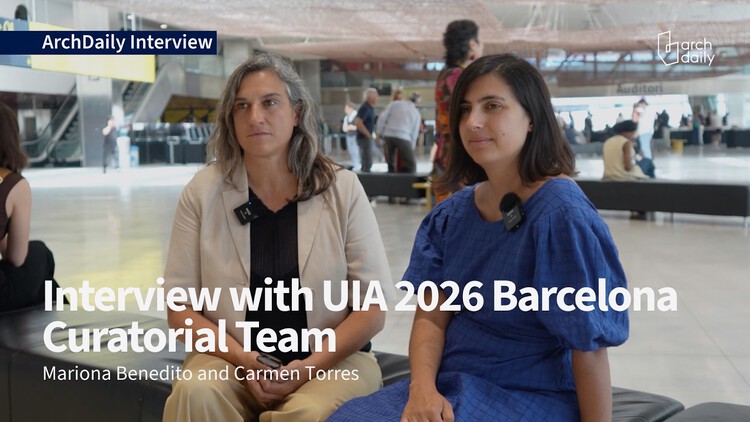
As Barcelona hosts the UIA World Congress of Architects for the second time in its history, thirty years after the 1996 edition, the city becomes a site for reflecting not only on architecture but also on the changing conditions under which it operates. Titled Becoming. Architectures for a Planet in Transition, and developed by the six-member curatorial team of Pau Bajet, Maria Giramé, Mariona Benedito, Tomeu Ramis, Pau Sarquella, and Carmen Torres, the 2026 Congress expands the discussion beyond the city toward planetary questions, addressing architecture through ecological, social, political, and material systems rather than as an isolated discipline. During the opening day of the Congress, ArchDaily spoke with Mariona Benedito and Carmen Torres, two members of the curatorial team, about how this edition revisits Barcelona's architectural legacy, why uncertainty has become central to architectural thinking, and what they hope participants will take away from the event.
In June 2026, the refurbished Teatro Mauri reopened its doors on Cerro Bellavista in Valparaíso, formerly Chile's main port. The building forms part of Latin America's modernist legacy and stands adjacent to La Sebastiana, one of the renowned residences of the poet Pablo Neruda. It was designed by architect Alfredo Vargas Stoller, author of other icons of modern architecture in Valparaíso, such as the Edificio Cooperativa Vitalicia and the Conjunto de Viviendas Vargas in Viña del Mar. Teatro Mauri opened in 1951 as a venue for performances and cinema. Following a fire in the early 1990s, it fell into disrepair, serving only sporadically as a venue for local parties and events. In 2015, it was purchased by the Sociedad Chilena de Autores e Intérpretes (SCD), which commissioned its restoration from architects Laura Garrido and Gregorio Garretón.
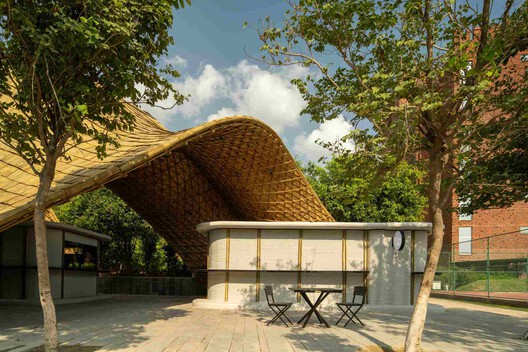
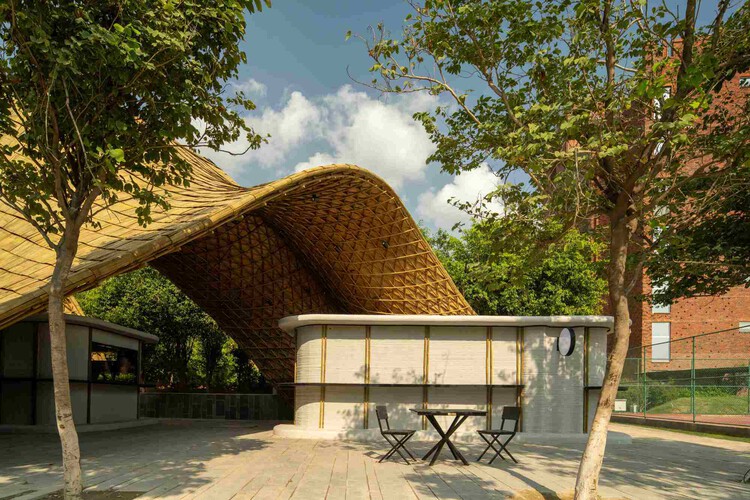
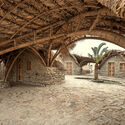
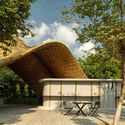
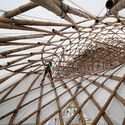
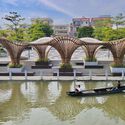
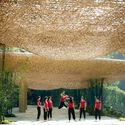
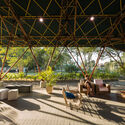
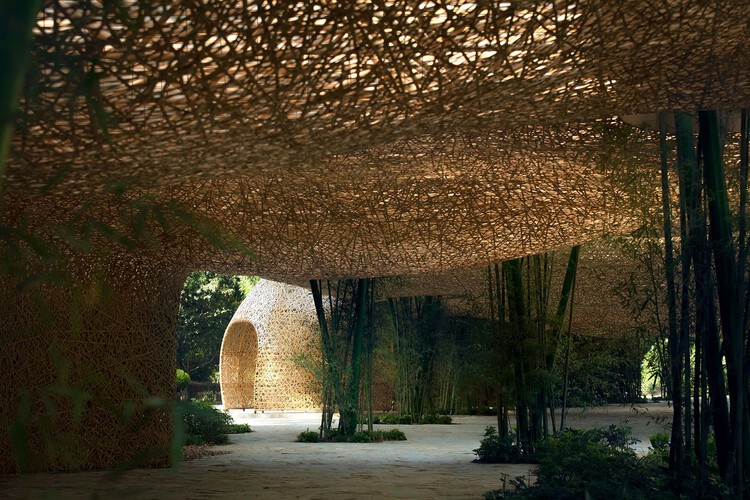
Bamboo is often praised before it is understood. It grows quickly, carries a long history of building cultures, and appears to offer architecture an immediate ecological language. In photographs, it can seem almost self-explanatory: light, natural, renewable, and already aligned with a more sustainable future. Yet this apparent clarity is also what makes bamboo difficult to discuss with precision. Once it becomes a symbol of environmental responsibility, the material itself can disappear behind the image it produces.
This is the risk of bamboo's contemporary revival. It can be imagined too easily as a green substitute for industrial materials, a regional atmosphere, or a softer alternative to the harder languages of steel and concrete. In each case, bamboo is admired before its conditions are understood. The more important question is not whether bamboo is sustainable in a general sense, but what kind of architectural culture it requires: what forms of knowledge, maintenance, regulation, labor, and time are needed for its sustainability to become real.



.gif?1477331311)