This chapter of the article series by Nikos A. Salingaros, David Brain, Andrés M. Duany, Michael W. Mehaffy, and Ernesto Philibert-Petit—which examines social housing in Latin America—presents recommendations for the sequence of actions required to generate housing in both rural and urban contexts. Review the previous installments and the new article below.
https://www.archdaily.com/1120741/22-steps-to-develop-social-housing-in-rural-or-urban-areasNikos A. Salingaros, David Brain, Andrés M. Duany, Michael W. Mehaffy & Ernesto Philibert-Petit
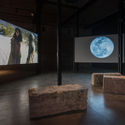
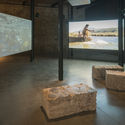
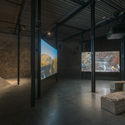
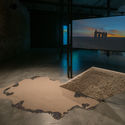
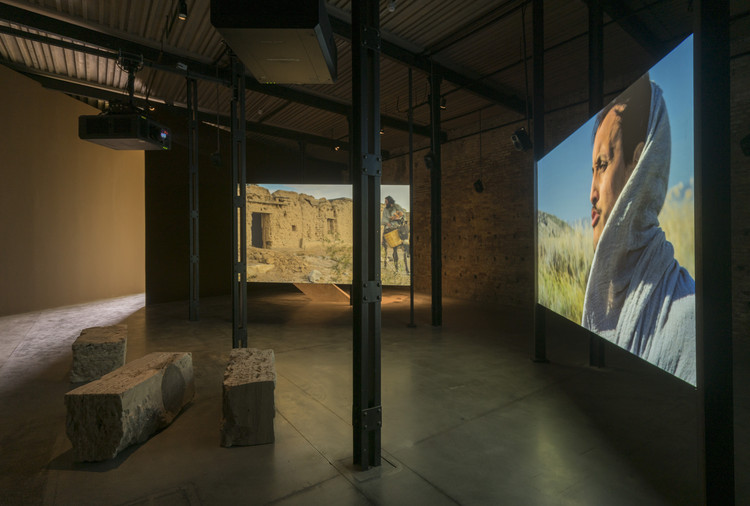
The International Art Exhibition of the Venice Biennale opened its 58th edition on May 11, 2019, at the Sale d'Armi in the Arsenale in Venice, and will run through November 24. At this world-renowned event, Mexico presented its contribution to the national pavilions with Acts of God by artist Pablo Vargas Lugo. Curated by Magalí Arriola, the project seeks to establish a dialogue with the curatorial concept of the Biennale Arte 2019, May You Live in Interesting Times, to examine how we value our actions, the connections we establish between the natural world and geological time, and to question the origins of our moral choices and inherited values, such as the idea of redemption.
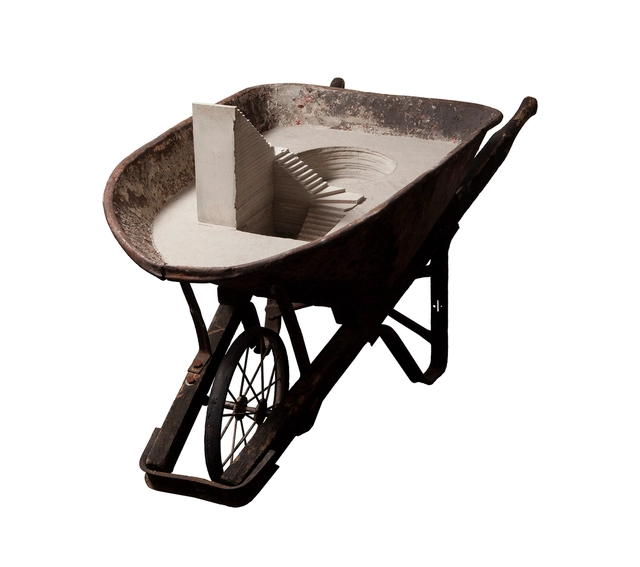
Through elements that once served a functional purpose in architecture—such as door frames, scaffolding, wheelbarrows, planters, or chairs—Colombian artist Sebastián Dávila assigns them a sculptural use, transmuting this obsolescence into the foundation for creating new scaled spatialities in cast concrete. In conversation with ArchDaily, the artist, sculptor, and near-architect explains how merging art and architecture transcends the stereotomic quality of concrete-generated space.
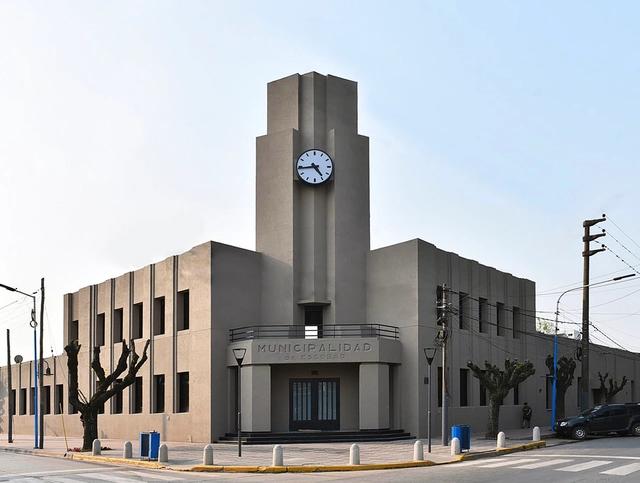
A numerical coincidence links the municipality of Escobar with the life of architect Francisco Salamone. In 2019, the district celebrates 60 years since its creation—having achieved municipal independence in 1959—an anniversary inviting its residents to reflect on both its history and its future. August also marked the 60th anniversary of Salamone's death. In 1938, he was commissioned to design the Municipal Palace in Escobar. The project, however, was left unfinished due to budget constraints, making it the only project by the architect in Buenos Aires that remains incomplete today. To mark this double anniversary, the local government is revisiting the original design to finally complete the building.
Paying attention to Lima's many perspectives is something that should be a daily occurrence, though unfortunately, this is not the case in our city. Sometimes we do not even notice what happens in the streets; at other times, we have a biased view, or we simply prefer to look at the city from the most comfortable angle. It is important to turn our attention to the many urban actors whose multidisciplinary visions, when integrated, can offer an interesting, enriched, and diverse outlook on the city.
In tribute to this diverse city of nearly ten million inhabitants, the UNESCO Office in Lima has gathered academics, historians, archaeologists, urban planners, architects, artists, and Lima enthusiasts for the inaugural UNESCO Talks event, titled “Lima, muchas miradas”.
Miguel Eyquem walks with one hand resting on his bag, bringing a handkerchief to his nose. He says he has a cold and hopes it will not be an obstacle to our conversation. Like all those who embody history, Eyquem's ideas race ahead of him. He walks, speaks, stops, thinks, speaks again, changes the subject, and keeps walking.
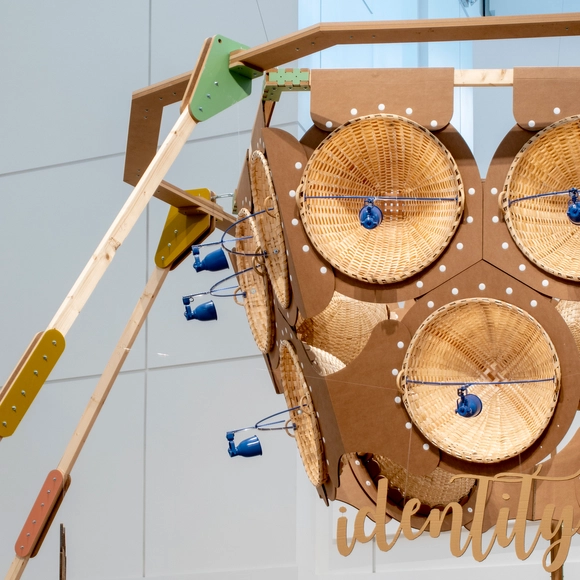
Of the two million people currently living in the region of Galicia, an estimated 5,000 work in the production and sale of crafts. Through the exhibition “Pensar coas mans. Las nuevas siete lámparas de la belleza artesanal” (Thinking with Hands: The New Seven Lamps of Craft Beauty), located at the Museo Centro Gaias in The City of Culture, Izaskun Chinchilla presents an art installation of 250 pieces. Created in collaboration with 65 artisans, the project seeks to restore the prestige of craftsmanship and prompt reflection on its collective value.
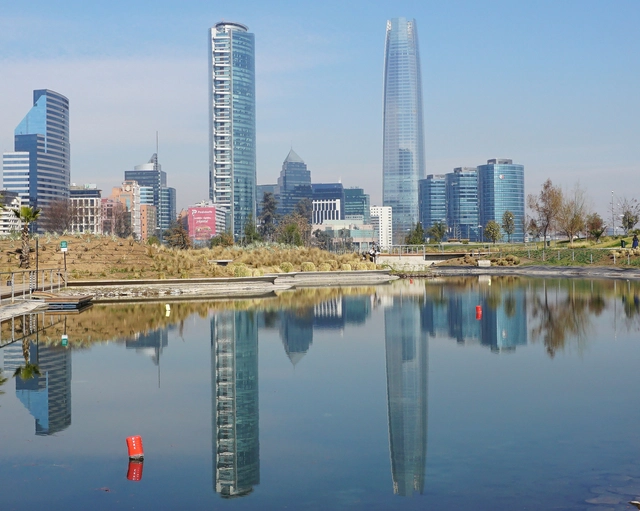
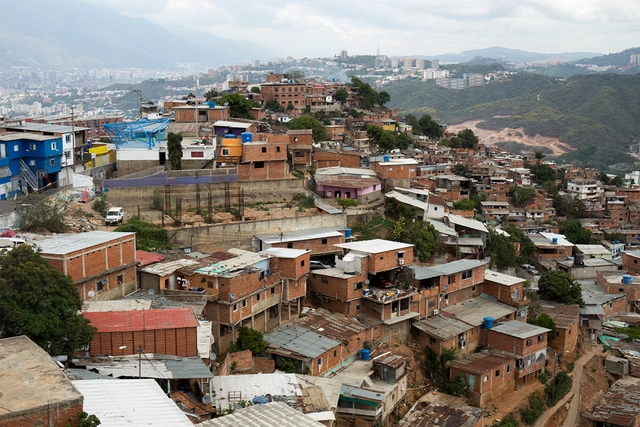
The Safe Cities Index (SCI) by The Economist Intelligence Unit ranks 60 representative cities worldwide based on indicators covering digital security, health security, infrastructure, and personal security.
Focusing on Latin America —and setting aside the repeated leadership at the top of the list by Tokyo, followed by Singapore, Osaka, Amsterdam and Sydney— where do this region's cities rank in terms of safety for 2019?
In this installment, as part of the series of articles by Nikos A. Salingaros, David Brain, Andrés M. Duany, Michael W. Mehaffy, and Ernesto Philibert-Petit, we examine the importance of design sequences and generative codes in social housing in Latin America. Explore all previous publications and the new article below.
https://www.archdaily.com/1120725/social-housing-in-latin-america-design-sequenceNikos A. Salingaros, David Brain, Andrés M. Duany, Michael W. Mehaffy & Ernesto Philibert-Petit
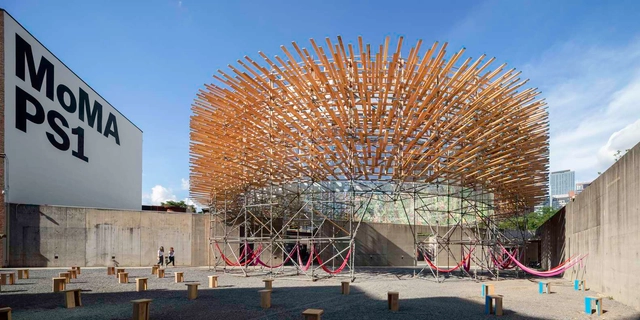
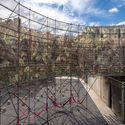
The installation Hórama Rama by Pedro y Juana (Ana Paula Ruiz Galindo and Mecky Reuss) opened this summer as part of the 20th edition of the Young Architects Program 2019 at MoMAPS1. This architectural installation is an immersive jungle landscape set within a large-scale cyclorama that sits atop the courtyard walls of MoMAPS1 and runs from June 28 through September 2, 2019.
2019 brought a wealth of enriching experiences through some of Mexico City's most prominent events, including the inaugural Porto Academy Workshop, the annual Design Week Mexico festival, and the Abierto Mexicano de Diseño, among others. These events hosted design and architecture exhibitions that captured the creative output of the moment—showcases that will serve as future reference points for understanding the architectural discourse of this era.
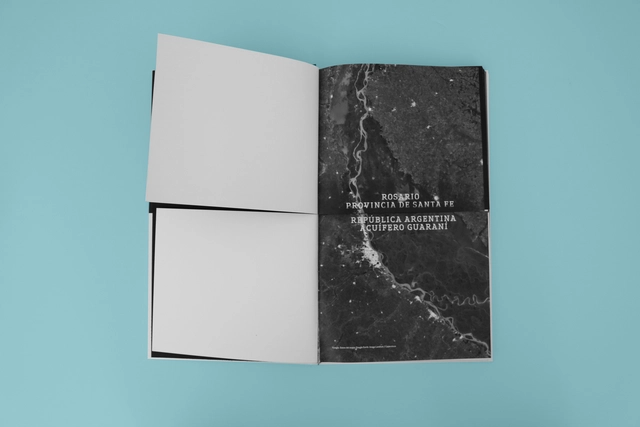
Reading "Poéticas Colectivas" is a unique experience: the pages divide into two, three, and then become one. The boundaries of the pages dissolve, and both knowledge and architectural works intersect on both a literal level—the pages—and a theoretical one—the ideas.
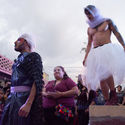
Mexico City’s vecindades (traditional tenement housing) are urban settlements located primarily in the downtown area. According to the National Institute of Anthropology and History (INAH), these buildings first emerged in the late 18th century, though their peak occurred during the 19th century as a result of rapid population growth, serving to provide affordable housing for the city's most marginalized sectors.
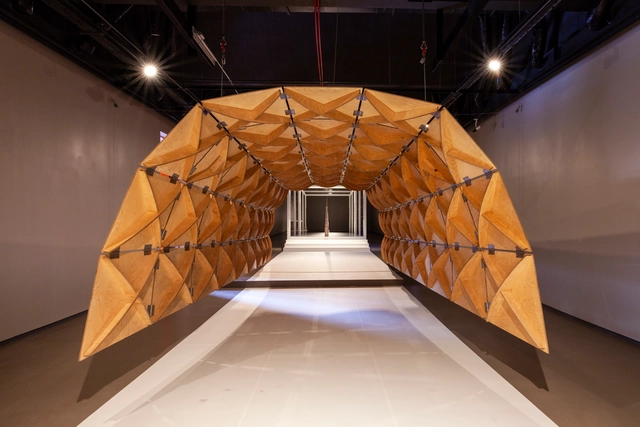
"SOM: Art + Engineering + Architecture" is an exhibition opening at the Antiguo Colegio de San Ildefonso in Mexico City. Presented in collaboration with MEXTRÓPOLI, the global architecture and urbanism festival organized by Arquine magazine, the exhibition offers a comprehensive overview of SOM's structural engineering practice, its integration with architectural design, and the firm's long tradition of collaboration with the visual arts.
https://www.archdaily.com/1120731/som-presents-exhibition-in-mexico-city-art-plus-engineering-plus-architectureArchDaily Team
The Chilean city of Valparaíso is comprised of 42 hills overlooking the Pacific Ocean. Its unique topography has prompted—or forced—residents to build a creative network of elevators, staircases, and alleys, connecting every corner of the city despite its rugged terrain.
With the launch of ODA19, this year we celebrate the eleventh anniversary of the Obra del Año (ODA) Award, the highest accolade in the architectural world where the winners are chosen by popular vote. Starting today, Monday, April 1, and for the next three weeks, our readers are responsible for determining which projects inspired us during 2018, faithfully representing the identity of our local contexts while shaping the way architecture is practiced around the world.
Over the next three weeks, the entire ArchDaily en Español network (Plataforma Arquitectura, ArchDaily México, ArchDaily Colombia, and ArchDaily Perú) will serve as the platform to celebrate the best built architecture in Spain and Spanish-speaking countries in Latin America.
The Mexican state of Oaxaca is one of the most visited destinations in the country, drawing travelers from around the globe with its rich culinary, cultural, and architectural heritage. Located in the southeastern region of the country, it spans 93,757 km² and is divided into 570 municipalities, making it the fifth-largest state in Mexico.
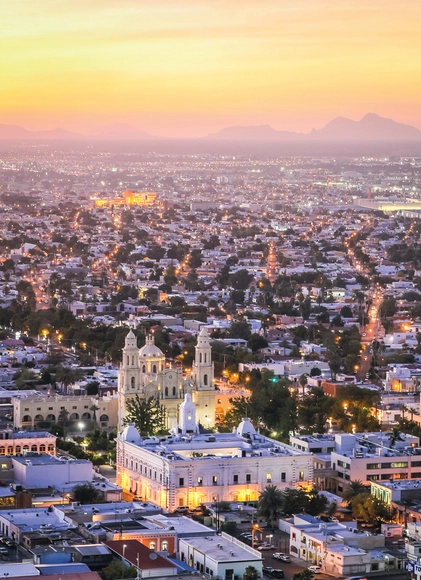
Courtesy of Felipe Vera, Diego Arcia & Andreina Seijas. ImageHermosillo, Mexico
Few may have heard of Hermosillo, a Mexican city of 850,000 inhabitants located in the middle of the desert, just 280 kilometers south of the United States border. It is a city of great strengths, but also immense challenges. In an increasingly urbanized world, cities have become platforms for innovation and change, particularly in developing countries. While megacities like Bogotá, Lima, and Mexico City struggle to distribute goods and services to their sprawling populations, intermediate cities like Hermosillo have the potential to offer a more sustainable alternative.
https://www.archdaily.com/1120492/hermosillo-the-mexican-city-that-became-a-testing-ground-for-urban-experimentation-in-the-desertFelipe Vera, Diego Arcia & Andreina Seijas
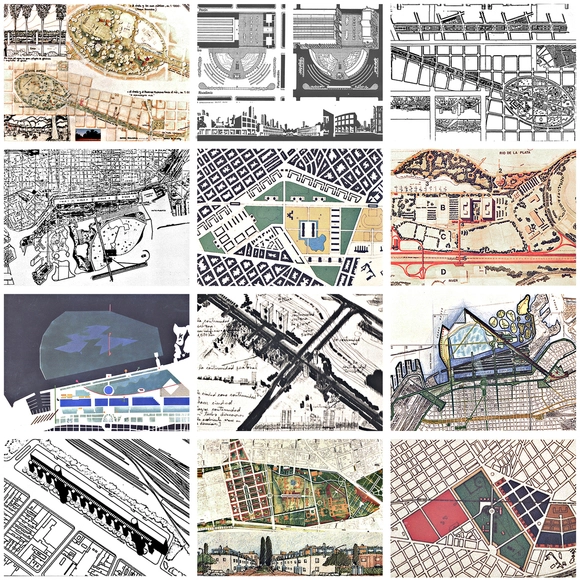
In 1986, an urban design competition was held in Argentina titled “Ideas Urbano-Arquitectónicas para Buenos Aires” (Urban-Architectural Ideas for Buenos Aires), more commonly known as “Las Veinte Ideas” (The Twenty Ideas). Organized as part of a cooperation program between the Community of Madrid and the Municipality of Buenos Aires during the mayoral administration of Facundo Suárez Lastra, this call for entries generated a high concentration of design concepts. With the participation of more than 400 architects, it yielded a total of 120 proposals for the city. Although unbuilt, these ideas hold significant theoretical and historical relevance; in many cases, they served as the seed or starting point for the development of subsequent urban projects.
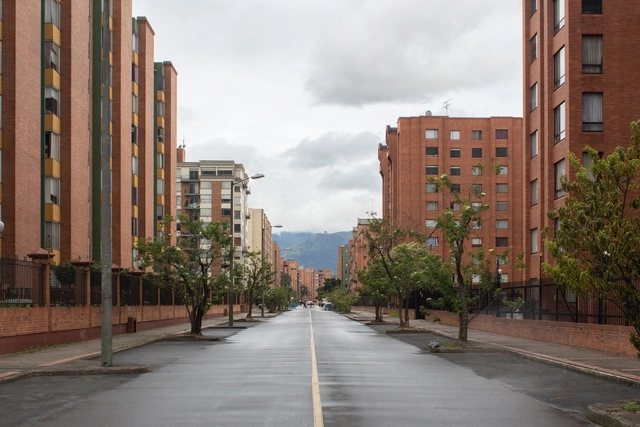
Ciudad Salitre. Foto de Santiago Beaumé, María Luisa Cervantes y Federico Chaparro. Image Cortesía de Ciudad Isla
In Bogotá, a third of all households live in gated communities. This phenomenon is a misguided application of the model idealized by post-war American suburbs, which projected an idyllic, safe, happy, and perfect life—a life where mobility prioritizes motorized vehicles, utilizing simple, replicable, and, of course, highly profitable construction models.
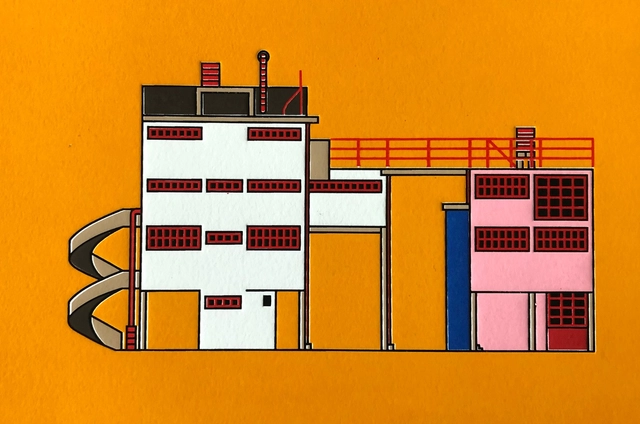
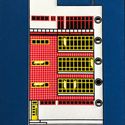
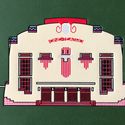
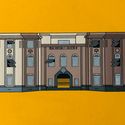
Construcciones Modernas, S.A. is a series comprising an album of popular, remembered, and forgotten buildings in Mexico City—a record and the beginning of an atlas. It is a subway line featuring all the architectural icons missing from the train cars, a tribute to the city, its modernity, and its decay.
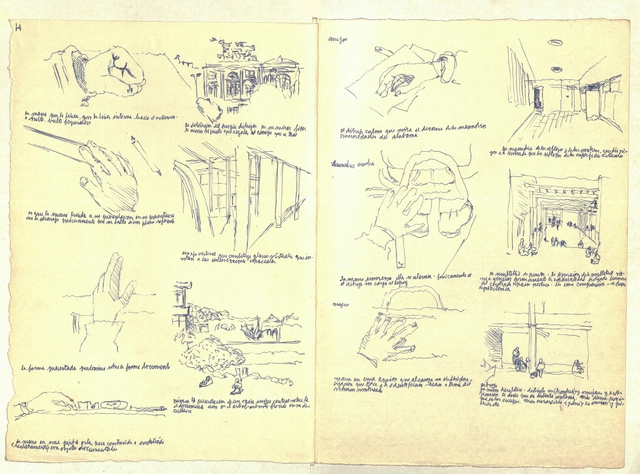
Alberto Cruz, one of the Chilean architects who re-founded the School of Architecture of the Pontificia Universidad Católica de Valparaíso and founder of Amereida and the subsequent Open City, left behind more than 2,200 notebooks and folders, 200 drawings in various techniques, formats, and mediums, and around a thousand documents when he passed away in 2013.
Five years earlier, his granddaughter, historian Sara Browne, began working with Cruz to catalog his private output. Today, this entire archive is part of the Alberto Cruz Covarrubias Foundation, a space dedicated to honoring the memory of the 1975 National Architecture Award recipient.
In this email conversation with Browne, the historian examines the challenges of conserving and digitizing this historic archive, while also reflecting on Cruz Covarrubias's legacy.
CityMakers is working with ArchDaily to publish a series of articles, conversations, and interviews with various actors in city co-production, who are behind the Barcelona CityMakers Lab 2019, an event taking place from October 14 to 20.
On this occasion, we feature Oriol Estela Barnet, general coordinator of the Barcelona Metropolitan Strategic Plan, who will give a MasterClass at the Barcelona CityMakers Lab 2019 addressing the concept of “a third generation of strategic urban plans: the case of Barcelona.”
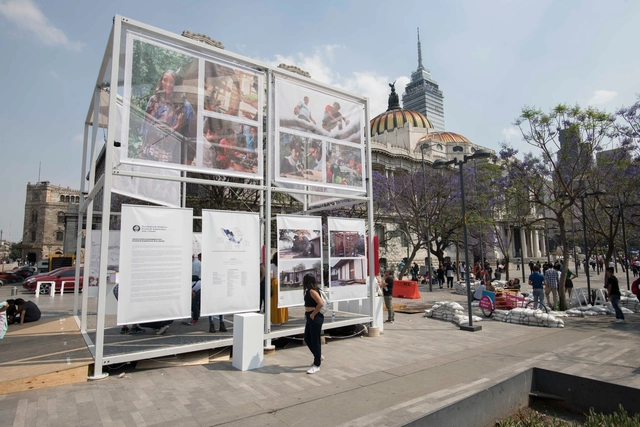
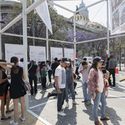
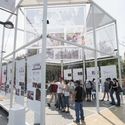
CUBO is the name of the installation created by the School of Architecture, Art, and Design at Tecnológico de Monterrey, which was presented in March at Alameda Central in Mexico City. The pavilion was designed as an open, flexible, and itinerant meeting point, hosting cultural events as well as exchanges of ideas and goods. CUBO (Urban Cell for Well-being and Opportunities) is a social innovation project that served as a stage for civic engagement, fostering participatory processes in communities through recreation, reconciliation, and learning.






.jpg?1567177603 "Global Ranking: 40. Image © Flickr User: Eneas De Troya Licensed under CC BY 2.0")






.jpg?1551806000 "© Benny Chan")
_Tom_Harris_(15).jpg?1551806141 "© Tom Harris")
.jpg?1551806155 "© Benny Chan")
.jpg?1551806066 "© Benny Chan")


.jpg?1597424114&format=webp&width=640&height=580)
.jpg?1597424114)