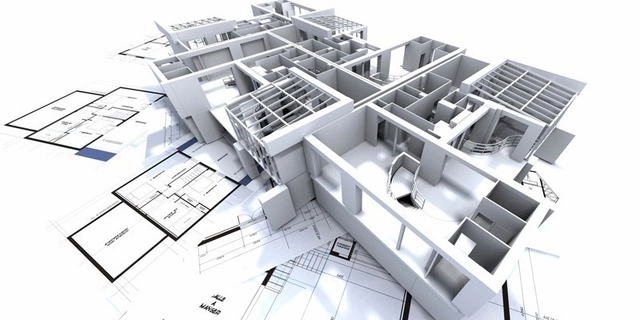
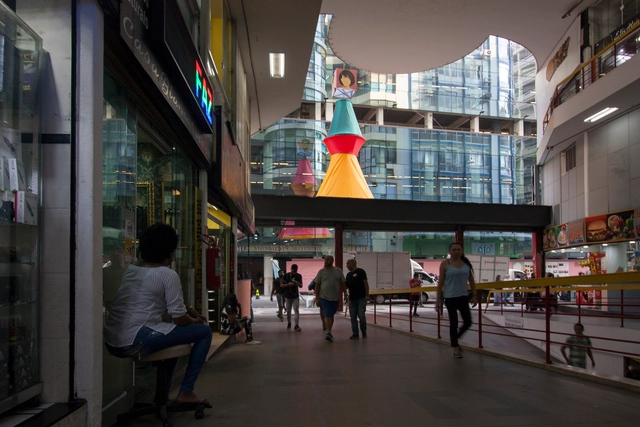
As awareness grows regarding the importance of using BIM technology for project development, many companies in the construction industry have struggled to find a BIM Manager. Much uncertainty arises, primarily because recruiters or the companies themselves often do not know exactly what they are looking for, how and where to look—let alone which candidate is best suited for the task.
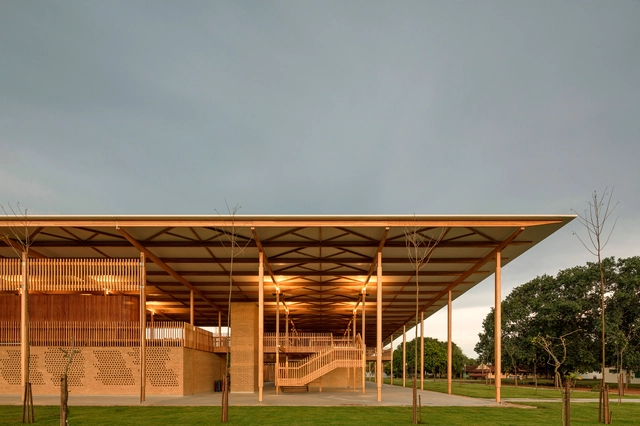
Although some projects conceal it, structure is always a primary concern in architectural design. Defining the structural system is among the first crucial decisions to be made, and it will likely shape a series of other aspects of the building. There are, however, extreme cases where architecture is seen and read simply as structure—projects whose character and image are largely defined by the chosen structural solution.
Fernanda Montenegro and Fernanda Torres. Photo: Reproduction
Conceived and directed by British artist Isaac Julien, the video installation A Marvellous Entanglement portrays the life of Lina Bo Bardi and stars actresses Fernanda Torres and Fernanda Montenegro, who play the architect at two different stages of her life. The nine-screen installation opens today at the renowned Victoria Miro art gallery in London.
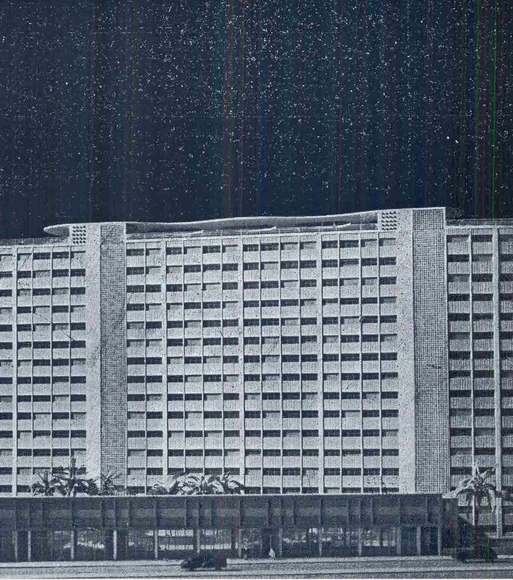
REVISTA ACRÓPOLE. Apartamentos para Industriários. São Paulo, n°119, 1948.. Image Cortesia de PC3 - Pensamento Crítico e Cidade Contemporânea
The Armando de Arruda Pereira Housing Complex, known as the Japurá Building, submitted to the IAPI in 1945 by architect Eduardo Kneese de Mello, stands out as a pioneering experiment in affordable housing in the central area and represents one of the earliest applications of the Corbusian unité d’habitation concept in the country.
https://www.archdaily.com/1121585/pioneering-experiment-in-affordable-housing-in-the-downtown-area-japura-buildingPC3 - Pensamento Crítico e Cidade Contemporânea
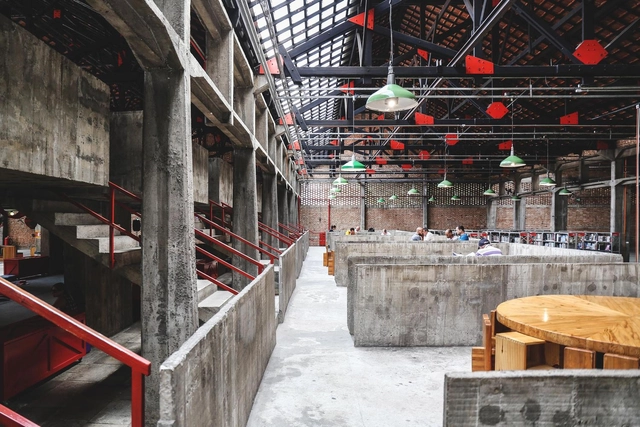
From domestic rooms to public infrastructure, the library is an architectural typology that must address various specific requirements tied to its core responsibilities: preserving books and publications, and providing spaces for reading, study, and research. Regardless of scale, libraries must efficiently manage natural light and ventilation, since they often combine leisure and work activities that require distinct qualities of environmental comfort.
Olinda, Pernambuco. Photo: Chico Atanásio/Pref.Olinda, via Flickr. License CC BY 2.0
The Iphan Dictionary of Cultural Heritage is a collaborative work developed by the General Coordination of Documentation and Research of the Department of Articulation and Promotion of Iphan, as well as a research project of Iphan's Professional Master's Program in Cultural Heritage Preservation (PEP/MP). Its goal is to provide the cultural heritage preservation field with a dynamic and critical reference work that, drawing from institutional experience, highlights the fundamental practices, discourses, and concepts that characterize the history of this field in Brazil.
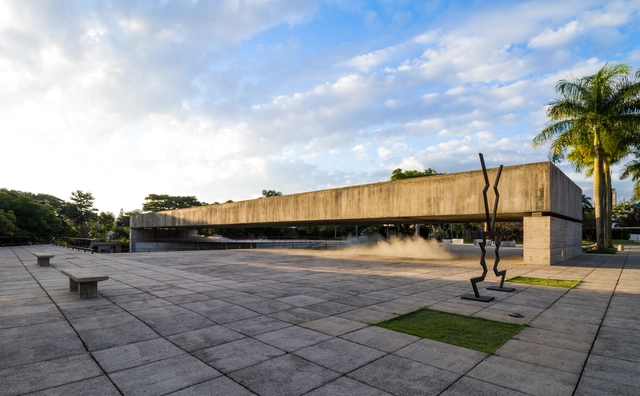
Yesterday, São Paulo City Hall approved the heritage listing of seven modernist works, six of which were designed by Paulo Mendes da Rocha and one by Gregori Warchavchik. In addition to these, 32 other properties were listed in the city.
Downtown Rio de Janeiro. Image: Petr Dvorak/Flickr. Via Caos Planejado
The minimum size of housing units has become a controversial issue. Several neighborhood associations oppose allowing the construction of highly compact units. This opposition runs counter to contemporary needs, as this type of apartment would cater to a large population of young singles, divorcees, and seniors who require smaller homes with lower maintenance costs.
https://www.archdaily.com/1121565/the-minimum-area-of-residential-unitsRogerio Goldfeld Cardeman e David Cardeman
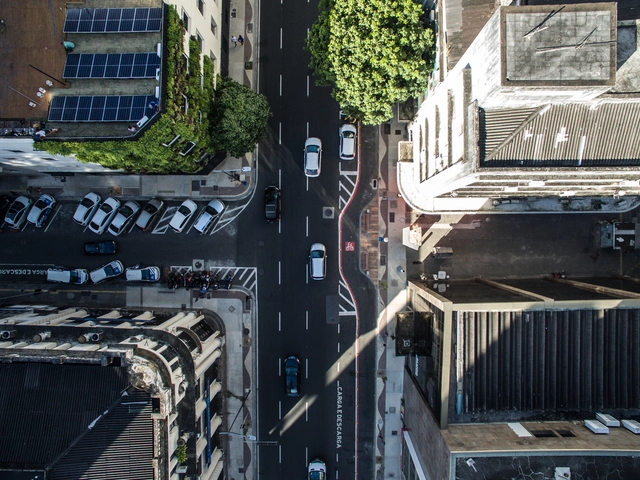
Rua Miguel Calmon has been the stage for significant transformations in Salvador. Until the early 20th century, before the land reclamation that created the left side of the street and a new port for the city, it was called Rua do Cais and was bordered by the sea. A century later, this street in the Comércio neighborhood has become the first Complete Street in the capital of Bahia, standing as a symbol of the interventions revitalizing its historic center.
https://www.archdaily.com/1121568/from-wharf-street-to-complete-street-intervention-in-salvador-restores-vitality-to-miguel-calmon-streetFernando Corrêa e Bruno Batista
Pedestrian-only area in Copenhagen. Photo: City Clock Magazine/Flickr
Walking is more than just a mechanical movement: it is a daily reclaiming of urban space. It is being active in the urban environment, noticing the city and the details that shape it. However, this choice does not always depend solely on individual willpower; it is also tied to external factors, such as people's physical and social conditions and the presence of infrastructure that enables this choice.
https://www.archdaily.com/1121570/5-cities-that-are-examples-of-walkabilityLara Caccia e Priscila Pacheco
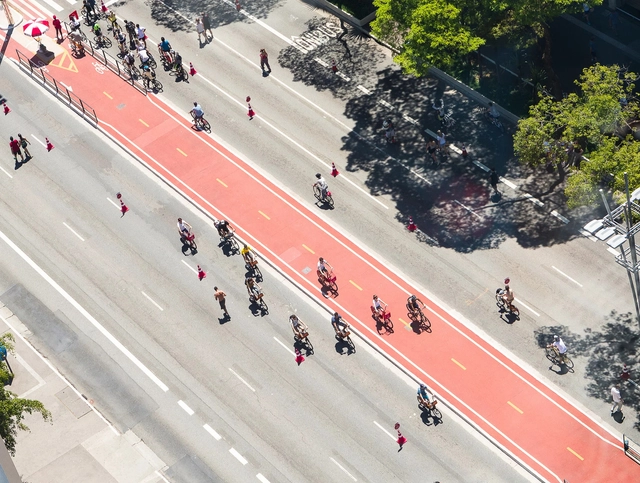
The new São Paulo Cycling Plan, recently presented by Mayor Bruno Covas, outlines the implementation of 173.3 kilometers of new bike lanes and paths in the capital. The proposal, which is part of adjustments to the municipal administration's Target Plan, also includes the upgrading of 310.6 kilometers of existing lanes.
"Tijolo por Tijolo" is a web series about Sesc Pompeia, Lina Bo Bardi's masterpiece. Through very short videos, viewers can explore the history of the Pompeia neighborhood and learn more about the factory that operated on the site before Sesc opened. Additionally, the series covers the repurposing and revitalization of the area and interesting details about the project designed by the Italian-Brazilian architect. In total, there are 11 episodes with exclusive content about the "Citadel of Liberty," containing historical facts, quotes from the architect, and rare photos. Watch all the videos from the series below:
The famous tube stations of Curitiba, icons of the Paranaense capital's urban development in the 1990s, will be replaced by a newer model. The goal of the City Hall and the Institute for Research and Urban Planning of Curitiba (IPPUC) is to replace twelve of these structures along the Inter 2 bus line.
The debate over materiality and how it shapes the spaces housing our entire social dimension lies at the core of architectural discourse. Although architects define a concept, a *parti*, and adhere to a program that can even influence urban life, ultimately it is everyday life and each individual's cultural repertoire that dictate how a place is experienced. The understanding that there are multiple layers in society capable of building invisible walls—which dissolve architectural poetics and unfold into other issues crucial to understanding the system in which we are embedded—is one of the reflections proposed by Nova República, a project created by anthropologist Hélio Menezes and the architects of Cape Town-based Wolff Architects for the São Paulo International Architecture Biennial.
The notion of authenticity is inseparable from theoretical discussions and actions in the field of Conservation and Restoration, and is directly related to the perception of values associated with a given cultural asset—whether tangible or intangible. Authenticity constitutes a foundational and structuring principle of the ethics that sustain and align criteria, concepts, and justifications within the realm of preservation. Like any process of cultural construction, authenticity cannot be understood or defined in absolute, pre-established terms, and its recognition is intrinsically linked to the context to which it refers—at a given time and in a given place.
The first episode of the ARQ.DOC documentary series, recently released on YouTube, explores the theme of "new aluminum" in architecture and design. Aiming to discover the stories behind architectural projects and urban interventions, the series' first season will feature 11 episodes where, alongside investigating specific themes, the producers turn their attention to the regional diversity of Brazilian architecture.
Photo: Chaval Brasil on Visual hunt / CC BY-NC-ND. Collage: ArchDaily
The terminology cultural property has several definitions. Found across various spheres and historical periods, the term has been gradually reshaped, with its application and meaning expanding and becoming more clearly defined over time.
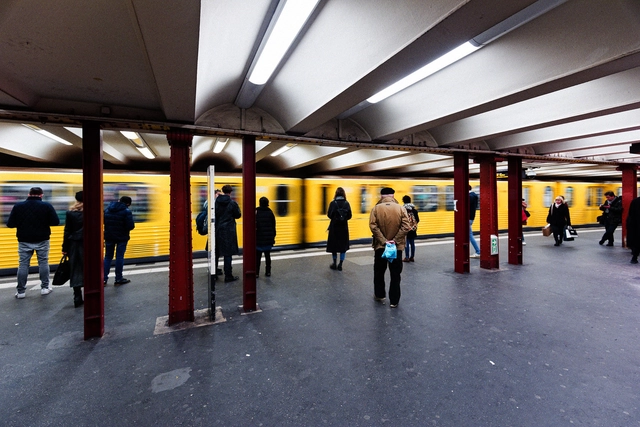
Berlin subway station. Image: Tuomo Lindfors on Visual Hunt / CC BY-NC-SA
Berlin is a global leader in urban mobility, according to the Mobility Futures study by data and consulting firm Kantar, which evaluated major world cities. The German capital topped the mobility ranking due to several factors, most notably more cost-effective travel and easy access to a broad public transit infrastructure network and shared mobility services.
Índia painting a graffiti piece about the bond of motherhood (Personal Archive) / Credit: Personal archive
Anyone walking through São Paulo is already accustomed to the colorful walls scattered across the capital. Generally, the graffiti that colors the city's streets is signed by men, and rarely by women. However, this scenario is changing in the city's outskirts. More and more women are bringing art to the streets, balancing motherhood with graffiti.
https://www.archdaily.com/1121418/women-graffiti-artists-occupy-the-walls-of-sao-pauloDanielle Lobato, Erica Pacheko, Ira Romão e Priscila Gomes
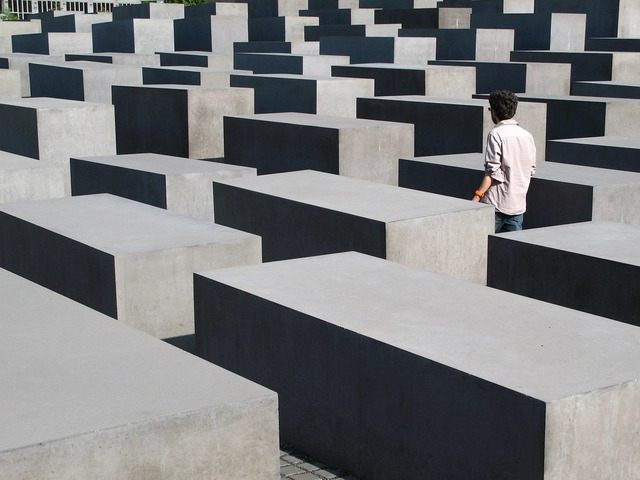
Memorial to the Murdered Jews of Europe. Photo: paula soler-moya, via Flickr. License CC BY-NC-ND 2.0
The steady escalation of complexity attributed to architecture and other fields of art over the past century—driven by a long process of disciplinary redefinition since the Modern era, coupled with an effervescence of experimentation and hybridization—has fostered the creation of innovative solutions designed for the human environment, while simultaneously giving rise to new challenges of categorization.
The curatorial proposal of the 12th São Paulo International Architecture Biennial, under the title Everyday (Todo Dia), aims to highlight the central role of the everyday – the most trivial dimension of reality – in 21st-century architecture and urbanism. “The discreet power of the everyday lies in its ability to translate the way we inhabit, use natural resources, and maintain space into common practices that make design relevant and a shared concern,” state the curators of this edition, Ciro Miguel, Charlotte Malterre-Barthes, and Vanessa Grossman.
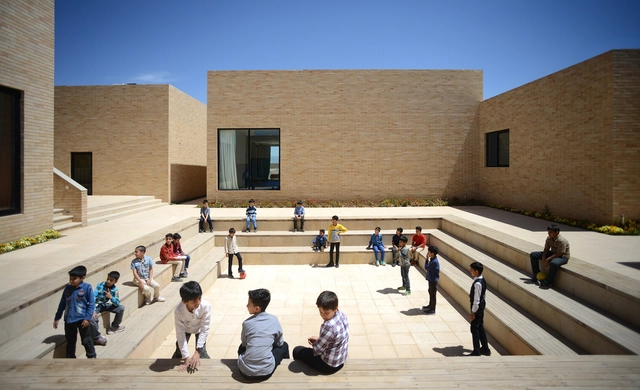
The design of educational spaces is perhaps one of the most compelling areas of architecture. It is also one of the fields in greatest need of development. Designing a school goes far beyond sizing classrooms and administrative areas; it involves conceiving spaces for gathering and exchange, connecting (or separating) specific areas, defining lighting and ventilation strategies, and studying color theory, to name just a few of the complexities involved.
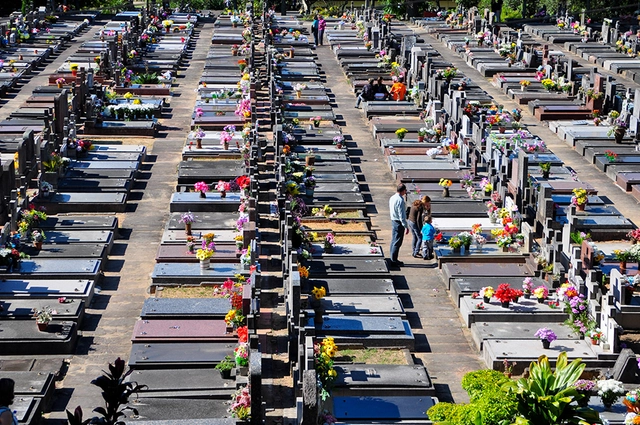
São João Cemetery, Porto Alegre-RS. Image: Lívia Stumpf/Flickr. Via Caos Planejado
“The following day, no one died.” Thus begins the novel Death with Interruptions, by Nobel laureate José Saramago. In it, death suspends its services and, for a time, everyone remains alive in an imaginary country. This masterly metaphor conceived by the Portuguese author, already in his final pairs of shoes, serves as the foundation for discussing the dilemmas and conflicts of the end of life.