In the second half of the twentieth century, driven by the mass adoption of the automobile and exponential population growth, cities around the world expanded at an accelerated pace. Santiago, Chile, was no exception, characterized by an extensive and fragmented urban sprawl that has led to a heavy reliance on cars, environmental degradation, and the loss of agricultural land. Without planning and policies aimed at sustainable urban development, the result is a more polluted and less green city—an alarming scenario considering the climate crisis we face.
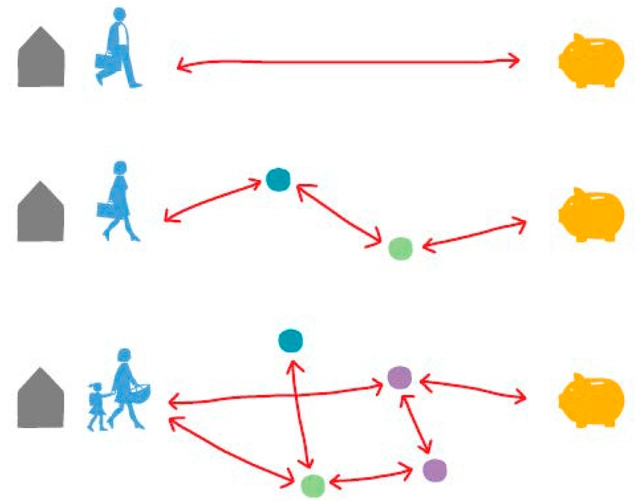
Figure 1. Everyday life itineraries. Source: own work by the authors.. Image via VAD
Proximity, understood as an urban quality that facilitates the management and pursuit of daily life, has for decades been a key tenet of feminist and gender-responsive urbanism. In the 1970s, academics from various disciplines began analyzing the link between the configuration and use of space and gender relations and roles. Since then, a robust critique of the androcentric configuration of the city has emerged, alongside proposals and criteria to rethink spaces from a gender perspective.
https://www.archdaily.com/1132448/the-precursors-of-proximity-a-feminist-genealogy-of-the-15-minute-cityCol·lectiu Punt 6
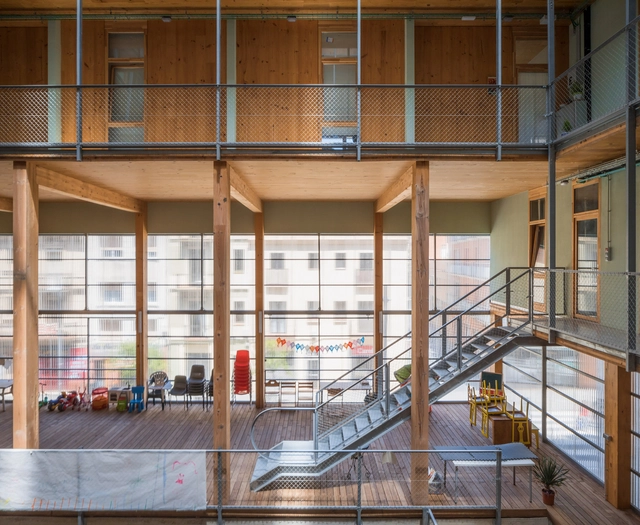
Cooperative housing, or co-housing, is a residential model that promotes access to housing in cities. This model first developed in countries like Denmark and Uruguay, and it is becoming increasingly popular throughout Europe. Indeed, it arrived in Barcelona several years ago and has since steadily expanded throughout the region, spreading beyond the boundaries of the Catalan capital. Below, we explore the cooperative housing model in Barcelona and how it contributes to a more democratic architecture for its citizens.
View of the Factory from the Wetland. Project by Mathias Klotz and Sebastián Mundi for the CCU Limache Brewery Museum. Image via CCU
The team led by Mathias Klotz and Sebastián Mundi of the architecture firms Klotz and SML has been unanimously selected in the open call for the heritage reconversion of the former CCU Brewery in Limache, the Chilean company announced today in a press release.
This project seeks to preserve the brewing heritage represented by the iconic building founded in 1883, through a museum open to the public.
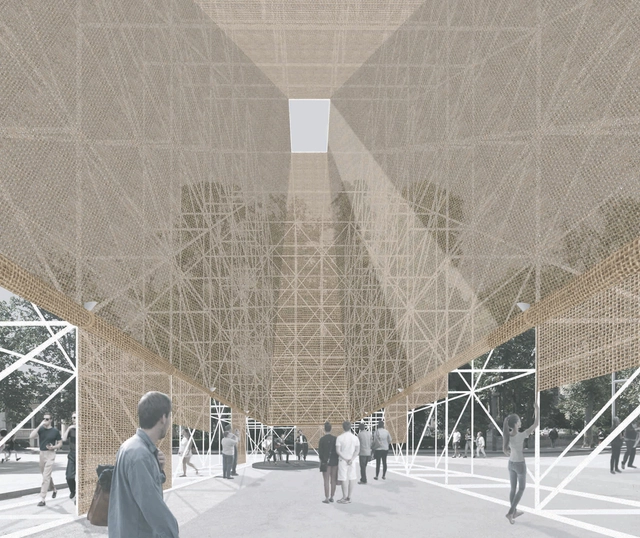
Aire / P + S Estudio de Arquitectura. Image Cortesía de TAC! Festival de Arquitectura Urbana
TheTAC! Urban Architecture Festival is an initiative led by the General Directorate for Urban Agenda and Architecture of the Ministry of Transport, Mobility, and Urban Agenda (MITMA), in collaboration with the Arquia Foundation. It is aimed at young architects to design and build a temporary pavilion that will host exhibitions, meetings, and activities.
Image by Enrique Guzmán. Corferias Active Edge. Image via BEP BOG 2021
Organized by the Colombian Society of Architects - Bogotá and Cundinamarca Chapter (SCA BC) and the Administrative Department of the Public Space Ombudsman (DADEP), the II Bogotá Public Space Biennial 2021 (BEP BOG) aims to recognize and showcase projects that contribute to the creation, recovery, and sustainability of public space in the city of Bogotá.
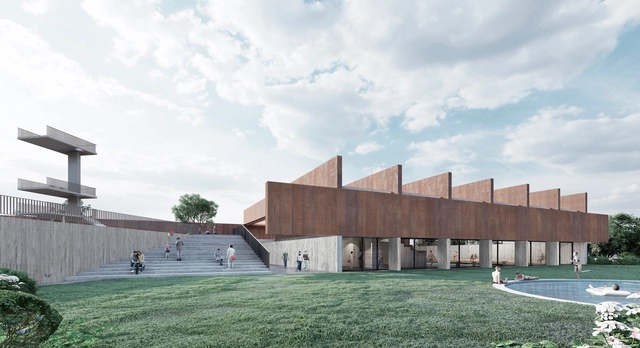
The New Municipal Swimming Pool of La Calera project in the Valparaíso Region is about to begin construction, as announced by the firm Gubbins Polidura Arquitectos on social media.
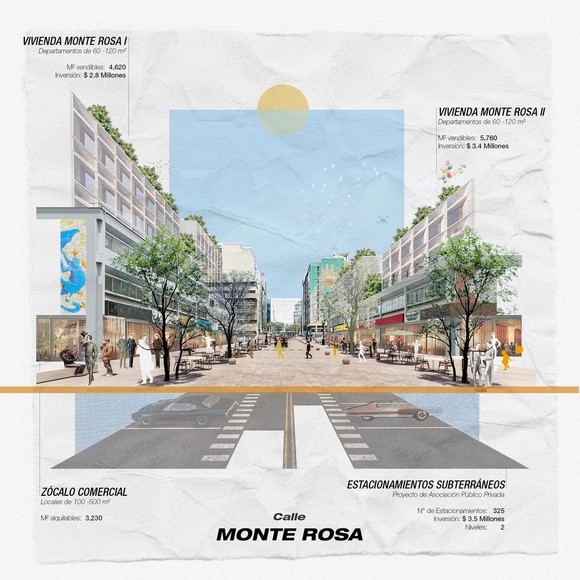
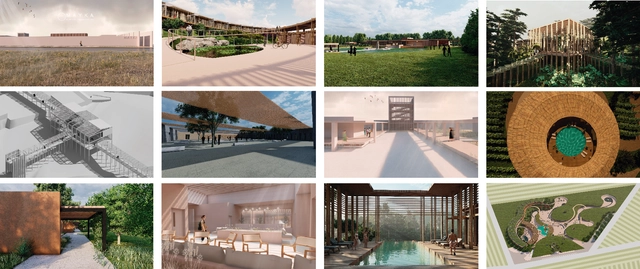
Cortesía de Nómena y Cuatro Cero Cuatro Arquitectura
The power of visual representation in architecture fosters debate and reflection on various urban issues. "Imaginarios urbanos" (Urban Imaginaries) is a collective initiative by Nómena arquitectura and Cuatro Cero Cuatro Arquitectura. Through a series of evocative images, the project aims to raise awareness and drive change in the design of Lima's streets.
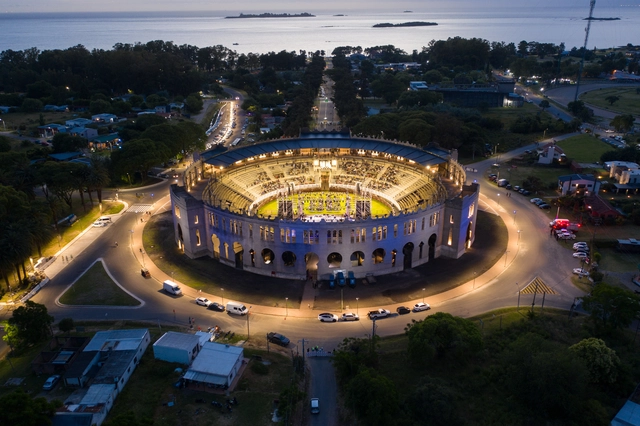
Recently opened in December 2021, the Plaza de Toros Real de San Carlos has been restored and repurposed to become a multi-purpose performance venue with a capacity for around 2,500 spectators in the stands and over 2,000 in the arena. Located in Colonia del Sacramento, Uruguay, this work, originally built by architect Josip Marković and engineer Dupuy, adopted a Neo-Mudéjar style, echoing the Spanish bullrings of that era.
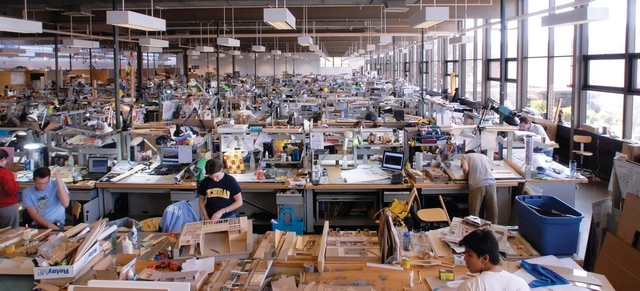
Is Apprenticeship the Way to Keep Architecture Education Relevant?. Image via University of Michigan
"I'm an architect... now what?" must be one of the most common questions for any recent graduate with an architecture degree in hand. Over the years, many will find jobs in different industries that do not necessarily involve working in an office designing and constructing buildings.
Taller Virtual de las Américas (TVA). Image Cortesía de Taller virtual de las Américas
More than a decade ago, a new initiative emerged to redefine the architectural pedagogical system. With an influence that today spans countries like Argentina, Peru, Mexico, Venezuela, Guatemala, and the United States, the Virtual Workshop of the Americas (TVA) successfully and synergistically brings together education, collectivity, and virtuality. Architects Nahuel Salcedo and Celeste Gómez Lahoz are part of the coordination team driving this project forward year after year. Here, they explain the initiative in greater detail.
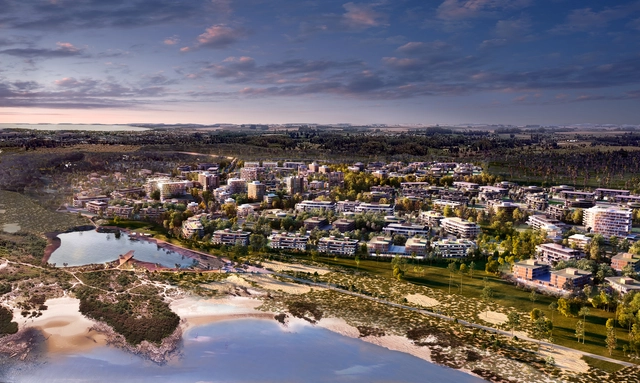
The phenomenon of building new cities around the world is gaining momentum in an effort to mitigate the effects of climate change, contain mass migration and brain drain, or improve the poor quality of life in some cities—a reality highlighted by pandemic lockdowns, among many other reasons. Urban planners and professionals in architecture, engineering, and other disciplines undoubtedly face major challenges, raising the question: should we concentrate all our efforts on creating new urban centers, or focus instead on improving conditions and addressing the issues of existing ones?
Videos
Cortesía de OP Arquitectos (Marcela Orcaje - Gonzalo Pérez)
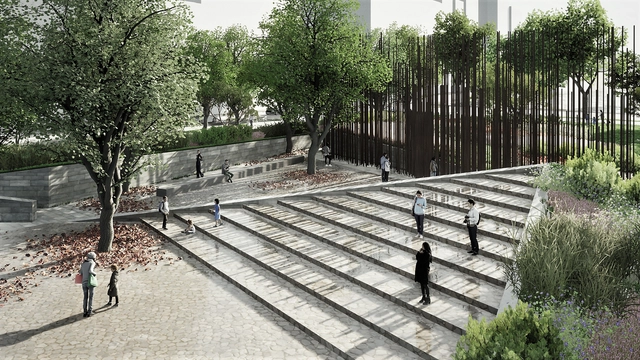
The Municipality of General Pueyrredón and the Buenos Aires Province Association of Architects announced a Provincial Ideas and Preliminary Projects Competition for the 40th Anniversary Memorial of the fallen soldiers in the Malvinas and its area of influence. This scope included the plaza of the same name and its surrounding area in the city of Mar del Plata, Buenos Aires province.
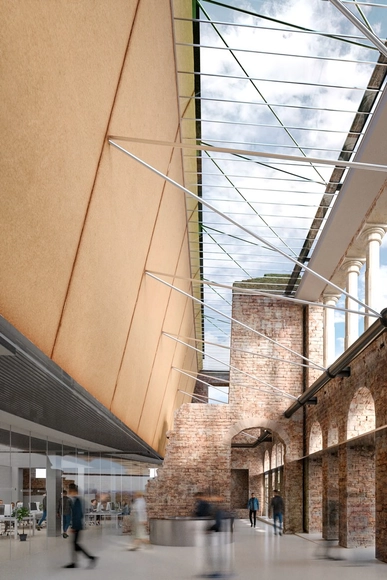
Proyecto ganador del Concurso para el Nuevo Archivo Regional Valparaíso. Image Cortesía de Cecilia Puga y Paula Velasco
Earlier this year, the Ministry of Cultures, Arts, and Heritage, through the National Cultural Heritage Service (SNPC), launched the bidding process for the design of the Valparaíso Regional Archive. The future building not only aims to preserve historical documents and collections and promote research and access to information, but also represents a major opportunity to value and reactivate the ruins of the historic Palacio Subercaseaux in Valparaíso's Barrio Puerto, Chile.
Following an evaluation of the 13 accepted bids, the winning proposal was submitted by architects Cecilia Puga, Paula Velasco, and their team. Their design defends and protects the urban profile, showing us how to connect the new with the old. Below, discover the winning project in detail, along with the other awarded entries.
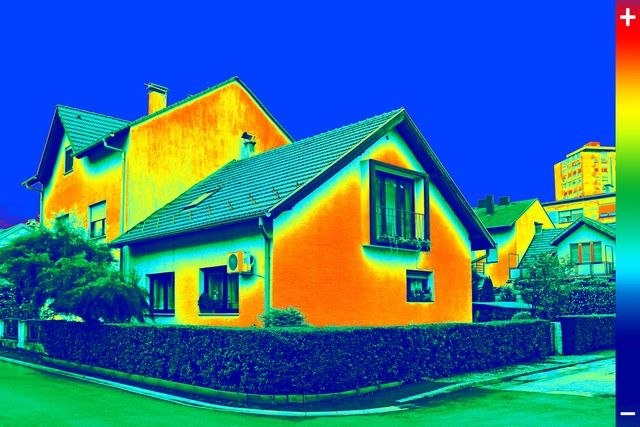
Infrared thermography image showing a home's lack of thermal insulation. Image by Ivan Smuk. Image via Shutterstock
How can we analyze the environmental impact of buildings? What strategies could be developed to improve people's quality of life and achieve a harmonious relationship with the environment? Year after year, more questions are added to the design decision-making process of thousands of architects around the world. They seek to take action and implement policies that improve the environmental performance of their buildings, reducing energy and resource consumption while also lowering greenhouse gas emissions and waste production.
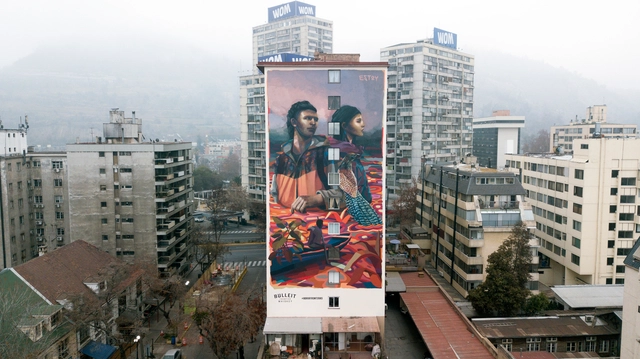
Arte Público de Estoy. Image Cortesía de Esteban Barrera
The city is in constant flux: monuments disappear, landmarks are forgotten, and new symbols emerge, prompting streets, plazas, and walls to redefine the urban landscape. In doing so, they offer new reference points, narratives, and ways of understanding the city, our history, and our society.
Thinking, discussing, and reconfiguring the city through art involves a series of processes. Researching territories, their inhabitants, sociocultural environments, and relational dynamics are essential pillars when designing and implementing installations that impact the city. The proliferation of large-scale artistic interventions that prioritize the purely aesthetic forces us to reflect on what we encounter in public spaces and how these encounters affect our daily lives.
August 19 is World Photography Day. To mark this occasion, we present the winning entries of the recent photography competition "Interculturality and Inhabited Heritage" ("Interculturalidad y Patrimonio Habitado").
Casa Domínguez. Alejandro de la Sota. La Caeyra, Pontevedra, 1973. Fotografía José Hevia. Image Cortesía de Fundación Alejandro de la Sota
The Alejandro de la Sota Foundation has created a portal to showcase the leading figures and works of the pioneers of Spanish modern architecture. The reason? When discussing the Modern Movement, it often seems that only architects like Mies van der Rohe, Le Corbusier, or Walter Gropius are mentioned. But what was happening in Spain during those years? Which figures stood out, and what were their intentions when designing?
Acervo documental del Sillón BKF. Image Cortesía de Estudio Normal
Under the title Origen, Estudio Normal and Fundación IDA are organizing an exhibition centered on the BKF chair, presenting it as a fundamental piece of Argentine design history and a key element of the design language of the BKF+H project, developed by Estudio Normal. With contributions from Fundación IDA, the exhibition is enriched by previously unpublished archival documentation related to the history of the chair and its creators.
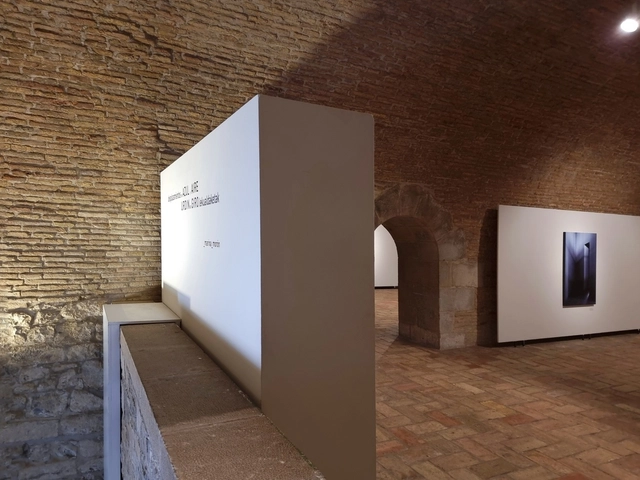
The internationally renowned art collective _marina_morón (comprising Dr. Jesús Marina, PhD in History, and architect Dr. Elena Morón, PhD) inaugurated their latest work at the Pabellón de Mixtos of La Ciudadela in the city of Pamplona. The exhibition is sponsored by the Basque-Navarrese Association of Architects and the Pamplona City Council, and will remain open to the public until March 15, 2022.
May 3rd is a holiday originating from the Finding of the Holy Cross (also known as May Cross or Feast of the Crosses), which traces its roots back to Roman rites celebrating the Cross of Christ. Over time, this commemoration has evolved and been adopted across cities in Mexico, Chile, Spain, Ecuador, El Salvador, Guatemala, Paraguay, Peru, Trinidad and Tobago, Argentina, Colombia, and Venezuela, where traditions include floral decorations, processions, and dances.
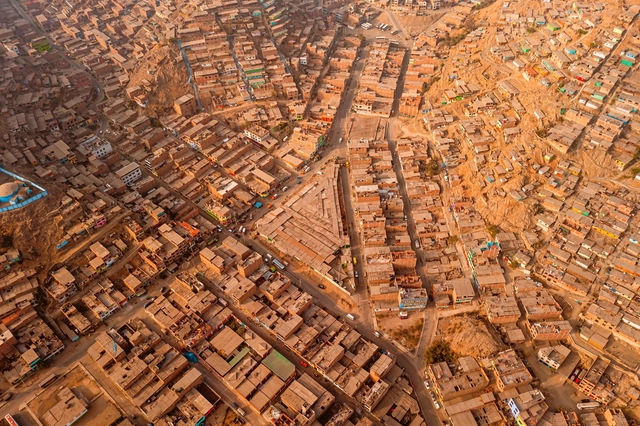
San Juan de Lurigancho, Lima, Peru. Image by MarcoRosales. Image via Shutterstock
The IPCC has published its latest report on the environmental crisis, "Climate Change 2022: Impacts, Adaptation and Vulnerability." The latest findings warn that urgent priority must be given to action on the adaptability of the built environment, noting that, globally, the most rapid growth in urban vulnerability has occurred in informal and unplanned settlements, as well as in small to medium-sized urban centers in low-income countries with limited adaptive capacity. This is a recurring reality across Latin America.


.jpg?1643728555&format=webp&width=640&height=580)







.jpg?1654626680&format=webp&width=640&height=580)