
The largest interior design competition in Latin America has begun and will award the winners of each category with a sculpture by the renowned visual artist Yutaka Toyota.
The largest interior design competition in Latin America has begun and will award the winners of each category with a sculpture by the renowned visual artist Yutaka Toyota.
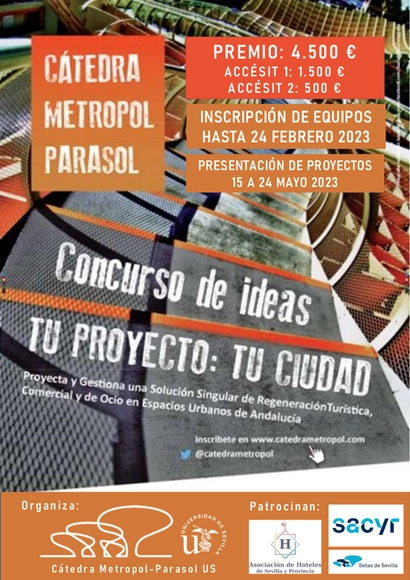
The general objective of this ideas competition is to foster reflection, commitment, entrepreneurial spirit, and innovation among students and recent university graduates, while promoting a better understanding of the technical and management factors that add value and influence the dynamics of urban complexes dedicated to tourism, commerce, and leisure.

The call for applications is now open for the Hatching Festival workshops, which will take place from July 5 to 8 in Tenerife and from July 10 to 14 in Fuerteventura, in the Canary Islands. Directed by architect Fernando Menis, the festival focuses on the possibility of creating life in desert or semi-desert areas through a symbiosis of tradition and new technologies, natural energy, and the manipulation of form.

The Illustrious Municipality of Santa Cruz invites students and architects from across Chile to present and develop ideas for the intervention of the former Santa Cruz departmental government building, located at 74 Diaz Besoain, to transform it into the future House of Culture.
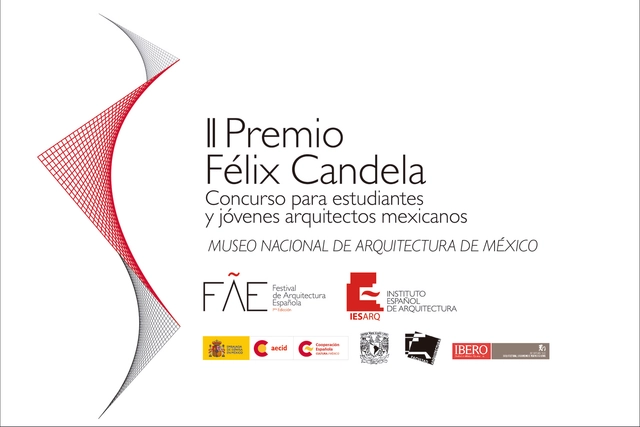
Organized by IESARQ, this competition is open to students of architecture, urbanism, and design, as well as Mexican architects, urban planners, and designers up to 35 years of age, participating individually or in teams of two or three members. The second edition of the Félix Candela Award invites participants to reflect on architecture as an autonomous discipline within the cultural context of Mexico.

5th Edition of PNAM: "The best timber constructions by the best Portuguese architects." Submissions are open until July 26 for permanent structures built within mainland Portugal or the islands, completed between January 1, 2017, and December 31, 2018.

The "Encuentro de Construcción con Tierra" (Earth Construction Meeting) is an event organized by faculty members from the Eastern Regional University Center (CURE) and the Faculty of Architecture, Design, and Urbanism at the University of the Republic (FADU). It is funded by the University of the Republic's Sectoral Commission for Scientific Research (CSIC) and supported by the Ibero-American PROTERRA Network. The event is open to the general public, with a focus on Uruguayan students, self-builders, construction professionals, and architects, who may participate as attendees or as presenters by submitting their work.

Now in its third edition, the Mi Parque Foundation and Fahneu Design and Innovation Competition invites students and professionals in design and architecture under the age of 30 to submit proposals aimed at improving the experience of young people in public spaces.

To foster the creative work of young talent and promote knowledge of steel and its applications, CAP Acero, a company of the CAP Group, has opened submissions for the 33rd edition of the "CAP Competition for Architecture Students."
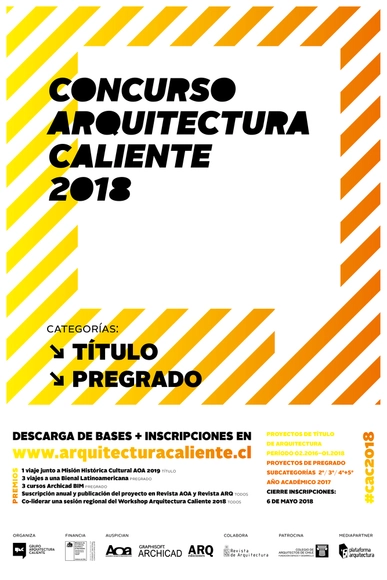
Grupo Arquitectura Caliente invites architecture students from all Chilean universities to participate in the new edition of the 2018 Arquitectura Caliente Competition (CAC).
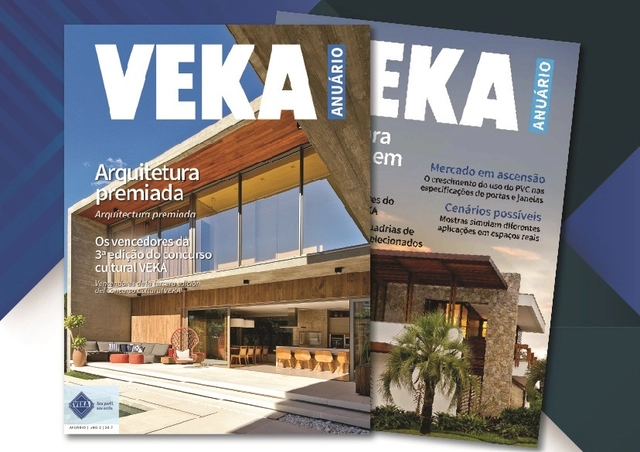
Registration is now open for the fourth edition of the VEKA Cultural Competition. This initiative by the German multinational PVC profile systems company introduces new features this year: projects will be evaluated in two categories (Horizontal Architecture and Vertical Architecture) and must have been executed in any Latin American country.

Arquitetura em Versos is now accepting entries for its second edition, a competition held in successive stages that unveils different rooms of the same house throughout the process. The exhibition aims to bring together various architects and designers under a shared vision: each participant develops a single room, yet all work from the same aesthetic and conceptual framework.

Saint-Gobain, a world leader in lightweight and sustainable construction, in partnership with the Brazilian Association of Architectural Offices (AsBEA), announces the launch of the 11th edition of the Saint-Gobain AsBEA Architecture Award. The initiative is co-organized by Cebrace, a leading glass and mirror brand in South America and a joint venture of the Saint-Gobain Group.
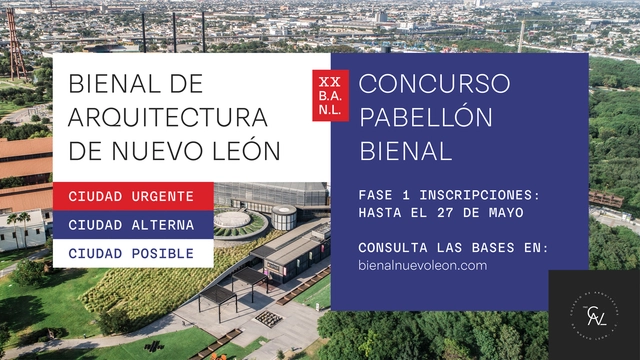
Colegio de Arquitectos de Nuevo León
.jpg?1554937896&format=webp&width=640&height=580)
The call for entries for the 2019 CEMEX Building Award, Mexico edition, closes on May 3. Projects completed in 2018 within the country are eligible. There will be 5 categories and 4 special awards. Winners will compete in the international edition.

Arquia Social is calling for proposals for the design of a toy to be gifted to hospitalized children, with the goal of making their hospital stay more bearable through play and fostering a more positive mood.
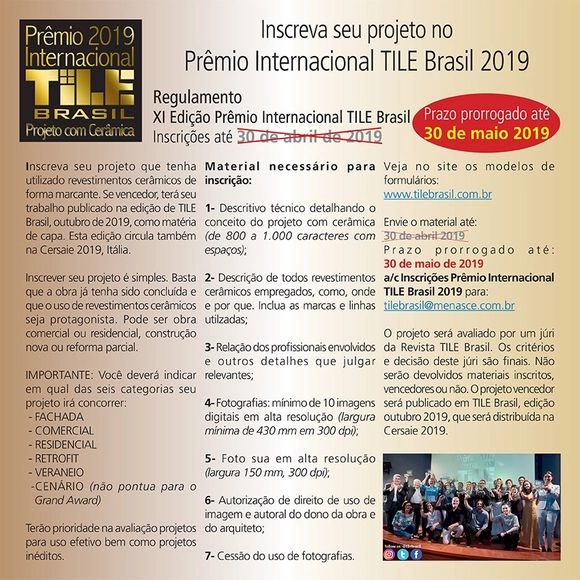
Submit your project that features ceramic tiles in a significant way. If selected as the winner, your work will be featured as the cover story in the October 2019 issue of TILE Brasil. This issue will also be distributed at Cersaie 2019 in Italy.

The competition "Evolution is part of history: Reinventing the stalls of the POA Book Fair," promoted by Minimum, is open to students and recent graduates in Architecture and Urbanism, Graphic Design, and Product Design.