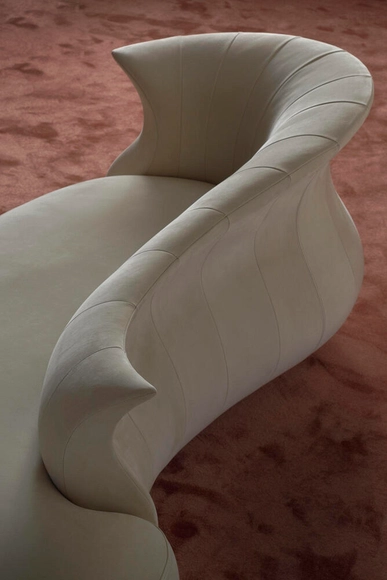
Set in open space, Desforma’s sinuous shifting designs are furniture as landscape. Image Courtesy of Desforma
The Desforma range is quite unique in the design world. It doesn't do reheated mid-century modern or strict straight lines or no-nonsense functionalism in powdered steel. Desforma does swooping, fluid lines and organic curves, sofas composed of sine waves that seem shaped by natural forces and summon up swaying sea life, chairs that might have blossomed into being.
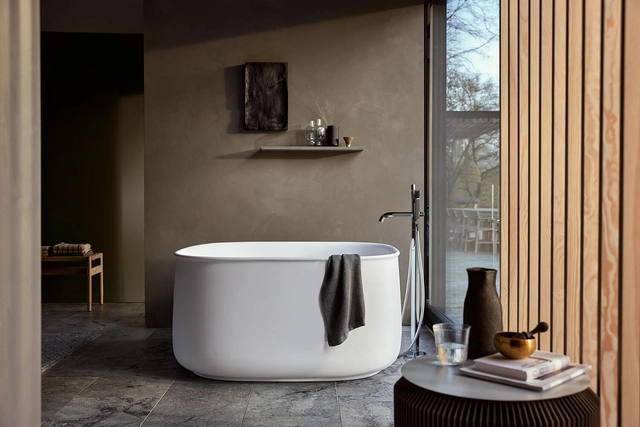
A bathroom in balance with Sebastian Herkner's Zencha series for Duravit, inspired by Japanese tea ceremonies. Image Courtesy of Duravit
With its curved, handcrafted shapes inspired by Japanese culture, the Zencha bathroom collection by Sebastian Herkner soothes its users in a meditative way.
Trends 23/24 at January's Heimtextil in Frankfurt will focus on material cycles and sustainability strategies for textiles – and use the analogue fair platform to promote exchange, present new products and bring experts together.
In early December, the global winners of the International VELUX Award 2022 were announced, a competition for architecture students that celebrates the innovative and creative use of daylight in a broad range of different projects.
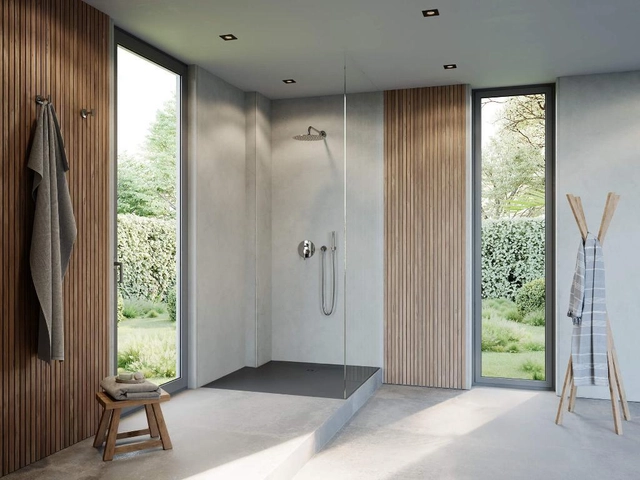
New perspectives: Duravit takes the topic of recyclability to the next level. With the Sustano shower tray, the bathroom specialist is presenting its first product made of the newly developed material DuraSolid Nature. Image Courtesy of Duravit
Innovative strength in industry is not only about developing new products, but also successfully establishing them on the market, because they make everyday life and the world a little bit better. As a full-range supplier of sanitary products, Duravit has a number of innovations in its range: the hygienic, easy-care ceramic surface HygieneGlaze, the efficient, water-saving HygieneFlush WC flushing technology or taps with the energy- and water-saving FreshStart or MinusFlow functions. Known for its acrylic bathtubs and shower trays, the Black Forest-based manufacturer continues to ask itself: How can we make it even better? Could a material be developed that has similarly positive properties to acrylic but can be completely recycled at the end of its life cycle? The answers can be found in its first product made of a new material called DuraSolid Nature: the Sustano shower tray range.
Designer and academic Brook Muller has authored a book called Blue Architecture: Water, Design, and Environmental Futures that presents innovative approaches to water-centric urban design. We asked him how a “hydro-logical” approach to architecture could allow us to design cities that improve water sustainability as well as promoting more equitable distribution of our most vital resource.
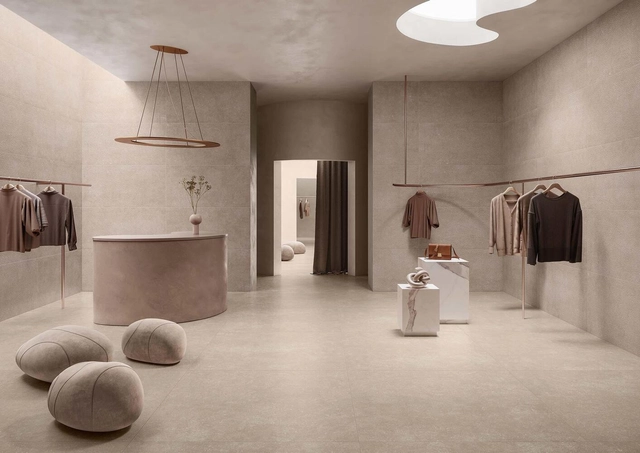
Casalgrande Padana’s Stile stone effect porcelain stoneware tiles bring the sophistication and charm of natural stone to interiors. Image Courtesy of Casalgrande Padana
Sustainability was a hot topic at this year’s Cersaie trade fair, the biggest international ceramic tile and surfacing event, held annually in Bologna, which exhibits the latest developments in ceramics industry trends. Dynamic discussions explored the environmental impact of the raw materials of ceramics, the thermal properties of ceramic tiles as insulators, the biophilic effect of ceramic tiles within urban interiors – and much more.
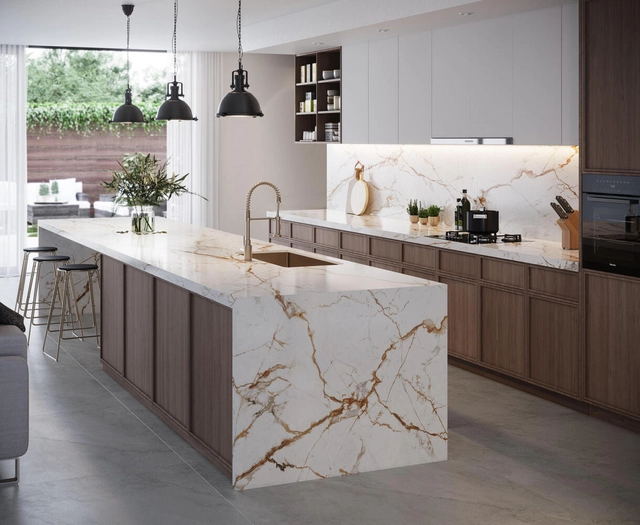
Dekton’s Onirika range brings the poetry of natural stone with its rhythmic veining to high-tech composite surfaces. Awake, seen here, recalls Poanazzo stone, with its oxide and grey markings. Image Courtesy of Cosentino
Opulence comes at a cost and it’s not just the sort that will leave your purse lighter. Exotic woods dent, gold tarnishes, marble stains and chips. But it doesn’t stop us hankering after the materials we perceive to be effortlessly elegant and replete with character. Okay, so we also like a bit of polish and precision in our building materials these days, alongside durability and ethical manufacture, ease of installation and maintenance alongside hygienic surfaces. But what’s often been missing from modern engineered materials is old-fashioned warmth and poetry. Is it too much to ask for both?
https://www.archdaily.com/991975/high-performance-yet-natural-cosentinos-new-surfacesEmma Moore
With the political, economic, social and ecological rollercoaster seemingly careering out of control, we are discovering what might be considered by some as the blooming obvious but by much of the business world who often like to box consumers, a hurdle: we humans are multifaceted and changeable. For Baiju Shah of Accenture Song, the creative arm of the consulting conglomerate, the term life-centric is replacing customer-centric, as people grapple to focus in on themselves, their health, happiness and survival, while panic planning for the future of the planet.
https://www.archdaily.com/991653/humanscale-a-new-path-for-workplace-designEmma Moore
Our quest today for the natural, the hand-crafted and the original in our built environments is righting some of the wrongs we’ve inflicted on our land and seas with the mass production of products made from synthetic materials. It’s also exposing a contemporary yearning for warmth, comfort and poetry in our surroundings, not seen perhaps since the seventies slump – the last economic happening that opened design doors to bamboo and rattan, and cosseting ‘fat’ furniture.
https://www.archdaily.com/991305/craftsmanship-in-lighting-design-handmade-luminaires-from-forestierEmma Moore
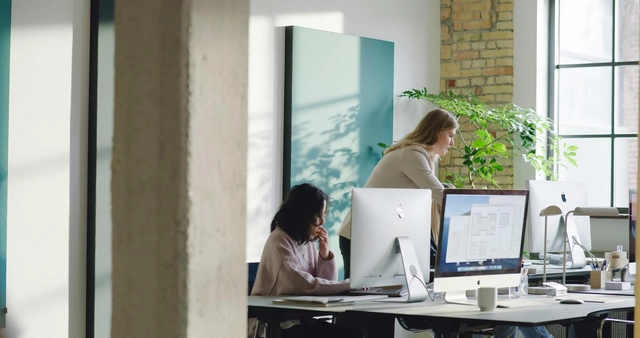
Rockfon Canva Wall Panels in various shades of green and blue create a harmonious atmosphere on the office walls – and the best acoustics. Image Courtesy of Rockfon
Even if you have never engaged with the ins and outs of a building’s acoustics, you will, no doubt, have had many a meeting or passing conversation eased by Rockfon’s sound-absorbing solutions. They may have invisibly clad a ceiling above you in tile form or seamlessly formed the white walls that surrounded you. Rockfon – a part of Rockwool Group – specialises in banishing acoustic bounce with sound absorbing products made from organic stone wool. The products have been part of the fabric of our public spaces – offices, schools, restaurants and libraries – for more than 60 years.
https://www.archdaily.com/991357/leading-the-way-by-sight-not-sound-the-changing-image-of-acoustic-designEmma Moore
As our collective conscience challenges the ethics of mass production and the manufacturers of high-end furniture make moves towards more mindful and individually specified making, a design-and-make mentality is becoming ever more present in the industry. It’s new but old. It’s workshops coming to the fore and it’s happening when design entrepreneurs are committed to the very 2022 preoccupations of waste-free production, individualisation and durability.
https://www.archdaily.com/990465/trella-and-the-rise-of-the-designer-makerEmma Moore
Don't be fooled. Size really does matter. Particularly when it comes to new urban housing developments, where the challenge of squaring housing density with quality of life and sustainability remains key.
Hospitality is an industry made of people being hospitable to people, and our interaction with places is its foundation. If the zeitgeist of our era lies in the perpetual dance of shock and awareness of how we treat each other and the planet we live on, what considerations should we pose to inform and shape what’s next for hotels? If there’s ever been a moment to think about the future of hospitality, this is it.
The new D2 shelving system, designed by Munich-based Diez Office for Wagner Living, can be used not only in living and office spaces, but also for the presentation of exhibition exhibits. Image Courtesy of Wagner
Anyone who has been writing about design for 25 years has seen many trends come and go. In retrospect, I even have to smile when I think about some of the theories – such as the one that things would ‘disappear’. That was actually predicted a good two decades ago with the advance of digitalisation.
Today, we know that analog hasn’t disappeared – and that we still want to live with things that can be kept and touched. The return of the vinyl record, for example, was unthinkable for many – and yet record players are enjoying great popularity again. Especially because we now have access to millions of songs via our smartphones, there's something special to the ceremony of putting on a record.
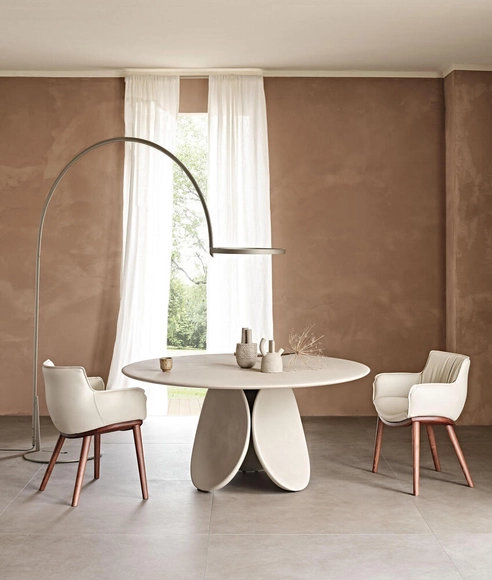
The Maxim Argile table brings the shapes and materials of nature inside. It is hand-finished with Argile, a textured clay-based material, offered in three natural shades, Oslo, Cairo or Havana. Image Courtesy of Cattelan Italia
Even before the ‘C’ word came to dominate our lives, homes were starting to be viewed as sanctuaries, and our furniture required to work ever harder in form and function to coset us. Straight lines have been warping and chairs starting to envelop, while the soothing textures and patterns of nature are in high demand.
https://www.archdaily.com/988574/uncomplicated-and-fluid-designing-wellbeing-with-cattelan-italiaEmma Moore
The new NOA outdoor living centre in Belgium offers boundless inspiration for the realisation of creative outdoor concepts, thanks to the collaboration of 24 high-end outdoor-living brands. Watch the video to find out more.
The story of the memorable curtain brightening up the DAAily bar at Swiss Corner during Milan Design Week is about more than just its colourful, natural patterns. As the Swiss-born artist Douglas Mandry, creator of the work in collaboration with Bally and Christian Fischbacher, explained during his Live Talk alongside the installation at the DAAily bar, "My work is driven by the global change we’re facing, addressing issues of climate change and environmental consciousness through visible elements."