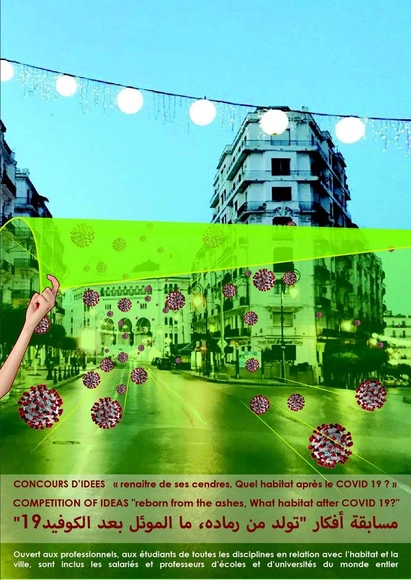
After the crisis that has just gone through the world, several questions will have to be asked of decision-makers, in particular the conditions of confinement in very narrow dwellings and devoid of living spaces or confinements elsewhere.
After the crisis that has just gone through the world, several questions will have to be asked of decision-makers, in particular the conditions of confinement in very narrow dwellings and devoid of living spaces or confinements elsewhere.

Time moves slowly in architecture. While the technological, financial, transport, and commercial industries of the world evolve at an unprecedented, exponential rate, the evolution of cities themselves is not keeping pace. While everyday commodities, from phones to cars to banking systems, change before our eyes, we continue to live and work in buildings designed for a past era, and depend on urban infrastructures long past their capacities.

The Arc. Eddy Eguavoen Foundation is a nonprofit organization that aims to build sustainable housing for communities in need across Nigeria. The foundation was officially announced on January 11th 2020, one year after the passing of Arc. Eddy Eguavoen, an accomplished Nigerian Architect.
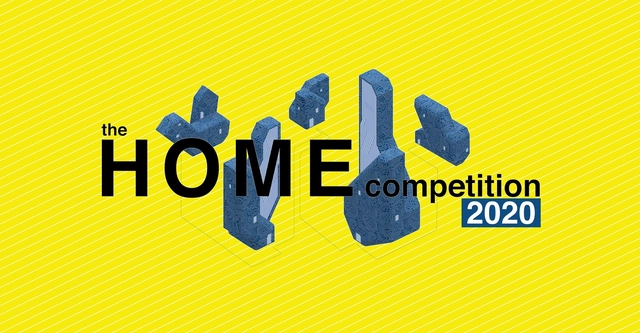
How do we define “home”? Although our ideas about home are constantly being rethought, the careful examination of “home” has recently come to our attention for architects and nonarchitects alike. Almost everyone has had to confront their perspective of “home” as they have adapted workplaces, social gatherings, fitness routines, and everyday life. We now not only internalize a home, but look at how our homes digitally connect to the rest of the world.
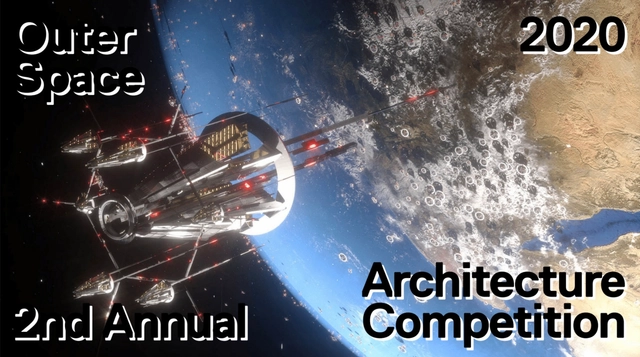
We are on the cusp of the second great age of space exploration.
Outer space has always captured the imaginations of the public. New advances in technology (including comet landings, the Orion Spacecraft, and large scale social experiments leading to exploration of Mars) mean that outer space is no longer a place only astronauts will get to experience – but something you and I can experience within our lifetimes
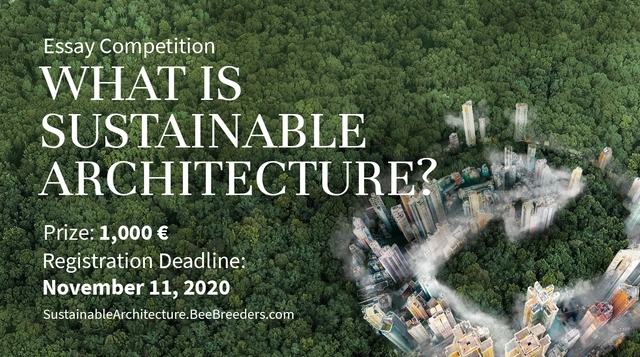
There are many ways of designing environmentally-responsible and resource-efficient structures and cities, with amazing innovations and advances introduced every day. These include everything from smart homes and photovoltaic glass to centrally organized power networks, modular building, and even self-healing bio-concrete.

The Earth is in a chaotic and confusing state right now, with the future of our society not entirely clear. But in a world of COVID-19 and climate change, now is the time to reflect on the positive aspects of humanity and its many great achievements.
FutureNow is a competition created with the future in mind, future that is already here! The current situation related to forced social isolation has changed our professional life, we are convinced that it will also change the way of thinking about designing functional spaces. Show us what you think the space we experience every day, perfectly reflecting the mobility between work and private life, should look like.

As an important birthplace and practical realization of the concept of "Lucid waters and lush mountains are invaluable assets", Lishui has assumed the responsibility of exploring the construction of contemporary ShanShui cities. With this background in mind, we hope to build upon Lishui’s status as a “traditional Chinese ShanShui city” to organically combine the spirit of Chinese ShanShui together with contemporary waterfront urban development concepts. The goal is to methodically construct a Shanshui city spatial framework in order to set a model image for this city typology, to create a new ShanShui city lifestyle, and to explore contemporary, sustainable urban planning strategies.
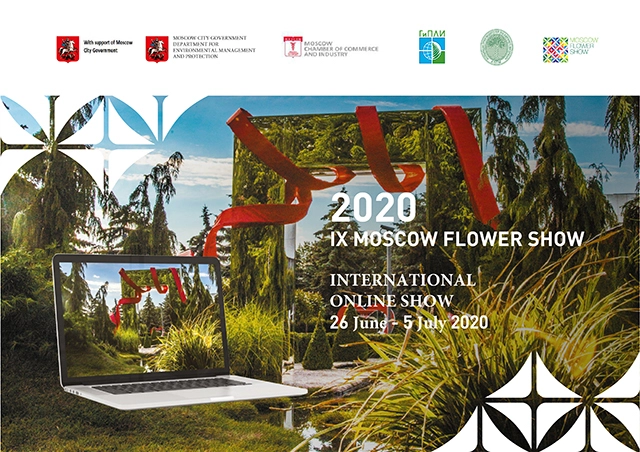
The 9th International Moscow Flower Show announces the first virtual international competition for the Best Garden Design that will be held on MFS ONLINE platform.
The participation is open for the students, designers, engineers and other specialists in the field of landscape architecture and garden design.

Reimagining Museums for Climate Action asks designers, architects, academics, artists, poets, philosophers, museum professionals and the public at large to radically (re)imagine and (re)design the museum as an institution, to help bring about more equitable and sustainable futures in the climate change era. The competition aims to explore how museums can help society transform to a low carbon future, adapt to the impacts of climate change, and safeguard ecosystems.

'Haiku' Writing Competition Series 2.0 is the sixth initiative of the Architectural Journalism & Criticism Organization, India founded by architect Pappal Suneja to spread awareness about this subject and sow the seeds of inspiration to explore and write about Architecture and allied fields. As per the curator, Journalism & Critical Appreciation in Architecture should reciprocate to the trending techniques. Our prenominal existence in the moment of time is not merely enough to amount for the utterance of spoken or written of the present. The architectural writings serve as reflections at a future day and it needs to be taken ahead at the forefront.
Previously, a competition submission by Bee Breeders was posted in this section. It has been removed as it doesn't align with our views of the issue.
_English.jpg?1592425114&format=webp&width=640&height=580)
Humankind has witnessed several historic, life-changing episodes such as industrialisation, colonisation and wars, and society has always adapted to such significant milestones fruitfully. Over the years architecture too, has been a witness the very same happenings, and has shaped itself accordingly to suit the times.
A free, open-to-all, collective drawing challenge that aims to create a giant tessellated isometric drawing from creatives around the world!

Melbourne is the capital city of Victoria, Australia, and holds the title of the country’s fastest-growing city. Melbourne had a growth rate of 2.7% from 2016 to 2017, seeing an increase of 125,000 citizens. Experts predict that in order to keep up with the growing population, Melbourne will need 1.6 million new homes to be constructed over the next 35 years, with estimates putting the population over five million by 2021, and over eight million by 2050.

The AIA DC - Urban Design Committee (https://www.aiadc.com/committee/urban-design-committee) has a fun stay at home challenge for everyone. In this challenge, let us look at what is happening outside through the lens of a camera (cell phones make for great cameras). So, open your windows and share your images!
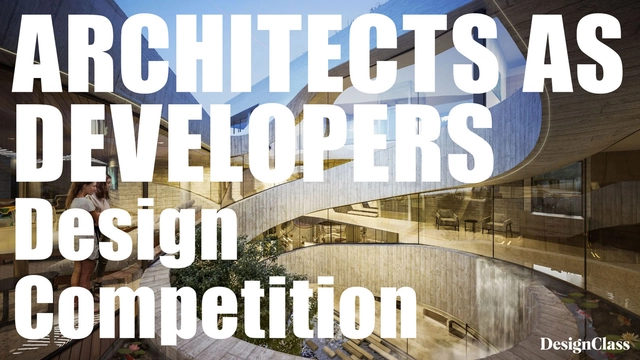
Being a successful architect is very hard. While this is no secret to anyone who has lead a team or studied the profession; the less obvious thing is what to do about it.
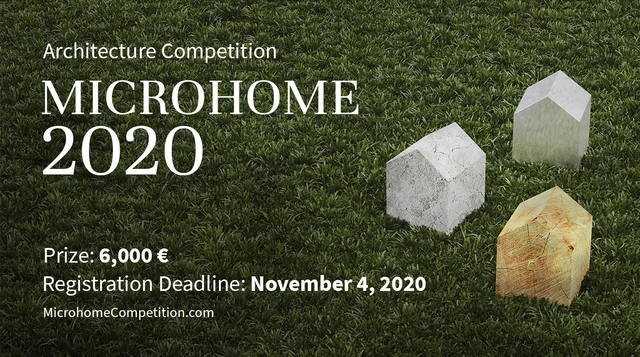
The second annual MICROHOME architecture competition is part of the Bee Breeders Small Scale Architecture Appreciation Movement, which hopes to highlight the fact that bigger isn’t always better. With great design and innovative thinking, small-scale architecture could change how this and the next generation view residential property.

With The Next 100 Years Project – Architect Edition, we invite architects to speculate on the built environment after the pandemic.
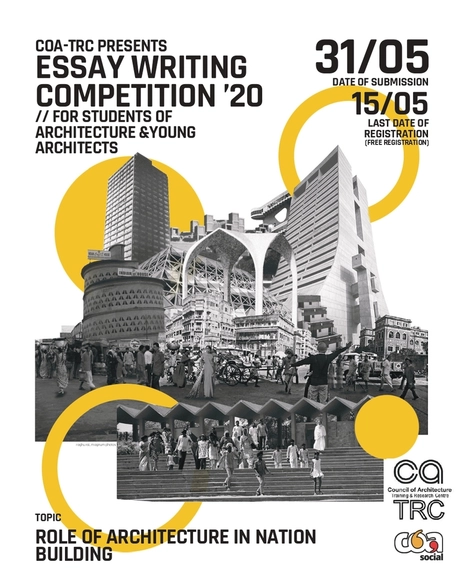
Essay writing competition ’20 for students of architecture & young architects on the role of architecture in nation-building.
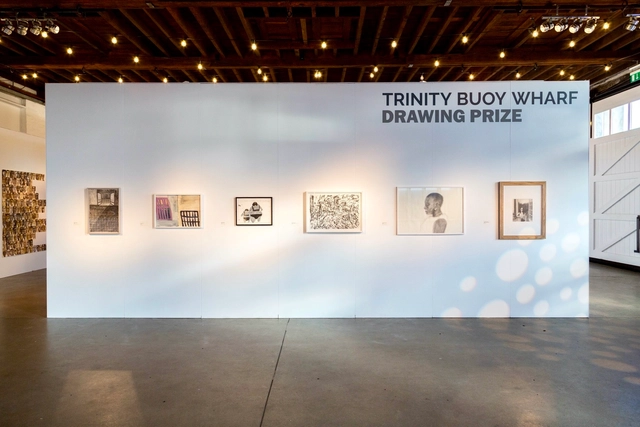
The Trinity Buoy Wharf Drawing Prize is now launching a milestone edition.
2020 will be the 3rd year of support for the Trinity Buoy Wharf Drawing Prize by the Trinity Buoy Wharf Trust and the 25th consecutive annual exhibition since 1994.

The COVID-19 pandemic has presented the world with unprecedented challenges and is impacting our daily lives by restricting our personal movements radically. It almost goes without saying that this month has continued to see extraordinary, rapid and previously unthinkable
changes to public and private spaces. As the virus continues to spread, countries around the globe have ordered citizens to retreat to their homes – and stay there. Social distancing measures drastically scaled down our personal range of movement to our ‘own four walls’.
Our world is changing fast, while ambitions and challenges match in importance. In this context, design can play a huge role. How do we imagine the world to be? What range of possibilities we haven’t discovered yet? What’s a Non-Architecture for a World in crisis? In 2020 we started the second phase of competitions to address the issues of tomorrow.