Laws, norms, standards, rules, regulations, orders, ordinances, protocols, codes. Like any endeavor that unfolds in the public sphere, architecture must submit to laws that exist outside of it, while simultaneously maintaining its cohesion through adherence to laws internal to its own field. However, architecture appears to be more than the mere application of these internal laws or simple submission to external ones.
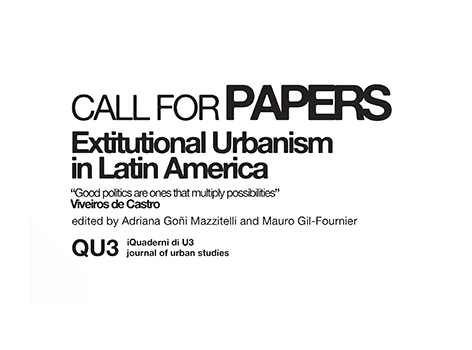
This issue of QU3 aims to explore research, projects, and actions in Latin America that observe and engage with the city through contemporary networks and the challenges that define them. The organizers observe these phenomena and engage in practices within a complex and open urbanism, which is the result of a constant interaction between agents and agencies, as well as processes of innovation in the distribution of urban decision-making. In these times of significant political upheaval and institutional crises across the continent, the goal is to identify, value, and safeguard urban practices, collectives, and projects that can chart new paths.
Following the success of the 2017 Antalis Interior Design Award, which featured over 500 entries from 29 countries, Antalis is pleased to announce a new edition of the competition.
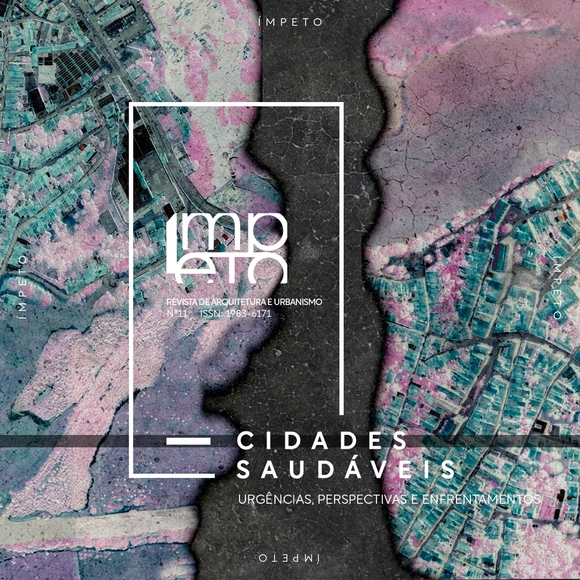
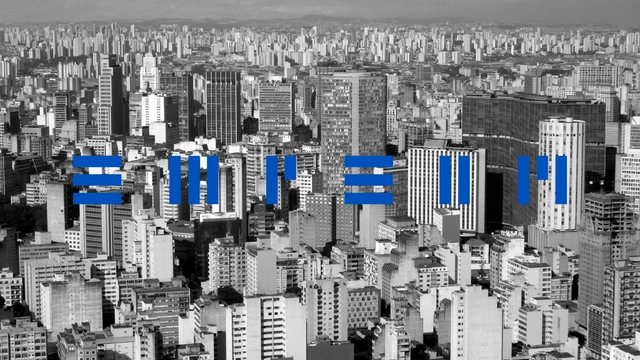
Revista Ímpeto announces the opening of article submissions and the cover design competition for the 11th edition of the journal, themed: HEALTHY CITIES: Urgencies, Perspectives, and Confrontations.
Call for Articles and Cover Design Competition for Revista Ímpeto No. 11. Revista Ímpeto is an annual publication organized by the Tutorial Education Program (PET) of the Faculty of Architecture and Urbanism at the Federal University of Alagoas. It features informative and reflective texts related to architecture and the city. In 2021, the eleventh edition of Ímpeto is structured around a thematic track, which aims to contribute to the debate on the theme: "Healthy Cities: urgencies, perspectives, and confrontations," and an Open Track, a space dedicated to diverse publications in architecture, urbanism, and related fields.
Contracting Entity: United Nations Office for Project Services - UNOPS Method: National Public Tender - RFP No. 17880/2020 Funding Source: International Technical Cooperation Project BRA/14/2020
Objective: Contracting a specialized and qualified firm to conduct geotechnical studies, planimetric and cadastral surveys, and to develop reference executive architectural and engineering designs for a male socio-educational detention facility in the municipality of Duque de Caxias, Rio de Janeiro, Brazil.
Traditional Architecture on the Island of La Palma
The call for papers for all sections of the second issue of the Journal of Traditional Building, Architecture and Urbanism is now open until March 15, 2021.
The Triennale is seeking proposals for self-funded projects that engage with the core programming of its 6th edition, to be held in 2022. These projects should showcase the independent and diverse production essential to the city's vibrant cultural mechanisms and demonstrate an interest in the lively debate surrounding architecture.
Participate and secure a fee waiver for the 2022 selection process.
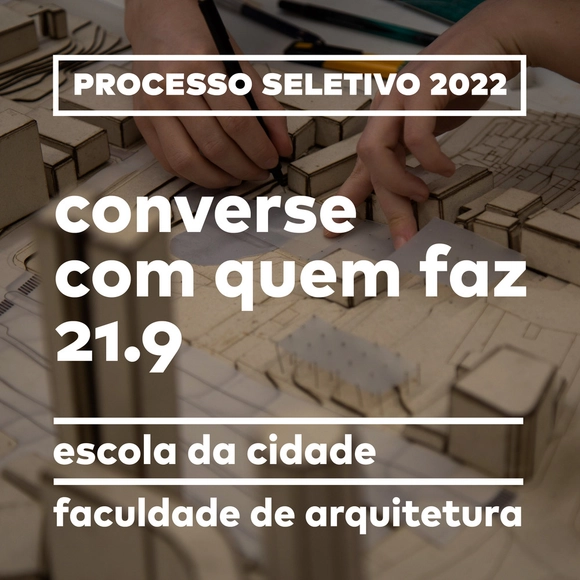
On September 21 at 6:00 PM, Escola da Cidade is hosting a conversation between alumni, current members of the school (students, faculty, or coordinators), and prospective students interested in our undergraduate program in Architecture and Urbanism. This free, online event will explore various perspectives on education and career paths in the field. Participants will receive a full application fee waiver for the 2022 admissions process.
After seven years, revista empena resumes its reflections on the city and those who inhabit it. We present ourselves, once again, as a student journal entirely organized, curated, and edited by students from Escola da Cidade.
The call for academic papers for the upcoming issue, rita_17, is now open at rita_ magazine. The call invites submissions in Spanish or Portuguese from faculty, graduate students, or professionals holding a master's or doctoral degree.
Applications for the Escola da Cidade lato sensu postgraduate program are open until August 13, 2021. Established over 10 years ago, the program consists of seven courses and is structured around two central pillars: practice and design, both understood as research and strategies for engaging with space across its multiple scales. The program’s overarching theme, "Civilization America: A Look Through Architecture," seeks to understand and address the historical, geographical, territorial, and social conditions that define us. With this perspective, the postgraduate courses at Escola da Cidade aim to connect professionals working in architecture, urbanism, and related fields with research and critical reflection applied to design and teaching.
“Our lives unfold through an exchange of nutrients with plants, even if we only remember them when it is time to water them. In one way or another, they are there, allowing us to continue existing here on this planet. However, forty years after the television broadcast of the series Cosmos, it seems we still do not understand plants as a fundamental part of our lives. We continue to view them as a mere source of energy or a raw material to be exploited (capable of defining vast economic sectors); we instrumentalize them when asked to explain the origins of architecture, or we even use their color to tint our projects and ventures with labels like “green,” “ecological,” or “sustainable”; yet it is not common for us to think about them—and with them—when designing. Perhaps to begin settling that debt, in this issue of ARQ magazine, we are seeking essays, projects, and research that challenge the secondary role we have assigned to vegetation, or that demonstrate new ways of including vegetation in architecture, with the minimum condition of moving beyond the paradigm of the primitive hut, as we believe it is time to take a step beyond their mere allegorical instrumentalization.”
The ability to develop new advanced solutions in architecture, construction, urbanism, and design will be fundamental to responding to the challenges posed by the current crisis. A commitment to innovation and the education of professionals and students toward new models represents a key element in driving radical change, providing tools for the professionals of tomorrow.
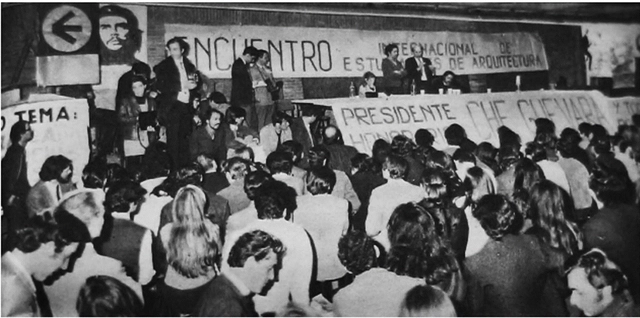
1969 International Architecture Students Meeting in: H. García, "La guerrilla de los arquitectos" [The Architects' Guerrilla], Así, no. 205 (1969), Buenos Aires, Argentina.
Rebel. (From Lat. rebellis). adj. 1. One who rebels (i.e., rises up). Also used as a noun. 2. One who rebels (i.e., opposes resistance). RAE Dictionary. Tricentennial Edition.
Collage of digitally manipulated images. Full image credits for the collage are available on the congress website.
The UIA 2026 Barcelona World Congress of Architects (UIA2026BCN) is launching the International Emerging Workshop, a special congress format designed for students and young professionals to participate in a laboratory led by twelve renowned emerging architecture firms.
Videos
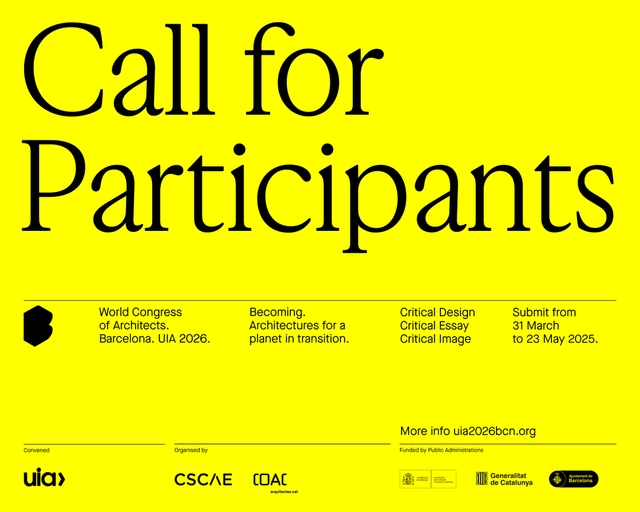
Call for Participants: UIA World Congress of Architects 2026 Barcelona
The UIA 2026 Barcelona World Congress of Architects (UIA2026BCN) announces the Call for Participants, an international, open invitation for professionals worldwide to take part in the world's largest architecture event.
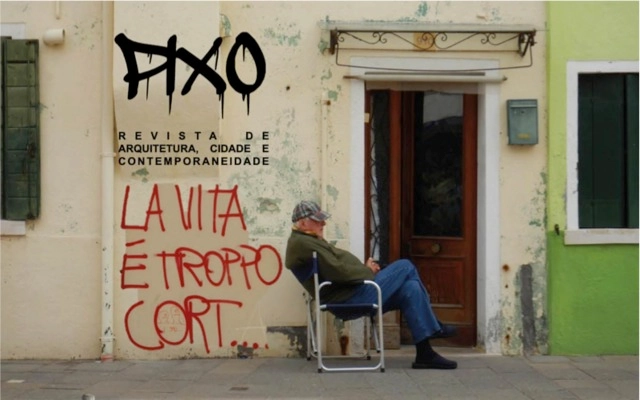
In conjunction with the 2019 IAPS Symposium, "Aging in Place in a World of Inequalities: How to Design Healthy Cities for All"—held from November 27 to 30, 2019, in Pelotas, Brazil—the thirteenth edition of PIXO (a journal of architecture, city, and contemporaneity) is now accepting submissions under the theme AGING IN PLACE. The symposium was promoted by the IAPS Environment and Gerontology Network, with support from the PlaceAge Project, the UFPel Behavioral Studies Laboratory, and the Graduate Program in Architecture and Urbanism at UFPel.
Revista MAPA is an annual publication edited by the Latin American Coordinator of Architecture Students (CLEA). The magazine serves as a platform for promoting and disseminating criticism and socio-spatial analysis of the diverse realities across Latin America, featuring contributions from students and professionals.
Submissions are now open for issue 10 of Projectare: Revista de Arquitetura e Urbanismo. Following the migration to the UFPel Journal Portal (https://periodicos.ufpel.edu.br/ojs2/), this will be the first issue of the magazine edited and published via the Open Journal Systems platform.
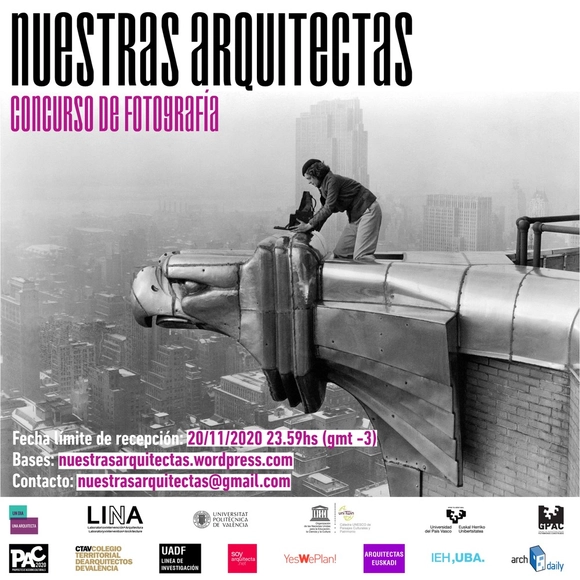
Through this photography competition, Nuestras Arquitectas aims to focus and refocus on images that have been hidden or overshadowed, restoring the recognition and prominence that architects deserve.