Romullo Baratto is an architect with a PhD from FAUUSP and Managing Editor of ArchDaily. He previously coordinated the editorial team of the 11th São Paulo Architecture Biennial and served as Managing Editor of ArchDaily Brasil, where he led the platform to win the FNA Award—the first time the honor was granted to a media outlet. He collaborated on the editing of the book "Concrete Jungle", published by gestalten, and has curated architecture exhibitions in Brazil, Chile, Denmark, and Italy, as well as delivered lectures and moderated debates in Spain, the United States, and Portugal. His doctoral thesis investigates the urban landscapes of São Paulo through cinema. His work spans academic research and editorial practice, communicating architecture through texts, interviews, lectures, curatorship, and photography. Follow him on Instagram @romullobf.
The Education and Training Commission (CEF) of CAU/RJ is conducting the survey Impacts of Remote Learning on the Training of Architects and Urban Planners. The goal is to analyze the impact of the COVID-19 pandemic on undergraduate education and professional training during the pandemic and its future ramifications, considering the implementation of remote classes and restrictions on curricular and extracurricular activities in architecture and urban planning schools across the state of Rio de Janeiro.
The incredible architectural drawings of Marion Mahony, the first registered female architect in Illinois (United States), were featured in many of Frank Lloyd Wright's projects—though he never credited her for them. Sophia Hayden, the first woman to graduate with an architecture degree from MIT, won the competition to design the Woman's Building, earning at least three times less than her male colleagues. Mayumi Watanabe was part of the first group of professors at UnB. Carmen Portinho, who was instrumental in introducing the concept of social housing to Brazil, fought for women's suffrage. Ruth Glass coined the term "gentrification." Rosa Kliass has more than 300 built projects. Zaha Hadid was the first woman to receive the Pritzker Prize (2004) and the RIBA Royal Gold Medal (2016).
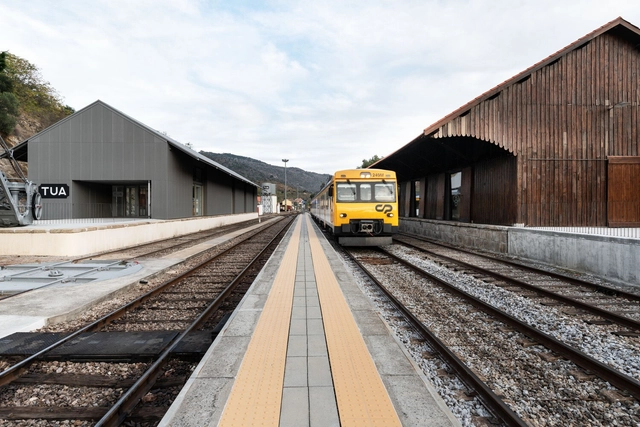
With the goal of getting to know the architects, projects, and stories behind landmark Portuguese architecture, Sara Nunes, from the architectural film production company Building Pictures, launched the podcastNo País dos Arquitectos, where she speaks with leading names in contemporary Portuguese architecture.
In this week's episode, Sara speaks with architects Susana Rosmaninho and Pedro Azevedo, from the studio Rosmaninho + Azevedo, about their project for the Tua Valley Interpretive Center, located in Carrazeda de Ansiães. Catch up on other interviews from the podcast No País dos Arquitectos and read the transcript of the interview below.
The 4th Tomie Ohtake Institute Leroy Merlin Design Award, dedicated to university students and recent graduates, has announced the three winning projects of this edition. The goal of this fourth cycle, themed around the verb acolher (to welcome/to shelter), is to highlight proposals that explore the relationship between design and other fields, such as communication, architecture, biology, engineering, fashion, technology, economics, physics, education, mathematics, and chemistry. The winners will receive scholarships for design courses abroad.
Vencedor | 167987. Image Cortesia de Prêmio {CURA}
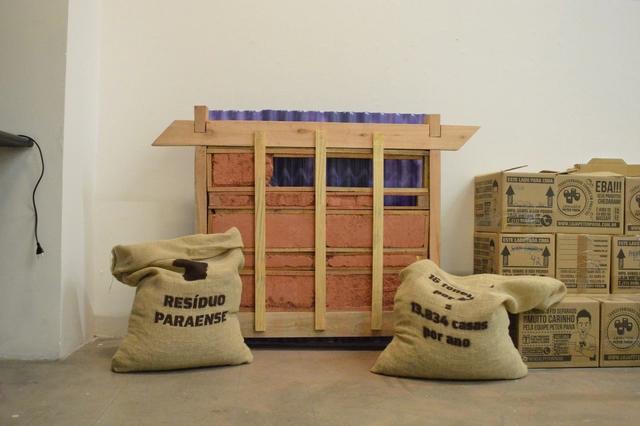
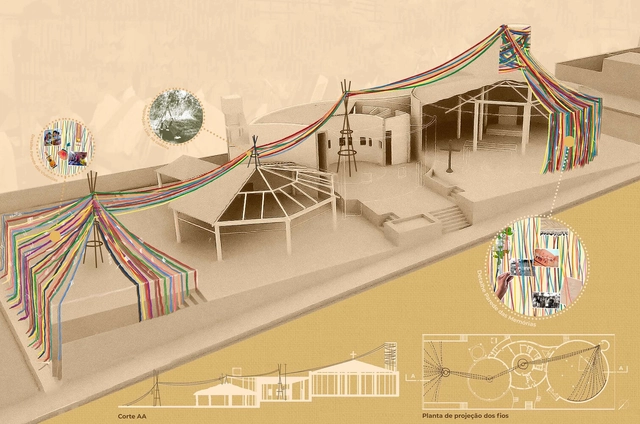
The 6th {CURA} Award has announced the results of its competition for students and young architects. In this edition, participants were invited to propose temporary interventions in works by Lina Bo Bardi. The proposal could be sited in any city in Brazil, provided it was an intervention in a work by the architect.
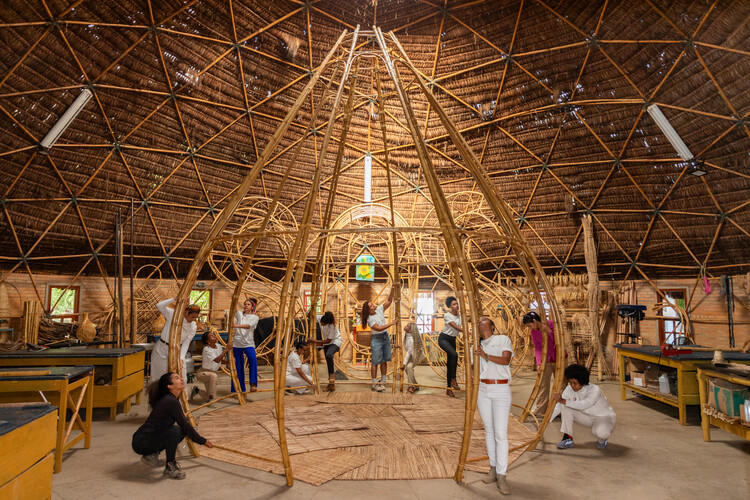
A bamboo structure rises as a space of convergence between technique, ancestry, and collective practice. OCO is the first work by Cambará Instituto, an organization that grew out of the Arquitetas Negras Project. Conceived during an artistic residency at Cerbambu, in Ravena (Minas Gerais), with support from re:arc institute, the project brought together ten black women architects who, over seven days of immersion in July this year, worked alongside master builder Lúcio Ventania to explore the constructive and symbolic potential of bamboo. The process culminated in the presentation of the work at the 14th International Architecture Biennial of São Paulo.
The experience sought to reconnect architectural practice with knowledges rooted in the body and the earth. The process encompassed every stage of production—from selecting and cutting the bamboo to curing and assembling it—resulting in a structure six meters high and five meters in diameter. Its design draws inspiration from the xossas of Benin and features straw from the African country at its top. The installation was also “clothed” with 220,000 beads, known as Our Lady’s Tears, handcrafted by forty elderly women in situations of social vulnerability who live in the same region where the residency took place—strengthening both community and economic bonds.
Based on themes suggested by the exhibition "Infinito Vão – 90 Anos de Arquitetura Brasileira" (Infinite Span – 90 Years of Brazilian Architecture), the "Architecture in Dialogue: Portugal and Brazil" seminar invites 13 architects from both countries to debate the distinctive features of new architectural production in both nations, and the extent to which they converge or diverge, on February 23rd, from 10:00 AM to 6:00 PM.
Using approaches such as program, technique, infrastructure, and cultural heritage as a starting point, the seminar will assess the current state of architecture in these two sister countries, separated by the Atlantic and by their own unique cultural dynamics.
The Arquitetas Negras project emerged from the need to provide visibility to the work of Black Brazilian architects. By mapping the production of these professionals, the project is building a platform for both research and the hiring of architectural services across Brazil.
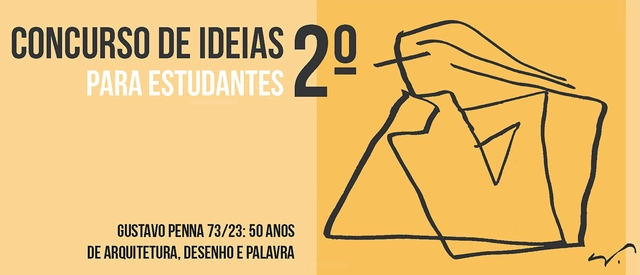
Registration is now open for the 2nd Student Ideas Competition of the Gustavo Penna 73/23 Project. In its second edition, the competition seeks to recognize the best architectural and urban design concept aimed at requalifying and redefining Praça da República and its surroundings in the heart of São Paulo, addressing local demands for the appropriation of public space, the harmonious integration of various public transport modes, and improved quality of life.
In Brazil, little is known about the reality of Paraguay, a country with a rich culture, beautiful landscapes, and a population of approximately 6.5 million people who speak its two official languages: Spanish and Guarani.
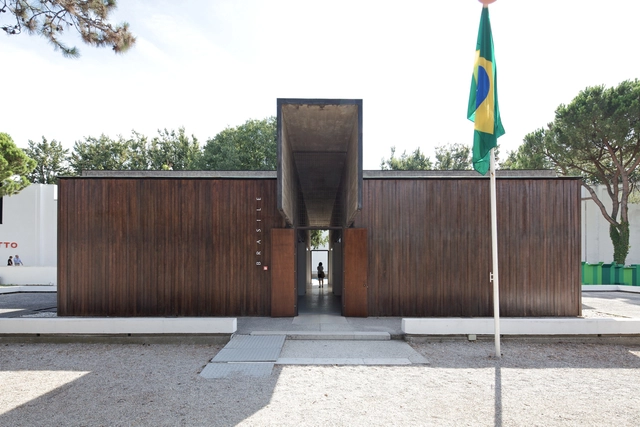
"The history of architecture is incomplete. Not wrong, but incomplete," said Lesley Lokko when announcing The Laboratory of the Future, the theme of the 2023 Venice Architecture Biennale. Echoing the curator's statement, a new study published by Studio Autonoma, led by Paulo Tavares, reveals deep disparities in representation within the Brazilian pavilion at the world's largest architecture event.
Titled Historical Census of the Brazilian Pavilion at the Venice Architecture Biennale (1980-2021), the study reveals a significant discrepancy in the profile of curators and participants over these three decades, with a predominance of white men from Brazil's Southeast region, particularly from São Paulo.
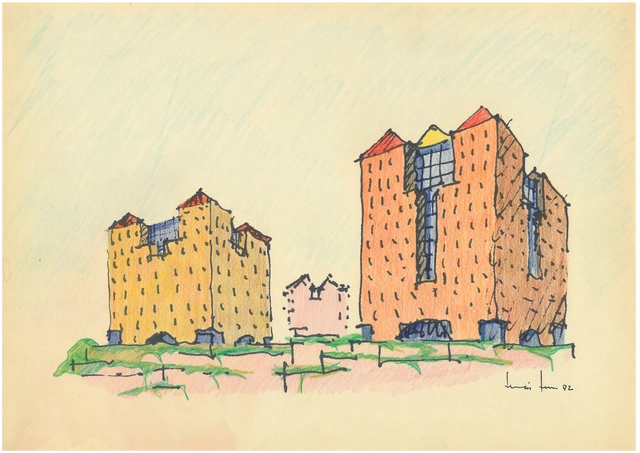
Amoreiras Complex (1980-1986), Tomas Taveira. Collection of Casa da Arquitectura
What has architecture done for democracy in Portugal—and what has the democratic era done for Portuguese architecture? These are the questions guiding the exhibition O que faz falta. 50 anos de arquitetura portuguesa em democracia [What is Needed: 50 Years of Portuguese Architecture in Democracy], organized by Casa da Arquitectura, which celebrates the fifty years since the 1974 Carnation Revolution.
Curated by Jorge Figueira with co-curator Ana Neiva, the exhibition highlights the intimate relationship between architecture and the democratic regime in Portugal, exploring how Portuguese architects contributed to democratic consolidation by transforming the country's public and private spaces over five decades.
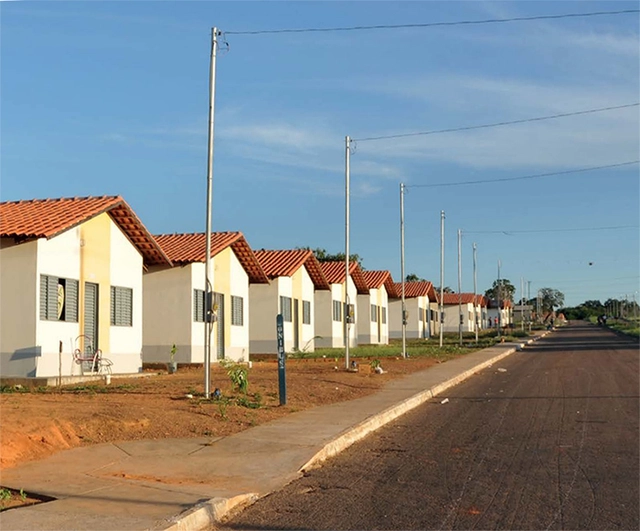
Social housing in Acre. Via: Agência de Notícias do Acre, Flickr. License CC BY 2.0. - photo by Sérgio Vale
The National Secretariat of Housing of the Ministry of Regional Development and the Council for Architecture and Urbanism of Brazil (CAU/BR) agreed, during a meeting this week in Brasília, to create methods that will allow architects and urban planners to participate directly in real estate financing throughout the country. However, the agreement has not yet been finalized, and the procedures will be developed jointly with financial institutions.
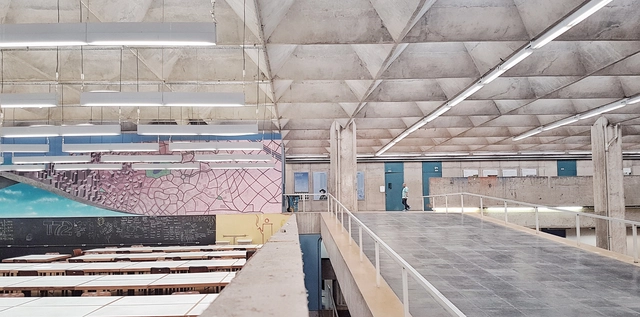
The School of Architecture and Urbanism at the University of São Paulo (FAU USP), one of the most prestigious architecture schools in Latin America, recently launched its YouTube channel—an initiative that continues efforts to highlight its community's work and democratize knowledge. Featuring student projects, lectures, documentaries, and expert perspectives on a wide range of topics, the channel offers diverse and relevant content.
On Sundays and holidays, vehicle traffic on Paulista Avenue is blocked, turning it into a leisure space. Photo by Sergio Souza, via Unsplash
Most architecture schools in Brazil also focus on the study of the city. This is only logical, considering that architecture and urbanism can be seen as the same discipline viewed from different scales. However, career opportunities at the urban scale may not always be clear. Consequently, Anthony Ling shared an article on ten ways to work in urbanism.
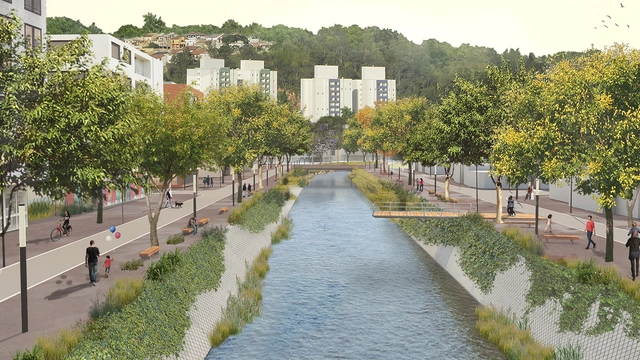
The City of Jundiaí, in partnership with IABsp, organized an ideas competition for the Jundiaí River Valley with the goal of promoting a new design proposal for the site, considering both the regional context within the urban agglomeration and its relationship with the life of its immediate surroundings.
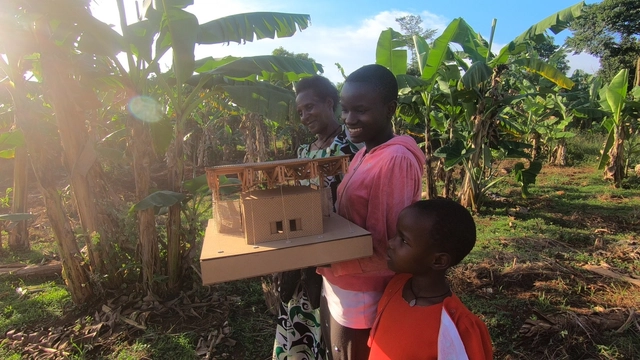
The **A Casa de Jajja **project explores the relationship between affection and architecture as an emancipatory practice. It grew out of research developed as Mariana Montag’s graduation thesis at the School of Architecture and Urbanism of Mackenzie Presbyterian University. This connection of affection emerged through her involvement in the School Project in Kikajjo, a rural village in Uganda, East Africa. There, Mariana met Jajja Imaculate, a strong and faithful 75-year-old woman, grandmother to Rose and Gift. Together, they designed and discussed what a house would look like—a home whose architecture not only shelters Jajja but also serves as an emancipatory practice challenging gender roles, with the construction process conducted through capacity-building workshops for women.
WRI Brasil has launched a free online publication detailing the benefits, costs, and barriers of adopting sustainability measures in social housing developments. Jointly produced by Lara Caccia, Henrique Evers, Luana Betti, and Camila Schlatter, the study examines simple, low-cost actions and technologies aimed at reducing water and electricity consumption in buildings.