Romullo Baratto is an architect with a PhD from FAUUSP and Managing Editor of ArchDaily. He previously coordinated the editorial team of the 11th São Paulo Architecture Biennial and served as Managing Editor of ArchDaily Brasil, where he led the platform to win the FNA Award—the first time the honor was granted to a media outlet. He collaborated on the editing of the book "Concrete Jungle", published by gestalten, and has curated architecture exhibitions in Brazil, Chile, Denmark, and Italy, as well as delivered lectures and moderated debates in Spain, the United States, and Portugal. His doctoral thesis investigates the urban landscapes of São Paulo through cinema. His work spans academic research and editorial practice, communicating architecture through texts, interviews, lectures, curatorship, and photography. Follow him on Instagram @romullobf.
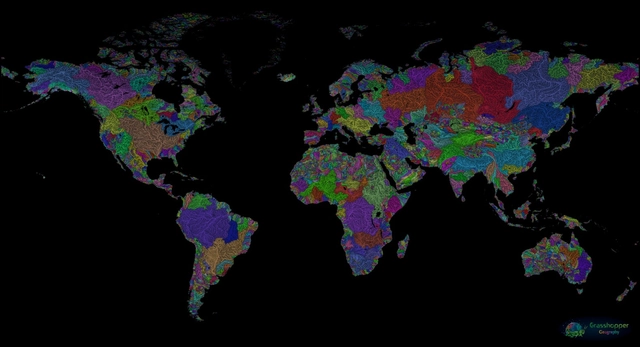
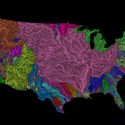
GIS analyst and Hungarian cartographer Robert Szucs has shared an impressive collection of maps that bring together all the drainage basins of the world in vibrant colors. Titled GrasshopperGeography, the maps showcase the rivers and watercourses of the world, featuring the basins of selected regions, countries and continents.
Entrance to the Memory Space. Courtesy of Gustavo Penna Arquiteto & Associados
Nearly two years after the collapse of the Córrego do Feijão mine dam in Brumadinho, Minas Gerais, the city's residents will receive a monument to honor the victims. The Brumadinho Memorial was designed by the firm GPA&A, founded by architect Gustavo Penna, and will serve to remind all Brazilians of one of the worst environmental tragedies in the country's history.
Partner and founder of the firm Metro Arquitetos Associados, Martin Corullon is the ninth guest of Studio Casa, an interview series produced by Casa da Arquitectura - Portuguese Center for Architecture. Since 1994, Corullon has frequently collaborated with architect Paulo Mendes da Rocha, with whom he has completed several projects on a wide range of scales.
Between 2008 and 2009, he worked at Foster+Partners in London. He has been a professor at Escola da Cidade since 2014 and was elected a member of CAU/SP for the 2018–2020 term. The interview is conducted by architect and curator Francesco Perrotta-Bosch.
National Congress under construction, seen from the STF (Supreme Federal Court), 1958. Image from the National Agency Collection, National Archives, Public Domain
The National Archives Wiki-Contest is an editing competition on the Portuguese Wikipedia that aims to improve articles related to Brasília. It is part of a series of activities throughout 2020 conducted in collaboration by the Wiki Movimento Brasil User Group and the National Archives. The Wiki-Contest aims to encourage the Wikipedia editing community to improve entries related to the National Archives' Inter-wiki WikiProject initiative, which has been active since 2017.
Guilherme Wisnik talks with Bruno Dunley, a visual artist, teacher, and co-creator and member of the project ali: arte livre itinerante, a nomadic art school that bridges centers and peripheries, operating in the district of Cidade Tiradentes on the far east side of São Paulo.
Although some projects conceal it, structure is always a primary concern in architectural design. Defining the structural system is among the first crucial decisions to be made, and it will likely shape a series of other aspects of the building. There are, however, extreme cases where architecture is seen and read simply as structure—projects whose character and image are largely defined by the chosen structural solution.
Elisabete França, a public administrator dedicated to implementing urban development, housing, and urban mobility programs, is the eighth guest on Studio Casa, an interview series produced by Casa da Arquitectura - Portuguese Center for Architecture.
Elisabete França has distinguished herself over the last few decades through her work promoting and disseminating architecture, curating several national and international exhibitions, and coordinating conferences and specialized publications. She holds a PhD from FAU Mackenzie and is a professor in the Architecture program at the Armando Alvares Penteado Foundation (FAAP).
Fachada do pavilhão de Yolana Lemos. Image Cortesia de Cabana de Arte
Still largely overlooked by the international media, Angola's contemporary architectural production faces, much like many of its African neighbors, social and economic realities that do not favor its dissemination. When the typical challenges of architecture are compounded by others stemming from an intense process of neocolonialism, taking good ideas off the drawing board and actually building them becomes a formidable task. Stretching the relationship between the physical and the digital, the Angolan collective Banga turns to virtual space to bring to life projects that blend architecture, sensory experiences, and art.
Developed by the Semeia Institute and the United Nations Office for Project Services (UNOPS),Parques para Todas e Todosis a tool to inspire the creation of more diverse spaces by incorporating a gender perspective into the planning and management of urban parks. It offers guidelines, suggestions, and ideas to begin designing parks that address everyone's needs.
Celso Sim, artistic collaborator of Teatro Oficina, is the seventh guest on Studio Casa, an interview series produced by Casa da Arquitectura - Portuguese Center for Architecture. As a filmmaker, he directed, wrote, and edited the 2018 feature film Penetrável Genet, which derives from the work created for the 10th São Paulo Architecture and Urbanism Biennial titled Penetrável Genet/Experiência Araçá, which occupied a cemetery in the city of São Paulo for 40 days.
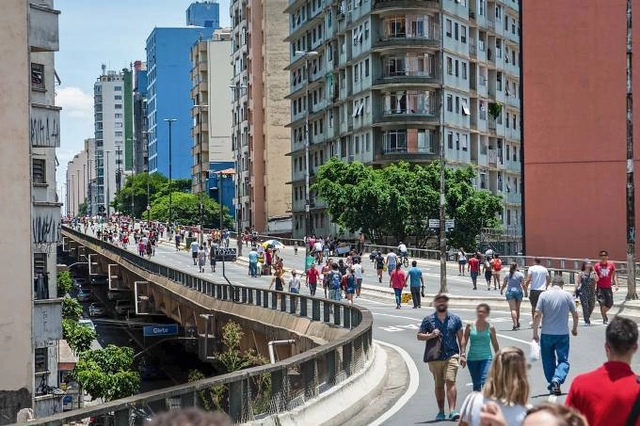
The São Paulo Municipal Government launched a bidding process this week for companies interested in constructing eight pedestrian access points to the João Goulart Elevated Highway, popularly known as the Minhocão, in downtown São Paulo.
In this week's debate hosted by Escola da Cidade, Guilherme Wisnik talks with Nuno Ramos, a painter, draftsman, sculptor, writer, filmmaker, set designer, and composer who holds a degree in philosophy from the University of São Paulo.
Photography researchers and enthusiasts now have another major tool at their disposal. The Photography Book Database (BDLF) has just been launched: a bibliographic reference platform exclusively dedicated to photography books. Conceived by photographer and researcher Leonardo Wen, the project began development in 2018 with funding from the Federal District's Cultural Support Fund.
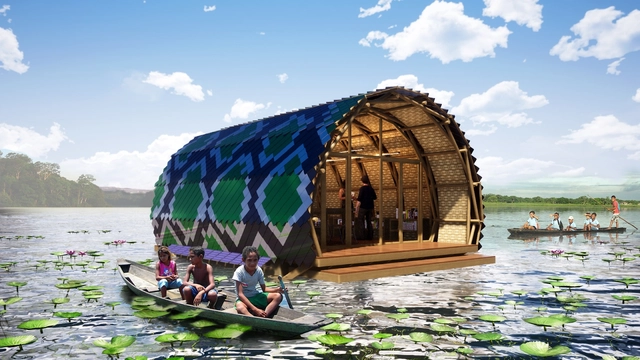
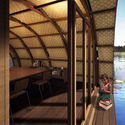
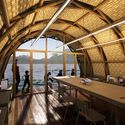
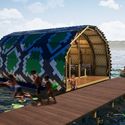
Atelier Marko Brajovic recently shared the design for a Floating Community Library on Lake Mamori, in the Amazon Rainforest. Developed in close collaboration with the local community, the project aims to become a benchmark for sustainable construction and environmental education.
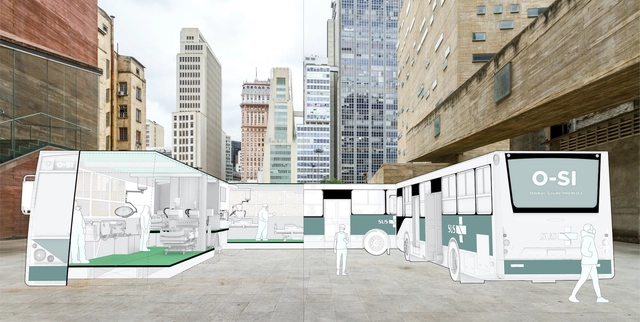
COVID-19 cases in Brazil continue to rise, overwhelming the healthcare system with patients diagnosed with the virus. Understandably, hospital visits by people suffering from other illnesses have also decreased due to fear of contracting the coronavirus. To prevent health complications among those hesitant to visit hospitals, the architects at the Brazilian studio Democratic Architects have proposed the Immediate Health Bus (O-SI), a system focused on telemedicine.
Marcelo Morettin, partner at the firm Andrade Morettin Associados, is the sixth guest on Studio Casa, an interview series produced by Casa da Arquitectura - Portuguese Center for Architecture. A graduate of the School of Architecture and Urbanism at the University of São Paulo, Morettin worked at the offices of Joaquim Guedes Arquitetos Associados and Marcelo Fragelli before founding his own practice in 1997.
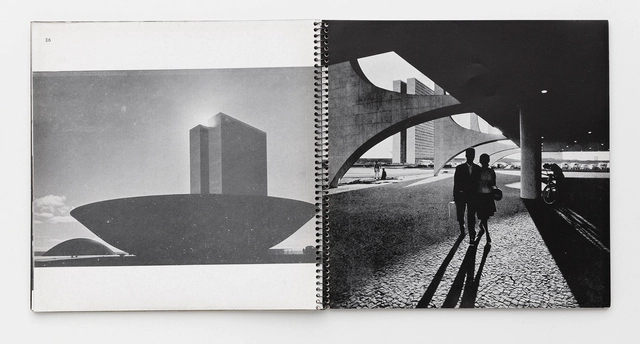
What is the historical arc that traces the path from Brasília's social-democratic (and urban) utopia to today's neo-slaveholding dismantling of the democratic pact? What is this city we see today, stripped of all utopias, and with distinct regimes of vulnerability to the coronavirus pandemic?
Guilherme Wisnik talks with Raquel Rolnik, architect and urbanist, and full professor at the University of São Paulo's School of Architecture and Urbanism (FAU-USP). She was the director of planning for the São Paulo Municipal Planning Department (1989–92) and National Secretary of Urban Programs at the Ministry of Cities (2003–07), among other public sector roles. The Seminar on Culture and Contemporary Reality is organized by Escola da Cidade with support from IABsp.
The Mapa Corona nas Periferias, a digital initiative by the Marielle Franco Institute and the Favela em Pauta channel, is now live. The digital map highlights solidarity initiatives combating COVID-19 in socially vulnerable areas such as favelas, communities, quilombos, or rural hinterlands.




.jpg?1591820635&format=webp&width=640&height=580)
.jpg?1591820618 "Crevice Corridor. Courtesy of Gustavo Penna Arquiteto & Associados")
Estagio_03.jpg?1591820696 "Memory Space. Courtesy of Gustavo Penna Arquiteto & Associados")
.jpg?1591820499 "Foyer. Courtesy of Gustavo Penna Arquiteto & Associados")
.jpg?1591820517 "Aerial view. Courtesy of Gustavo Penna Arquiteto & Associados")
.jpg?1591820635)
.jpg?1591199099&format=webp&width=640&height=580)