Walls of Air is the theme guiding Brazil's participation at the 16th International Architecture Exhibition in Venice. Jointly curated by Laura González Fierro, Sol Camacho, Gabriel Kozlowski, and Marcelo Maia Rosa, the Brazilian Pavilion features 17 projects from different regions of the country, selected through an open call, as well as a series of large-scale cartographic drawings addressing various aspects of the country's urbanization through the lens of architecture.
Romullo Baratto
Romullo Baratto is an architect with a PhD from FAUUSP and Managing Editor of ArchDaily. He previously coordinated the editorial team of the 11th São Paulo Architecture Biennial and served as Managing Editor of ArchDaily Brasil, where he led the platform to win the FNA Award—the first time the honor was granted to a media outlet. He collaborated on the editing of the book "Concrete Jungle", published by gestalten, and has curated architecture exhibitions in Brazil, Chile, Denmark, and Italy, as well as delivered lectures and moderated debates in Spain, the United States, and Portugal. His doctoral thesis investigates the urban landscapes of São Paulo through cinema. His work spans academic research and editorial practice, communicating architecture through texts, interviews, lectures, curatorship, and photography. Follow him on Instagram @romullobf.
BROWSE ALL FROM THIS AUTHOR HERE
↓
Walls of Air: Curators Present the Brazilian Pavilion at the 2018 Venice Biennale
https://www.archdaily.com/1114232/walls-of-air-curators-present-the-brazilian-pavilion-at-the-2018-venice-biennaleRomullo Baratto
"Banespão" Reopens with Public Attractions in Downtown São Paulo
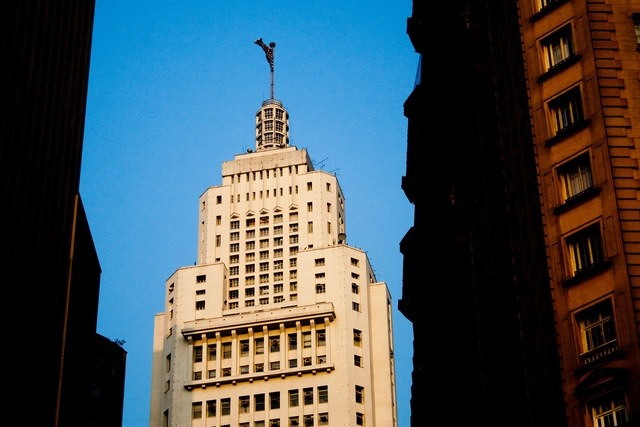
Closed for more than two years for renovations, the Altino Arantes Building, affectionately nicknamed Banespão by locals, will reopen to the public tomorrow in celebration of São Paulo's 464th anniversary. Built in 1947 to house the headquarters of the State Bank of São Paulo (Banespa), the 161-meter-tall skyscraper offered visitors access to its observation deck with panoramic views of the city.
Now, the downtown icon will feature a series of attractions including a museum on the building's history, art exhibitions, a skate park, and a loft available for rent on Airbnb.
https://www.archdaily.com/1114242/banespao-reopens-with-public-attractions-in-downtown-sao-pauloRomullo Baratto
The Best of Architecture in 2018

As the end of the year approaches, we would like to thank our readers and contributors once again for making 2018 such a rich year for architecture. With your continued support, we are reaching more architects, students, and those outside the architectural community worldwide, inspiring them to build a better environment for everyone.
https://www.archdaily.com/1114338/the-best-of-architecture-in-2018Romullo Baratto
Bjarke Ingels: "Gentrification is not only negative, it is also the engine for the redefinition of the urban"
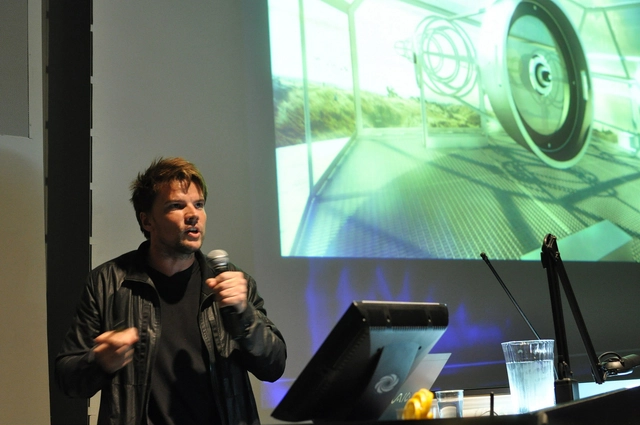
In an interview with El País, Bjarke Ingels discusses with architecture journalist Anatxu Zabalbeascoa the motivations behind his work and the factors that have made him one of the most prominent figures in global architecture.
Moving between the formal concepts that give his buildings their names—such as "snowflake" or "labyrinth"—and the competitive nature of the architecture world (his proposal replaced Norman Foster's for Two World Trade Center in New York), Zabalbeascoa questions Ingels more sharply than might be expected, at one point asking if "architecture can turn into a joke."
https://www.archdaily.com/1114343/bjarke-ingels-gentrification-is-not-only-negative-it-is-also-the-engine-for-the-redefinition-of-the-urbanRomullo Baratto
APCA announces list of winners in the 2018 Architecture category
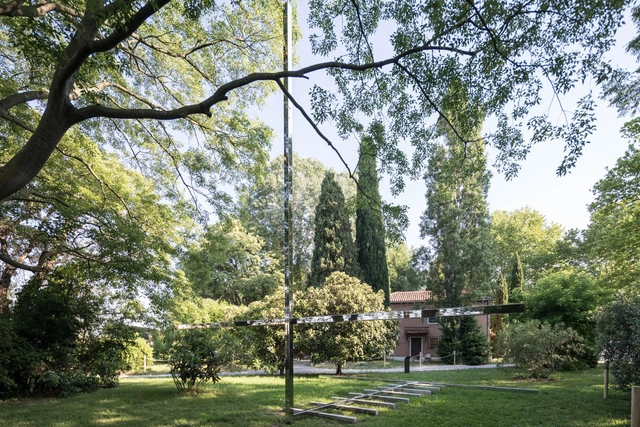
The São Paulo Association of Art Critics (APCA) announced yesterday the winners of the 2018 APCA Awards. The awards are divided into ten categories covering architecture, visual arts, cinema, literature, fashion, popular music, radio, theater, children's theater, and television.
The ceremony honoring all the winners of this APCA Award will take place on a date to be announced in the first half of 2019, when the organization will celebrate its 62nd awards ceremony.
https://www.archdaily.com/1114154/apca-announces-list-of-winners-in-the-2018-architecture-categoryRomullo Baratto
Animal inspiration: school in the interior of São Paulo copies yellow giraffe from French project

UPDATE: This article has generated a much larger response than expected, and we feel it is our duty to clarify the situation. At no point does the article suggest that the project in Artur Nogueira is a plagiarism of the French project. Plagiarism, by definition, is presenting someone else's intellectual work as one's own, and this article makes no such claim. What it does state is that the project in Brazil is a copy of the French one, without accusing anyone of plagiarism or clarifying whether or not permission was granted to copy the design. We were contacted by the owner of Colégio Futura Plus, who informed us that during the design process, French architect Raphaelle Hondelatte was contacted and authorized the use of the elements mentioned in the text—specifically, the yellow giraffe and the cantilevered white volume. As soon as we receive new information, we will update the article again.
To what extent can architecture draw inspiration from references without being considered a copy of another building? This discussion raises diverse and controversial opinions that prompt us to reflect on the issue of architectural copyright and recall the infamous architectural replicas produced in recent years in China, which mimic everything from iconic buildings to the French capital itself.
https://www.archdaily.com/1114266/animal-inspiration-school-in-the-interior-of-sao-paulo-copies-yellow-giraffe-from-french-projectRomullo Baratto
Rescuing Venice's Mosaics: Project Aims to Protect St. Mark's Basilica

As Europe's second most visited built heritage site, behind only the Colosseum in Rome, St. Mark's Basilica in Venice receives over 5 million visitors annually. Yet, under the strain of this massive influx, the 11th-century Byzantine mosaic floors seem to be succumbing to the effects of the floating city's tides.
The undulations in the basilica's floor are visible to the naked eye—feet have not touched them for a decade, as visitors are only allowed to walk on synthetic carpet runners—and they have even cracked at the most critical points, especially in the center of the building. Currently, only 20% of the geometric marble and stone patterns are original; the rest has been restored over the last ten centuries by the artisans of the St. Mark's Workshop.
https://www.archdaily.com/1114263/rescuing-venices-mosaics-project-aims-to-protect-st-marks-basilicaRomullo Baratto
Rosenbaum and Aleph Zero Among the Finalists for the 2016-2017 MCHAP Prize
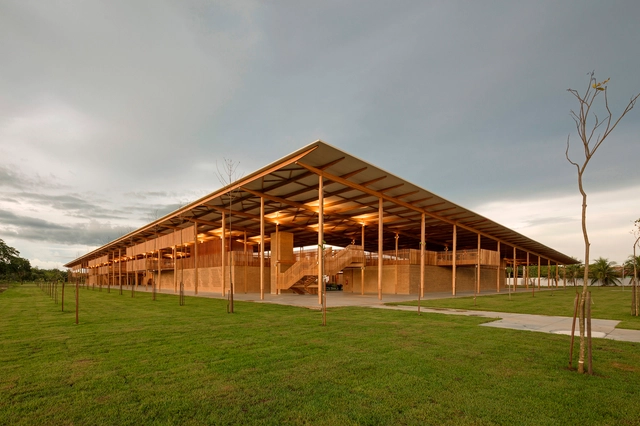
The Illinois Institute of Technology College of Architecture has announced the four finalists for the MCHAP.emerge, the emerging practice award of the Mies Crown Hall Americas Prize - MCHAP, which recognizes the most outstanding architectural works in North and South America. Every two years, the prize is awarded at an event held at IIT's S. R. Crown Hall, Mies van der Rohe's masterpiece in Chicago.
Among the finalists for this edition is a Brazilian project: the Children's Village in Formoso do Araguaia, Tocantins, designed by Rosenbaum and Aleph Zero. Of the other three finalists, two are from Mexico and one is from the United States.
https://www.archdaily.com/1114257/rosenbaum-and-aleph-zero-among-the-finalists-for-the-2016-2017-mchap-prizeRomullo Baratto
Architecture and civil engineering among the professions that are not hiring in Brazil

The online portal of Exame magazine published a list of professions and roles that "are on the decline in Brazil," based on hiring numbers for the first quarter of 2018. The article points to cost reductions and the introduction of new technologies as the main factors driving the decline in demand for certain professionals.
https://www.archdaily.com/1114258/architecture-and-civil-engineering-among-the-professions-that-are-not-hiring-in-brazilRomullo Baratto
The Place of Sharing: A House for Play and Beyond... the topping-out celebration
.jpg?1534172500&format=webp&width=640&height=580)
Ultimately, the construction concluded with a celebration. With the completion of "Not Only a Playhouse" ("Uma Casa de Brincar e Não Só..."), Casa da Arquitectura – Portuguese Centre for Architecture handed over the facility last Friday, August 10, to the residents of the Guarda Housing Complex in Perafita, Matosinhos, Portugal. Music and performances brought a lively close to two weeks of intense work during the second edition of "O Lugar de Partilha" (The Sharing Place).
https://www.archdaily.com/1114304/the-place-of-sharing-a-house-for-play-and-beyond-the-topping-out-celebrationRomullo Baratto
Tourist rentals in a neighborhood designed by Álvaro Siza divide residents

Works designed by renowned architects have always drawn attention, especially from tourists who, passing through new cities, seek to catch a quick glimpse of the best those places have to offer. While this phenomenon is not new, services like Airbnb, which allow short stays in rented homes, have given it a new dimension.
This is currently the case in the Bouça Neighborhood in Porto, designed by Álvaro Siza Vieira. Conceived in the 1970s as a social housing project promoted by the Local Support Ambulatory Service (SAAL), the complex—originally built as permanent housing for workers—has always attracted architecture enthusiasts and fans of Siza's work. In recent years, however, it has also begun attracting temporary residents to units listed for rent.
https://www.archdaily.com/1114169/tourist-rentals-in-a-neighborhood-designed-by-alvaro-siza-divide-residentsRomullo Baratto
The Sharing Place: A Play House and More... Part II
.jpg?1533646991&format=webp&width=640&height=580)
The deck is finished, the beams and columns have already been painted, and construction is moving forward at a good pace at the Guarda Housing Complex in Perafita, Matosinhos, Portugal, which will very soon see the completion of Uma Casa de Brincar e Não Só… / Not Only a Playhouse, built as part of the second edition of “O Lugar de Partilha.” At the end of the first week on-site, there is still much work to be done for this Self-Construction Laboratory organized by Casa da Arquitectura (CA) – Portuguese Center for Architecture and curated by Roberto Cremascoli, but spirits are high, and by August 10th, everything will be ready for the local community to enjoy.
https://www.archdaily.com/1114272/the-sharing-place-a-play-house-and-more-part-iiRomullo Baratto
Seu Acervo showcases the most popular graduation projects of 2017
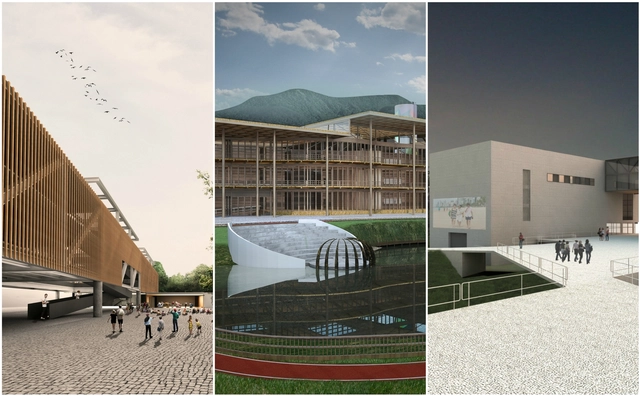
Seu Acervo, a platform for architecture final graduation projects, has released the results of the "Most Popular Project of 2017" open call, launched last November. The goal of the call is to expand the reach of the material available on the platform and encourage recent graduates to engage with digital publishing media.
The winners of this first edition of the award are Rogério Oliveira da Costa, from the Centro Universitário Belas Artes de São Paulo; Nayara de Paula, from the Universidade Anhembi Morumbi; and Hugo Rossini, from the Universidade Presbiteriana Mackenzie. See the winning projects below.

https://www.archdaily.com/1114280/seu-acervo-showcases-the-most-popular-graduation-projects-of-2017Romullo Baratto
Jornada do Patrimônio 2018 offers more than 300 activities to explore the history of São Paulo

To celebrate the diverse groups that built the cultural heritage of São Paulo and helped shape the city's identity, the Municipal Secretariat of Culture will host the Jornada do Patrimônio (Heritage Journey) on August 18 and 19, under the theme "One City, Many Hands."
The event offers a free, diverse program aimed at connecting the public with historical and emotionally significant spaces that define the city's history. In total, 320 activities will take place, including tours, lectures, workshops, building visits, guided tours, and book launches.
https://www.archdaily.com/1114223/jornada-do-patrimonio-2018-offers-more-than-300-activities-to-explore-the-history-of-sao-pauloRomullo Baratto
"Registro de uma vivência": Lucio Costa's Autobiography Is Republished by Editora 34

Originally published in 1995, Registro de uma vivência is an autobiography by Lucio Costa (1902–1998) composed of critical essays, memoirs, plans, projects, photographs, and drawings specifically selected and arranged by the author.
Out of print for nearly 20 years, the book has been reissued by Editora 34 in partnership with Edições Sesc SP. Fully preserving the original graphic design, this new edition features an introduction by Maria Elisa Costa, Lucio’s daughter, an index of names, and an essay by Sophia da Silva Telles, which seeks to decipher the significance of the work of this great architect and urban planner, who was also one of the most important Brazilian intellectuals of the 20th century.
https://www.archdaily.com/1114213/registro-de-uma-vivencia-lucio-costas-autobiography-is-republished-by-editora-34Romullo Baratto
Carrilho da Graça is the winner of the first Leon Battista Alberti Architecture Prize

Portuguese architect João Luís Carrilho da Graça has been unanimously selected as the winner of the inaugural Leon Battista Alberti Architecture Prize, awarded by the Leon Battista Alberti Center for Studies Foundation, named after the prominent Renaissance architect and art theorist.
Carrilho da Graça, who heads the eponymous firm Carrilho da Graça Arquitectos, is known for major projects in Portugal and other European countries, such as the Lisbon Cruise Terminal, the Theater in Poitiers, and the Orient Museum.
https://www.archdaily.com/1114216/carrilho-da-graca-is-the-winner-of-the-first-leon-battista-alberti-architecture-prizeRomullo Baratto
Porto architecture guide chronicles 75 years of the city's history

Architecture is perhaps the built heritage that best expresses a city's history, highlighting major cultural figures whose work enriches the history of its people. The Porto Architecture Guide 1942-2017 follows the Lisbon Architecture Guide 1948-2013; together, they are the first two volumes in the Cities collection published by A+A Books.
https://www.archdaily.com/1114215/porto-architecture-guide-chronicles-75-years-of-the-citys-historyRomullo Baratto
Mobilize Portal Lists 30 Documentaries on Urban Mobility
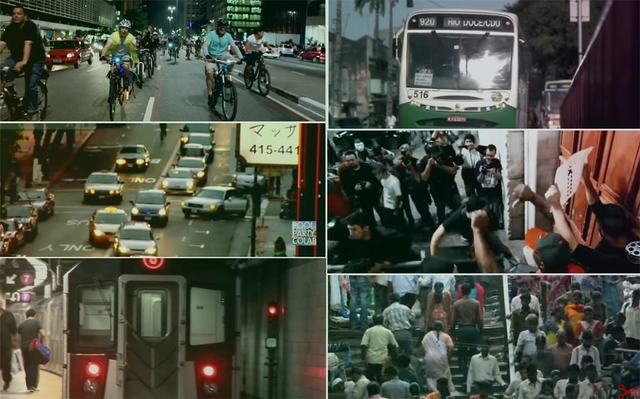
The website Mobilize, Brazil's first platform dedicated exclusively to sustainable urban mobility, has published a list of 30 must-see documentaries on the subject. Divided into feature and medium-length films, the selected titles address urban mobility from various perspectives, ranging from mass transit and non-motorized personal transport to urban culture and the June 2013 protests in Brazil.
https://www.archdaily.com/1114289/mobilize-portal-lists-30-documentaries-on-urban-mobilityRomullo Baratto