Romullo Baratto is an architect with a PhD from FAUUSP and Managing Editor of ArchDaily. He previously coordinated the editorial team of the 11th São Paulo Architecture Biennial and served as Managing Editor of ArchDaily Brasil, where he led the platform to win the FNA Award—the first time the honor was granted to a media outlet. He collaborated on the editing of the book "Concrete Jungle", published by gestalten, and has curated architecture exhibitions in Brazil, Chile, Denmark, and Italy, as well as delivered lectures and moderated debates in Spain, the United States, and Portugal. His doctoral thesis investigates the urban landscapes of São Paulo through cinema. His work spans academic research and editorial practice, communicating architecture through texts, interviews, lectures, curatorship, and photography. Follow him on Instagram @romullobf.
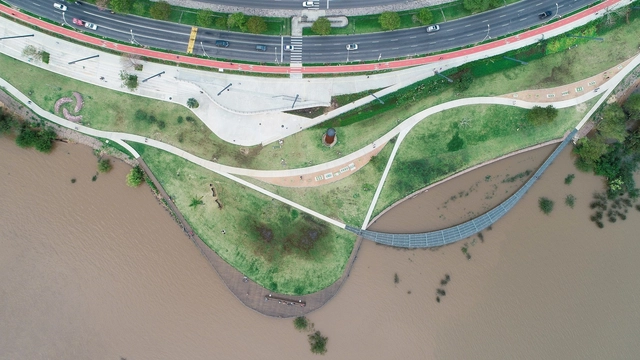
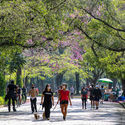
Linear parks exist in many different contexts - along riversides, coastal areas, or inserted in the urban fabric - and represent a very particular type of public space that evokes the idea of a vector and, consequently, the sense of movement. However, they can provide more than just activities and programs associated with mobility, proving to be an appealing solution to the lack of spaces for leisure, contemplation, and relaxation in the most varied urban situations.
Below, we have gathered 12 examples of linear parks built in different parts of the world, illustrated by photographs and floor plans.
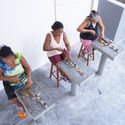
Considered an intangible cultural heritage by the State Council of Culture (CEC) of Alagoas, the sururu is a mollusk whose harvesting is the main source of income for several communities in the state. Around the Mundaú lagoon alone, in Maceió, five communities living below the poverty line produce approximately 300 tons of sururu shells annually—a massive amount of waste that previously had no use and ended up in the Alagoas capital's landfills.
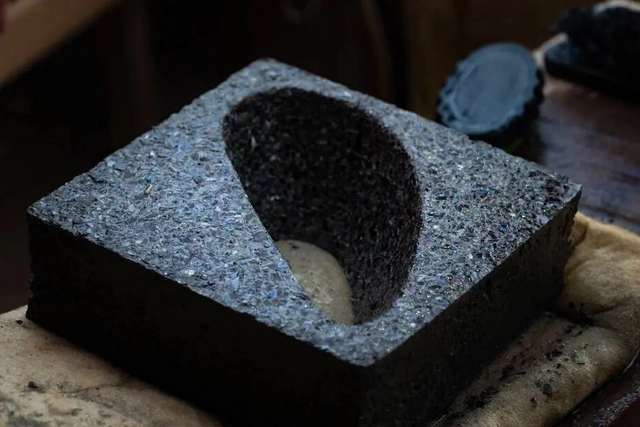
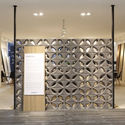
Recognizing its significant economic and social engagement potential, designers Marcelo Rosenbaum, Adriana Benguela, and Rodrigo Ambrósio developed the Cobogó da Mundaú project, which incorporates sururu harvesting waste into the manufacturing of architectural screen blocks.
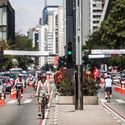
Urban resilience was put to the test as the pandemic swept quickly and drastically through cities. Limiting movement, contact, and access to public spaces was the most effective strategy for containing the virus. However, the city's infrastructure, compounded by a lack of emergency public policies, proved far from resilient. This vulnerability was exposed as a large portion of the population was forced to continue commuting long distances on public transit to work in essential services, and as the physical and mental health of residents suffered from a lack of access to safe spaces for physical activity—underscoring the city's precarious supply of public spaces.
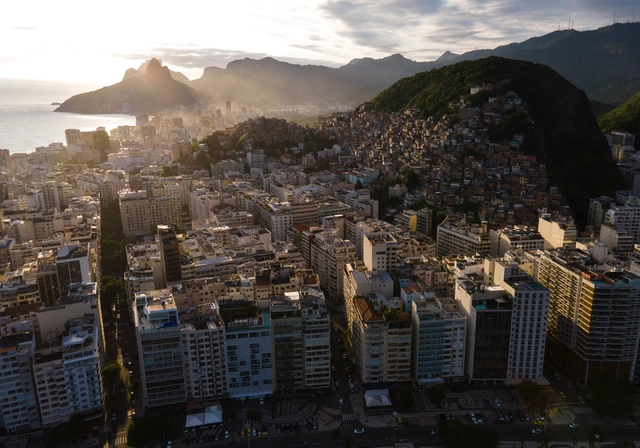
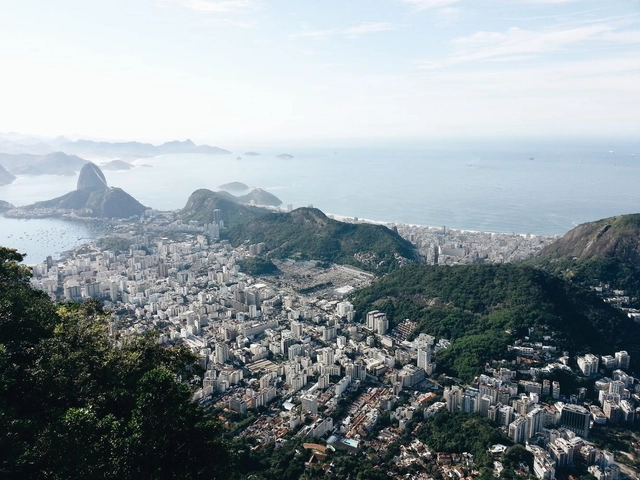
The 27th World Congress of Architects UIA2021RIO will be a hybrid event, featuring virtual sessions starting in March, and in-person activities from July 18 to 22 in Rio de Janeiro, broadcast live online to congress participants worldwide.
The first UIA2021RIO World Architects Week, featuring digital content, will take place from March 22 to 25. During this week, the content will be free to access; afterward, it will only be available to registered Congress participants. The theme chosen to open UIA2021RIO in March is one of the most pressing global concerns today: social vulnerabilities and inequalities.
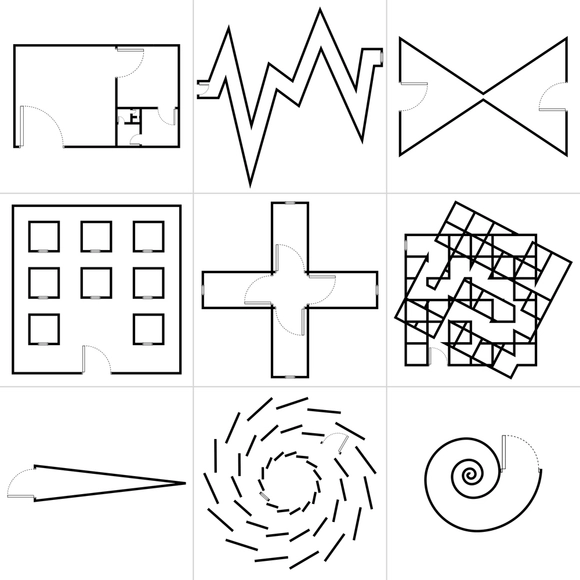
Moradas is a visual-literary project initiated in 2020 by Rafael Baldam, using illustrations based on floor plans and short texts to reflect on domestic space and the act of dwelling. At the beginning of quarantine, the architect and poet began contemplating the domestic sphere, anticipating that it would become a permanent backdrop for the coming months—a reality that indeed materialized and, as of February 2021, still persists.
Motivated by the enrollment of a classmate with a disability at the Dona Escolástica Rosa State Technical School (Etec), logistics students at the institution developed a project that could transform public transit in the city of Santos, São Paulo. The project consists of an audio system designed to assist and offer autonomy to passengers who face mobility challenges.
The Federal University of Rio de Janeiro (UFRJ), through its Library and Information System (SiBI), has conducted a detailed survey of academic publishers across Brazil's leading universities, compiling a list of 2,650 titles available for free download.
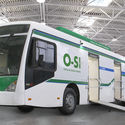
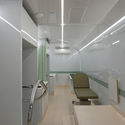
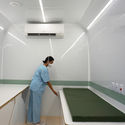
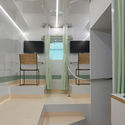
Developed by the Brazilian studio Democratic Architects, the O-SI - Immediate Health Bus (Ônibus de Saúde Imediata) was conceived by designers and doctors focused on creating a modular platform to provide public healthcare services in a modern, safe, and efficient way, based on cutting-edge technology and contemporary concepts of mobile healthcare, sustainable reuse, and social inclusion.
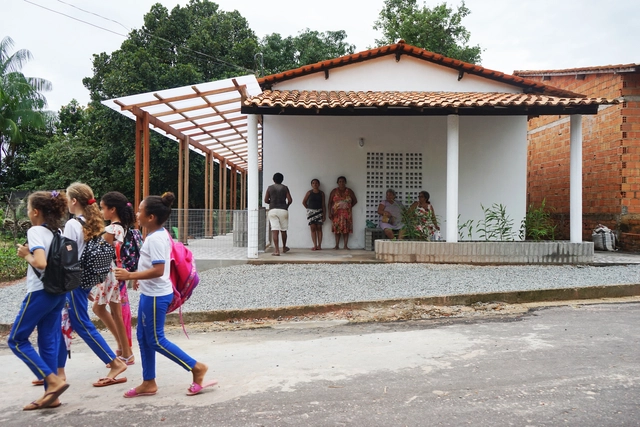
Renovation and Expansion of the Babassu Flour House. Serra - MA, February 2020. Photo by Noelia Monteiro
It is easier said than done, and when it comes to the practice of architecture—an activity heavily conditioned by countless external factors—this statement carries even more weight. Few professionals are willing to help solve problems in remote, relatively isolated communities facing social and environmental vulnerabilities. However, this is precisely the focus of Noelia Monteiro, an Argentine architect working in Brazil who, along with Christian Teshirogi, founded Estúdio Flume in 2015.
Developing projects alongside multidisciplinary teams that include professionals from architecture, engineering, social sciences, geology, and anthropology, the architect's approach is, nonetheless, deeply personal. In fact, it requires a significant degree of community engagement, bringing people close to the design process from the very beginning to completion. The results of this practice have been recognized with major national awards, and more recently, ArchDaily selected Noelia for its list of Best New Practices of 2020.
The latest data from SICCAU reinforces the importance of architects and urban planners during times of crisis and necessity. With the COVID-19 pandemic, uncertainty and business restrictions caused demand for projects and construction to drop drastically in the first months of last year. However, after this initial shock, the architecture and urban planning market showed a strong recovery. In the final three months of 2020, the number of activities registered by architects and urban planners grew by 12% compared to the same period in 2019.
In celebration of São Paulo's 467th anniversary, street artist Criola gifted the Liberdade neighborhood with a massive mural. Produced in partnership with Instagrafite, the work was funded by a special edition of the Street Art Museum (MAR) and prompts a deep reflection and reclaiming of a long history as a stronghold of Black resistance in the city, starting with the neighborhood's very name.
In 2017, Escola da Cidade—through its Seminar on Culture and Contemporary Reality course, then coordinated by Professor José Guilherme Pereira—welcomed anthropologist and PhD in Social Sciences Manuela Carneiro da Cunha to discuss the history, spatialization, and daily life of Indigenous peoples in Brazil, highlighting issues from not only a cultural standpoint, but also a legal and environmental one.
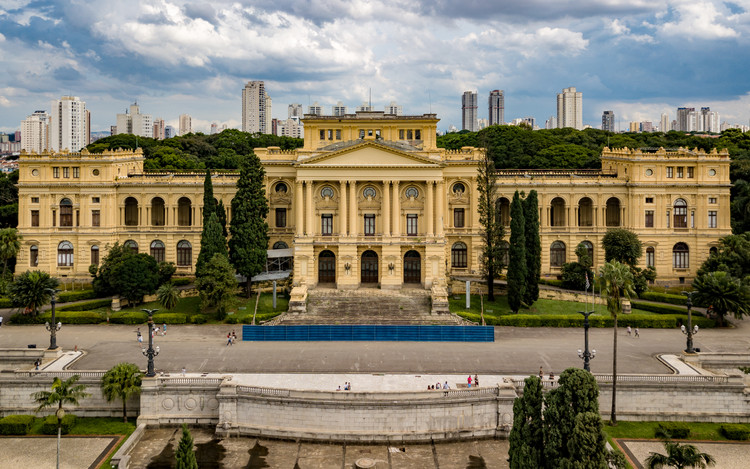
Ipiranga Museum. Photo by Webysther, via Wikipedia. License CC BY-SA 4.0
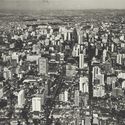
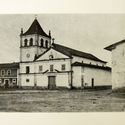
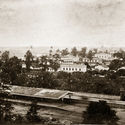
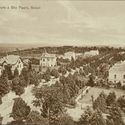
To celebrate the 467th anniversary of the city of São Paulo, the Museu do Ipiranga is launching the digital campaign São Paulo – Território em Construção on January 25. Through the collection's rich iconography, along with testimonies from historians, architects, and urban planners, the public is invited to reflect on the city's transformations, from its founding in the colonial period to the grand metropolis we know today. The content, formatted as web stories, will be available on a website featuring a timeline, photos, paintings, and maps from the collection, as well as explanatory audio and videos about the evolution of São Paulo's urban space. Visitors can also learn more about the city's main landmarks, such as Pátio do Colégio, Paulista Avenue, and Nove de Julho Avenue.
Jesuit-Guarani Missions Trail in Rio Grande do Sul. Photo by Halley Pacheco de Oliveira, via Wikipedia. License CC BY-SA 3.0
Iphan has announced the winners of the 33rd edition of the Rodrigo Melo Franco de Andrade Award (2020 Rodrigo Award). The 12 selected initiatives will each receive R$ 20,000 in funding from the National Institute of Historic and Artistic Heritage, while five others were recognized with honorable mentions. Organized by the institute, the awards program has been held since 1987 and is the largest in the field of Cultural Heritage in the country, recognizing exemplary initiatives of excellence.
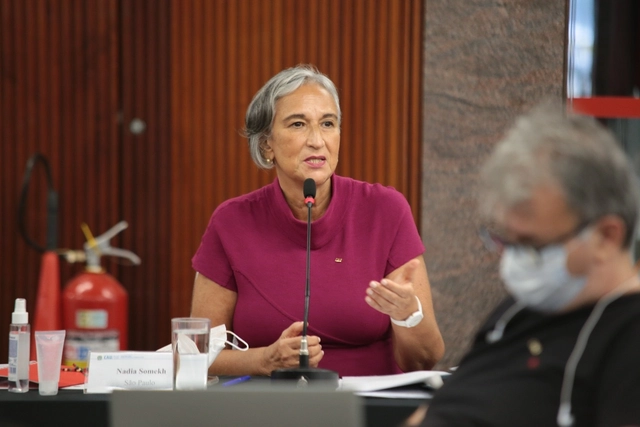
Architect and urban planner Nadia Somekh, from São Paulo, was elected today as president of the Council of Architecture and Urbanism of Brazil (CAU/BR) for the 2021-2023 term. This is the first time a woman has held the position. The selection was decided by secret ballot among the 28 federal councilors, with Somekh receiving 19 votes. In her management plan, Nadia Somekh states that “the country's current situation and the ongoing threat to representative professional organizations demand a dual approach.”
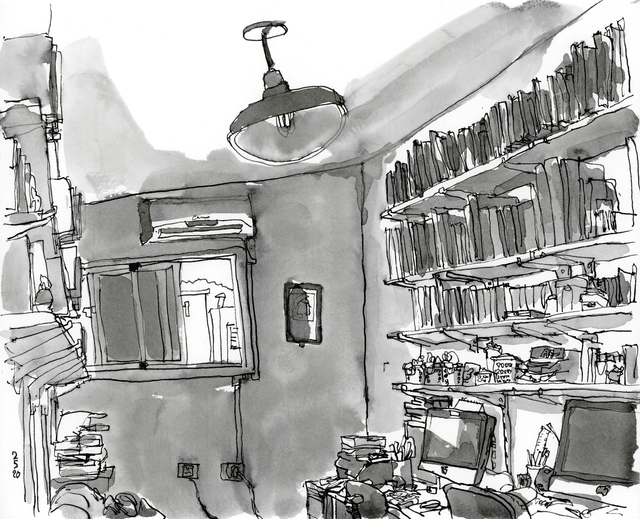
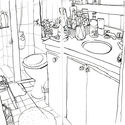
During the first two months of isolation due to Covid-19, designer Ivan Jerônimo accumulated more than forty drawings depicting objects and rooms in his apartment. These are ordinary scenes that were suddenly brought to the forefront during the pandemic.
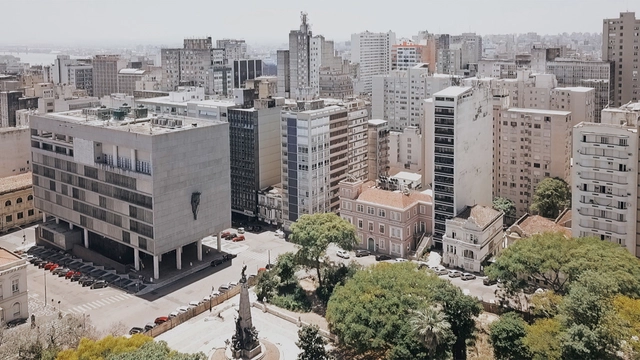
Honoring and reaffirming the importance of Porto Alegre's modernist icons, a new series launched by AsBEA-RS on its YouTube channel invites the public to visit, alongside architects, market experts, and users, six of the most important buildings constructed between the 1950s and 1960s in the state capital.
Faial, Santa Tecla, Santa Cruz, Palácio da Justiça, Centro Administrativo Fernando Ferrari, and Grêmio Náutico União: six projects that shape the skyline and reaffirm the construction quality of fifty-year-old structures, revisiting the legacy and lessons of prominent architects from Rio Grande do Sul for contemporary urban development.
Buraco do Lume. Image via Skyscraper City, user Leo10Rio
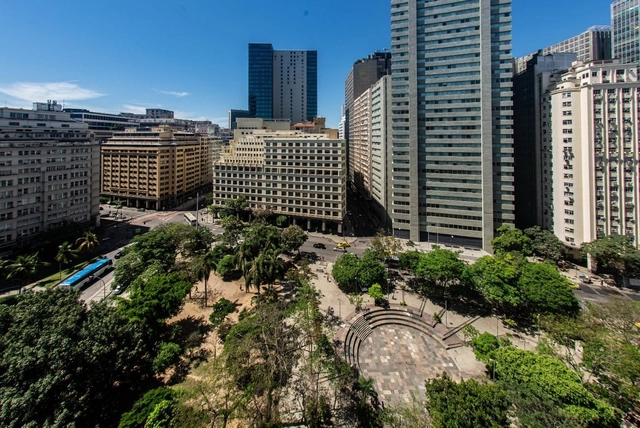
The approval of the controversial draft legislation dubbed the “Lei do Puxadinho” in mid-2020, which relaxed zoning parameters in the city of Rio de Janeiro, sparked widespread debate across various sectors of society—particularly among architects and urban planners, many of whom have strongly criticized the proposal. The debate, however, intensified even further when, under the auspices of this law, a surprise amendment was published in the Official Gazette. This amendment temporarily lifted several restrictions on the Buraco do Lume site, which is adjacent to the square officially named Praça Mário Lago—an important venue for political demonstrations in the city, landmarked by the municipality in 1989 and by the state government in 2019.















.jpg?1611255930&format=webp&width=640&height=580)