If you work in the world of architecture and find that your daily routine doesn't allow you to accomplish everything you would like, this book will be a great help.
If you work in the world of architecture and find that your daily routine doesn't allow you to accomplish everything you would like, this book will be a great help.
In this book, Pier Vittorio Aureli reconsiders architectural form in light of a unitary idea of architecture and the city, proposing a heightened formal awareness in architecture as a prerequisite for political, cultural, and social engagement with the city. In this study, the author opposes the forces of limitless urbanization, proposing the idea of absolute architecture as a confrontation with the forces of global capital—a generational call to reclaim the concept of the city, as well as the reality of its narratives, as the foundation for rethinking the possibilities of architecture.
Aureli revisits the work of architects who advanced the construction of architectural forms concerned with the city as a whole—such as Cerdà, Palladio, Piranesi, Boullée, Mies van der Rohe, Hilberseimer, Ungers, Archizoom, and OMA—whose work addresses the transformations of the modern city and its urban implications through the development of specific, strategic architectural forms. Their projects for the city do not take the form of a master plan, but are instead expressed as an “archipelago” of site-specific interventions. The possibility of an absolute architecture is, therefore, the possibility of both constructing the city and understanding it—along with its opposing force, urbanization—through the finite nature of architectural form.

Beatriz Colomina is the director and founder of the interdisciplinary Media and Modernity program at Princeton University in the United States, where she also serves as a professor and director of Graduate Studies at the School of Architecture.
Light plays a decisive role in the execution of architectural and interior design projects. However, most literature on the subject consists primarily of catalogs from light source and lighting equipment manufacturers. Until now, with the publication of Manual de Iluminación, there has been no single document consolidating all the information necessary for approaching a lighting project. The author drew from a wide range of sources, including books, catalogs, and manuals from international organizations and renowned manufacturers such as Philips, Osram, General Electric, Erco, Iguzzini, Lamp, Flos, Zumtobel, Westinghouse, Deltalight, Targetti, and Reggiani, among others. This information is synthesized into tables, charts, and practical recommendations, serving as an essential guide for students and professionals in the field.
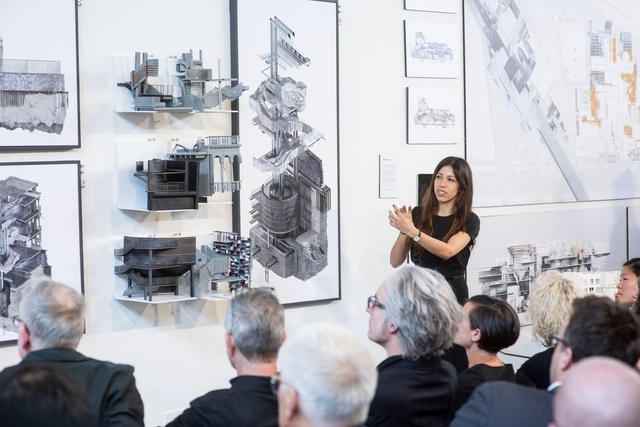
With the expansion of its international programs, as well as satellite initiatives in Bogotá, China, and Mexico City, SCI-Arc has broadened its global reach while maintaining its commitment to creating a positive impact within the Los Angeles context.
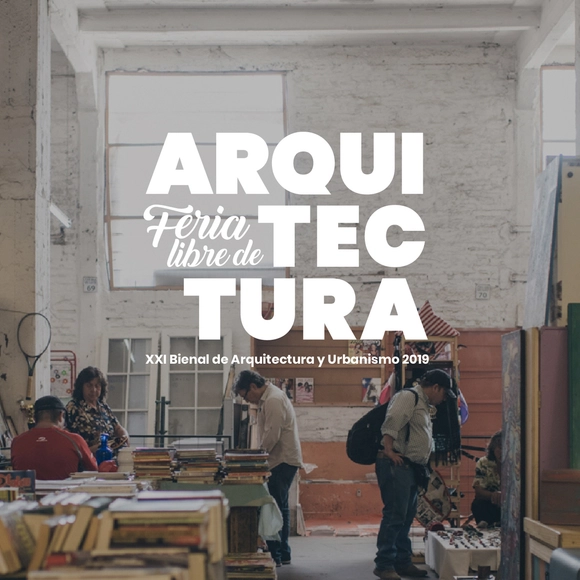
The XXI Chile Architecture and Urbanism Biennial invites students, architects, firms, institutions, publishers, and collectives to participate in the country's most significant event of its kind. This year, the event will focus on proposals geared toward the "everyday" public.

It is impossible to grasp the significance of architectural masterpieces built throughout history without first understanding what it meant to "be an architect" in each era and how that profession was practiced.

Description via Amazon. Through the sketches that make up this book, its author, Rodrigo Pérez de Arce, not only teaches us to look at the city of Valparaíso with fresh eyes but also reveals his affection for the port. His obsession and dedication to exploring the buildings, plazas, and hills are captured in strokes that, in sum, compose the author's perspective and the critical lens he applies to them in his annotations. Ultimately, drawing is presented as a tool for observation. With a record dating back to the early 1970s, the representation and analysis of this critical survey of Valparaíso have continued to deepen and expand. Furthermore, the book presents projects completed by the author in collaboration with other architects, serving as evidence of the strong bond between Rodrigo Pérez de Arce and Valparaíso—a bond this book aims to convey faithfully.
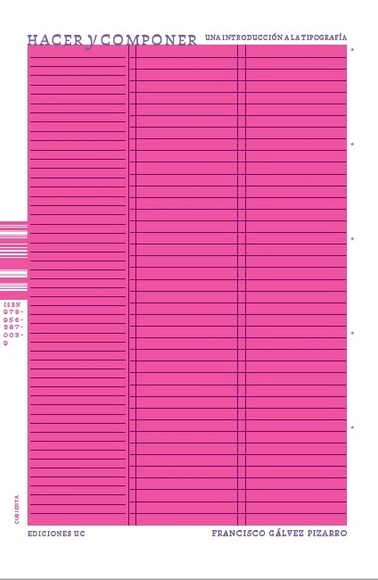
Letters are everywhere, yet we rarely stop to consider their forms or the complexity they conceal. This book serves as a gateway to the fascinating world of typography, offering readers an understanding of the scope and variety of letterforms, the creative challenge involved in their design, and the magic of composing them into a text.
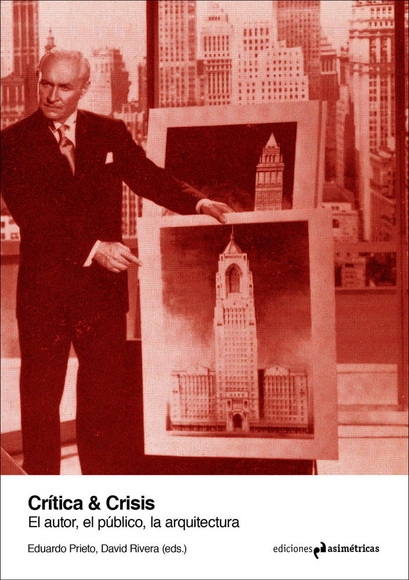
Cultural criticism is an occupation as serious as the work of an actor or a comedian. No society can do without it without suffering an internal process of fatal contraction. Neither can architecture, a discipline that suffers—perhaps more than most—from the pressures of political and economic powers, as well as the prejudices of the public and architects themselves. With the same insistence that people speak of the 'death of the novel,' some critics and historians frequently revisit the tropes of the 'death of architecture' and the 'death of criticism.' These are bad times for criticism. Yet it is precisely the threatened state of the discipline—the fact that it finds itself in a 'crisis' that will lead either to its death or to its revitalization—that opens the door to reflecting on it without prejudice.
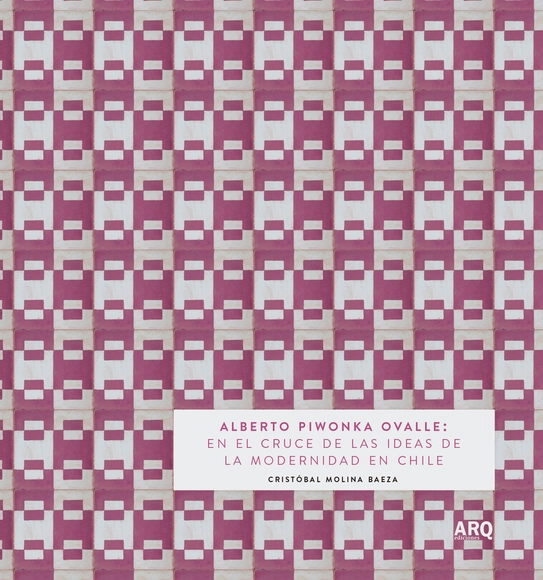
Alberto Piwonka Ovalle: En el cruce de las ideas de la modernidad en Chile goes well beyond the scope of architecture, offering a broader perspective on the processes of cultural, material, and architectural modernization in mid-20th-century Chile. With the figure of Alberto Piwonka acting as a nexus—capable of linking a wide variety of people, projects, ideas, and even schools of thought—the architect becomes not only a prism through which to view the culture of that specific moment in the country, but also a reference point for understanding much of the era's material legacy.

Arquitectura Viva has released its latest monograph. This edition is dedicated to the Chilean firm Undurraga Devés, the architects behind projects such as the Palacio La Moneda Cultural Center (2004-2005), the Ministry of Social Development (2011-2014), and the Expo Milan Pavilion (2013-2015).
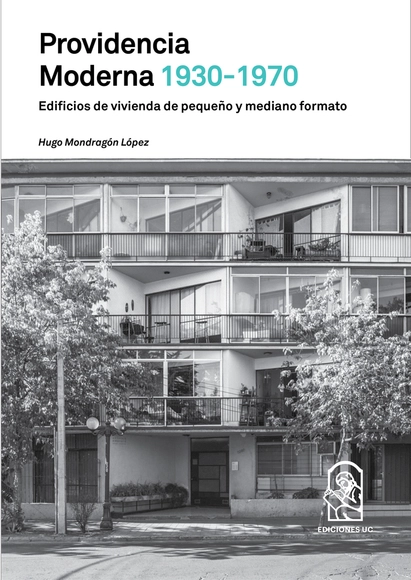
"The interest in the urban condition of thirty-eight small- and medium-scale residential buildings located in the Providencia district—which form a detailed catalog of works completed between 1930 and 1970—demonstrates how significant the architectural proposals of this period were in the creation and formation of the modern city project in Santiago, Chile.
Description via Amazon. We live in an era where design and innovation are at the forefront of conversation, and users are increasingly critical and active participants in decision-making. Design and innovation serve as the primary drivers of organizational change, but what theories underpin their solutions? Users are viewed as the center of the process, but what methodologies are used to incorporate their behaviors and beliefs in a rigorous and dynamic way?

Because architecture is essentially space, the language employed by architects organizes and relates it, defining its boundaries and characterizing the space itself. Interior spatial organization follows diverse patterns: sometimes emphasizing compactness, while at other times expanding or wrapping around a central void, reviving traditions, or initiating new interpretations to bring the building's massing to life. It challenges conventional functional approaches, pursues the poetics of circulation, and incorporates elements of surprise. Depending on the site, the massing may be compact or extended, adapting to the topography and either blending into or contrasting with its surroundings, yet it never ignores the landscape. Within the urban fabric, architecture may turn inward, becoming abstract, or it may strengthen its relationship with the street, seeking continuity and fostering social interaction. Light is treated beyond its functional capacity to highlight boundaries, forms, materials, textures, and colors—whether through dramatic plays of light and shadow or by filtering it indirectly to create subtle spatial atmospheres. The use of materials—particularly brick, the protagonist of these works—creatively explores their expressive and structural qualities. The goal is for architecture to maximize resources by leveraging site conditions, ensuring sustainability, utilizing new technologies, reusing materials, or prefabricating components, all while maintaining a lasting architectural language that serves as a witness to its time.
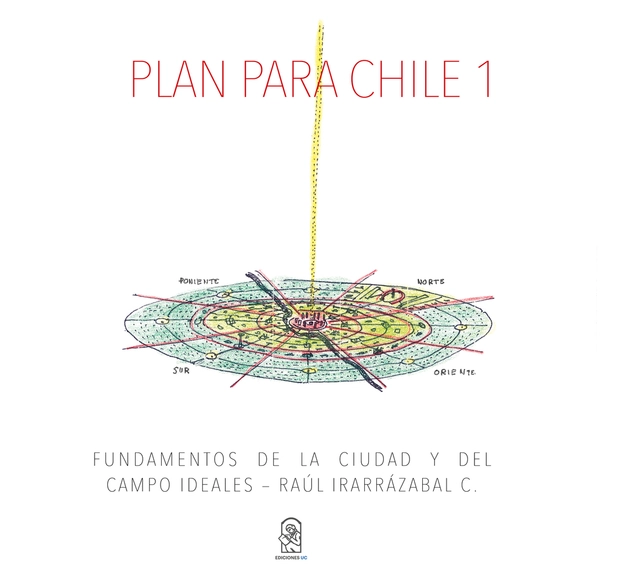
The book series 'Plan para Chile', by prominent Chilean architect Raúl Irarrázabal, consists of three volumes that invite the reader to envision a new urban planning scheme for Chile through an avant-garde, bold, and inclusive lens.

Anales de Arquitectura is an annual publication that compiles a selection of articles presenting the results of research projects developed within the School of Architecture at the Pontificia Universidad Católica de Chile. This volume presents the work of professors, research groups, and theses developed within the various master's programs, as well as contributions from the Doctoral program of the Faculty of Architecture, Design, and Urban Studies. The objective of Anales de Arquitectura is to disseminate disciplinary arguments and debates emerging from the University regarding research on design, the city, landscape, heritage, technology, sustainability, and the theory and history of architecture.
The digital version of the catalog for the XI Ibero-American Biennial of Architecture and Urbanism (XI BIAU) is now available. It includes documentation regarding the XI BIAU Ibero-American Prize awarded to César Ortiz-Echagüe Rubio (Madrid, 1927) and Jorge Enrique Scrimaglio (Rosario, 1937).