June 29 / Marcelo Barbosa – On three architectural projects
The event, which has been running since June 8, concludes next Saturday, June 29, with a lecture by Marcelo Barbosa (Bacco Arquitetos). Held over four Saturday morning sessions, the program has also featured presentations by Cristiane Muniz (Una Arquitetos), Marcos Boldarini (Boldarini Arquitetos), and Marta Moreira (MMBB Arquitetos).
To highlight the themes of Urban October, the United Nations Human Settlements Programme (UN-Habitat) office in Brazil created the Urban Circuit in 2018—a call for events organized by various stakeholders on topics related to Urban October. The second edition of the Urban Circuit in 2019 will feature the general theme "Innovative and Inclusive Cities" and the guiding question: "How can innovation improve urban services and policies in an inclusive and sustainable way?"
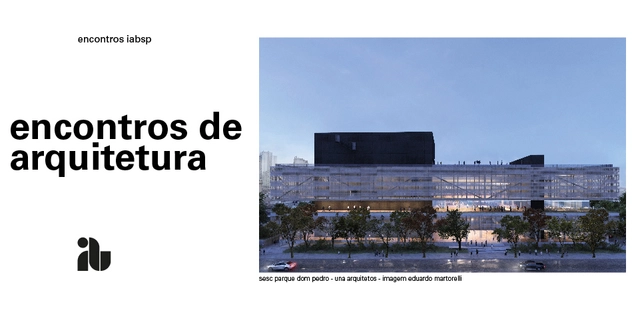
August is approaching, and with it, our "Architecture Meetings" return.
For those unfamiliar, the idea behind these meetings is to discuss contemporary Brazilian architectural production, organized by theme. The conversation will feature professionals active in the field of architecture and will be moderated by an external guest or a member of the group formed by IABsp to curate this activity.
The Architecture and Urbanism Week (SAU) at UNIFAP is an annual event organized as a university extension initiative. It is primarily student-led, with at least one tenured faculty member serving as the director and primary liaison. This year’s edition, VIII SAU: Create Yourself, City!, aims to present and discuss the Creative Cities Network program by the United Nations Educational, Scientific and Cultural Organization (UNESCO). The program seeks to foster international cooperation among cities that invest in culture and creativity as drivers of sustainable development. The theme will be explored through three tracks focused on the city of Macapá, Amapá: Creative processes in the city; Perception and memory of the city; and Sustainability and self-management practices. For this edition, SAU is accepting submissions of academic work in three distinct categories: scientific articles, graphic works (physical models, photography, video, and sketchbooks), and posters. These will subsequently be published in the event proceedings. Over the course of the four-day event, the organizers aim to bring together students, faculty, researchers, and professionals to discuss the theme through lectures, roundtable discussions, workshops, and networking opportunities.
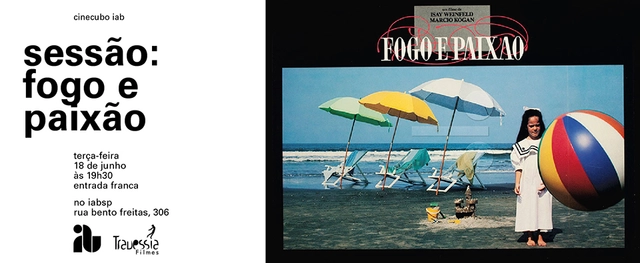
Cinecubo is a film club hosted by the Institute of Architects of Brazil (IAB) aimed at fostering dialogue between audiovisual and architectural languages and debating perspectives on the city. On the third Tuesday of every month at 7:30 PM, Cinecubo screens films followed by a discussion at the IAB-sp headquarters. Curated and moderated by Nana Maiolini, Travessia Filmes, and guests, the sessions are free and open to the general public.
Can the workspace influence human creativity? What are the strategies for fostering a culture of innovation within a company? Will machines replace humans in the office design process? These and other topics will be discussed at WORKTECH 2019 Buenos Aires, the international conference on the future of work, brought to Argentina by Contract Workplaces, a regional firm specializing in the design and construction of high-performance workspaces.
The fourth edition of the International Urban Interventions Forum (FIIU) will bring together urban experts, policymakers, citizens, collectives, and international networks of activists interested in reclaiming public space and its use. Furthermore, this year, FIIU will host the 3rd Placemaking Latinoamérica meeting, a global movement that has been bringing together professionals and activists from Latin American countries for two years.
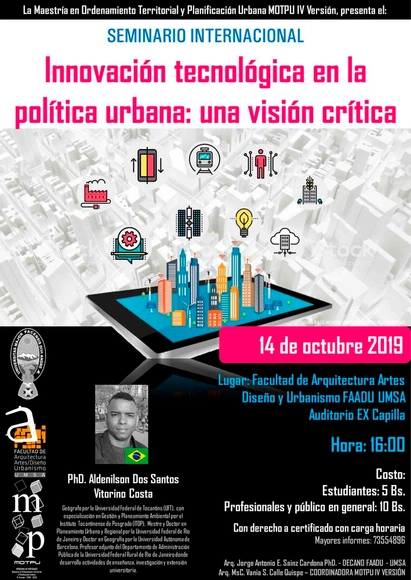
The Master’s Program in Territorial Management and Urban Planning (MOTPU IV) at the Faculty of Architecture, Arts, Design, and Urbanism of the Universidad Mayor de San Andrés in La Paz, Bolivia, presents the international seminar: "Technological Innovation in Urban Policy: A Critical Perspective."
The IAB-RJ Continuing Education Program was created to share diverse knowledge and perspectives on the contemporary city. Our goal is to share the experiences of instructors with distinguished careers in various fields, providing opportunities for the continuous professional development of architects, urban planners, landscape architects, designers, engineers, students, and those interested in architecture and urbanism. We focus our efforts on five key areas: city and society; innovation; sustainability; management; and memory, culture, and heritage.
Objective images_Alin Veliz + Nicolás Socías, Workshop V 2018 UTEM
Collective Housing in Chimbarongo: Reflections on a Rural Collective Habitat is an exhibition of academic projects by third-year students from the Architecture program at the Universidad Tecnológica Metropolitana in Chile.
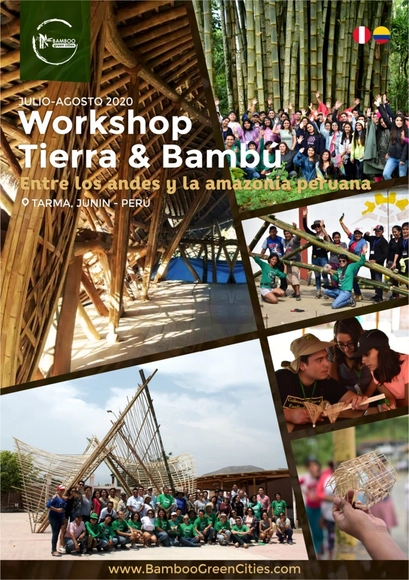
We are officially launching the 3rd edition of the Bamboo Experience Camp - Peru 2020, an international training workshop where we will construct a module using earth and local, native, and introduced bamboo species—Chusquea dombeyana and Dendrocalamus asper—in the city of Tarma, Peru.
Earthen architecture is an important part of Chile's construction heritage. It declined during the height of the Industrial Revolution but has seen a strong resurgence in recent decades, driven by the need to make construction more sustainable for our planet. In this context, innovation in construction systems that incorporate earth and natural fibers as building materials offers an appropriate expression of local identity and an understanding of the territory as pillars of the new human habitat.
The IV ENEEEA aims to discuss the teaching of structures in architecture schools, addressing traditional structural systems and innovations, as well as their integration with architectural design courses and other didactic activities outlined in the programs' pedagogical curricula.
This Forum aims to bring together, over four days in Belo Horizonte, various stakeholders involved in housing issues—architects, planners, public officials, members of municipal housing councils, grassroots movements, government representatives, organizations, and other professionals working in the field, as well as researchers and students. In doing so, it aims to provide a space for multidisciplinary discussion, addressing both theoretical and practical issues related to urban living.
The course—organized into three monthly modules (April, May, and June), each consisting of four classes—will examine central issues in modern art history through the works of: Paul Cézanne, Aleksander Rodchenko, Hannes Meyer, and Le Corbusier (Module 1, April); Federico Fellini, Giuseppe Terragni, Arnold Schoenberg, and Rem Koolhaas (Module 2, May); Kazimir Malevich, Marguerite Duras, Louise Bourgeois, and Toyo Ito (Module 3, June). Modules may be taken individually or sequentially.