Portobello's traditional awards event recognizes architecture and design professionals from various cities across Brazil. The special program also includes tributes and a surprise performance. Credits: Portobello press release
Portobello Shop, the retail chain of Portobello, will host the Portobello+arquitetura party on June 10th at 5:00 PM. Inspired by the power of the connections that unite and drive us, the awards night will reveal the names of the standout architecture and design professionals of 2020 across different regions of the country. The party is a traditional brand event, and this year, for the first time, it will take place in a digital format open to the public.
Online and free, the Estadão Summit Urban Mobility 2021 discusses the future of cities
"Transitioning to a New City" is the theme of the Estadão Summit Urban Mobility 2021, which runs through Friday (21) and is entirely online and free of charge. Experts from Brazil and around the world are discussing the transformations the current pandemic has brought to how we move. Highlights include socio-spatial inequality, urban planning, the boom in active mobility, and trending concepts such as Paris's "15-minute city."
Registration is now open for the second edition of Archademy Trends, a free online event for those looking to establish a unique position aligned with market behavioral trends, in an exclusive immersion designed to transform the mindset of architects and designers across the country.
Toy - metal and agate cauldron, Inah Meirelles Faria Guimarães Collection. Photo: José Rosael/Hélio Nobre/Museu Paulista.
This theme will be addressed in five meetings throughout this semester, aimed at the production and improvement of entries in the digital encyclopedia. With the presence of researchers from the Museum, the edit-a-thons will feature discussions on topics such as the construction of gender relations through domestic spaces and objects, as well as the historical transformations that have occurred in Brazilian domestic interiors.
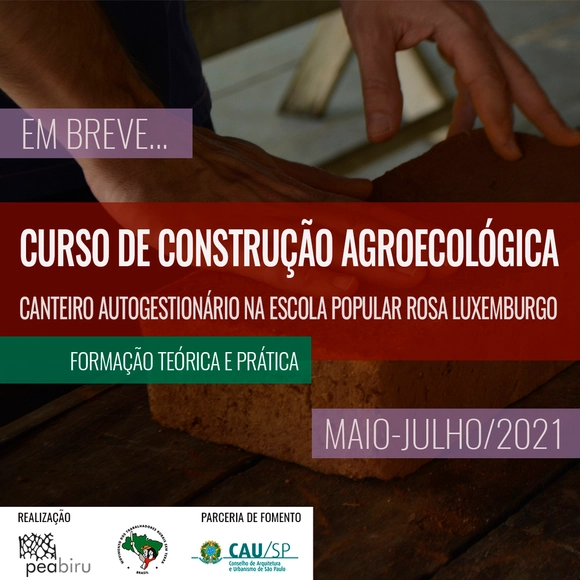
Call for the Agroecological Construction Course - more information on social media
The Agroecological Construction Course - Self-Managed School Site at the Rosa Luxemburgo Popular School, promoted by Peabiru TCA and the Landless Workers' Movement (MST) in partnership with the Council of Architecture and Urbanism of São Paulo (CAU/SP), seeks to address key issues surrounding popular housing in rural areas, while promoting discussions on agroecological materials and construction techniques within this context.
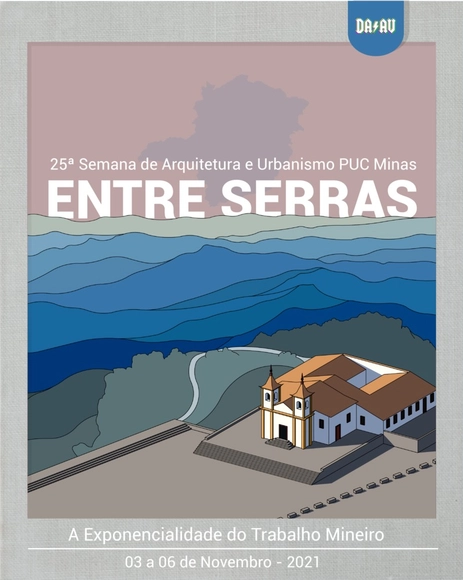
The Architecture and Urbanism Week is a non-profit event organized by the Architecture and Urbanism Academic Directory at PUC Minas. Held annually, the event is currently part of the university's second-semester academic calendar. Its primary objective is to highlight topics of regional and global relevance through lectures, workshops, and activities. By welcoming students from PUC Minas and other universities, as well as industry professionals, the event fosters an exchange of experiences among participants. Since 1996, the PUC Minas Architecture and Urbanism Weeks have stood out in the local scene as artistic and cultural events. Beyond architectural discussions, they host debates with social and political movements, meetings with renowned and street artists, exchanges with leading professionals, and a variety of workshops and activities.
IED Rio is offering four free online classes this September, corresponding to four full online courses scheduled for the second semester. These sessions serve as a lead-up to the launch of in-person courses in 2022. The classes—covering lighting design, style generation, the role of the physical store in a post-pandemic landscape, and visual thinking for business—will be led by industry-leading designers, including Diana Joels, Michela Mezzavilla (Spain), Rafo Castro, Carolina Baltar, and Rafael Andrade.
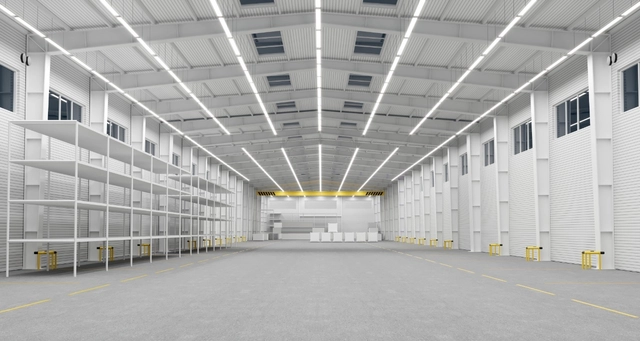
The Brazilian Center for Steel Construction (CBCA) is accepting registrations until April 30 for the "Industrial Steel Sheds" course. Previously offered in person, the training will now be held entirely online to comply with safety protocols regarding the spread of the novel coronavirus.
We present two new publications on the Mies van der Rohe Pavilion, edited by Dietrich Neumann with David Caralt. The editors have rigorously collected, selected, and curated the voices of researchers and artists into two volumes that will serve as essential reference books for anyone interested in the Pavilion and modern architecture.
Whether you are already a BIM Coordinator / BIM Manager or aspire to become one, this is a great opportunity to get up to speed with all the latest BIM standards and best practices. Attend a fun and interactive 10-week online program packed with presentations, tips, and virtual activities. Learn everything you need to know to manage a BIM office with Archicad from experienced GRAPHISOFT trainers and BIM Managers—from project creation and consultant collaboration to people and process management. Virtually meet other peers and share your experiences working on BIM projects using Archicad. Pass the assessments to earn a globally recognized GRAPHISOFT certificate.
What are the principles of timber structural design? How can one understand and develop structural arrangements? How can structural stability be ensured and elements pre-dimensioned? Which construction systems are most suitable for a given project? How can one begin projects involving long spans or tall timber buildings? This course aims to address these and other key questions to assist architects, engineers, builders, and others interested in using timber as a structural material.