With more than 590,000 submissions in 2017, the EyeEm Photography Awards is the world's largest photography competition for discovering new talents.
The 2018 EyeEm Awards feature nine categories, including a category focused on architecture: "The Architect" where we encourage you to submit interesting lines, shapes, and beautiful spaces in architecture.
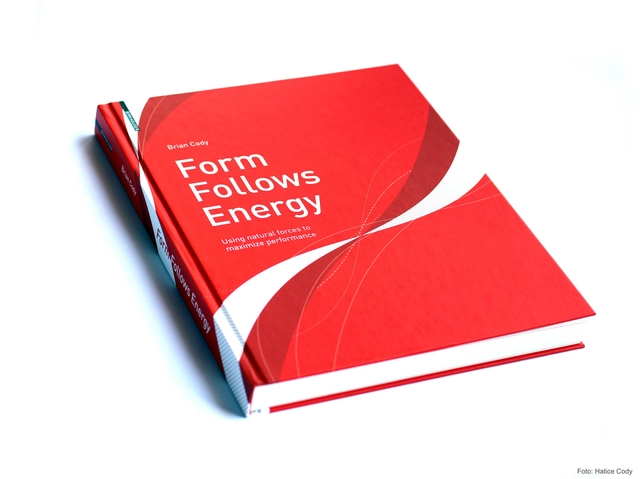
Book cover, Form Follows Energy, Photo: Hatice Cody
Architecture is energy. Lines drawn on paper to represent architectural intentions also imply decades and sometimes centuries of associated energy and material flows. “Form Follows Energy” is about the relationship between energy and the form of our built environment. It examines the optimisation of energy flows in building and urban design and the implications for form and configuration. It speaks to both architectural and engineering audiences and offers for the first time a truly interdisciplinary overview on the subject, explaining the complex relationships between energy and architecture in an easy to follow manner and using simple diagrams to show how energy design strategies can be used to maximize the energy performance of our built environment, while at the same time leading to new aesthetic qualities and radically new forms in architecture and urban design. After building an understanding of the physical laws of nature underlying energy use in buildings and urban design in the initial chapters, ways and means of allowing the consideration, analysis and manipulation of natural forces in the field of design in the built environment are explored. Strategies for maximizing energy performance in the design and construction of buildings and cities are then expanded upon. The text is illustrated with many examples from research and practice, in which Brian Cody draws on 30 years of experience as an engineer and university professor. His designs have been developed in collaboration with many well-known international architectural firms, including Coop Himmelb(l)au, OMA, DMAA, David Chipperfield, MVRDV and Zaha Hadid.
Description via Amazon. The gold-standard exploration of architecture's global evolution A Global History of Architecture provides a comprehensive tour through the ages, spinning the globe to present the landmark architectural movements that characterized each time period. Spanning from 3,500 b.c.e. to the present, this unique guide is written by an architectural all-star team who emphasize connections, contrasts and influences, reminding us that history is not linear and that everything was 'modern architecture' in its day. This new third edition has been updated with new drawings from Professor Ching, including maps with more information and color, expanded discussion on contemporary architecture, and in-depth chapter introductions that set the stage for global views. The all-new online enhanced companion site brings history to life, providing a clearer framework through which to interpret and understand architecture through the ages.
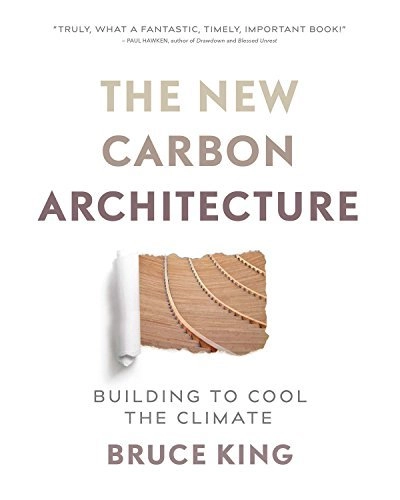
Description via Amazon. “Green buildings” that slash energy use and carbon emissions are all the rage, but they aren’t enough. The hidden culprit is embodied carbon―the carbon emitted when materials are mined, manufactured, and transported―comprising some ten percent of global emissions. With the built environment doubling by 2030, buildings are a carbon juggernaut threatening to overwhelm the climate.
Description via Amazon. A passionate and personal book about the writer's own love for a controversial architectural style. Featuring buildings typically constructed of concrete, Brutalist architecture flourished in the 1950s to mid-1970s. Though controversial, the style has an enthusiastic fan base—including John Grindrod, who is on a mission to explain his passion. His enlightening study brings humor, insight, and honesty to the subject as it journeys from the UK to examine Brutalism’s influence around the world, from Le Corbusier's designs in India to Lina Bo Bardi's buildings in Brazil. Featuring a series of mini essays, along with illustrations by The Brutal Artist, it explains the human aspect of Brutalism and explores its architectural, historical, and even pop-cultural meanings.
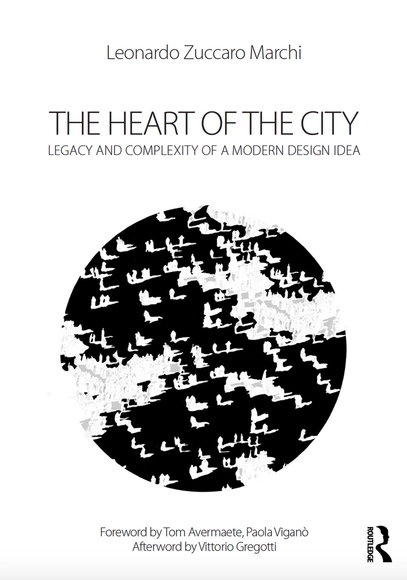
The book focuses on both the historical and theoretical reinterpretation of the Heart of the City Idea, which was introduced at CIAM 8 in 1951 and has played an impor¬tant role in architectural and urban debates ever since. It is a comparative history-theory, which traces the social-spatial role and character of transdisciplinary encounters and migrations on the concept of the Heart of the City. The main aim is to illustrate the continuity and the complexity of this pivotal theme, highlighting a new perspective on the significance of public space in our contemporary urban condition as well. In an age of rapid urbanisation and fast transformations of the public realm, the book is also of interest to compare to our current attempts at planning and thinking about the city. Indeed, the Heart of the City has many links and resonances with our contemporary debate about the centrality and the identity and with the right public space design. It is a theoretical discourse which has been often exposed as a specific post-war debate; on the contrary, its complex interpretations have many layers of sig¬nificance which have many reflections on the contemporary social, physical structure of the city. Furthermore, within the dissolution of the contemporary urban elements, or their legibility, we need to go back and study the essentials that lie at the foundations of the urban structure. The Heart of the City is certainly one of them. It is a Constitu¬ent Element at the basement of the urban structure dealing with the balance between the private and the public spheres, between the social and physical structure of the city. The issue of the Heart of the City is the question of the symbolical and physical reform of the structure of the city through the creation of centres of social life. After the first chapter that reveals the debate which occurred at CIAM 8, three actors are used in order to dissect the complexity of the Heart of the City theme, similarly to the sections of a complex project or territory. These sections reveal three different relationships: the First Urban Design Conference at Harvard in 1956 and Victor Gruen, and the Heart as Urban Design and Invention of the City; the CIAM Summer School in Venice in the 1950s and the Heart of the City as Continuity; Jaap Bakema and the Heart of the City as Total Relationship. The failures, successes and contradictions of the theories and projects of the three actors are important key stud¬ies for contemporary design of the City.
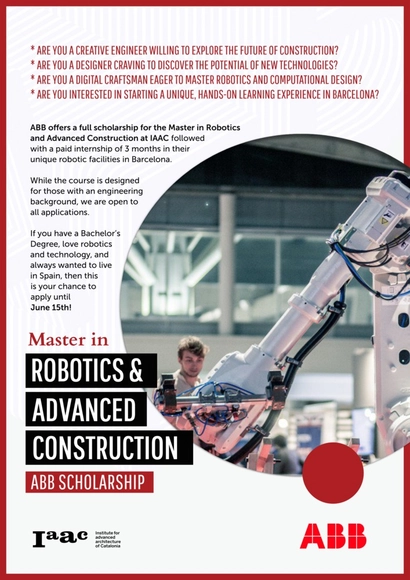
The Institute for Advanced Architecture of Catalonia (IaaC) is pleased to introduce you the new Master of Robotics and Advanced Construction (MRAC) and related scholarships and internship opportunities for students offered by our Institute.
The Institute for Advanced Architecture of Catalonia is the center of research, education, production, and outreach. Based in Barcelona, Spain, the Institute has the mission of envisioning the future habitat of our society and building it within the present. Following the digital revolution at all scales, from bits to geography, from micro-controllers to cities, from materials to the territory, the IAAC is an experimental and experiential center where one learns by doing, through a test of methodology that promotes real solutions.
Artfully dancing together to the beat of their own drum, the familiar look of the New York skyline has now been broken up by an eye-catching pair of skyscrapers on the banks of the East River. The dual copper-clad residential towers are reminiscent of a couple dancing, leaning back slightly and linked together by a bridge with a metallic reflecting finish half-way up the tower. The glass for the 100-meter-high skybridge for this extraordinary project was created by the Swiss specialists Glas Trösch which developed a complex, double-insulating glass with an internally laminated, metallic web to give a glossy finish.
The design of the American Copper Buildings overcame the challenges posed by development and zoning plans, which helped to determine the layout and architectural volumes. This makes the end result all the more impressive: New York firm SHoP Architects has created a distinctive building complex for developer JDS that stands out both in its material choice and shape—even in a city as architecturally distinctive as New York. The central design element is the Skybridge, which goes beyond a purely aesthetic function as it links the utilities of both towers and is integrated into the structure’s static design.
Architecture and the arts have long been on the forefront of socio-spatial struggles, in which equality, access, representation and expression are at stake in our cities, communities and everyday lives. Feminist spatial practices contribute substantially to new forms of activism, expanding dialogues, engaging materialisms, transforming pedagogies, and projecting alternatives. Feminist Futures of Spatial Practice traces practical tools and theoretical dimensions, as well as temporalities, emergence, histories, events, durations – and futures – of feminist practices. Authors include international practitioners, researchers, and educators, from architecture, the arts, art history, curating, cultural heritage studies, environmental sciences, futures studies, film, visual communication, design and design theory, queer, intersectional and gender studies, political sciences, sociology, and urban planning. Established as well as emerging voices write critically from within their institutions, professions, and their activist, political and personal practices. Feminist Futures of Spatial Practice deepens and broadens how we can understand and engage with different genders, bodies and peoples, diverse voices and forms of expression, alternative norms and ways of living together.
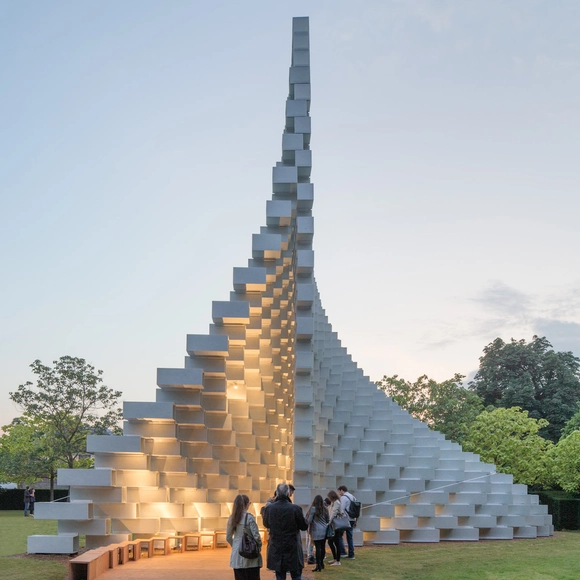
Serpentine Pavilion 2016 by Bjarke Ingels Group (BIG) Image credit: Danica O. Kus
Danica O. Kus has been documenting Serpentine Pavilions since 2009. In her photography work, she illustrates the uniqueness of each pavilion, the new architecture, and design that people can experience.
Don’t miss out! Join Monocle’s editor in chief and chairman Tyler Brûlé, and its editors, at the fourth installment of the annual Quality of Life Conference.
YACademy launches Architecture for Exhibition, a high-level training course offering 8 scholarships and internships in internationally-renowned architectural firms.
110 hours of lessons, a 60-hour workshop and internships/lectures held by internationally-renowned architectural firms like Zaha Hadid Architects (London), David Chipperfield Architects (London), Jean Nouvel Design (Paris), Carlo Ratti Associati (Turin), Fabio Novembre Studio (Milan), Studio Urquiola (Milan), aLL Design (London), MAXXI (Rome), Italo Rota (Milan), and Ferrari SpA (Maranello).
The past few decades brought a revolution in computer software and hardware; today we are on the cusp of a materials revolution. If yesterday we programmed computers and other machines, today we program matter itself. This has created new capabilities in design, computing, and fabrication, which allow us to program proteins and bacteria, to generate self-transforming wood products and architectural details, and to create clothing from “intelligent textiles” that grow themselves. This book offers essays and sample projects from the front lines of the emerging field of active matter.
Architects are always trying to be more efficient and adding more value for clients. But with most software, rendering is very time-consuming, impairing efficiency significantly. It is exhausting for designers when the process of visual processing uses energy that would be better invested in design and architecture itself.
With the Enscape plugin, real-time rendering and virtual reality can help to remedy this situation. The plugin integrates as a toolbar in the popular design platforms Rhino, Revit and SketchUp, with a version for Archicad also currently in development. Because the software is a plugin for these popular programs, architects do not need to learn to use new software, but work in their familiar system with some additional features. And since the software runs on the local graphics card, projects do not have to be uploaded to the cloud.
IsArch is a non-profit organization, originally formed by architecture students and young architects, and directed to this same public. For the past 8 years we have been organizing a competition for architecture students, with the aim of promoting an international debate on the future of architecture. Academic projects from all over the world are put on display, side by side, and are being voted by a prestigious jury and also, the online community. The winners receive prizes and are published in a rich network of press collaborators we have built over the past years, and are occasionally called for internships at the jury members' practices.
We live in a time of great change. As paradigmatic shifts in technology, social networks and the physical environment constantly reshape our way of living, we can foresee that the living space of the future in 10 or even 5 years will be drastically different from what it is today.
How will we live in 2025 with updated basic needs and redefined living spaces? Perhaps, physical space and distance will further give way to digital connectivity, while inter-personal relationships will be complicated by our latest affair with artificial intelligence. Or, unsustainable urban development and the celebration of all things virtual will come to a halt and humans will engage in a renewed conversation with each other and the environment.
Habitat: Vernacular Architecture for a Changing Planet
Climate change is the biggest challenge facing our planet. There has never been a more important time to understand how to make the best use of local natural resources and to produce buildings that connect to ecosystems and livelihoods and do not rely on stripping the environment or transporting materials across the globe.






_exhibition.jpg?1530836440&format=webp&width=640&height=580)

_exhibition.jpg?1530836440)