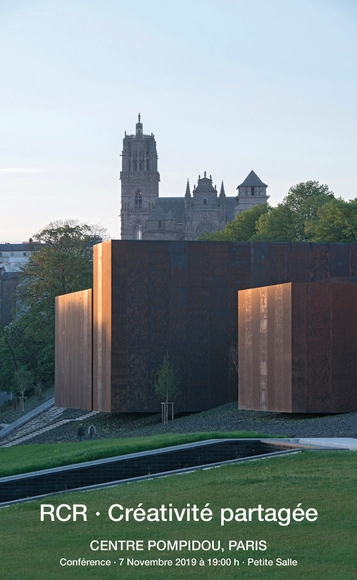
Conference by Carme Pigem , principal and founder of RCR Arquitectes, on their work and their philosophy of shared creativity.
RCR Arquitectes is a studio of Catalan architects, created in Olot in 1987 by Rafael Aranda, Carme Pigem and Ramon Vilalta. The atelier has received many prizes including the Gold Medal of the Academy of French Architecture in 2015 and the prestigious Pritzker Prize in 2017.
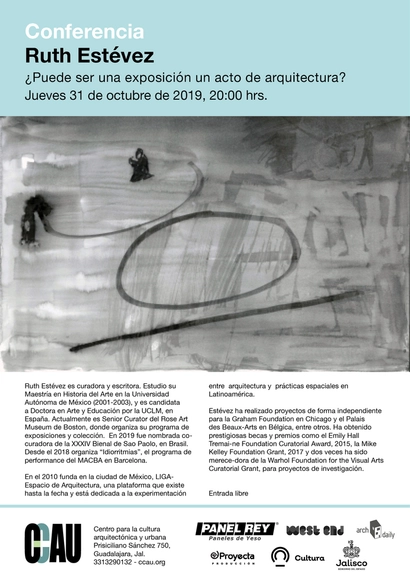
Thursday, October 31, 2019 Ruth Estévez is a curator and writer. She earned her Master’s degree in Art History from the National Autonomous University of Mexico (2001–2003) and is a PhD candidate in Art and Education at UCLM in Spain. She is currently a Senior Curator at the Rose Art Museum in Boston, where she oversees its exhibition and collection program. In 2019, she was appointed co-curator of the 34th São Paulo Biennial in Brazil. Since 2018, she has organized “Idiorritmias,” the performance program at MACBA in Barcelona.
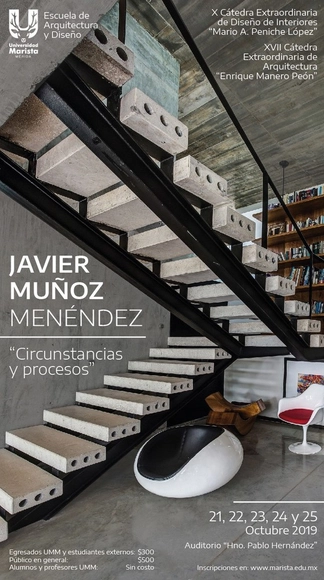
17th "Enrique Manero Peón" Extraordinary Chair of Architecture and 10th "Mario A. Peniche López" Extraordinary Chair of Interior Design: An annual lecture series organized by the Universidad Marista de Mérida A.C., which invites a renowned expert in design, architecture, and interior design to share their experiences and knowledge with the academic community and the general public.
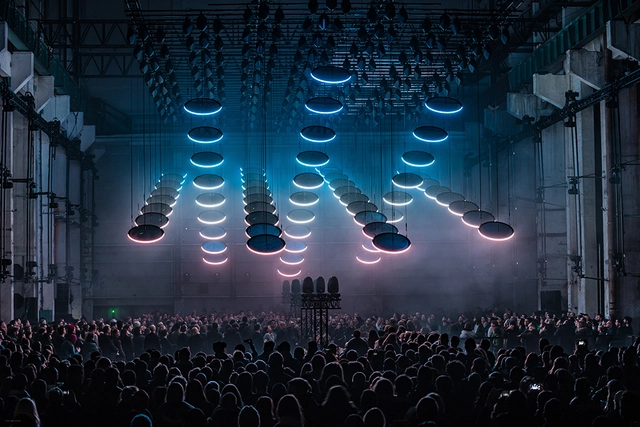
This November, Mexico City cements its status as one of the most exciting creative capitals in the world, featuring a circuit of activities designed to highlight the avant-garde, experimentation, and new digital art models that the city attracts and inspires. After 16 years of continuous work, MUTEK Mexico is proud to be part of this circuit, collaborating with other organizations to offer the public one of the year's most intense and stimulating weeks dedicated to digital art and sound.
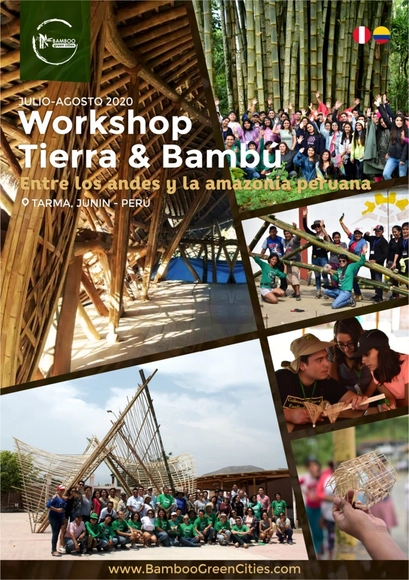
We are officially launching the 3rd edition of the Bamboo Experience Camp - Peru 2020, an international training workshop where we will construct a module using earth and local, native, and introduced bamboo species—Chusquea dombeyana and Dendrocalamus asper—in the city of Tarma, Peru.
This catalog focuses on the theme of the "Mediterranean house," investigating its operational presence within a specific historical context: the 1950s. This period is characterized by the decisive influence in Spain of two masters of international architecture—Gio Ponti and Alberto Sartoris—whose ideology is rooted in a balanced mediation between tradition and modernity.
Faculty of Architecture, Universidad del Atlántico
The "Three Decades of Research in Architecture, City, and Territory" seminar, honoring architects Silvia Arango and Carlos Bell Lemus, stands as the most significant event on the subject ever held in Colombia. It has successfully brought together renowned architects such as Silvia Arango, Alberto Saldarriaga, and Germán Mejía, along with 15 other distinguished professionals who contribute to both the academic and professional fields.
This is a space for discovery and discussion regarding the present and future of the country's cities. The event aims to share approaches, evidence, and proposals concerning Peru's cities, and to facilitate the exchange of multi-stakeholder efforts aimed at improving urban areas nationwide, with the goal of accelerating Peru's transformation into a country of high-quality cities for all citizens.
The Provincial Municipality of Chanchamayo, through its Urban and Rural Development Management (GDUR) and the Sub-Management of Planning and Urban Control, in an inter-institutional cooperation agreement with the College of Architects of Peru – Junín Regional Chapter, is organizing the National Architectural Design Competition for the Plaza de Armas, the Civic Center, and the Integration Park in the city of La Merced, Chanchamayo.
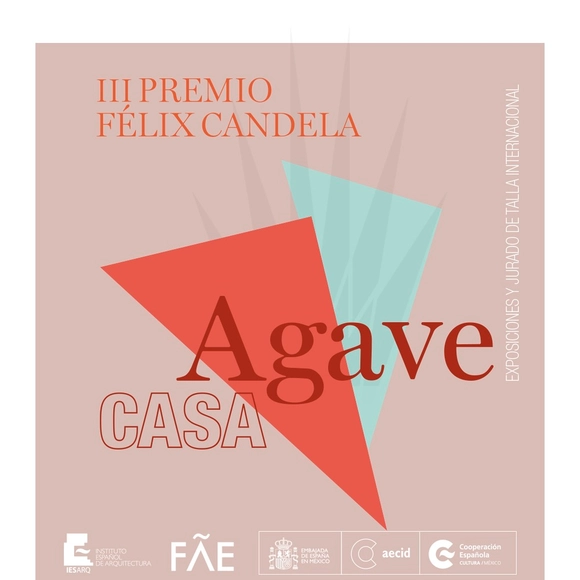
The Félix Candela Award is a two-stage international architecture ideas competition conducted in Spanish. Organized annually by the Instituto Español de Arquitectura (IESARQ), it is open to students of architecture, landscape architecture, urban planning, and design, as well as architects, landscape architects, urban planners, and designers up to 35 years of age, participating individually or in teams of two or three.
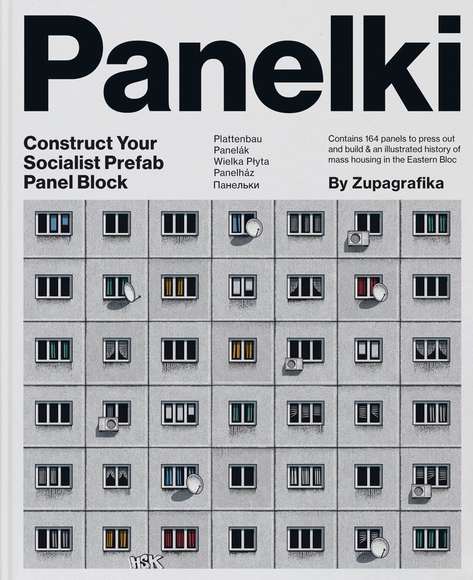
Plattenbau, Panelák, Wielka Płyta, Panelky, Panelház or Панельки: Prefabricated panel blocks go by different names around the former Eastern Bloc, but no matter where they were built, their goal was always the same: to provide homes for expanding city populations after World War II.
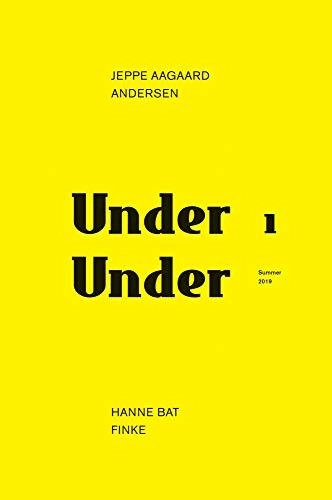
Description via Amazon. Under Under is a publication that links the works and thoughts of practitioners, educators, and researchers in the fields of landscape architecture, architecture, urbanism, and the visual arts. This editorial experiment attempts to reveal images and ideas that have not necessarily had the chance to solidify as built projects or in academically rigorous media. The editors must first select work that they believe deserves some form of inquiry, and secondly, they must attempt to build new knowledge by pairing two different bodies of work or perspectives. For this inaugural edition, we chose to open Jeppe Aagaard Andersen’s archive. Andersen’s influence is not questioned, however, precisely because of his visibility as a practitioner, widely available media usually focuses on his built works. Hanne Bat Finke helps us read his work, also elaborating on his legacy for Danish landscape architecture. Hanne’s own experimental production is presented together with Andersen’s archival material.
The purpose of the present essay is a comprehensive analysis of the theory of individuation in the process of design and digital fabrication in architecture and design. The systematization of the concepts in a coherent discourse is achieved in function of following the theoretical proposal of the french philosopher Gilbert Simondon.
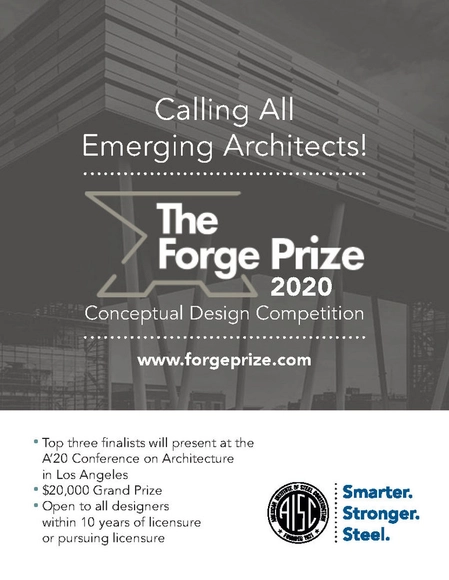
The Forge Prize recognizes innovation in the use of steel and how it can be used to reduce design and construction time. Established by the American Institute of Steel Construction (AISC), the prize invites emerging architects to submit proposals for visionary designs that embrace steel as the primary structural component to increase project speed. The Forge Prize is intended to engage emerging architects in developing imaginative solutions that bolster steel as the 21st century building material of choice through a two-stage design challenge, culminating in a public announcement of finalists in Spring 2020.
Paris, the capital of France has been inhabited since the beginning of 3rd Century BC along the banks of river Seine. It started as the hub of trading center which eventually led to its growth as a metropolis.