
Capitalizing on the current shift toward online learning, architect and professor Pedro Vada has organized a series of conversations with Portuguese architects, specifically tailored for Brazilian students.
Capitalizing on the current shift toward online learning, architect and professor Pedro Vada has organized a series of conversations with Portuguese architects, specifically tailored for Brazilian students.

This Monday, May 25, marks the beginning of the 7th Arica Barroca South Andean Art Festival, an initiative established in 2014 to highlight the cultural identity and diversity of Arica, Parinacota, and the South American Andes.
For 2020, Arica Barroca introduces the theme “Sayarikuna”—Quechua for “We will rise”—to spark inquiry into exemplary manifestations across the American continent. It invites us to reflect on a return to our origins, the principles of “good living” (*buen vivir*) within the Andean worldview, and the practice of collectivity, reciprocity, and access to information, learning, and *Ayni*.

On Monday, May 25, the VII Arica Barroca South Andean Art Festival begins—an initiative established in 2014 to highlight the cultural identity and diversity of Arica, Parinacota, and the South American Andes. For 2020, Arica Barroca presents the theme "Sayarikuna"—Quechua for "We will rise"—to prompt questions regarding exemplary manifestations across the American continent. It invites reflection on returning to one's origins, the principles of "good living" (buen vivir) from the Andean worldview, and the practice of collectivity, reciprocity, access to information, learning, and Ayni.
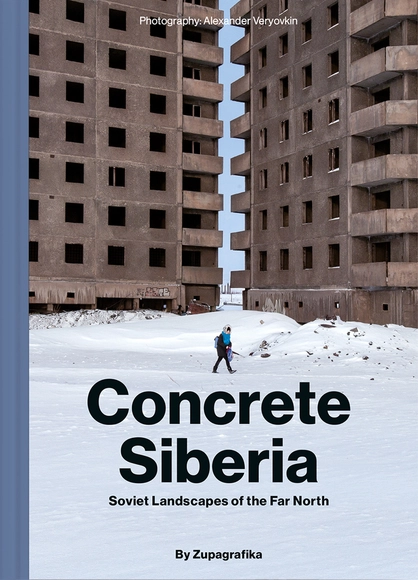
A photographic insight into the Soviet-era architecture of one of the most extreme, little-known and vast territories on Earth.
From the Ural Mountains to the Arctic Circle, the book features the extensive micro rayon of Siberia’s urban centers, the brutal landscapes of industrial monotowns, cosmic circuses, concrete theatres and opera houses, as well as prefabricated panel blocks, or panelki, erected on permafrost.

Pascal Schumacher’s unique aptitude and sensitivity with the vibraphone are unparalleled, having been developed in no less than four of Europe’s most notable conservatories including the Luxembourg Conservatory where he now teaches percussion and jazz vibraphone. Over a 25-year career, he has explored the links that exist between many musical genres, making it difficult to pigeon–hole his talent, taste or musical influences. Schumacher has made a name for himself in a variety of collaborative endeavours from trios and quartets to symphonic orchestras, with a repertoire that spans contemporary classical music to pop-infused jazz.

On Thursday, 4 June at 6 p.m., Oris House of Architecture (Kralja Držislava 3) in Zagreb, launches the international Friends for Oris exhibition, which will be on view until 31 July 2020. The opening of the exhibition will be organised in accordance with the Recommendations for the prevention of the emerging COVID-19 pandemic during public events and gatherings, issued by the Croatian Institute of Public Health.

Bruce Presents, the Bruce Museum’s program series featuring thought leaders in the fields of art and science, returns on Thursday, June 4, 7:00 – 8:30 pm (EDT), with a Zoom virtual panel discussion: Architecture 20/20: New Visions for Public Spaces in the Age of COVID-19.
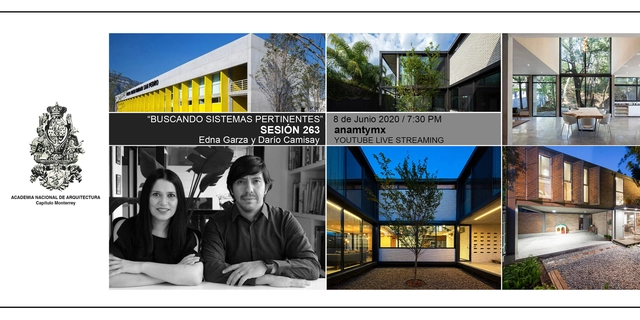
In the lecture "Seeking Pertinent Systems," Edna Garza and Darío Camisay, directors of the Monterrey, Mexico-based architecture and design firm Garza Camisay Arquitectos, will share the unique story behind each of their projects. This narrative will focus on uncovering the architectural system selected for each work. The "search for pertinence" is a constant in every project—a filter that allows these systems to be understood as a consequence rather than an objective.

Join us together with Jemima Burrill as we chat with Hannah Corlett, Founding Director of HNNA and Design District Master Planner and Architect, about the thinking and planning behind London’s new Design District.
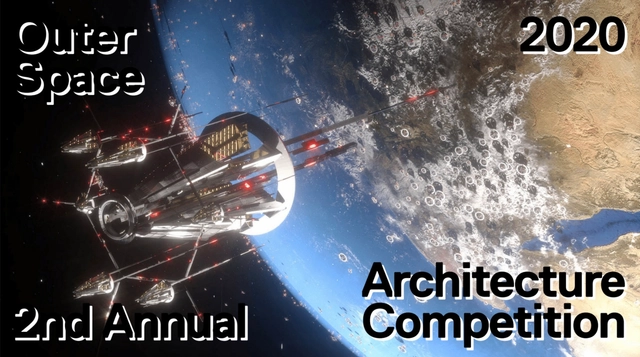
We are on the cusp of the second great age of space exploration.
Outer space has always captured the imaginations of the public. New advances in technology (including comet landings, the Orion Spacecraft, and large scale social experiments leading to exploration of Mars) mean that outer space is no longer a place only astronauts will get to experience – but something you and I can experience within our lifetimes

The proposals that make up the exhibition Ciudad Completa | La Palomera: reconocimiento y celebración (Hacienda La Trinidad Parque Cultural) are the result of a multiplicity of individual and collective exercises, deployed as creative actions—experiences conceived to transcend the boundaries that make it difficult to imagine and experience the city as a diverse and complex fabric, open to the forces of the other, always yet to come; and of the other, the inhabitant who, together with us, inhabits and shapes it. A city for encounter, active consensus, learning, and transformation.

Brazilian architect Matheus Seco and artist Patrícia Osses will discuss "Universal Influences and Local Expression: A Look from Isolation," analyzing the cases of Brasília and São Paulo, the cities where they reside, respectively. This conversation will take place as part of "Isolated Dialogues" (Diálogos aislados), an online series organized by the School of Architecture at Finis Terrae University, which brings together guests from various disciplines to analyze the theme of isolation from different perspectives.

Through its Schools of Architecture in Bogotá, Manizales, and Medellín, the National University of Colombia invites you to this series of online lectures, highlighting key areas such as professional practice, teaching, research, and outreach.
.jpg?1590710505&format=webp&width=640&height=580)
The launch of the 2020 educational offer of YACademy –YAC’s program to open its network of the most prestigious studios in the world for the most deserving young designers– is the right moment also to narrate some of the experiences the students had before starting their collaborations with the main characters of the contemporary architectural world.

Each issue is a new experiment born from its cover image, which serves as a common thread. From there, the articles branch out, interweave, or simply juxtapose, forming a tapestry that everyone is invited to read, discuss, and contribute to.
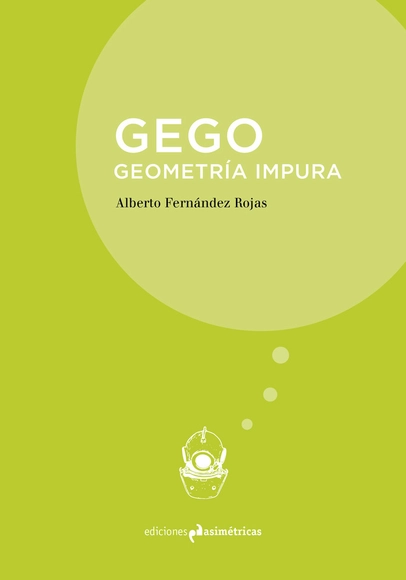
The place Gego's work occupies in Venezuela's abstract-geometric tradition—one of the most fertile in the Americas—is complex; indeed, this subtle body of work, which paradoxically conveys so many meanings, resists definition. Consequently, this book serves as an exploration of how the artist, while engaging with the leading figures of this tradition and acknowledging and sharing some of their ideas, freely expressed their own vision.
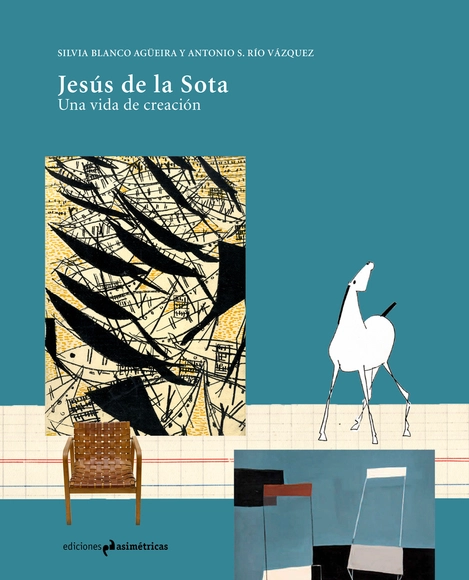
The work of Jesús de la Sota, known primarily for his furniture designs—which often complemented the buildings of renowned architects, such as his older brother Alejandro de la Sota—represents a unique case within 20th-century Spanish design. He was consistently distinguished by his elegant sobriety, brilliant refinement, and clean, powerful lines. He experimented across many diverse creative fields: as a painter, muralist, illustrator, draftsman, and graphic designer, he created chairs, armchairs, tables, and lamps, as well as books, fabrics, and tapestries, all in an attempt to unite utility and beauty in every sphere of daily life. He launched the firm Cores y Sota, a comprehensive interior design project capable of generating architecture from a small scale, in a constant search for the essential and the minimal.
For some time, an entire generation of architect-educators has been exploring the real connections between the speculation inherent in design studios and the professional practices of those who lead them.