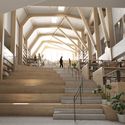
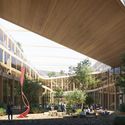
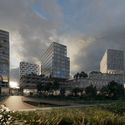
Architectural visualization company Brick Visual has been loading its most complex scenes into Chaos Group’s real-time 3D ray-traced engine, Project Lavina, since the private beta first launched. With the first public beta now available, Attila Cselovszki, CDO at Brick Visual, shares how adding Project Lavina to the architectural visualization (arch-viz) pipeline has revolutionized the way they work.
What would you do with an old and empty building? Would you tear it down, leave it abandoned, or could you transform it into something new? Cities all around the world are wrestling with this very challenge. The question then becomes, what can architecture do about it?
Due to the disruption caused by the Covid-19 outbreak, Combo Competitions has decided to extend the deadline of Emotions, Architecture, Opioids by 4 weeks to make up for lost time owing to the pandemic, and to allow more time for participants to adjust to a new workflow. Submission deadline is now Sunday, September 6 (registration deadline August 30).
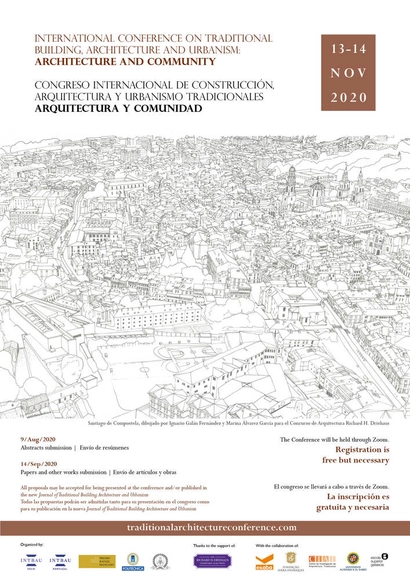
The "International Congress on Traditional Construction, Architecture, and Urbanism: Architecture and Community" will be held online on November 13 and 14, 2020.
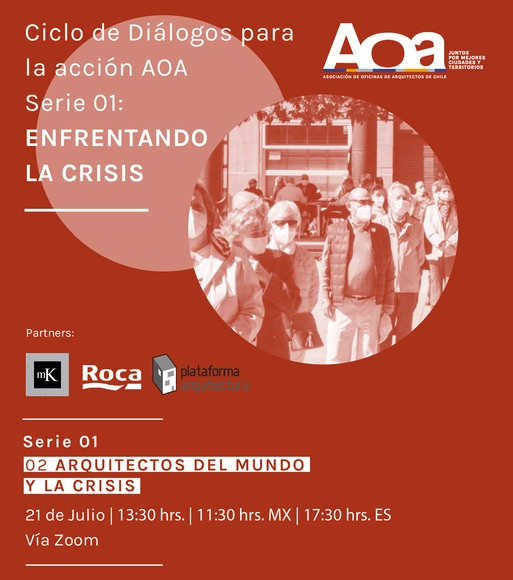
Aiming to continue the discussion and uncover opportunities for adaptation and resilience, the Association of Architecture Offices (AOA) continues its series of conversations addressing various topics relevant to both professional practice and the public and private spheres that shape the city.
Photography: Daniela Fullerton and Piera Medina_ design: Daniela Moyano
This book continues the line of research into our country's vernacular architecture conducted by the authors in various remote locations across the nation, focusing this time on the isolated settlements of the archipelagos along the Aysén region's coastline (1). Through this book, the urban ingenuity employed to inhabit this extreme landscape is identified and highlighted, the sense of rootedness achieved within the archipelagic territory is explored, and the qualities behind the places created by the men and women of the fishing tradition who live here are recognized.
The Journal of Traditional Building, Architecture and Urbanism is aimed at individuals and institutions interested in traditional building, architecture, and urbanism. Published articles address the theory and practice of these disciplines. Its objective is to promote the creation of places and buildings that harmonize with local culture and tradition while respecting the environment and its natural resources. Furthermore, it seeks to foster a deeper understanding of traditional construction cultures worldwide, thereby encouraging greater respect for them and contributing to their preservation and continuity.
On Thursday, July 30, at 6:00 PM, Cosentino City Barcelona and ArquinFAD invite you to discover the finalist projects of the 2020 FAD International Awards, presented directly by their authors.
The Peninsulist Presents/ Designing Inclusive Spaces: In conversation, Resolve Collective and Yinka Ilori, chaired by Professor Paul Goodwin
The recent health pandemic and resulting economic crisis have revealed deep socio-economic inequalities. Architects Akil Scafe-Smith and Gameli Ladzekpo from Resolve Collective and interdisciplinary designer Yinka Ilori discuss collaboration, social engagement and creating inclusive public realm spaces.
Saratov is a city located in the southeastern European portion of Russia, and a major cultural and economic centre of the Volga region. This open international competition will determine the best concept for integrated development of 5 sites in the central part of the city: the former Saratov-Tsentralny (Saratov-Central) Airport, the Park Pobedy (Victory Park) Memorial Complex on Sokolovaya Gora, Zeleny Island, Glebuchev Ovrag (Glebuchev Ravine) and the Pokrovskie Peski (Pokrovsky Sands) Island.
The Committee for the Protection of Yerevan’s Heritage has organized an idea competition for the urban revitalization of the District 33 in Yerevan, Armenia, to find alternative approaches to this valuable historic urban area.
Over the course of its history, this iconic structure has undergone several design changes to deter and prevent suicides. Most recently, a Task Force worked for more than a year to provide recommendations for a more effective, permanent solution to this ongoing and challenging problem.
Architecture Residency Free Virtual Public Lectures by 'T' Space / SMHF
As part of its annual Architecture Residency Program, the Steven Myron Holl Foundation and 'T' Space offers a Virtual Public Lecture Series, featuring practicing architects, scholars, and esteemed art professionals.
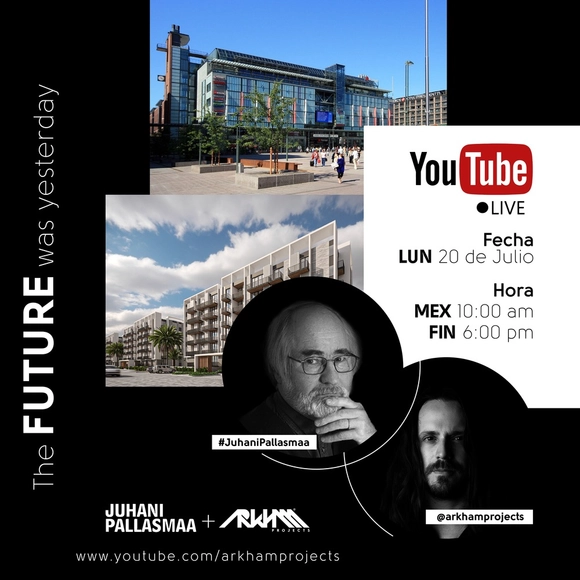
The poster was created in-house at Arkham Projects.
Min Peniche, creative director of Arkham Projects, will be in conversation with Juhani Pallasmaa to discuss the future of architecture and how it resonates with topics explored decades ago. The discussion will examine the similarities and differences between past and present thinking, architecture, and humanism.
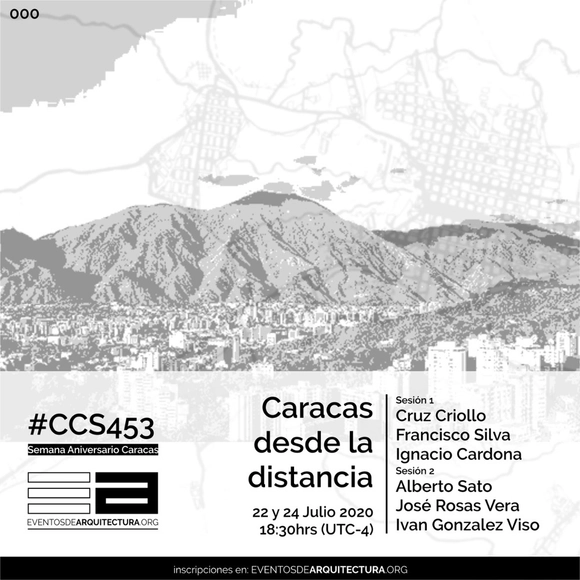
Caracas is not only thought about by those who walk its streets daily, participate in its activities, or simply contemplate it from their windows. Those who have chosen to reside in distant latitudes or opposite time zones also keep it in mind, and in some way, it has become part of their new daily routines.
Description via Amazon. In a series of fascinating tales, Gene Kohn explains how he helped build one of the most successful architecture firms in the world, offering inspiring lessons on business leadership and design innovation that can be applied to many fields.
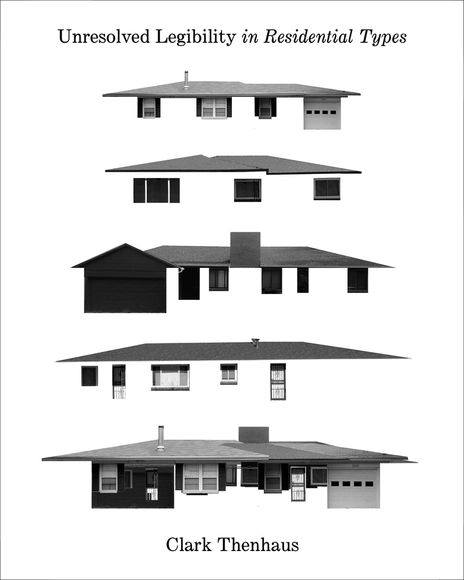
Architectural legibility requires both visual clarities of a building’s appearance such that its formal, spatial, and material compositions can be comprehended, as well as a certain clarity of its social, cultural, and political histories. While the term legibility carries a connotation of conclusiveness or objective qualifications, legibility in architecture is most often inconclusive and unresolved. Such unresolved legibility is particularly visible in houses, which are the source of inquiry in this project. This project proposes new understandings and interpretations of American residential architecture by investigating and graphically illustrating the forms, spaces, and histories of ten residential types.
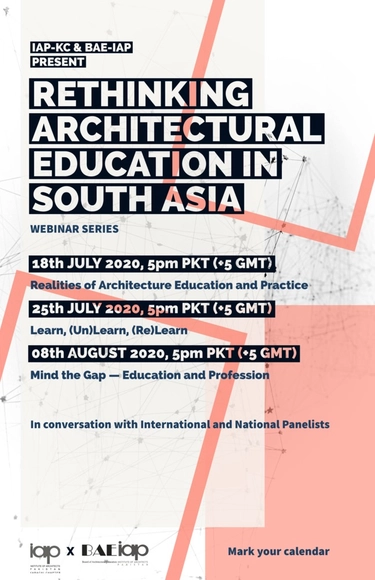
Institute of Architects Pakistan-Karachi Chapter (IAP-KC) and the Board of Architectural Education (BAE-IAP) are excited to announce the webinar series, “Rethinking Architectural Education in South Asia” to be held every Saturday, 5pm PKT (+5 GMT), starting 18th July - 08th August, 2020.