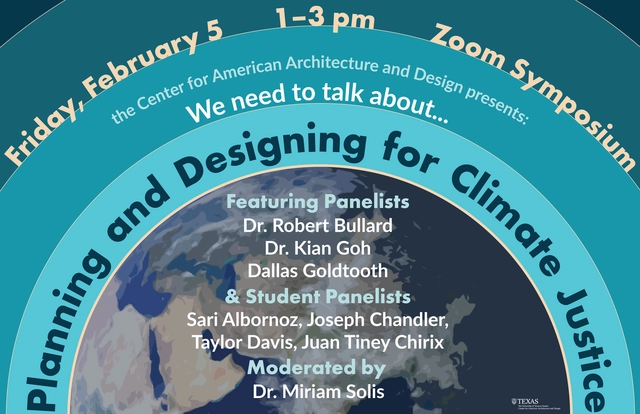
The cumulative effects of agriculture, industrialization, and urbanization are unequivocally changing our climate and producing globally unprecedented challenges related to food production, building materials, and human and ecosystem health, and exacerbating conditions that promote the spread of pandemic diseases, and these challenges are disproportionately affecting low-income communities and communities of color. This is not new. Our built environments create impacts on all of the above forces, and play a critical role in the creation of, and potential dismantling of, inequitable conditions of living and human and ecosystem health. How do we as designers of buildings and cities contribute to climate change and its deeply-rooted, systemic impacts, and what can we do now to turn our impact positive? How do we recognize, through our planning and building processes, the links between human health in our communities, particularly in communities of color, and the health of the planet and its ecosystems? How do we designing for climate justice, carbon neutrality, and equitable impact of positive change? And how do we reform our pedagogical approaches in our academies to ensure equitable climate considerations “go without saying”?
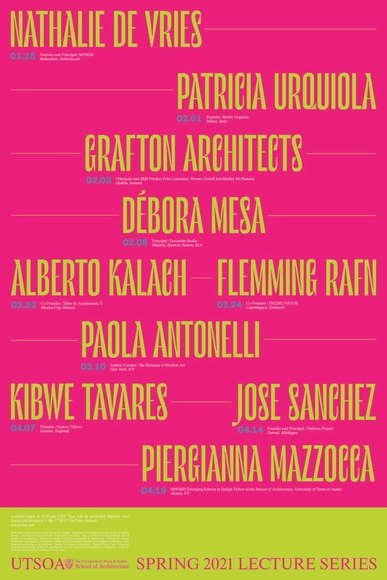
The University of Texas at Austin School of Architecture is pleased to announce its Spring 2021 Lecture Series. With speakers hailing from across the globe, this semester’s lineup represents an exciting range of contemporary voices and international perspectives. Featuring a new, dynamic slate of speakers each semester, the School of Architecture’s lecture series plays an integral role in fulfilling the school’s commitment to fostering lively intellectual curiosity and the open exchange of ideas.
Starting Monday, January 25 and continuing throughout the semester, lecturers representing a broad cross-section of cultural practices—including Pritzker Prize Laureates, video game designers, filmmakers, and beyond—will present talks that push the traditional boundaries of the design disciplines, address some of society’s most pressing challenges, and help us reimagine the relationship between ourselves design and the world around us.
INTRODUCTION History of Architecture is a 2021 Presentation and Writing Competition, organized by Archiol. Architecture evolved over the centuries, with the rise and fall of civilizations. Architecture is the essence of the history of Human Civilization. The competition, History of Architecture is looking for a presentation board and essay submissions on any of the periods from the history of architecture.
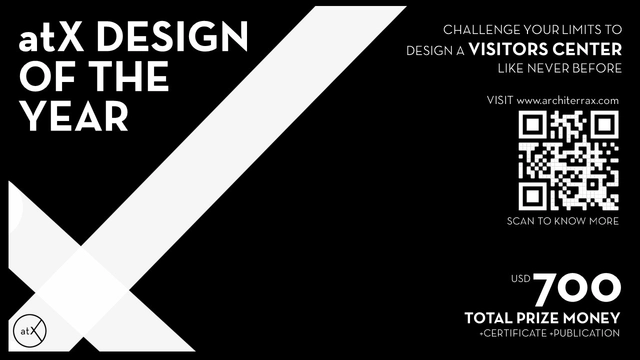
We want students to explore what architecture truly means and what it can achieve without any constraints. This competition encourages students to create unconventional and exceptional designs. The aim is to let your imagination run wild and design a breathtaking Visitors Center.
100-hour individual design contest • Issue #01 Jan 2021
We are excited to announce our first-ever 100-hour individual architecture drawing contest! In this architecture competition, individual contestants will be given the detailed brief 100 hours prior to the submission deadline. We are challenging you as an individual to come up with a design concept and pitch it to us within 100 hours! All you have to submit at the end is one JPG panel & 150 words of the design description.
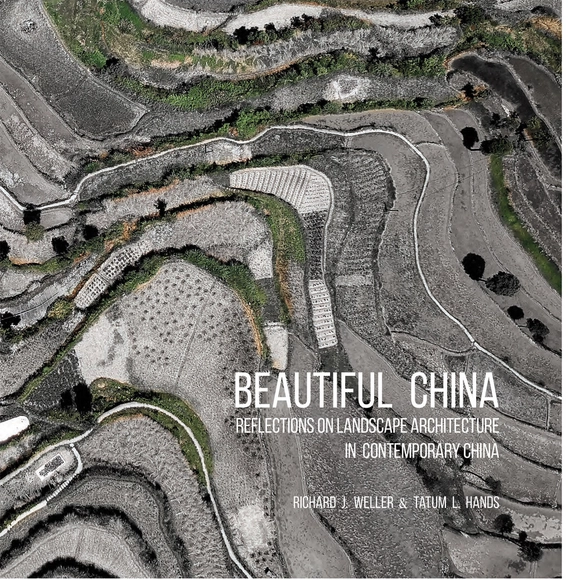
Beautiful China is the title of the Chinese government’s broad policy to ensure the traditions and esthetics of Chinese culture not only survive as heritage but apply to contemporary society and to the future. Beautiful China is also nested within the larger policy concept of creating an “ecological civilization.” Applied to a nation of over 1.3 billion people and the second most powerful economy in the world, these policies are arguably the most fascinating socio-political experiment taking place anywhere in the world today. This book is the first serious consideration of this policy and what it means for the design professions in contemporary China.
’ORTE Architekturnetzwerk Niederösterreich’ annually grants a studio apartment in Krems as well as a scholarship financed by the Federal Province of Lower Austria to three artists focusing their work on building culture. The duration of stay is selectively one to three months.
For the 28th annual Tile Competition, Ceramics of Italy is currently accepting submissions from top North American architects and designers who have used Italian ceramic and porcelain tile to create unique installations in built projects around the world. An international jury of design experts will review submissions from all over the continent and select winners in five categories: Commercial, Institutional, Residential (Multi-Family), Residential (Single-Family), and Student. Projects must have been completed between January 2016 and March 2021 and feature tile from one or more Ceramics of Italy manufacturers.
The City of Culver City will implement a permanent Public Art Program for the Washington/National TOD (Transit Oriented Development) District. The Washington National TOD Gateway Public Art Program will inspire artists in the creation of world-class, aesthetically rigorous artwork(s) that respond to the natural, cultural, and infrastructural resources present at the site. Formerly the site of the Hal Roach Studios, the Washington National TOD gateway has continued to be a site of artistic and entrepreneurial activity. This Public Art Program will offer artists the opportunity to aesthetically respond to the past, present, and future of this unique cultural site.
With Tiny Library 2021 we invite you to rethink and re imagine the idea of Library as a 21st century self-learning and educational incubation space.
With the world constantly evolving, there is a ton of information being formulated out there. The human civilization is expected to keep up with this change and evolve with this developing world to open up multiple possibilities for a better future. Despite all the information available around us, the only way to best access it, is through reading and self-learning. As a major tool for the 21st century, self-learning is an important skill that is to be refined for future generations as they journey through education and beyond.
The guidelines for the Building Arts Awards, organized by INTBAU with the support of the Richard H. Driehaus Charitable Lead Trust and the Ekaba Foundation, and in collaboration with the Ministry of Transport, Mobility and Urban Agenda, the Ministry of Culture and Sport, the Rafael Manzano Prize, and the Spanish Council of Architects, have been published. Submissions are open until February 16.
The Foros lecture series at the UIC Barcelona School of Architecture, an essential annual event in the fields of architecture and urbanism, is launching a new edition in an online format that will run from January 27 to April 28.
Traditional Architecture on the Island of La Palma
The call for papers for all sections of the second issue of the Journal of Traditional Building, Architecture and Urbanism is now open until March 15, 2021.
“Our lives unfold through an exchange of nutrients with plants, even if we only remember them when it is time to water them. In one way or another, they are there, allowing us to continue existing here on this planet. However, forty years after the television broadcast of the series Cosmos, it seems we still do not understand plants as a fundamental part of our lives. We continue to view them as a mere source of energy or a raw material to be exploited (capable of defining vast economic sectors); we instrumentalize them when asked to explain the origins of architecture, or we even use their color to tint our projects and ventures with labels like “green,” “ecological,” or “sustainable”; yet it is not common for us to think about them—and with them—when designing. Perhaps to begin settling that debt, in this issue of ARQ magazine, we are seeking essays, projects, and research that challenge the secondary role we have assigned to vegetation, or that demonstrate new ways of including vegetation in architecture, with the minimum condition of moving beyond the paradigm of the primitive hut, as we believe it is time to take a step beyond their mere allegorical instrumentalization.”
The Design Educates Awards recognize, showcase, and promote globally the best ideas and implementations of architecture and design that can educate. The design itself may provide an informative and educational layer that guides us through the increasing complexity of our environment. The objects in our surroundings can communicate important values and guide us through desirable, positive practices.