From Stonehenge to Greek temples, architecture is the signature of humankind on landscape, the artificial element that has always been connected to the natural environment. Architecture and landscape are linked by a fundamental continuity that is now starting to fade, damaging the quality of the space we dwell.
Today, more than ever, the landscape is a precious heritage that architecture can and must enhance, while protecting it to pass it on to future generations: architects shall not give up on working on landscape, instead they should be able to design architectures that respond to each landscape’s specific feature and generate wonderful and unique spaces.
Proyectar a Conciencia 5.0. Image Cortesía de Sto Chile
Commemorating PAC 3.0 and PAC 4.0, which took place during the quarantine, and launching PAC 5.0, Sto Chile celebrated at "Casa ArchDaily" with competition partners and friends from the private, public, trade, and industrial sectors.
Interior architecture today operates at the intersection of physical and mediated spaces, such as those of mass communication, digital platforms, or the visual arts. If we consider any form of representation as potential architecture—from writing to photography, from drawing to film—this essay addresses contemporary interiors as "expanded media" platforms that belong to different places and temporalities, reaffirming the role of interior architecture in the construction of contemporaneity.
The decline of monasticism as a historical movement coincides with what Hannah Arendt proposes as the fundamental paradigm shift upon which modernity was built: "The inversion of the hierarchical order between the vita contemplativa and the vita activa." By elevating action to the highest state of the human condition, contemplation lost its traditional meaning and surrendered its honorary position as a source of access to truth.
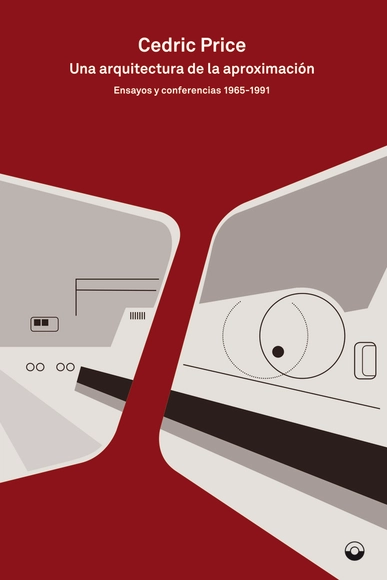
This book brings together, for the first time in Spanish, more than twenty writings and lectures by British architect Cedric Price. Drawn from diverse sources, Price’s texts reveal an exceptional understanding of architecture, filtered through a critical and complex—yet honest and ironic—personality.
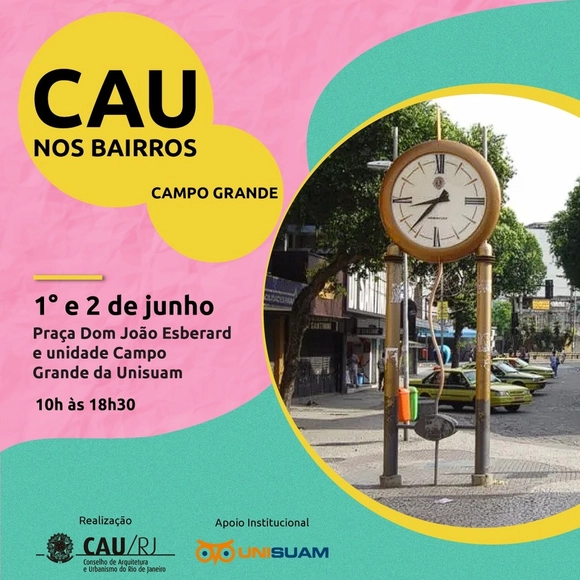
The Council of Architecture and Urbanism of Rio de Janeiro (CAU/RJ) will hold the first edition of "CAU nos Bairros" (CAU in the Neighborhoods) in Campo Grande on June 1st and 2nd. This free, public initiative aims to demonstrate how architects and urban planners can help build or renovate with efficiency, quality, and fewer unforeseen issues.
This book analyzes the origin, development, and dismantling of the Lima Planning Institute (IPL) at the National University of Engineering (UNI), which served as the headquarters for Project 205 of the Inter-American Program for Urban and Regional Planning (PIAPUR).
The book highlights the Institute's significance within both the national and Latin American contexts regarding professional training in urban and regional planning, while considering the influence of the various schools of thought and the political and social movements of the era. It was the first postgraduate program of its kind in the country and the first in its specialty in Latin America.
Avian hazard – and that's hazard to birds rather than some Hitchcockian hazard to you – is an increasing concern for architects and developers. You may not have thought about it much, but build a tall glass building and sooner rather than later an unwitting bird is going to fly right into it. And then more and often with fatal consequences.
In fact, billions of birds collide with buildings every year, especially during migration. And given our insatiable appetite for putting up more and ever taller glass buildings, that tally is only going to rise. To tackle that death toll, more and more cities – including, not surprisingly, New York – have passed or are passing legislation that require architects and developers to install bird-friendly glass.
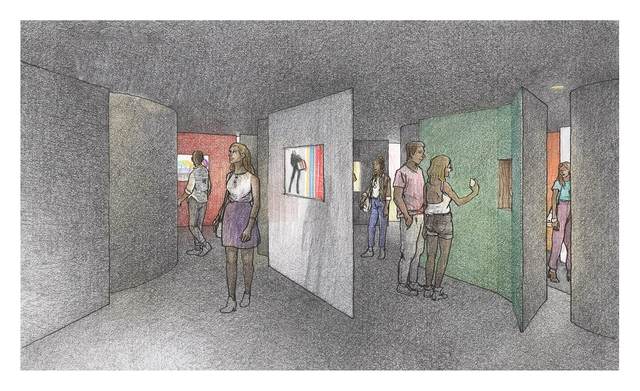
Interior view of the pavilion by architect Isay Weinfeld.
Portobello will have a special presence during the 2022 edition of FuoriSalone. Held in parallel with Salone del Mobile in Milan, the program brings together installations and exhibitions from companies and professionals from around the world in the charming Italian city from June 6 to 13. The brand is one of the main sponsors of the architectural space designed by renowned Brazilian architect Isay Weinfeld, which is part of the Design Re-Generation exhibition, organized by the iconic magazine Interni and one of the most significant events at FuoriSalone.
Call for papers for TULHA Journal - PET Architecture and Urbanism Group at PUC-Campinas
The submission process for issue No. 9 of TULHA magazine, published by the Tutorial Education Program (PET) for Architecture and Urbanism at PUC-Campinas, is now open. The journal accepts scientific, textual, design-based, and graphic essays that explore architecture and urbanism. This year, the magazine follows a thematic axis titled "Urbanity: Body and Social Texture."
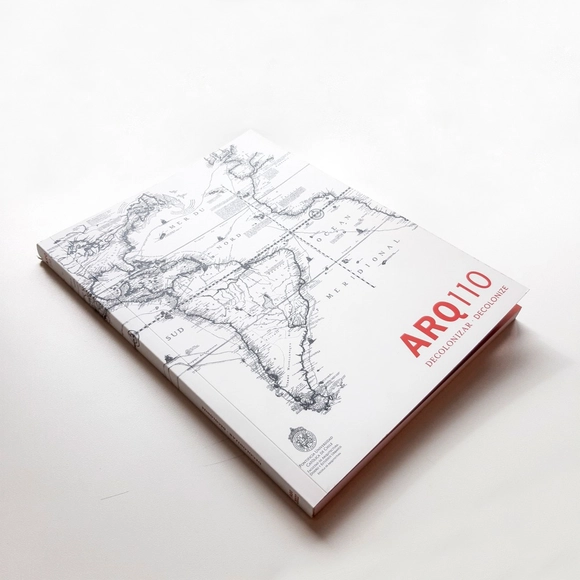
We present the 110th edition of ARQ magazine. Titled 'Decolonizing,' the issue opens a discussion around a simple question: What does it mean to decolonize architecture?
Traditionally, architects have been perceived as artistic individuals who create amazing designs but lack insight into the business, financial and investment aspect of development. However, an increasing number of professionals have broken the mould and have transitioned into Real Estate development and investment.
Next Tuesday 31st May 7pm CET, Flavio Tejada Director at ARUP and Director of the IE Master in Real Estate Development full-time, will explore the benefits and opportunities that await our students.
Paint is synonymous with color, even when it is white. It is the simplest way to restore and correct imperfections on any surface, whether interior or exterior. Without detracting from this significant aesthetic benefit, paint also possesses composition-based properties that turn an attractive, well-finished project into a healthy building—one with a lower environmental impact throughout its life cycle.
Microalgae architecture has gained awareness for its biotechnical potential to achieve net-zero energy architecture while also promoting ecological sustainability and occupant well-being. Microalgae Building Enclosures: Design and Engineering Principles aims to provide design, engineering, and biotechnical guidelines for microalgae building enclosures that need to be considered for symbiotic relations among the built environment, humans, and ecosystems.
Diagrams, transpositions, and space: alternatives for contemporary urban complexity. Credits: Paco Editorial
Immaterial flows characterize the urban condition in the era of globalized information, intensifying its existing complexity. Temptations to return to the past, or a penchant for the radical or purely virtual, accompany the uncertainty of a landscape undergoing profound social transformations. To intervene in a perceptible way, a new cohesion is required, provided by a diagrammatic unfolding of the urban condition and a move beyond form-based urban readings. This new arrangement aims to reveal more than the simple sum of its parts.

.jpg?1653591774&format=webp&width=640&height=580)


.jpg?1653659897&format=webp&width=640&height=580)