Rene Submissions

BROWSE ALL FROM THIS AUTHOR HERE
↓

The Case for Using Automated Building Performance Analysis in the Design Process

 | Sponsored Content

Building performance is a hallmark of architecture in the 21st century. With buildings and the construction industry being significant contributors to carbon emissions, designers must do everything to reduce their buildings’ energy consumption and carbon footprints. Moreover, buildings need to contribute to a positive occupant experience, improving the health and productivity of their users through enhanced visual and thermal comfort and air quality. Today’s buildings are also expected to perform outside their physical boundaries and positively impact surrounding communities; by reducing their contributions to local heat islands and stormwater runoff, and supporting local green economies and sustainable systems.

With high-performance design goals becoming a standard benchmark for buildings, designers must identify the high-performance aspects they want to design for and set targets for key performance metrics. By tracking a building’s performance at each design stage through various simulations, building performance analyses provide a road map that gradually connects its predicted performance to its target values.

Architectural Design and Municipal Building Profile for Chile Chico: Public Tender

The Municipality of Chile Chico, located in the Aysén Region, invites entries for the public tender titled "Architectural Design and Consistorial Profile for the Chile Chico Municipal Building." The initiative is organized by the Municipal Planning Secretariat of Chile Chico.

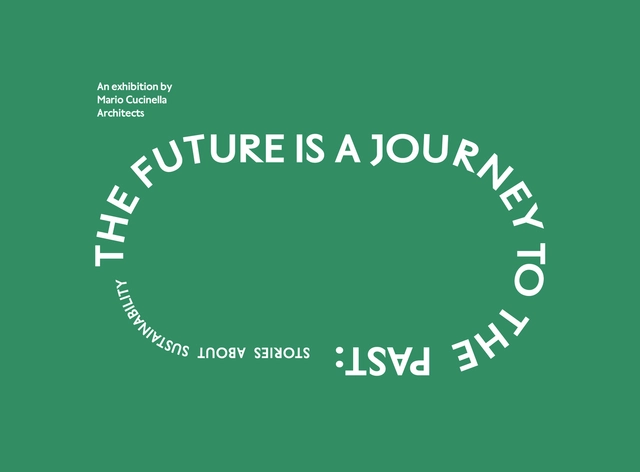
The Future is a Journey to the Past: Stories about Sustainability

From Friday 23 September 2022, the Architectural Association School of Architecture in London will host The Future is a Journey to the Past: Stories about Sustainability, an exhibition curated by Mario Cucinella Architects. The exhibition explores past and present notions of sustainability in order to develop the ecological thinking necessary to bridge the divide between the natural world and human activity – including, of course, architecture.
Held in the AA Gallery on the ground floor of 36 Bedford Square, the exhibition comprises three key elements: a timeline tracing the evolution of environmental awareness and activism from prehistory to the present, and speculating on the future; a selection of projects designed by Mario Cucinella Architects that explore these themes through scale models and booklets; and a map highlighting the locations of key sites and projects explored in Cucinella’s book The Future is a Journey to the Past (Quodlibet, 2022).
New solutions through planning and innovation often require expensive and complex stratagems. However, a journey into the past reveals how, in eras when sustainable thinking was a necessity, humans created ingenious practical solutions that we still have much to learn from. While nature has offered us the sustainable environments of the termite nest and beehive, of forests and the very structure of trees and plants, human ingenuity once shaped the stepwells of India, the ice houses of the Iranian desert and the city of Hyderabad in Pakistan that catches the wind to naturally ventilate its buildings. These projects, and many others, have much to teach us beyond their intrigue and beauty.
In the exhibition, these journeys through the past are projected into the future, suggesting a synthesis of traditional and modern thinking in how we approach architecture and the environment. Architectural history, in all its global richness, becomes a relevant source of inspiration to educate us about our sustainable past while providing us with tools to become future guardians of the global environment.

ARO: Training the Whole Architect with Kim Yao, FAIA, Principal and Megumi Tamanaha, Studio Director

Join us for Best Practice, a virtual fireside chat series dedicated to practice operations at architecture firms and beyond. From pain points to potential, hear how leaders in the architecture and engineering industry are innovating through new business models and managerial techniques.

Gehry Chair Lecture: Marina Tabassum on Architecture of Transition

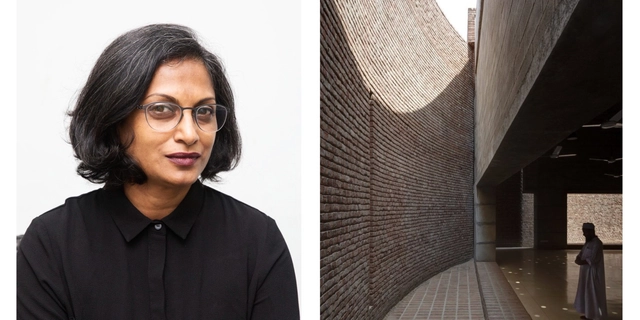
The work of Dhaka-based Marina Tabassum Architects (MTA) often addresses the needs of marginalized communities, whose well-being has been especially threatened during the COVID-19 pandemic. In 2020 and 2021, the firm undertook various projects that dealt with displacement, vulnerable populations and humanitarian challenges. During this lecture and presentation, MTA founder Marina Tabassum — the Daniels Faculty’s 2022-2023 Frank Gehry International Visiting Chair in Architectural Design — will be speaking about those projects, about her experience as an architect in South Asia and elsewhere, and about the changing role of architects as agents of change.

The Architecture of Transition: Emergent Practices in South Asia

"The Architecture of Transition: Emergent Practices in South Asia" will convene young practices that have displayed a rigorous engagement in making architecture in the public realm and in response to the spectrum of issues that societies in acute transition are experiencing. This online lecture series will take place over the next year beginning on September 17, 9am EST.

Patricia Urquiola Presents her New Design

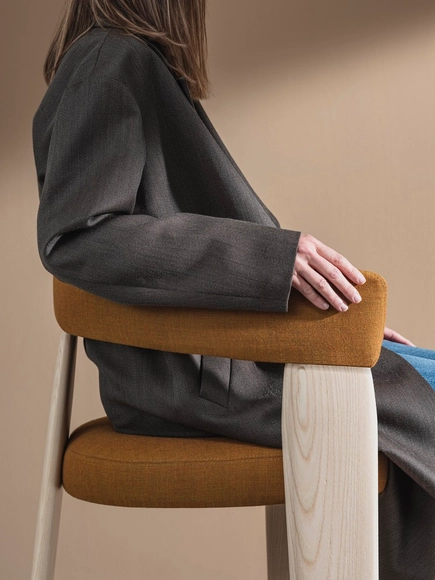
On Friday 23rd of September, at 3:30 p.m., Patricia Urquiola will be at the Andreu World stand at Feria Hábitat Valencia presenting her new designs for Andreu World, in addition to those made over the last decade. All of them 100% sustainable, with the Cradle to Cradle® certification, which represents a further step towards the circular economy.

Seeking Resonance: the life-architecture of Gregory Burgess

An exhibition dedicated to the career of award-winning Australian architect Greg Burgess will be on display at the University of Melbourne’s Melbourne School of Design.

Classify BIM data like a Pro | FREE WEBINAR

Classifying, structuring data is key to unlocking the full value of BIM. It makes data easier to understand, ensuring accurate and timely budgeting, planning, building, and management of a given asset.

Online Master's in Cities - Proximity Urbanism

This Master's program is specifically designed for professionals seeking a degree in Cities and Urbanism without the need to travel or relocate abroad. It offers distance learning led by experts in Architecture, Urbanism, Sociology, Ecology, and Economics, featuring faculty from the IAAC and a roster of leading transdisciplinary professionals in the field.

Vobi Talks: How to Add Value to Your Work and Secure More Projects

What you will learn:

- Learn how to increase the perceived value of your work to close more and better projects;
- Learn the secrets to becoming a more confident professional;
- Discover Renata Pena's tips for growing your architecture and design firm.

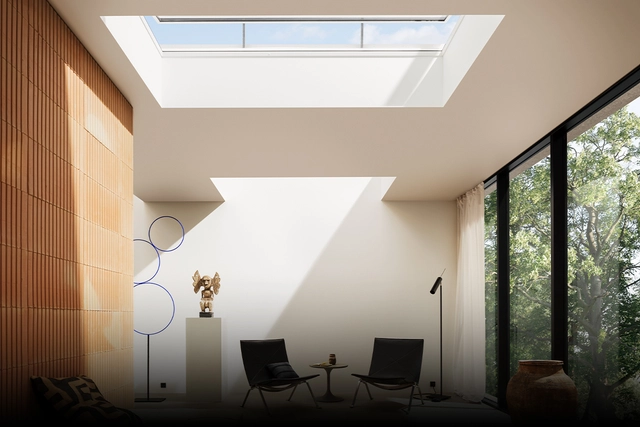
Daylight Design: A digital tool to integrate natural light

Natural light is a key design element that can improve indoor comfort in architectural projects. VELUX Academy offers courses, videos on daylighting design, and information modules featuring exclusive content on the subject. This expert-curated content challenges how architects and designers think, ensuring the best possible design outcomes for their clients.

Travels in Sweden / Sigurd Lewerentz

A little-known facet of Sigurd Lewerentz’s work is the collection of photographs he took during his various travels throughout Sweden over the course of his life. While his famous photographs from his travels in Italy sought to capture the essence of ruins and fragments of classical architecture, in his native country, he turned his attention to landscapes and gardens, cemeteries, and vernacular architecture—ranging from isolated buildings to entire clusters—as well as church interiors, domestic spaces, walls, fences, and gates. Everything was captured through the lens of an architect, rather than an ethnographer.

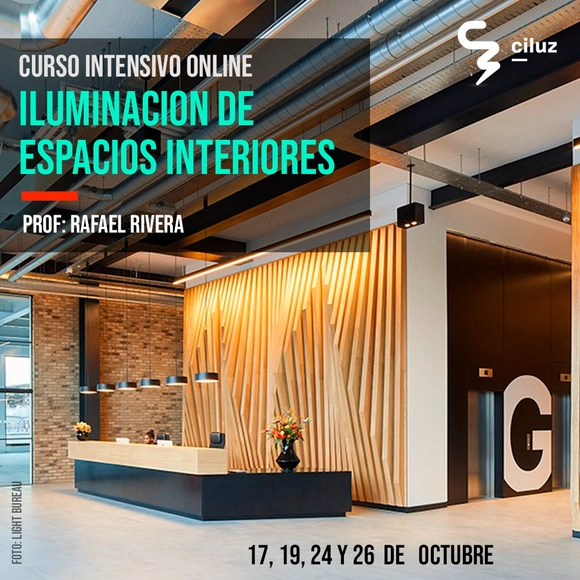
Online Course: Interior Lighting / Ciluz

The Interior Lighting course aims to provide the necessary tools to develop lighting projects for residential and/or commercial spaces. Participants will learn how lighting can personalize and shape new spaces based on the program and its lighting requirements.

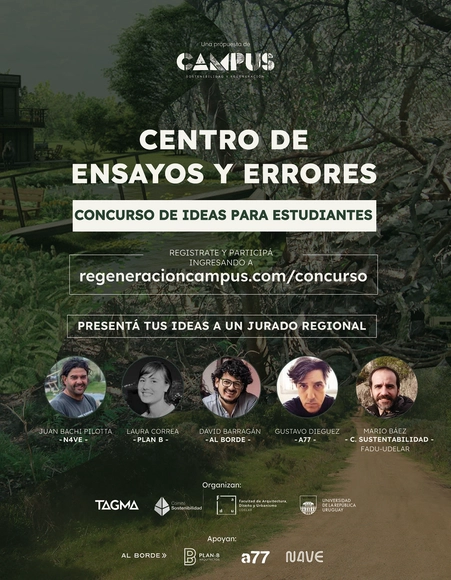
Student Ideas Competition: Center for Trial and Error at CAMPUS

TAGMA and the Sustainability Committee of the Faculty of Architecture, Design, and Urbanism at the University of the Republic (Uruguay) invite students to participate in the Student Ideas Competition for the development of the Center for Trials and Errors (Centro de Ensayos y Errores), an infrastructural support facility for CAMPUS (Training in Sustainability and Regeneration) located in the department of Maldonado (Pan de Azúcar).

Carbon Fixers: Calculate the Carbon Impact of Your Building Designs

 | Sponsored Content

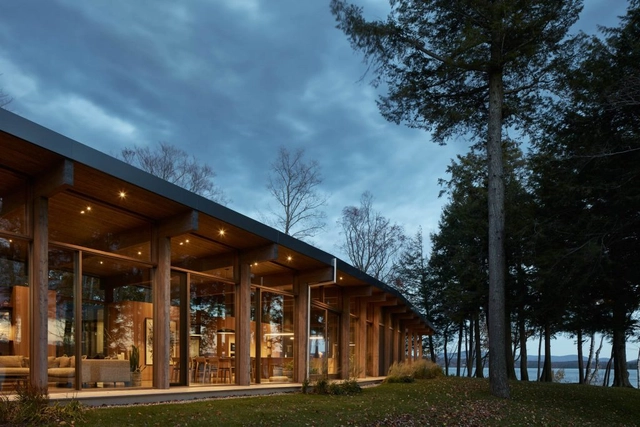
Timber construction and its benefits is moving into the BIM space for even more sustainable uses. A new BIM-integrated web application, called Carbon Fixers (which expands on its Offsite Wood plug-in for Revit), pre-calculates the carbon-benefit of choosing timber and other bio-sourced materials in early design.

Carbon Fixers lets you rapidly build a scenario using only basic architectural program information, such as the type, size, and number of stories in the building. For advanced users, preferences can be saved for firms with a regional expert dashboard, side-by-side comparisons and detailed assemblies.

Modular Summit Brazil

There is an underexplored niche within architecture and construction that is revolutionizing the market. With greater agility, speed, design freedom, and sustainability integrated throughout the process, Modular Construction represents a blue ocean of opportunity that is growing exponentially worldwide.

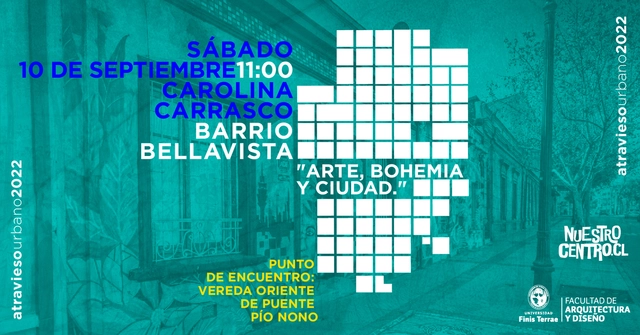
Urban Traverse: "Bellavista Neighborhood: Art, Bohemia, and the City"

Since 2016, the Universidad Finis Terrae School of Architecture has hosted Atraviesos Urbanos (Urban Traversals), a series of thematic tours through various sectors of the capital where an architect from the institution discusses the cultural, urban, and historical value of a neighborhood. For this new edition, the school has joined forces with Nuestro Centro, a neighborhood association dedicated to the revitalization of five neighborhoods: Bellas Artes, Bustamante, Lastarria, Plaza Italia, and Bellavista.